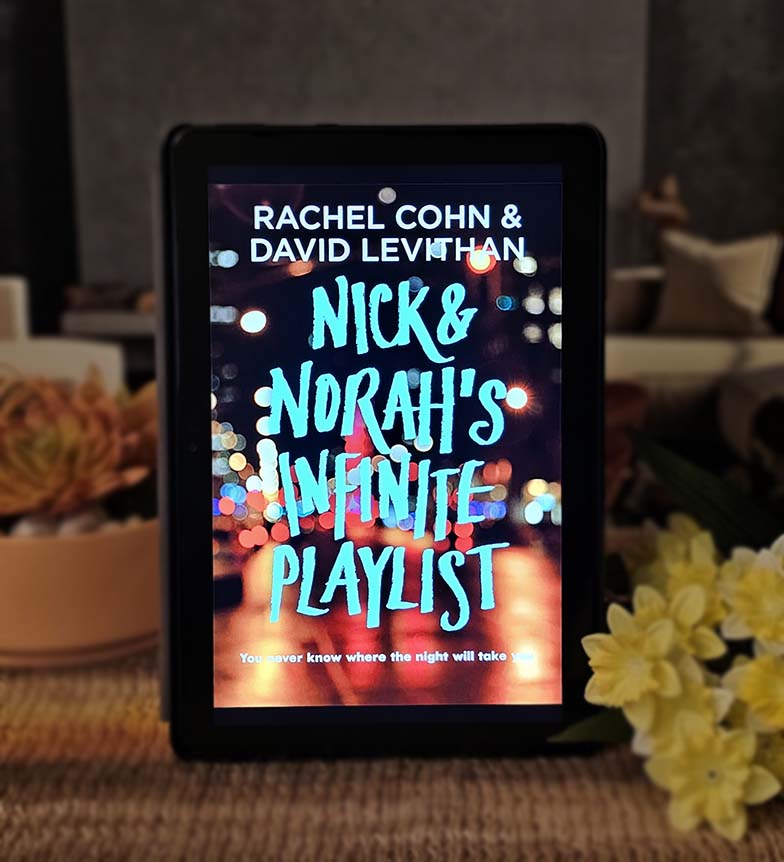
Nick & Norah's Infinite Playlist
by Rachel Cohn, David Levithan
Nick - the only straight member of a New York queercore band, working through his breakup with the complicated Tris by making her mix CDs she throws away - is at a Lower East Side club for a show when he sees Tris walk in with another guy, panics, and asks the nearest girl to pretend to be his girlfriend for five minutes; the girl turns out to be Norah, daughter of a well-known music producer, a classmate of Tris's at the Convent of the Sacred Heart, and the person who has been retrieving Nick's discarded mix CDs from Tris's trash and loving them without knowing he made them; the kiss they share to sell the cover is the first event in a single Manhattan night that will involve Norah's drunk friend Caroline, Norah's complicated ex Tal, and a citywide search for the secret late-night show of their favorite band, Where's Fluffy. Rachel Cohn and David Levithan's 2006 YA collaboration, with Cohn writing Norah's chapters and Levithan writing Nick's, told in alternating first-person POV over the course of a single night.
Buy this book:
Spoiler Warning
This review may contain spoilers. Read at your own discretion if you haven't finished the book yet.
A Five-Minute Fake Kiss, A Secret Show By A Band Called Where's Fluffy, And One Manhattan Night To Get Through
The mechanics of the book are right there in the title. Nick and Norah are the two protagonists, alternating chapters, told first-person and written by two different authors: Rachel Cohn writing Norah's chapters and David Levithan writing Nick's. The night is the infinite playlist. The premise is the kiss. Nick is at a Lower East Side club because his queercore band - in which he is the only straight member and the only one without much in the way of a love life - is on the bill. Tris, the ex who has been throwing the heartbreak mix CDs Nick has been making for her into the trash, walks into the bar with another guy. Nick panics. He asks the nearest girl to pretend to be his girlfriend for five minutes. The girl is Norah: classmate of Tris's at the Convent of the Sacred Heart, daughter of a well-known music producer, and - in a detail neither of them knows yet - the person who has been retrieving Nick's discarded mix CDs from Tris's trash and loving them. They kiss to sell the cover. Norah's drunk friend Caroline needs to be found. Norah's complicated ex Tal is somewhere in the city. The band Nick and Norah both love - Where's Fluffy - is playing a secret late-night show somewhere downtown. The night, which the chapter structure renders in close to real time, is the search for the show, the friend, and a way out of the relationships they came in with.
A 3.0 reflects: a YA collaboration novel that does the alternating-POV-with-two-authors device with more craft than that device usually gets credit for; a genuine love letter to mid-2000s New York indie music and the specific Lower East Side scene the book documents; a romance that compresses the two-strangers-fall-in-love arc into one night with all the credibility issues that compression brings; and the unmistakable feeling, twenty years on, of reading a book that is exactly of its moment rather than across it.
What Cohn And Levithan Are Doing With The Form
The dual-author dual-POV device is the book's actual mechanical achievement. Cohn's Norah and Levithan's Nick read like two people, not two voices in the same writer's range. Norah is sharper, more guarded, funnier on the page. Nick is more raw, more sentimental, more given to long mix-tape-shaped sentences. The chapters hand the night off to each other in the way two friends might hand off the telling of a shared evening: complementary versions of the same scene from inside the two heads that were having two different experiences of it. It also matters that Cohn and Levithan drafted the novel by handing chapters back and forth to each other - which is part of why the two voices read as if they are responding to each other rather than performing for the reader.
The other formal piece is the playlist as architecture. Music is not background in this book. It is causation. Nick has been communicating with Tris through mix CDs the entire pre-novel history of their relationship; Norah has been receiving them by way of Tris's trash. The Where's Fluffy chase is the spine of the night. The bands and venues the characters move between are doing the work that subway maps would do in a different kind of New York book. If you were inside the Lower East Side / queercore / indie scene in 2006, the book will read as documentary. If you were not, the references will not all land, and some of them will be more dated than others.
The Night, And What Goes Wrong, And What Doesn't
The chronological arc is straightforward and most of the pleasure of the book is in not knowing which beat is coming next. Some things to flag without flattening the experience: Tris turns out more complicated than the opening framing suggests and ends up doing more for both Nick and Norah than her introduction implies; Tal is more disappointing than Norah's history with him would suggest; Caroline's drunk-friend subplot is doing real emotional work for Norah independent of the romance; and the queercore band Nick plays in - whose members are not the only-straight-member's punchline but actually friends who matter to him - is rendered as a found family rather than as a setting detail. The night includes, among other things, a stop at a strip club and a sneaked-into-a-hotel-room kiss. The novel ends on a choice. Nick and Norah choose each other and choose to skip the Where's Fluffy show they have been chasing all night. The point is that they have, by then, made their own playlist.
What Has And Hasn't Aged
The book was published in 2006 and was, in its moment, genuinely doing something. The queercore framing - a straight kid in a band of out, queer musicians who are his actual best friends and chosen family - was unusual for YA at the time and is still warmer than most contemporary YA bothers to be about adult-adjacent queer community as a normal feature of teenage life rather than the engine of a coming-out plot. The frank treatment of teenage sexuality, the city as a real place rather than a backdrop, and the assumption that teenagers care about specific bands rather than generic "music" all date the book in ways that, on balance, are the book's strengths.
What has aged less well is the specific corpus of band references - some of which the reader will recognize and most of which will not signify the same way in 2026 as they did in 2006 - and the breakneck pace at which Nick and Norah's connection is required to become deep enough to carry the book's ending. A one-night-falling-in-love novel is asking the reader to accept the compression as a feature. The book does the work to earn most of it; the last act is asking for a little more credit than the night itself deposits.
Why a 3
The strengths: a dual-POV, dual-author form that earns its trick; a New York that is the actual New York of the actual scene the book is documenting; a Norah whose interiority is more interesting than most YA female leads were getting in 2006; and a found-family queer band Nick plays in that the book treats as real people with their own lives rather than as set dressing for the central romance.
The reservations: a romance arc that asks the reader to accept a lot of weight on a single night; cultural references that will land for one specific cohort and bounce off everyone else; and a Caroline subplot that is doing more thematic than narrative work and can read, at the high end, as a structural device.
A 3.0 means: a YA romance of its moment that is better than most YA romance of its moment, a successful collaboration between two writers who would each go on to write a lot of books on their own, and a book that is best encountered in roughly the mood it was written in. Read it on a slow night with the playlist on.
Rating: 3.0/5 ⭐
Perfect for: Rachel Cohn or David Levithan readers, anyone nostalgic for the 2005-2006 NYC indie scene, fans of dual-POV YA romance, readers who want a queer-positive queer-adjacent YA without a coming-out arc as the engine, one-perfect-night romance fans.
Skip if: You need a romance that earns its depth over a longer arc, you find mid-2000s music-scene references alienating rather than charming, or you want a YA novel where every secondary character is doing more than thematic work.
You Might Also Like
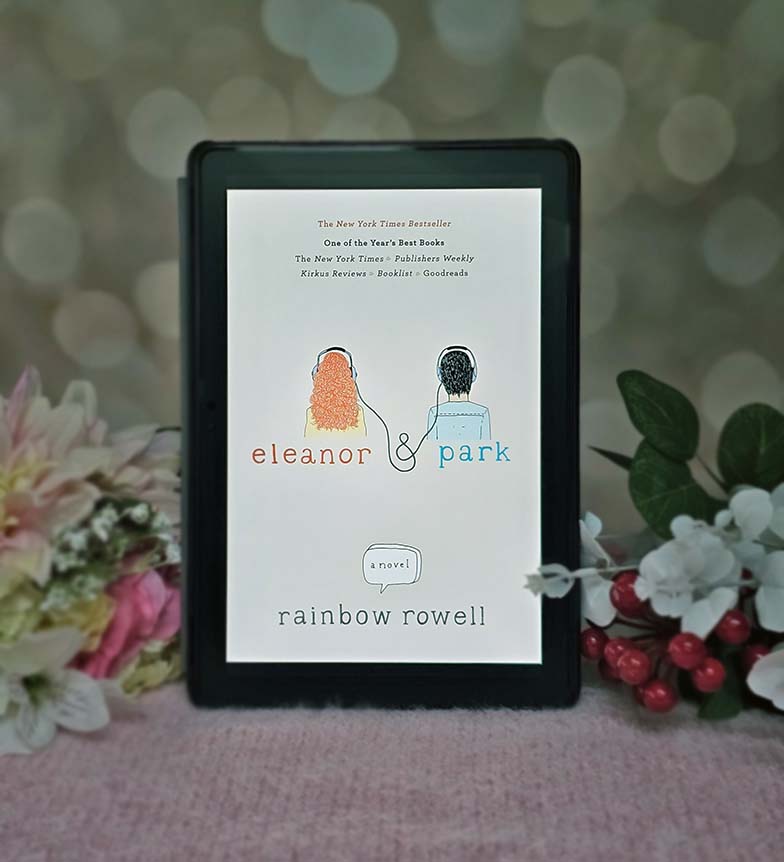
Eleanor & Park
by Rainbow Rowell
Rainbow Rowell's beloved YA novel about two misfit teenagers who fall in love on the school bus in 1986 Omaha. A tender, painful story about first love, abuse, racism, and finding someone who sees you - praised for representation but not without controversy.

Thirteen Reasons Why
by Jay Asher
Two weeks after high school sophomore Hannah Baker kills herself, a shoebox arrives at Clay Jensen's house containing seven cassette tapes she recorded before she died - one side per person who contributed to the decision, thirteen reasons in all, with instructions to listen, pass them on, and not break the chain or the second set held by a watchful classmate gets released to the world.
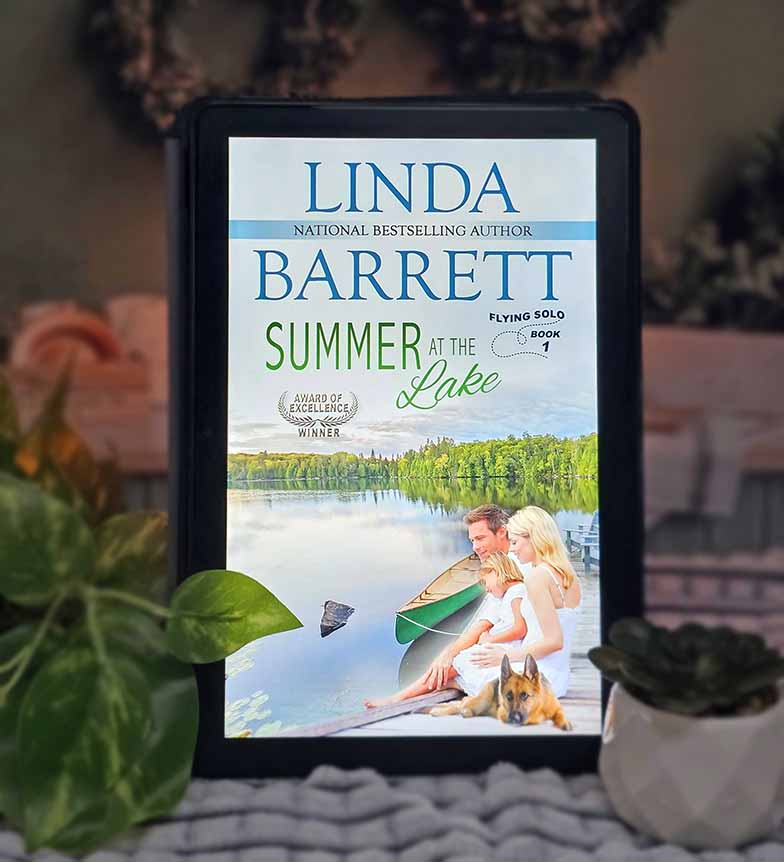
Summer at the Lake
by Linda Barrett
An NYPD veteran who lost a child during a hostage negotiation retreats to Morningstar Lake with his German Shepherd Quincy and his saxophone; a widow named Kristin McCarthy borrows her friend Marsha's Catskills cottage and brings her eleven-year-old daughter Ashley, a recent rape survivor who has stopped being able to be in her own house - and the music carries across the water in Linda Barrett's first Flying Solo novel.