
Thirteen Reasons Why
by Jay Asher
Two weeks after high school sophomore Hannah Baker kills herself, a shoebox arrives at Clay Jensen's house containing seven cassette tapes she recorded before she died - one side per person who contributed to the decision, thirteen reasons in all, with instructions to listen, pass them on, and not break the chain or the second set held by a watchful classmate gets released to the world.
Buy this book:
Spoiler Warning
This review may contain spoilers. Read at your own discretion if you haven't finished the book yet.
A Box of Cassette Tapes, Thirteen Reasons in Order, and a Listener Who Doesn't Know Yet Why He's One of Them
Clay Jensen comes home from school to find a shoebox on his porch with no return address. Inside are seven double-sided cassette tapes, numbered in dark blue nail polish. The first side, when he finds an old Walkman to play it on, is Hannah Baker - the classmate he had a crush on, the girl who killed herself two weeks ago, the girl whose locker is now a memorial in the hallway - explaining the rules. There are thirteen reasons she did what she did. Each tape side is one reason, named by name. Whoever is listening is on the list. Listen all the way through, then mail the box on to the next person whose tape comes after yours. Do not break the chain. A second set of these tapes exists, held by a person Hannah is not going to identify, and if the chain breaks, that second set goes public. Clay listens. Clay walks Hannah's map of their town as he listens, the locations marked on a folded sheet she included. Clay does not yet know which of the reasons he is.
Jay Asher's 2007 YA novel Thirteen Reasons Why is, structurally, one of the more thought-out conceits the genre has produced. Two voices share every chapter - Hannah on the tape, Clay walking through the present - and the dread builds because the reader, like Clay, knows what is coming and cannot stop it. A 4.5 reflects: a powerful, specific, well-built novel; a book that has, since the 2017 Netflix adaptation, become more controversial than its YA peers, in ways the post-Netflix conversation has earned; and one of the more unforgettable structural choices in contemporary YA.
The Tapes, the Map, the Walkman, and Tony
Asher's structural cleverness extends to the small mechanics. Clay does not own a cassette player; the Walkman he borrows from a classmate, without quite explaining why he needs it, becomes the device he carries through the entire book. The folded map Hannah included sends him to specific places - houses, parks, a peephole window, the school - as the relevant tape plays. Each location, when Clay arrives, makes the audio land harder. The fail-safe tape-holder turns out to be Tony, a quiet classmate who has been keeping a copy as Hannah's insurance policy and who has been watching Clay with patient, knowing concern since the box appeared on Clay's porch. The reader meets Tony piece by piece across the night, and his presence - the friend who already knows everything Clay is just learning - is one of the book's quieter formal accomplishments.
The Reasons, in Order
The thirteen accumulate the way Hannah keeps insisting they accumulate: not as one catastrophic thing but as a sequence in which each cruelty makes the next easier for the next person to commit. Justin Foley, on the first tape, is the boy Hannah kissed in middle school - a single, gentle moment he goes on to misrepresent in the locker room until the rumor reshapes Hannah's reputation in advance of high school. Alex Standall, the second reason, makes a "Hot or Not" list and ranks Hannah on it, which gives every boy in the school a permission slip to treat her as the body the list named. Jessica Davis, third, is the friend whose friendship Hannah lost to the rumor and whose anger she later wore. Tyler Down, fourth, is the yearbook photographer who took pictures of Hannah through her bedroom window. Courtney Crimsen, fifth, is the popular girl who pretended to be Hannah's friend and used her as cover for her own social maneuvering.
The middle reasons keep escalating. Marcus Cooley, on the sixth tape, comes to a date in a diner and gropes Hannah under the table. Zach Dempsey, the seventh, after Hannah turns him down, retaliates by stealing the encouraging notes classmates had been leaving for her - the small daily evidence that she mattered. Ryan Shaver, the eighth, takes a private poem of Hannah's and publishes it without permission in his magazine, where it becomes a thing classmates pass around and mock. Clay Jensen, the ninth - the only name on the list whose presence Hannah explicitly says is undeserved - is on the tapes because Hannah wants him to understand, even if he was not part of the harm, what was happening in the months when he could not figure out how to talk to her.
Justin Foley appears again at ten, this time for a different and worse reason: he stood by - or, depending on how the reader weighs the chapters, actively enabled - Bryce Walker raping Jessica at a party while she was unconscious, while Hannah hid in a closet and listened. Jenny Kurtz, the eleventh, is the cheerleader who knocked over a stop sign while Hannah was in the car with her, then refused to let Hannah call it in, and the missing stop sign was responsible for a later fatal accident in which a classmate died. Bryce Walker, the twelfth, is the predator who eventually rapes Hannah in a hot tub at a party - the assault she has been working her way toward saying out loud across the entire run of the tapes.
The thirteenth reason, the last tape, is the one that breaks the book.
Mr. Porter, the Last Tape, and the Help She Couldn't Get
The final tape is for Mr. Porter, the school's counsellor. Hannah's tape places him at the end of the list because he was, by her own framing, the last person who could have changed what she was about to do. She goes into his office. She tells him - with the difficulty a sixteen-year-old has in telling an adult anything she is not certain the adult will hear - that she has been sexually assaulted. Porter's response is one of the most quietly devastating scenes in YA fiction. He does not call it what it is. He suggests that she could press charges if she wanted, or she could move on. He does not push. He does not follow up. Hannah leaves. The book lets that scene sit on the page with the gravity it deserves, because what Asher is doing, structurally, is using the last reason to argue that the difference between Hannah getting through this week and Hannah not getting through this week was an adult paying attention well enough to catch what she was bringing in.
It is the rare YA novel that takes the failure of the help-seeking system seriously rather than treating "she didn't ask for help" as a closing absolution.
What the Book Does, and Where the Conversation Has Gone
The strengths are the structural conceit, Hannah's voice (bitter, angry, sad, occasionally darkly funny, refusing to be a sympathetic victim on anyone else's terms), the unflinching choice to name the people responsible by name, the dual-timeline intercutting, and Asher's willingness to let a YA novel sit with the failures - of friends, of institutions, of the counselling office - that allow these outcomes to happen. The reservations have grown louder since the 2017 Netflix adaptation: that the book's tape-as-revenge frame can read as posthumously empowering in ways suicide-prevention experts argue is dangerous; that Hannah's mental illness is mostly absent from the text as a clinical reality; that the cumulative-cruelty argument the book is making, while emotionally true, can be heard by vulnerable readers as a permission rather than a warning. Those reservations are real. The American Foundation for Suicide Prevention has, post-Netflix, formally argued the work is contraindicated for at-risk teenage readers without adult support. That is not a reason to refuse the book. It is a reason to read it carefully, with the awareness of what it is doing and what it is not doing.
A 4.5 reflects: a remarkable structural accomplishment, a book that has done real work in the conversation about teen mental health and adult responsibility, and a YA title that earned its cultural weight even as the conversation around its risks has appropriately deepened. Half a star comes off for the same reasons many readers have flagged: the absence of explicit mental-illness framing, and the residual revenge-fantasy structure that Hannah's narration cannot quite shake.
Rating: 4.5/5 ⭐
Perfect for: Mature YA readers, educators and parents wanting a starting point for difficult conversations, anyone interested in YA that takes structural risks, readers who want a book about institutional and interpersonal failure rather than about heroic recovery.
Skip if: You are currently struggling with suicidal ideation (please read with support if you do read it), you bounce off dual-timeline narration, or you would rather not engage with a book the post-Netflix conversation has rightly complicated.
You Might Also Like
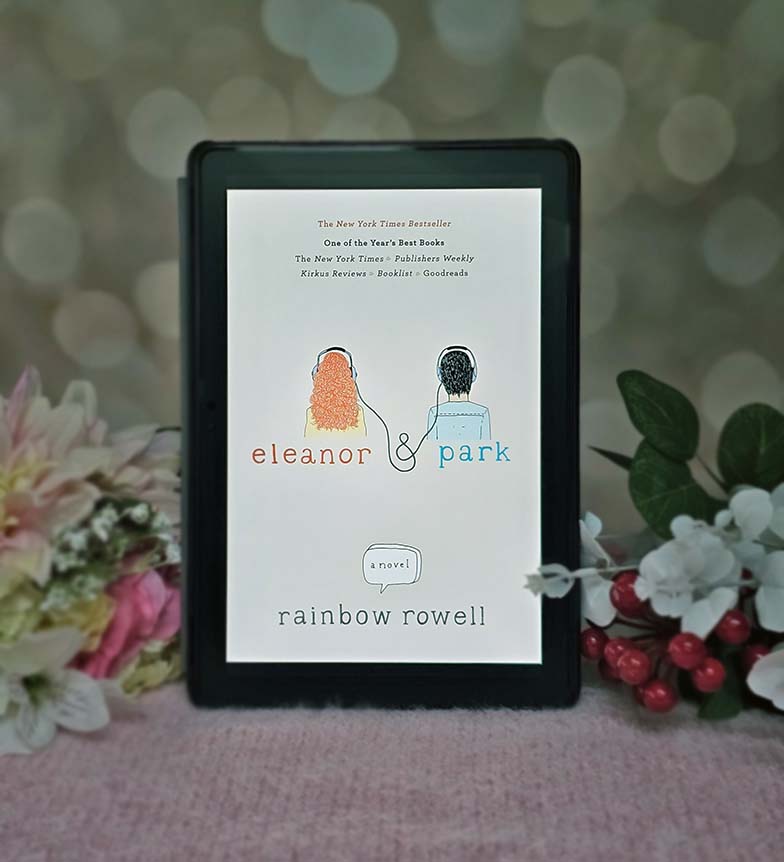
Eleanor & Park
by Rainbow Rowell
Rainbow Rowell's beloved YA novel about two misfit teenagers who fall in love on the school bus in 1986 Omaha. A tender, painful story about first love, abuse, racism, and finding someone who sees you - praised for representation but not without controversy.
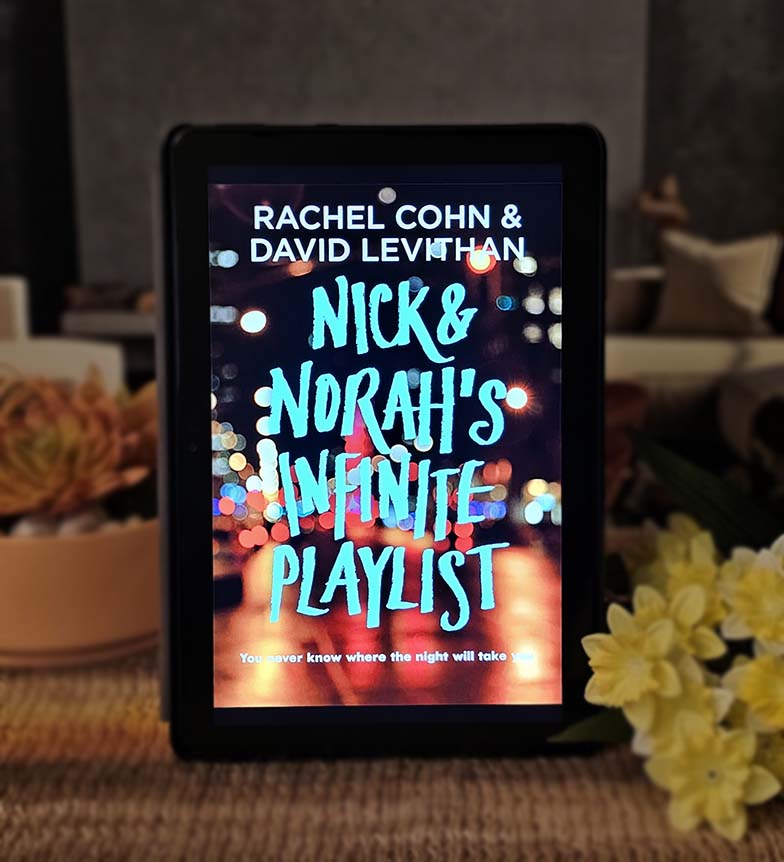
Nick & Norah's Infinite Playlist
by Rachel Cohn, David Levithan
Nick - the only straight member of a New York queercore band, working through his breakup with the complicated Tris by making her mix CDs she throws away - is at a Lower East Side club for a show when he sees Tris walk in with another guy, panics, and asks the nearest girl to pretend to be his girlfriend for five minutes; the girl turns out to be Norah, daughter of a well-known music producer, a classmate of Tris's at the Convent of the Sacred Heart, and the person who has been retrieving Nick's discarded mix CDs from Tris's trash and loving them without knowing he made them; the kiss they share to sell the cover is the first event in a single Manhattan night that will involve Norah's drunk friend Caroline, Norah's complicated ex Tal, and a citywide search for the secret late-night show of their favorite band, Where's Fluffy. Rachel Cohn and David Levithan's 2006 YA collaboration, with Cohn writing Norah's chapters and Levithan writing Nick's, told in alternating first-person POV over the course of a single night.
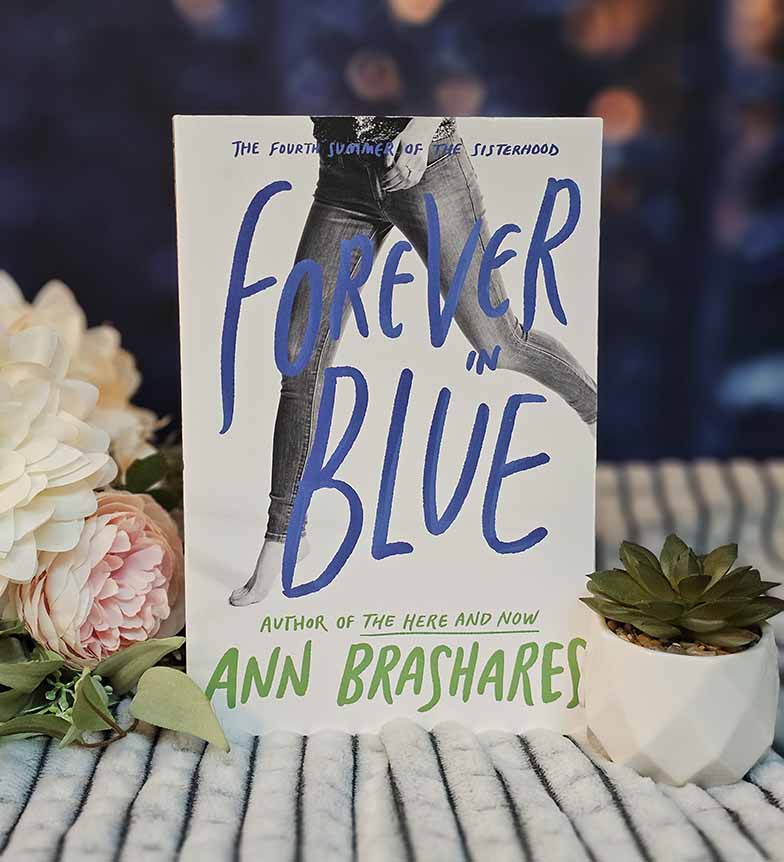
Forever in Blue: The Fourth Summer of the Sisterhood
by Ann Brashares
The summer after freshman year of college - the friends are scattered, changed, and struggling. The pants bring them together as they navigate who they're becoming.