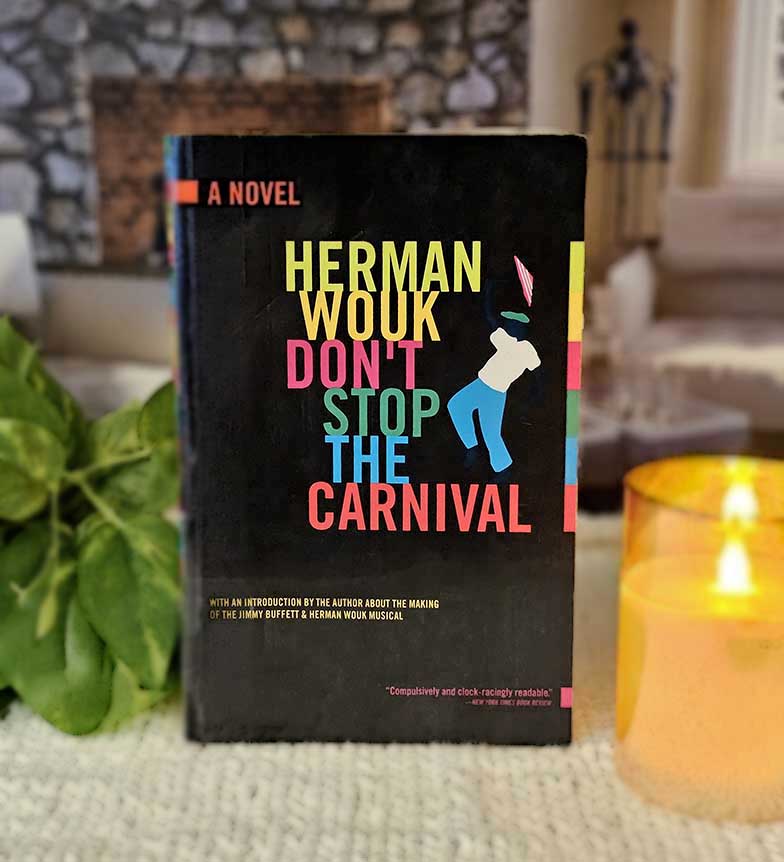
Don't Stop the Carnival
by Herman Wouk
Norman Paperman - a middle-aged Broadway press agent who has just had a heart attack and decided he is done with New York - flies to the fictional Caribbean island of Amerigo (which the people who live there still call by its old British name, Kinja) with his millionaire friend Lester Atlas, buys a faltering resort called the Gull Reef Club, leaves his wife Henny and daughter Hazel back home while he tries to make a go of it, nearly drowns on his first day and is rescued by a Navy frogman named Bob Cohn, takes up with a former actress named Iris Tramm who lives at the club, watches the hotel's water and electrical systems fail in sequence, watches Atlas fire his irreplaceable handyman Hippolyte while he is briefly off-island, and ends the novel agreeing with Henny to sell the hotel and go home. Herman Wouk's 1965 comic novel, drawn from the six years he and his wife actually spent running a small hotel in St. Thomas in the U.S. Virgin Islands.
Buy this book:
Spoiler Warning
This review may contain spoilers. Read at your own discretion if you haven't finished the book yet.
A Heart Attack, A Hotel, And The Year Of Caribbean Disasters Herman Wouk Already Lived Through Before He Wrote The Book
The first thing to know about Don't Stop the Carnival is that Herman Wouk - the same Herman Wouk who wrote The Caine Mutiny and The Winds of War - actually lived this. From 1958 to 1964 Wouk and his wife lived in Saint Thomas in the U.S. Virgin Islands and managed a small hotel. The fictional Gull Reef Club is modeled on the Royal Mail Inn on Hassel Island in Charlotte Amalie Harbour. The fictional island of Amerigo - which everybody who lives there still calls by its old British name, Kinja - is Saint Thomas. Almost every catastrophe the novel inflicts on its protagonist is a catastrophe Wouk appears to have either suffered or watched a friend suffer. The book is a comic novel. It is also, in passing, a fairly precise piece of revenge writing from a man who finally got off the island and sat down at his desk to write what he had seen.
The protagonist is Norman Paperman, a middle-aged Broadway press agent who, in the opening movement of the novel, has a heart attack and decides on the spot that he is finished with New York. His millionaire friend Lester Atlas - a comic tycoon who never met an angle he could not play - takes Paperman down to the Caribbean to look at a resort called the Gull Reef Club. Paperman, in the impulse purchase of his life, buys it. His wife Henny and daughter Hazel stay back home in New York. The novel is what happens next.
A 4.0 reflects: a Wouk comic novel that earns its reputation as one of the better disaster comedies of the postwar American canon; a real-time accumulation of the kind of mechanical, bureaucratic, and human failures anyone who has tried to run anything in a place that does not work the way the manuals say it does will recognize; a marital and moral subplot that takes the book deeper than its premise; and reservations about 1965 period content and the colonial-tourist framing any honest reading has to engage with.
The Disasters, In Approximate Order
On Paperman's first day on the property he nearly drowns while scuba diving. He is rescued by a Navy frogman named Bob Cohn. From there, the book methodically catalogues the things that fail. The water system. The electrical system. The plumbing. Ants. An earthquake. The bureaucracy of permits and licenses and inspections that operates on a logic Paperman does not initially understand and never fully masters. The staff who run on their own time. The supplies that never arrive on the schedule the New York mind expects them to. Wouk does not exaggerate any of it. He accumulates. The comedy is in the way one disaster trips into the next, the way every successful evening is the bookend to a near-miss earlier in the day, and the way Paperman, who is competent in his New York life, keeps discovering that none of his competence translates.
The most quietly devastating subplot is Hippolyte Lamartine. Hippolyte is the handyman who, when he is on the property, can fix anything that is wrong with it - and most of what is wrong with the Gull Reef Club is wrong with it constantly. He is also a man with his own history, his own logic, and an unsettling quality that Lester Atlas, while Paperman is briefly off the island, decides is reason enough to fire him. Paperman returns to find his most indispensable employee gone, fired by his absentee partner, and discovers that the loss of Hippolyte is the loss of the hotel's ability to function. The Hippolyte firing is one of the moments the book stops being purely funny.
Iris Tramm
The other thing that complicates the simple comic frame is Iris Tramm, a former actress who lives at the club, who Paperman falls into an affair with despite genuinely loving Henny, and whose presence in the book quietly reframes the whole hotel project as a midlife crisis Paperman has been running away to rather than a business he has been running toward. Wouk does not flinch on the affair. He also does not let it stay a comic interlude. The relationship has its own arc, and that arc ends in a way - involving a car, the night, and a dog Iris has gone out to look for - that the novel does not soften.
By the time Paperman and Henny make the decision to sell the Gull Reef Club and go home to New York, the book has earned its title in two senses. The carnival of the actual island, which the book renders with affection and texture, does not stop for anyone's New York problems. And the carnival inside Paperman's head - the fantasy of escape, of reinvention, of the small clean life the small clean Caribbean island will let him live - does not stop either, even after the evidence that it was the wrong fantasy is overwhelming. He sells the hotel and goes home, knowing he could not run it, knowing why, and knowing he would probably do it again.
What Has And Hasn't Aged
The book was published in 1965 and reads as a 1965 book. The American expatriate frame is exactly the frame an American expatriate of that era would write in: affectionate about the island, sharp on his own kind, and frequently more interested in the white Americans on the property than in the Black and Caribbean characters who keep the property running. Wouk renders his local characters with care relative to a lot of his contemporaries and with the limitations of his moment relative to a contemporary reader. The gender writing has dated. The tourist-economy framing has dated. The cigarette-smoke pace of the New York scenes has dated in the way that postwar male-midlife-crisis writing generally has.
What has not dated is the central observation: that the white-collar American fantasy of buying paradise is a fantasy at the expense of the place being sold as paradise, and that the place itself will respond to the purchase by being exactly itself - which the buyer was not prepared for, because he was not actually buying a place, he was buying an escape from himself. The book is funny because Wouk had the structural patience to let the joke be the accumulation rather than any single line. It is moving because, by the end, Paperman knows.
Why a 4
The strengths: a comic engine that runs on patient accumulation rather than punchlines, an autobiographical specificity that elevates the catastrophe inventory beyond the "running a hotel in the islands is hard" cliche, a Hippolyte subplot that adds moral weight without breaking the comic register, an Iris subplot that takes the book to a darker register and survives the trip, and a Wouk-grade closing arc that knows what the book has been about all along.
The reservations: 1965 attitudes about gender, race, and Caribbean labor that any contemporary reader has to read with the historical apparatus on; an Atlas figure who occasionally feels closer to caricature than character; and a length, at four hundred-plus pages, that not every contemporary reader will give a postwar comedy of midlife crisis regardless of how well it earns its run-time.
A 4.0 means: a postwar American comic novel that has outlived most of its peers, that genuinely is funny, and that has the moral patience of the better Wouk. Jimmy Buffett liked it enough to make a 1997 album out of it, which is its own kind of canonical endorsement for a book about the gap between paradise and the postcard.
Rating: 4.0/5 ⭐
Perfect for: Anyone who has fantasized about running away to paradise, readers who have lived or worked in the Caribbean and will recognize every disaster, fans of midcentury American comic novels with a moral underside, Jimmy-Buffett-album-curious readers wanting the source material.
Skip if: You are not willing to read 1965 expatriate-American writing about the Caribbean with the historical apparatus on, you find slow-accumulation comedy frustrating, or you want a book about island life from a Caribbean rather than a New York perspective.
You Might Also Like
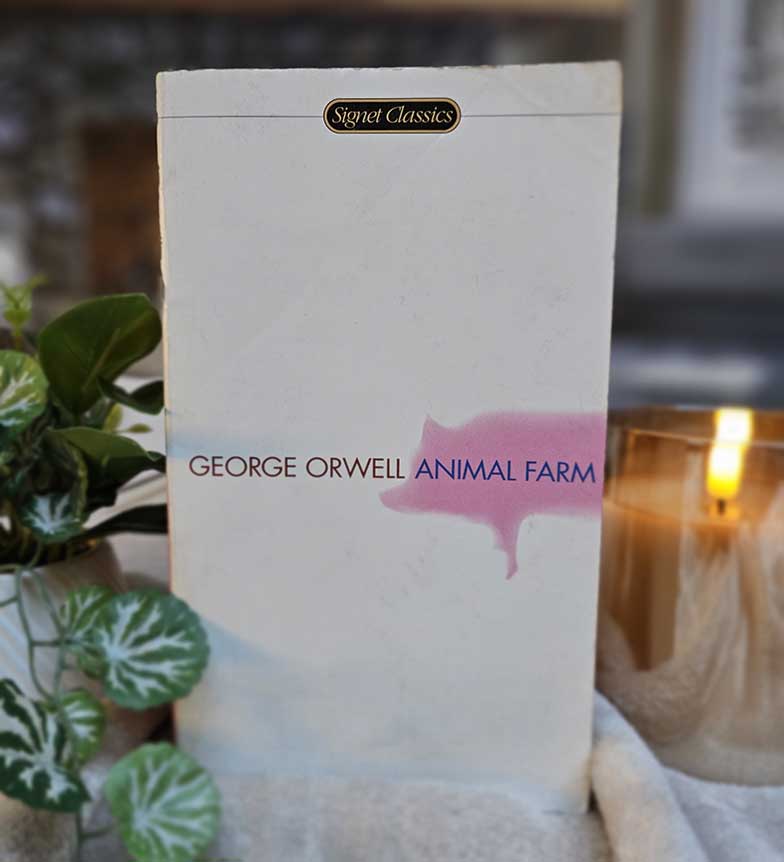
Animal Farm
by George Orwell
George Orwell's 1945 fable: the animals of Manor Farm, inspired by an old prize boar named Major, rise up and drive out the drunk Mr. Jones, paint seven commandments on the barn wall, and over the next several years watch as two pigs - the idealist Snowball and the schemer Napoleon - turn the revolution into exactly the regime it was supposed to replace.
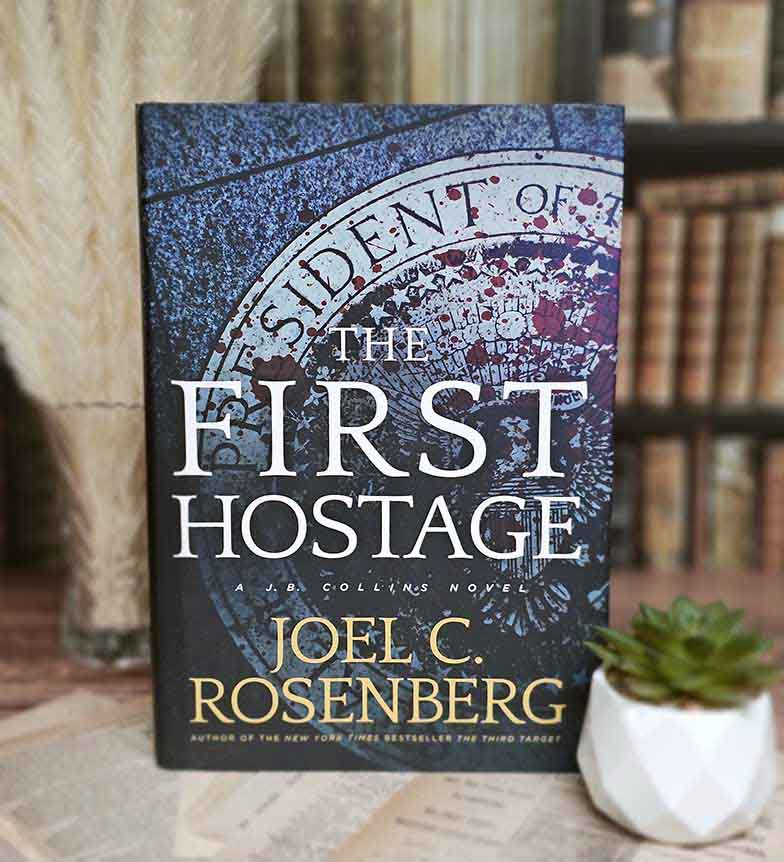
The First Hostage
by Joel C. Rosenberg
Joel C. Rosenberg's second J.B. Collins thriller picks up seconds after the Amman peace-summit massacre that ended The Third Target: the King of Jordan is wounded, the leaders of Israel and Palestine are critically hurt, and the President of the United States is missing and presumed captured by ISIS. New York Times correspondent J.B. Collins, the only Western journalist on the ground when the wave hit, spends the next four hundred and sixty pages helping the Jordanians, the Mossad, and the Secret Service try to find Harrison Taylor before Abu Khalif puts him on camera with a sword.

Big Little Lies
by Liane Moriarty
Liane Moriarty's 2014 novel about three mothers at a Sydney kindergarten - Madeline, Celeste, and Jane - whose first school year together is structured around the countdown to a Trivia Night that ends with somebody dead on the pavement, and around the much smaller and much larger lies the rest of the parent community has been telling itself the whole time. Domestic-suspense with actual satire and an actual position on what it is taking on.