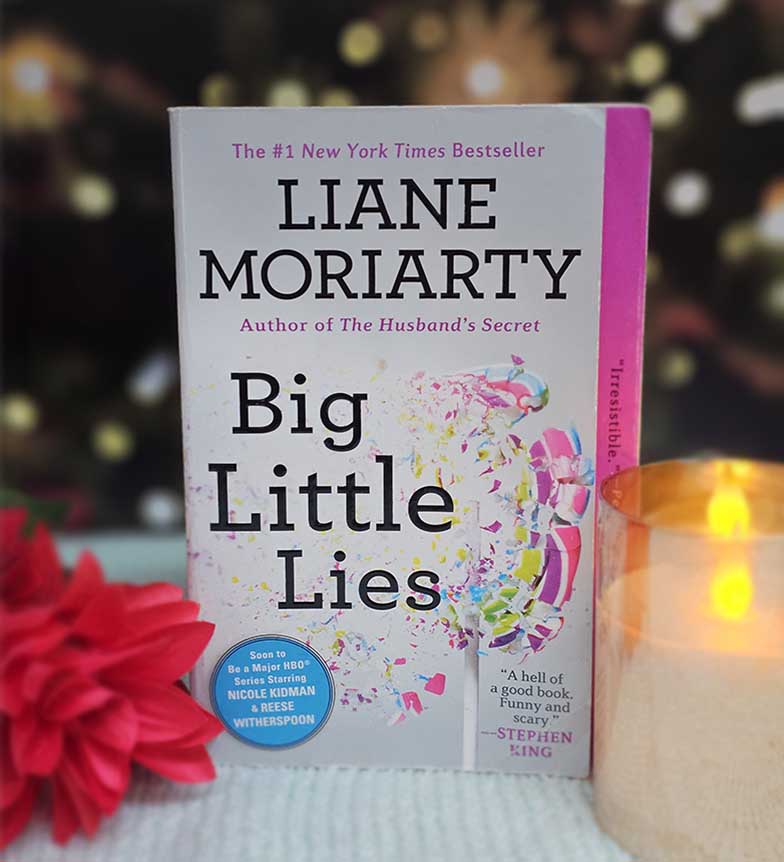
Big Little Lies
by Liane Moriarty
Liane Moriarty's 2014 novel about three mothers at a Sydney kindergarten - Madeline, Celeste, and Jane - whose first school year together is structured around the countdown to a Trivia Night that ends with somebody dead on the pavement, and around the much smaller and much larger lies the rest of the parent community has been telling itself the whole time. Domestic-suspense with actual satire and an actual position on what it is taking on.
Buy this book:
Spoiler Warning
This review may contain spoilers. Read at your own discretion if you haven't finished the book yet.
Pirriwee Public Kindergarten, the Trivia Night, and the Three Mothers Whose Year Is Building to a Body on the Pavement
The structural trick Liane Moriarty pulls in Big Little Lies is announced on page one: a person has fallen, or been pushed, from the balcony of a Pirriwee Public School trivia-night fundraiser, and the rest of the four-hundred-and-sixty pages is the school year that led to it. You do not know who fell. You do not know who pushed. You do not even know, for a while, whether the death was the point of the evening or an interruption of it. The book runs as a roughly six-month countdown - chapters dated by weeks-to-trivia-night - and is interleaved with short transcript-style fragments from other parents, faculty, and witnesses being interviewed by police after the fact. Those fragments form a sort of Greek chorus of contradictory hearsay: the music teacher thinks one thing, Thea-the-French-manicure-mum thinks another, the principal is being diplomatic, the kindergarten dads who barely know any of these women have very confident theories. The reader is doing two jobs at once - reading the year unfolding and reading the community's after-the-fact mythology about it - and the gap between those two records is where Moriarty does her sharpest work.
The three women whose year this is are Madeline Mackenzie, Celeste Wright, and Jane Chapman, all mothers of kindergarteners starting at Pirriwee Public School on Sydney's Northern Beaches. A 4.0 reflects: a commercial novel that is also a real one, with three protagonists who are differentiated at the level of voice and not just situation; a domestic-abuse storyline that is handled with more care and specificity than the genre usually grants it; a satirical eye for school-parent politics that is funny without being cheap; and one real reservation about how neatly the climax resolves the threads it spent five hundred pages tangling.
Three Mothers, One School Year, the Cast Around Them
Madeline is the engine of the book's social comedy. She is small, sharp, dramatic, married to Ed (warm, patient, slightly besotted) and mother to seven-year-old Fred and five-year-old Chloe, who is starting kindergarten. She also has a teenage daughter, Abigail, from her first marriage to Nathan, who walked out when Abigail was a baby and has spent the years since reconstituting himself as a calmer, more enlightened version of the man he was - now married to Bonnie, a younger yoga teacher who serves herbal tea and speaks softly and is, in Madeline's view, an unbearable cosmic insult. Bonnie and Nathan have a daughter, Skye, who is - of course, because the universe enjoys this kind of thing - in Chloe's kindergarten class. Madeline spends the school year metabolizing the indignity of having to do drop-off in the same playground as her ex-husband's new wife while Abigail starts gravitating toward Bonnie's vegan, mindful household and away from her mother's louder one. The Madeline material is where the book is most overtly funny, and Moriarty earns the comedy by keeping Madeline genuinely sympathetic - her impulsiveness is treated as a real trait with real costs, not as a sitcom tic.
Celeste is the apparent fairy tale and the actual horror. She is beautiful in a way that stops conversations, married to Perry Wright - rich, charming, frequently traveling for work, a man who buys her jewelry and books expensive holidays and openly adores her - and mother to four-year-old twin boys, Max and Josh. The rest of the school community looks at the Wrights and sees the marriage they wish they had. The reader is given, in fragments, the version Celeste is actually living in: Perry hits her. Perry has been hitting her since before the twins were born. He hits her about specific things, then he hits her about nothing, then he is sorry, then he books them a trip somewhere, then he hits her again. Moriarty does this material with a procedural specificity that the rest of the genre rarely manages - the bruises are in particular places, the cover stories are tracked, the children's awareness is mapped on a curve from oblivious to not, and Celeste's interior is rendered as the interior of a woman who is highly intelligent, completely aware of what is happening to her, and still unable to imagine the logistics of leaving. Her sessions with a counselor named Susi - introduced as a kind of pretend-couples therapy that Celeste is doing alone - are the closest thing the book has to a structural spine, and they are the chapters where Moriarty's argument about how domestic abuse actually works comes through cleanest.
Jane is the third mother and the youngest of the three by a decade. She arrives in Pirriwee with her five-year-old son Ziggy, no partner, no family money, and a story she has not told anyone about how Ziggy was conceived. The book reveals it in pieces: a one-night encounter at nineteen with a man who gave his name as Saxon Banks, which started consensual and turned, partway through, into something that was not, and which Jane has been carrying alone for the entire intervening half-decade. Ziggy is the result. Jane has not gone to the police, has not told her parents the truth, and has organized her body and her life around making herself as small and unsexual as possible since. Her arrival in Pirriwee is supposed to be a fresh start. It is not.
The Bullying Accusation, the Petition, and the Engine of the School-Year Plot
The detonator for the year is an incident on orientation day. The teacher asks the kindergarteners to introduce themselves; one of them, Renata Klein's daughter Amabella, comes back from a corner of the room with red marks around her neck and accuses Ziggy of having choked her. Ziggy, asked, says he did not do it. Jane believes her son. Renata - high-powered, wealthy, terrifying, the kind of mother whose calendar is run by a personal assistant - does not. The accusation hardens into a feud. Through the school year, Amabella is bullied repeatedly: pinched, bitten, marked. Each incident gets traced back to Ziggy by the parent rumor mill, and a faction of the school's mothers, led by Renata, eventually circulates a petition demanding that Ziggy be suspended. The petition is the kind of organized social violence that Moriarty is unusually good at rendering - politely worded, copied to the principal, signed by people who would describe themselves as kind. Jane has to walk her son into the playground every morning past women who have signed a document arguing for his expulsion.
The actual identity of Amabella's bully is one of the book's reveals, and Moriarty seeds it competently. Late in the school year, Amabella finally tells Celeste - not her own mother, not the principal, but Celeste - who the bully is. It is Max. Celeste's son. The boy who has been watching his father hit his mother for as long as he has been old enough to watch anything, and who has been quietly replicating what he has been shown on the smallest classmate he can find. Celeste's recognition - of what her staying has done to her child, of what her staying has done to another child - is the moment her plan to leave Perry stops being a hypothetical that lives in Susi's office and starts being a logistical document with apartment listings on it.
The Trivia Night
Moriarty plays fair with the countdown. The trivia night arrives. It is an Audrey-and-Elvis costume fundraiser; the parking lot is full of identical pompadours and beehives; the wine is the kind of wine these fundraisers always have. Several plotlines collide on the same balcony at the same moment. Jane sees Perry for the first time and recognizes him - not as Saxon Banks, but as a man with Saxon Banks's face, because Perry and Saxon are cousins. Perry was not her rapist. Saxon was. But Jane's recognition lands publicly enough that Celeste understands what she is looking at, and the conversation that follows - in which Celeste tells Jane out loud what Perry's family is, what Perry himself has been doing to her, and what their son has been doing to Amabella - is the conversation Celeste has been trying not to have for years. Perry overhears. Perry, in front of the school community, in costume, on the balcony, hits Celeste. And Bonnie - quiet vegan Bonnie, Madeline's sworn enemy, who has been carrying her own childhood-witness-to-her-father's-abuse history for the entire book without anyone in the present narrative knowing about it - is the person closest to him, the person who sees it happen, and the person whose body moves before her mind does. She pushes him. He goes over.
The cover-up the women improvise on the balcony - all of them agreeing, in the first stunned minutes, to tell the police that Perry simply fell - holds for about a day. Bonnie turns herself in. She receives a non-custodial sentence (community service, in the order of hundreds of hours). Celeste, in the epilogue, has retrained as a family-law attorney and is speaking publicly about her marriage. The school community's chorus-of-witnesses fragments resolve into the recognition that none of them had any idea what was happening in the Wright house, the Chapman flat, or behind Bonnie's herbal tea.
Where the Book Earns the 4 and Where It Doesn't Quite Earn a 5
The strengths are real and they are why the book has the cultural life it has had. The structural conceit - countdown plus witness chorus - works mechanically and thematically; the parent-testimony interludes are doing both suspense work and satirical work at the same time. The three protagonists are differentiated in voice and not just in plot function; Madeline is funny, Celeste is interior and frightened, Jane is watchful and young, and the rotating close-third lets each of them have the kind of texture the genre often skimps on. The domestic-abuse material is the part of the book that elevates it. Celeste's chapters do not romanticize Perry, do not punish Celeste for staying, do not pretend that leaving is a single decision rather than a logistical project that takes months and a lawyer and a plan for the children, and do not pretend that watching the abuse has not already done its work on Max. The Susi sessions in particular are the kind of slow, careful, specific writing that the commercial-fiction shelf does not always make room for. The bullying plot pays off honestly: the school's most marginalized mother is accused, the rumor mill commits to its accusation, and the real answer turns out to indict not the family that everyone was suspicious of but the family that everyone idealized. Moriarty's argument - that the version of family life that looks the cleanest from outside is the one nobody is checking on - is the book's actual thesis, and the bullying plot is its second proof after the Wright marriage.
The reservations. The climactic balcony scene is doing several plot jobs at once, and a couple of them are doing the work of coincidence rather than the work of consequence: Jane recognizing Perry as Saxon's cousin at exactly the same fundraiser where Celeste finally tells the truth out loud, with Bonnie - who happens to carry the exact childhood history that would make her push - standing in the exact right spot, is more convenient than the rest of the book has trained the reader to expect. Several reviewers have flagged this, and the criticism is fair. The tonal oscillation between the school-parent comedy and the abuse storyline mostly works but occasionally jars - a chapter that has just rendered Celeste's bruises in clinical detail will hand off to a chapter about Madeline's ongoing rage at a coffee shop owner who has banned Tim Tams. Most of the time Moriarty keeps the temperature controlled; once or twice the gear-change is audible.
A 4.0 means: one of the better domestic-suspense novels of the 2010s, the rare commercial book that takes its own serious material seriously, and a book that has earned its book-club ubiquity rather than coasted on it. If the HBO adaptation is your only point of contact, the book is worth the eight hours on its own terms - Bonnie's interiority in particular is built out on the page in a way the series did not have time for, and the Pirriwee parent chorus reads as a different and sharper instrument than the visual version.
Rating: 4.0/5 ⭐
Perfect for: Domestic-suspense readers who want a book that has an actual position on what it is taking on, book clubs (the discussion writes itself), Liane Moriarty newcomers, and readers who liked the HBO adaptation enough to want the longer, denser, Jane-and-Bonnie-with-more-room version.
Skip if: Detailed and recurring depictions of intimate-partner violence are a hard limit (Celeste's chapters do not look away), you find structural coincidence at the climax disqualifying, or you cannot tolerate tonal oscillation between comedy and serious-issue material in the same chapter.
You Might Also Like

Sisterhood Everlasting
by Ann Brashares
Ten years after college, the Sisterhood reunites in Greece for what should be a joyful reunion. Then tragedy strikes, changing everything forever.
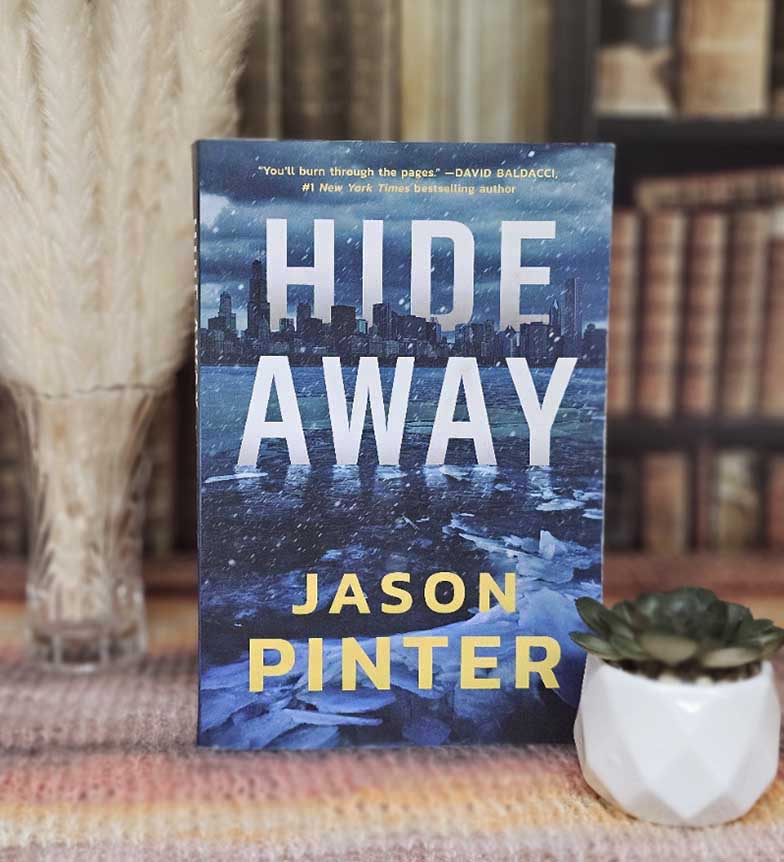
Hide Away
by Jason Pinter
A gripping thriller about a woman who changed her identity to protect her children after her husband's murder. When her carefully constructed new life begins to unravel, Rachel Marin must confront the past she's been hiding from.

Somebody's Daughter
by Rochelle B. Weinstein
On the night of her twin daughters' fifteenth birthday party in Miami Beach, Emma Ross's life cracks open: a private, humiliating moment of her quieter twin Zoe ends up online, the video goes viral, and the public scandal that follows surfaces a set of Emma's own old secrets that her marriage and her family were not built to hold.