
The Spender's Guide to Debt-Free Living
by Anna Newell Jones
Anna Newell Jones, the creator of the AndThenWeSaved.com blog, wiped out $23,605.10 of personal debt in fifteen months by going on what she calls a Spending Fast - a near-total freeze on non-essential spending - and turned the method into this 2016 personal-finance book aimed not at minimalists or budget-spreadsheet people but at the audience the genre usually scolds: spenders.
Buy this book:
Spoiler Warning
This review may contain spoilers. Read at your own discretion if you haven't finished the book yet.
Finance Advice From a Fellow Spender, by Way of $23,605.10 in Fifteen Months
Anna Newell Jones is the kind of person personal-finance books are usually written at, not for. She liked shopping. She liked dinners out. She liked treating herself. She also, by her own account, found herself in the kind of debt that the standard envelope-method, cut-up-your-credit-cards, drink-water-not-lattes prescriptions weren't going to fix - because the prescriptions were written by people who didn't understand why she was spending in the first place. So she ran her own experiment. She would freeze every non-essential dollar - everything beyond housing, utilities, basic food, and existing debt payments - until the debt was gone. She started a blog called AndThenWeSaved.com to keep herself accountable. Fifteen months later, she had paid off $23,605.10 in personal debt to the cent. The blog had become a small audience-magnet. The 2016 book, The Spender's Guide to Debt-Free Living: How a Spending Fast Helped Me Get from Broke to Badass in Record Time, is the long-form expansion of the method.
A 3.5 reflects: a warmly-written, structurally useful, psychologically smart book for exactly the audience it's aimed at, with a few real reservations about the underlying economic assumptions and a closing-third drift into cheerleader register that some readers (including me, in places) found a touch much.
What the Spending Fast Actually Is
The method is in the name. For a defined period - Jones did fifteen months, but she designs the book to scale to whatever size of debt-and-time the reader is working with - you commit to spending only on a pre-agreed list of needs. The needs are the fixed monthly expenses (rent or mortgage, utilities, insurance, the minimum payments on existing debts) plus the absolute essentials a person requires to remain a functional human being (basic groceries, prescriptions, transportation to work, etc.). Everything else is on hold. New clothes are out. Coffees out are out. Gym memberships, streaming subscriptions, gifts, the small ambient hemorrhage of digital impulse-buys - all of it gets paused until the debt is paid off.
What lifts this above the standard "stop spending so much" advice is that Jones takes seriously the question of what counts as a need for you specifically. She defines needs as "the fixed expenses you are required to pay each month, as well as the essential items or activities that make you a happy, healthy, and unique individual" - which leaves explicit room for the running shoes a runner actually uses, the books a reader actually reads, the small specific things that keep a person sane during a financial overhaul. The method is austere but not punitive. The book sets it up that way on purpose.
The Psychological Half, Which Is Why the Book Works
The personal-finance shelf is heavy on technique - spreadsheets, debt-snowball orderings, interest-rate optimization. It is light on the question of why people who already know all of that don't do any of it anyway. Jones puts the why at the center of the book. The chapters on identifying the emotional triggers behind your spending, on handling social situations when everyone else is ordering another round, on the "shopper's high" and what to substitute for it, on slip-ups and how to recommit without flushing the whole project - this is the part of the book a spender actually needs and the part most personal-finance books skip. The notes I kept (preserved at the top of this entry) are mostly from these chapters, because that is where Jones earns her audience.
She is also honest about the cost. The Spending Fast was hard. There were months of resentment. Friendships strained around her inability to do the going-out things her friends were doing. Family events got awkward. The book does not pretend it is easy or fun; the book argues, persuasively, that it is worth it for a specific class of debt-and-spender combination, and that the difficulty is not a bug.
What the Book Is Not, and Where the Critique Sits
The structural assumption underneath the Spending Fast is that the reader's income covers the necessities and the existing debt minimums with enough cushion that cutting non-essentials accelerates the payoff. That assumption holds for a meaningful slice of the lifestyle-debt audience the book is actually aimed at. It does not hold for readers whose debt comes from medical bills, from insufficient wages, from job loss - readers for whom there is no non-essential spending to cut because there was no slack to begin with. The book gestures at side-hustles and extra-income strategies, but it does not deeply engage with structural economic distress, and a reader carrying medical debt on a poverty wage will need a different kind of book.
The other reservation is one professional financial advisors have made about specific pieces of Jones's advice - in particular, the way the Spending Fast prioritizes psychological wins over mathematical optimization at points. The reader who wants to maximize interest-rate efficiency is going to find passages where Jones's structure leaves money on the table compared to what an optimal debt-payoff calculator would recommend. That is, in fairness, the trade Jones is consciously making: she is writing for the human who has not been able to follow optimal mathematical advice, and is therefore willing to give up some efficiency for the behavioral momentum the method generates. Whether that's the right trade for you is a question you have to answer honestly.
Where I Landed
The strengths: the willingness to address spenders on their own terms; the psychological infrastructure of the chapters on triggers, social situations, and reintegration after the debt is paid off; Jones's voice, which is warm, self-effacing, and sounds like a friend talking rather than a finance professional lecturing. The reservations: the prose can tip into cheerleader register, with more exclamation points than the material strictly requires; the income-assumption ceiling on who the method works for; the financial-advisor critique that some specific pieces of advice optimize for behavior over math.
A 3.5 means: a useful book for a specific audience, recommended with the understanding of who it's for and who it isn't, and worth the four hours it takes to read if you recognize yourself in the spender profile Jones is writing toward.
Rating: 3.5/5 ⭐
Perfect for: Self-identified spenders carrying lifestyle debt, readers who need the emotional component of money handled rather than just the spreadsheet, anyone who has bounced off the standard envelope-method finance books, people who want a relatable voice rather than a credentialed lecture.
Skip if: Your debt comes from medical bills or insufficient income rather than discretionary spending, you want optimal mathematical strategy over behavioral coaching, or cheerleader-register prose grates on you.
My Notes & Takeaways
Key Insights
-
Finding Your True Source of Happiness
"Once you have a clear idea of the times that you've felt truly alive, you'll be able to see that it's those feelings you're after, not the new shirt or boots that you once thought led you to happiness. You'll be able to achieve these positive emotions without spending a lot, and without accumulating more and more stuff in an effort to experience those feelings. You'll feel much better about embarking on the Spending Fast when you realize that you don't need your attachment to spending nearly as much as you thought you did. Finding other ways to mimic that shopper's high will undoubtedly help you in your Spending Fast, because you'll be able to replace the spending with another activity. This step is very important in the getting-out-of-debt process."
-
Wants vs. Needs
"Not being able to differentiate between wants and needs is one of the biggest reasons people aren't able to direct more money toward paying down their debt."
"Needs are defined as 'the fixed expenses you are required to pay each month, as well as the essential items or activities that make you a happy, healthy, and unique individual.'"
-
Money's Impact on Life
"Money touches every area of our lives. People like to say that money doesn't matter and money isn't the most important thing, but we all know that your relationship with money has a huge impact on the quality of your life."
You Might Also Like

The Year of Less
by Cait Flanders
A deeply personal memoir about one woman's year-long shopping ban and her journey toward mindful consumption and intentional living.
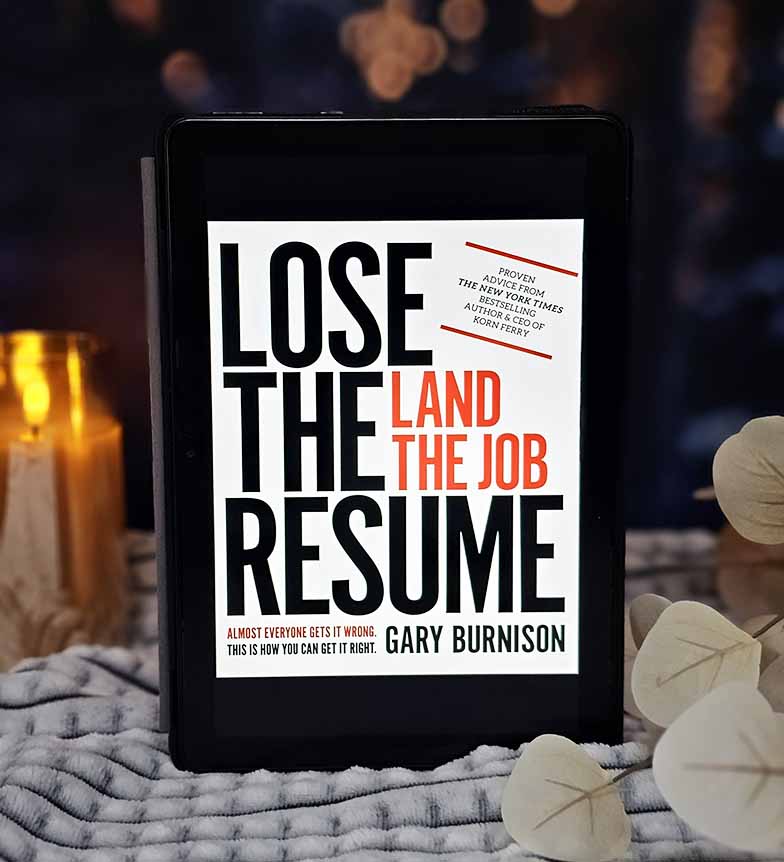
Lose the Resume, Land the Job
by Gary Burnison
A modern approach to job searching that emphasizes relationship-building and personal storytelling over traditional resume-focused strategies.
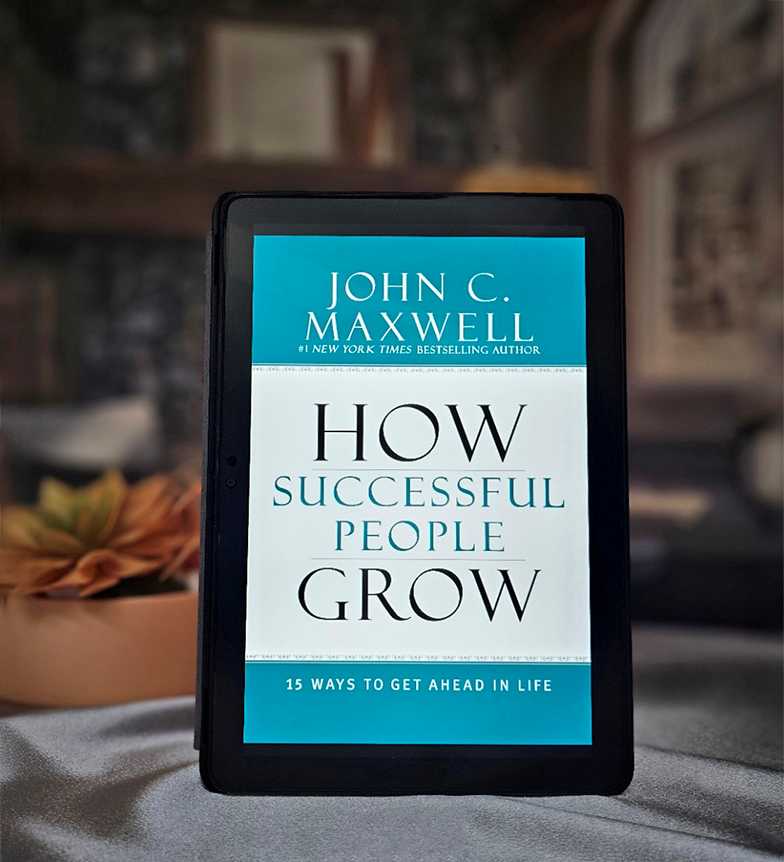
How Successful People Grow
by John C. Maxwell
A practical guide to personal and professional development from leadership expert John C. Maxwell, exploring the habits and mindset that drive continuous growth.