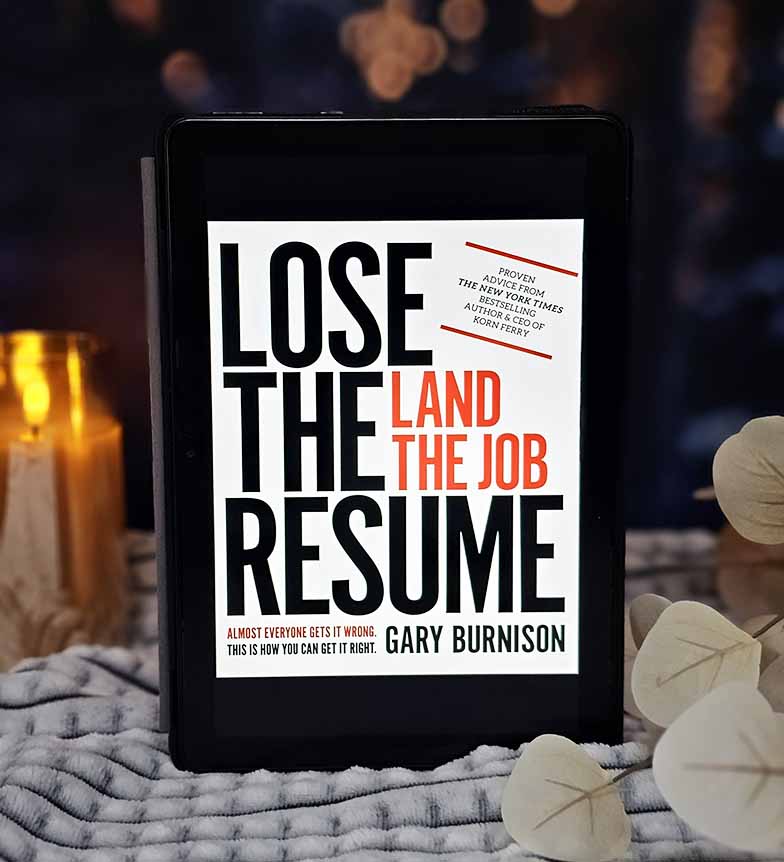
Lose the Resume, Land the Job
by Gary Burnison
A modern approach to job searching that emphasizes relationship-building and personal storytelling over traditional resume-focused strategies.
Spoiler Warning
This review may contain spoilers. Read at your own discretion if you haven't finished the book yet.
Your Resume Isn't Getting You Hired (And Here's What Will)
Here's an uncomfortable truth from someone who's watched thousands of hiring decisions play out from the inside: your resume probably isn't why you got the interview, and it's definitely not why you got the job. Gary Burnison is the CEO of Korn Ferry, one of the world's largest executive search and talent management firms - a company that fills leadership positions across industries and has seen, quite literally, millions of resumes. When he says the resume is the least important part of landing a job, he's not being contrarian for the sake of a catchy title. He's reporting what he's observed over decades of watching who actually gets hired and why. Lose the Resume, Land the Job is his attempt to share that insider knowledge, and it's one of the most genuinely useful career books I've read.
The core argument is deceptively simple: hiring decisions are made emotionally and justified rationally. Interviewers often know within the first few minutes whether they connect with a candidate, and the rest of the conversation is spent confirming or questioning that initial instinct. Your resume got you through the applicant tracking system and into the room, but it's not what keeps you there. What keeps you there is your ability to tell a compelling story about who you are, to build a genuine connection with the person across the table, and to demonstrate that you understand their problems well enough to solve them. Burnison isn't dismissing resumes - he calls them table stakes, the minimum requirement to be considered - but he's adamant that the candidates who obsess over formatting and keyword optimization are focusing on entirely the wrong thing.
The Four Pillars That Actually Matter
Burnison organizes the book around what he calls the four pillars of a successful career strategy: know yourself, get connected, get a job, and keep growing. It's a framework that covers the entire career lifecycle rather than just the job search, and each section is packed with specific, actionable advice drawn from his years at Korn Ferry. The "know yourself" section alone is worth the price of the book - he walks you through a self-assessment process that goes beyond the usual "identify your strengths" advice, pushing you to articulate not just what you're good at but what drives you, what kind of culture brings out your best work, and what story your career tells when you look at it as a narrative arc rather than a list of positions.
The "get connected" section is where Burnison takes on networking, and his approach is refreshingly honest about why most people hate it. Traditional networking - showing up at events to collect business cards, sending LinkedIn requests to strangers, following up with people you met once at a conference - feels transactional because it is transactional. Burnison's alternative is what he calls "authentic relationship building," which boils down to investing in people before you need anything from them. Learn what matters to the people in your professional orbit. Share information that's valuable to them. Make introductions that benefit them, not you. The payoff isn't immediate, and that's the point - when you do need a connection, you're drawing on a relationship that already has depth, not cold-calling someone who barely remembers your name.
He's particularly sharp on the topic of informational interviews, which he argues are the single most underused tool in career development. Most people think of informational interviews as something college students do, but Burnison makes the case that they're even more valuable for mid-career professionals. They give you access to insider knowledge about companies, industries, and roles that you can't get from job postings or company websites. They build relationships with people who are in a position to recommend you when opportunities open up. And they force you to practice the conversational skills - asking good questions, listening actively, following up thoughtfully - that matter far more in interviews than rehearsed answers to "tell me about yourself."
The Art of the Professional Story
The storytelling section is where Burnison's advice gets most specific and most useful. He breaks down professional storytelling into a framework he calls "KSAs - Knowledge, Skills, and Achievements" - and then immediately argues that most people present them in the wrong order. Nobody cares about your knowledge and skills in the abstract; they care about what you've actually done with them. Burnison pushes readers to lead with achievements - specific, quantifiable results - and then connect them backward to the skills and knowledge that made those results possible. It's a subtle but powerful reframing that shifts you from reciting your qualifications to demonstrating your impact.
He also addresses one of the most common mistakes people make in interviews: answering the question they were asked instead of the question they should have been asked. Burnison's point is that interviewers aren't always great at their jobs - they ask generic questions, they follow scripts, they don't always know what they're looking for until they hear it. A strong candidate doesn't just answer the question; they redirect the conversation toward the stories and examples that best demonstrate their value. This isn't about being evasive or manipulative - it's about understanding that an interview is a conversation, not a test, and that you have as much responsibility for steering it as the interviewer does.
The exercises Burnison includes for developing your professional stories are genuinely practical. He has you identify five to seven key career moments - turning points, big wins, hard lessons - and develop each one into a concise narrative with a clear setup, conflict, and resolution. Then he has you practice adapting those stories to different interview questions, different audiences, and different levels of formality. By the time you've worked through the exercises, you have a toolkit of real stories from your career that you can deploy naturally in conversation rather than scrambling to think of examples on the spot. Most career books tell you storytelling matters; this one actually teaches you how to do it.
A CEO's Blind Spots
For all the book's practical value - and it's genuinely substantial - Burnison's perspective does come with inherent limitations. He's a CEO of a global executive recruiting firm, and his frame of reference skews toward white-collar, corporate, and leadership-track careers. The advice is most directly applicable if you're pursuing the kind of positions Korn Ferry fills: director-level and above, corporate strategy, executive leadership. If you're early in your career, working in a trade, freelancing, or operating in industries where hiring works differently - tech startups with their coding challenges, creative fields with portfolio reviews, academia with its committee-driven processes - some of the specifics will need adaptation.
Burnison is also writing from a position of significant privilege and access, and while he acknowledges that not everyone has the same network to draw on, his suggestions for building one still assume a certain baseline of professional proximity to power. "Have coffee with a VP" is easier advice to follow when you work in an environment where VPs are accessible. The core principles - build relationships, tell your story, invest in people before you need them - are universally sound, but the execution advice is most useful for readers who are already in or adjacent to the corporate world he knows best.
None of this undermines the book's central value, though. The insight that hiring is fundamentally a human process, not a credential-matching exercise, is true across industries and career levels. And Burnison's emphasis on career development as ongoing work - not something you dust off when you're between jobs - is advice that ages well no matter where you are in your professional life. I gave this a rare five stars because it changed how I think about career strategy, not because it's perfect, but because the framework it provides is immediately useful and the perspective is one you genuinely can't get from someone who hasn't spent decades watching hiring decisions from the inside.
Rating: 5.0/5 ⭐
Perfect for: Anyone in career transition, mid-career professionals looking to advance, job seekers frustrated with traditional resume-and-apply approaches that aren't producing results.
Skip if: You're looking for quick tactical resume formatting tips, or you're in a field where hiring works very differently from the corporate model Burnison describes.
My Notes & Takeaways
Key Quotes
"Your resume alone won't land the next job for you, and it certainly won't advance your career along the trajectory that will get you where you truly want to go."
"What you've done is not what counts. Who you are and what you will do for them matter most."
"Without a handle on your strengths and accomplishments, as well as an understanding of your blind spots, your weaknesses, and where you need to develop, you will lack clarity in your job search."
"You need to get in touch with what gets you up and excited and four o'clock in the morning without the alarm."
"You must have a genuine passion for your employer's overarching purpose. If not, you'll be only a worker."
"Culture fit is as big as technical fit for achieving success."
"Instead of looking to make a jump and land somewhere, you need to be strategic.… Think several moves ahead."
"Most people would rather avoid the truth than face it - even when that means missing out on opportunities to improve themselves."
"Traits not only affect how you perform in your current job, they also determine your future."
"Your competencies are how you drive results - the essential ingredients of your success. These are observable skills and behavior, such as resourcefulness, courage, or decision making."
"Your experiences should tell a story about you and your career progression from one position to the next."
"Korn Ferry research shows learning is the number-one determinant of a person's earnings for life."
"Unless you face the real risk of failing, you will not develop significantly."
"Lifelong learning is a prerequisite to greatness."
"People are hired for what they know - but fired for who they are! Make sure who you are fits the company culture."
"Networking is a big mystery to most people. And even many who think they do it well probably don't - because they don't realize it's always about the other person."
"Networking is about building relationships - and relationships aren't one-way streets."
"Your resume will be scanned for only seconds at first, and then reviewed for two to five minutes before you come in for an interview. You must make those quick glances count."
"A good working relationship with a recruiter can help take your career to the next level."
"If you are late for the interview, you have probably just lost the job."
"The interview is not about you. It's all about connecting with others."
"Be aware of perceptions or assumptions that people may have about you because of your profession or background."
"Interviewers are looking for your ability to be groomed for a leadership position one day."
"At every level, it's not simply about what you do, but also about what you learn."
You Might Also Like
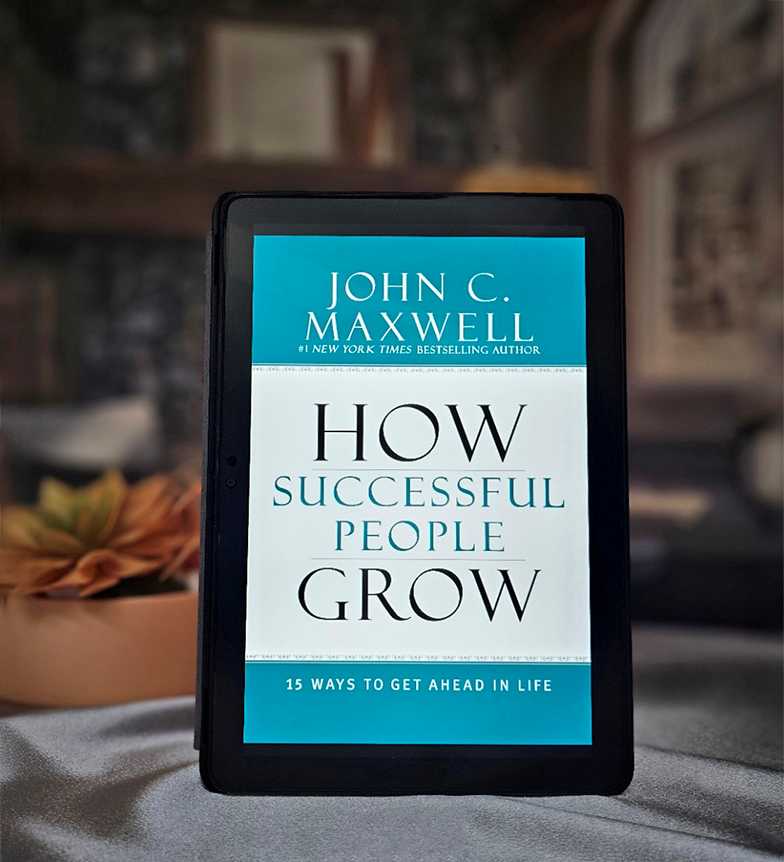
How Successful People Grow
by John C. Maxwell
A practical guide to personal and professional development from leadership expert John C. Maxwell, exploring the habits and mindset that drive continuous growth.

Playing Big
by Tara Mohr
A practical guide for women looking to step into their power and pursue their ambitions. Tara Mohr offers tools to quiet your inner critic, recognize your unique calling, and take bold action.
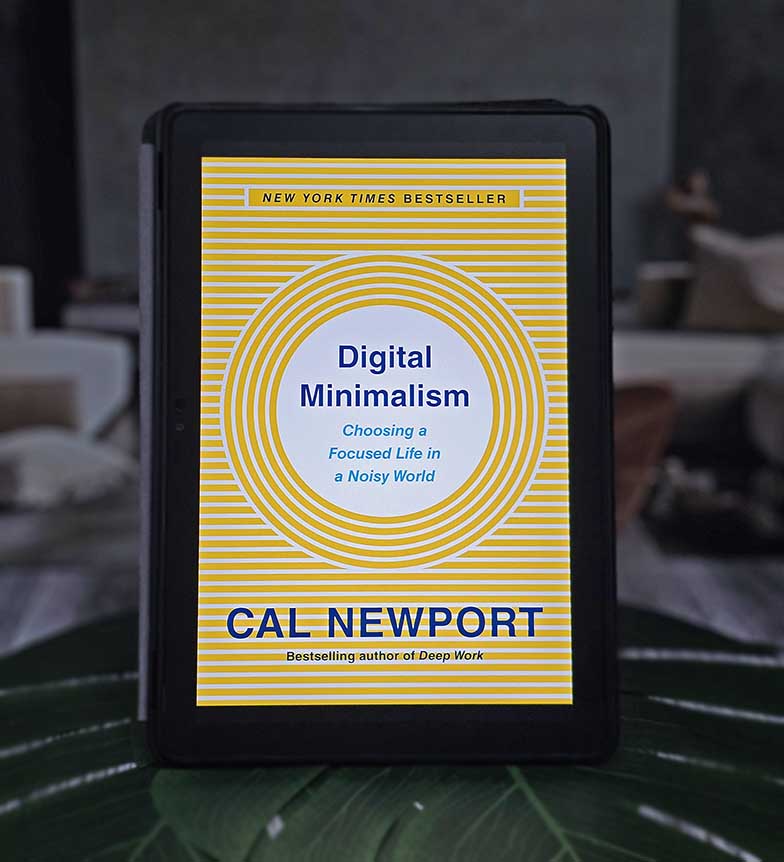
Digital Minimalism
by Cal Newport
A compelling philosophy for technology use in the modern age, arguing for a minimalist approach to digital tools. Cal Newport makes the case for being highly intentional about which technologies you allow into your life and how you use them.