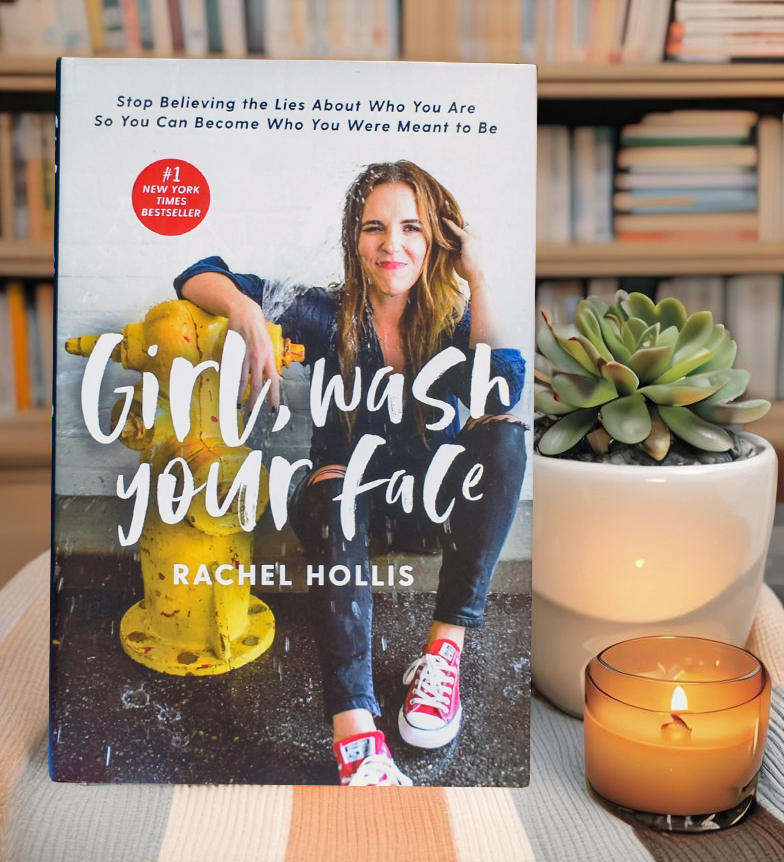
Girl, Wash Your Face
by Rachel Hollis
A motivational self-help book that encourages women to stop believing lies about themselves and start living authentically. Rachel Hollis shares personal stories and practical advice for overcoming self-doubt.
Spoiler Warning
This review may contain spoilers. Read at your own discretion if you haven't finished the book yet.
Stop Believing the Lies You Tell Yourself
You've probably seen Girl, Wash Your Face somewhere - on a friend's nightstand, in your Instagram feed, or maybe in the middle of an internet debate about whether it's life-changing or wildly tone-deaf. Rachel Hollis's breakout book became a publishing phenomenon that spent years on bestseller lists, and having finally picked it up myself, I understand why it sparks such strong reactions in both directions. This is a book that will either light a fire under you or make you want to throw it across the room - possibly both in the same chapter.
The premise is deceptively simple. Hollis identifies twenty "lies" that women commonly tell themselves - things like "Something else will make me happy," "I'll start tomorrow," "I'm not good enough," and "I need a hero" - and tackles each one with personal stories, tough love, and a call to action. Every chapter follows the same basic formula: here's a lie I believed, here's the messy personal story behind it, here's how I stopped believing it, and here's what you can do right now to stop believing it too. It's structured less like a traditional self-help book and more like a series of brutally honest conversations with your most driven, slightly intense friend.
Twenty Lies and the Stories Behind Them
What makes the book work - when it works - is Hollis's willingness to get genuinely personal. She doesn't just identify these lies in the abstract. For "Lie #3: I'm not good enough," she goes back to her childhood as the youngest, most self-sufficient kid in her family, describing how she was largely ignored unless she accomplished something noteworthy. She connects that directly to an adult belief that she needed to constantly produce in order to be worthy of love - that the moment the audience stopped clapping, everything went back to the way it was before. That kind of vulnerability is disarming, and it's where the book is at its strongest.
Her chapter on "Lie #8: I will never get past this" is similarly raw. She describes trauma as a violent whirlpool that will drag you under if you don't fight to stay afloat, acknowledging that the path through extreme pain is one of the most difficult things a person can encounter. There's a tenderness in the way she writes about keeping your head above the waves - the recognition that sometimes just breathing in and out is its own form of fighting back. These moments of genuine empathy stand in sharp contrast to the book's more rah-rah sections and remind you that Hollis isn't just performing vulnerability for content.
The chapters on "Lie #5: No is the final answer" and "Lie #7: I need to make myself smaller" hit particularly hard. In the former, she reframes rejection not as a stop sign but as a yield sign - a signal to slow down, re-evaluate, and figure out how your new position can better prepare you for your destination. In the latter, she delivers one of the book's most quotable lines: "You were not made to be small." For readers who have spent years dimming their own light to make other people comfortable, that chapter alone might be worth the price of admission.
The Pep Talk You Didn't Know You Needed (With Caveats)
Hollis's practical advice isn't revolutionary, but she delivers it with a conviction that makes familiar concepts feel urgent again. Her emphasis on keeping promises to yourself - the argument that if you constantly make and break commitments to your own goals, you're not making promises at all, you're just talking - is the kind of tough love that stings because it's true. She hammers the point that when you really want something, you'll find a way, and when you don't, you'll find an excuse. It's not a new idea, but hearing it framed as a broken promise to yourself rather than a failure of willpower shifts the emotional weight in a useful way.
Her approach to happiness is similarly direct. In the very first chapter, she argues that if you're unhappy, that's on you - that you must choose to be happy, grateful, and fulfilled every single day regardless of circumstances. And here's where the book starts to show its seams, because that advice is genuinely helpful for someone stuck in a negativity spiral by habit, and genuinely unhelpful for someone dealing with clinical depression or circumstances that can't be positive-thought away. Hollis doesn't really distinguish between the two, and the book suffers for it.
The same tension runs through "Lie #9: I am defined by my weight," where she pivots from the empowering message that your weight doesn't define you to a detailed list of health behaviors everyone should follow - drink half your body weight in ounces of water, stop medicating every ache and pain, get off the sofa. It's well-intentioned advice wrapped in an assumption that everyone has the same access to healthy food, free time for exercise, and bodies that respond predictably to lifestyle changes. She writes from the perspective of someone who is thin, financially comfortable, and married with a supportive partner, and she doesn't always seem aware of how that shapes her prescriptions.
There's also the matter of "Lie #4: I'm better than you," where Hollis acknowledges that everyone judges and competes, and that just because you believe something doesn't mean it's true for everyone. It's a solid chapter on paper, but it's hard not to read it alongside her less self-aware moments and wonder if the lesson didn't quite stick. The book's overall framework - that you are entirely responsible for your own happiness and success, full stop - can slide uncomfortably close to suggesting that people who are struggling simply aren't trying hard enough.
A Starting Point, Not a Complete Philosophy
Here's my honest take: I gave this book four stars because it genuinely moved me in places. The chapter on getting past trauma, the insistence that you were not made to be small, the reframing of broken self-promises - these ideas landed with real force, and I highlighted more passages than I expected to. Hollis has a gift for making you feel simultaneously called out and cheered on, which is a tricky balance that most motivational writers can't pull off.
But I'd be doing you a disservice if I didn't flag the blind spots. The "just choose happiness" framework doesn't account for mental illness, systemic barriers, or the very real ways that race, class, and circumstance shape what's possible for people. This is a book written by a woman whose hardest battles, by her own account, were internal - and while internal battles are real and valid, they're not the only kind. If you're fighting external ones too, some of this advice will feel tone-deaf at best.
Think of it as the motivational equivalent of a strong cup of coffee. It'll wake you up, get you moving, and make you feel like you can tackle the day. But it's not a meal, and it's not medicine. Pair it with authors who bring more diverse perspectives to personal growth, take what resonates, and give yourself permission to set down what doesn't. The conversation this book sparked about privilege and self-help culture might honestly be as valuable as the book itself - and to Hollis's credit, she's the one who got millions of people talking.
Rating: 4.0/5 ⭐
Perfect for: Readers seeking motivation who enjoy memoir-style storytelling, anyone looking for an accessible entry point into personal development who doesn't mind strong opinions.
Skip if: You're dealing with serious mental health challenges that require more than positive thinking, or you're frustrated by advice that doesn't acknowledge systemic barriers.
My Notes & Takeaways
The Lies
-
Lie #1: Something else will make me happy.
"... if you're unhappy, that's on you."
"You must choose to be happy, grateful, and fulfilled. If you make that choice every single day, regardless of where you are and what's happening, you will be happy."
-
Lie #2: I'll start tomorrow.
"If you constantly make and break promises to yourself, you're not making promises at all. You're talking."
"When you really want something, you will find a way. When you don't really want something, you'll find an excuse."
-
Lie #3: I'm not good enough.
"Even though I was the youngest, I was a very self-sufficient child, and I think the combo of those two things meant that I was largely ignored - unless I did something good."
"When I succeeded, I got praise and attention; I felt liked and accepted. But the moment the audience stopped clapping, it all went back to the way it was before."
"What this taught me as a child and what I carried into adulthood ... is the belief that in order to be loved, I felt I needed to produce something."
-
Lie #4: I'm better than you.
"The first step toward getting past the desire to judge and compete is admitting that nobody is immune."
"The second step is recognizing that just because you believe it doesn't mean it's true for everyone."
-
Lie #5: No is the final answer.
"... no is only an answer if you accept it."
"When it comes to your dreams, no is not an answer. The word no is not a reason to stop. Instead, think of it as a detour or a yield sign. No means merge with caution. No reminds you to slow down - to re-evaluate where you are and to judge how the new position you're in can better prepare you for your destination."
"Perception means we don't see things as they are; we see things as we are."
"You don't see things as they are; you see things through the lens of what you think and feel and believe."
-
Lie #6: I should be further along by now.
"... everything happening exactly when it's supposed to ... Or maybe that goal wasn't ever meant to be yours."
"Today there may be items on your to-do list, but you also have a long list of things you have achieved. You've already done little things and big things ... goals you accomplished years ago that are on someone else's bucket list. Focus on what you have done ... Celebrate the small moments. They're sacred, even if they aren't stepping stones to something else. Nothing is more important than today."
-
Lie #7: I need to make myself smaller.
"There are hundreds of ways to lose yourself, but the easiest of them all is refusing to acknowledge who you truly are in the first place."
"You - the real you - is not an accident."
"Don't sit this one out. Don't let someone else's opinion of you determine your worth. Don't miss out on the chance to live the life of incredible possibility in front of you."
"You were not made to be small."
-
Lie #8: I will never get past this.
"There are many types of trauma - big, small, childhood, adult - but we all belong to a club we never asked to join."
"You cannot ignore your pain. You cannot leave it behind completely. The only thing you can do is find a way to embrace the good that came out of it - even if it takes you years to discover what that is."
"The path through hardship or extreme trauma is one of the most difficult things a being can encounter. But make no mistake: the only way is to fight through it. Pain and trauma are a violent whirlpool, and they will drag you under if you don't battle to stay afloat. There will be times, especially in the beginning, when it will take everything within you to keep your head above those waves."
"But you must keep your head above those waves. It's so difficult, but you are tough. Even if you don't feel it at the time, the very fact that you're still breathing in and out means you're fighting back against the tide that wants to sweep you away. Don't let it. After a while I promise it will become easier to tread water, and finally you'll learn to swim against the current."
-
Lie #9: I am defined by my weight.
"Who you are today is incredible. You have so many qualities to offer the world, and they are uniquely yours."
"... humans were not made to be out of shape and severely overweight ... we function better mentally, emotionally, and physically when we take care of our bodies with nourishment, water, and exercise ... it's not your weight that defines you, but the care and consideration you put into your body absolutely does."
"You need to be healthy."
"You don't need to be thin. You don't need to be a certain size or shape or look good in a bikini. You need to be able to run without feeling like you're going to puke. You need to be able to walk up a flight of stairs without getting winded. You need to drink half of your body weight in ounces of water every single day. You need to stretch and get good sleep and stop medicating every ache and pain ... You need to take in fuel for your body that hasn't been processed and fuel for your mind that is positive and encouraging. You need to get up off the sofa and out of bed and move around."
-
Lie #10: There's only one right way to be.
"We have to consider if there are areas where we stay safely inside the lines we've drawn or those drawn for us by our family of origin. And how we can know the right community to seek out if we've never been a part of it before?"
"There isn't one right way to be a woman. There isn't one right way to be a daughter, friend, boss, wife, mother, or whatever else you categorize yourself as. There are so many different versions of each and every style on this planet and beauty lives in that dichotomy."
"Every day you get to choose the way your world looks. Regardless of how you were raised or what you were taught to believe, you get to decide where your story goes from here."
-
Lie #11: I need a hero.
"And the things you've achieved? The big and little stuff that peppers your life and adds flavor, the achievements that have made you who you are - those are all you."
"Only you have the power to change your life."
"You have the ability to change your life ... You just have to stop waiting for someone else to do it for you."
"Girl, get ahold of your life. Stop medicating, stop hiding out, stop being afraid, stop giving away pieces of yourself, stop saying you can't do it. Stop the negative self-talk, stop abusing your body, stop putting it off for tomorrow or Monday or next year. Stop crying about what happened and take control of what happens next. Get up, right now. Rise from where you've been, scrub away the tears and the pain of yesterday, and start again ... Girl, wash your face!"
You Might Also Like
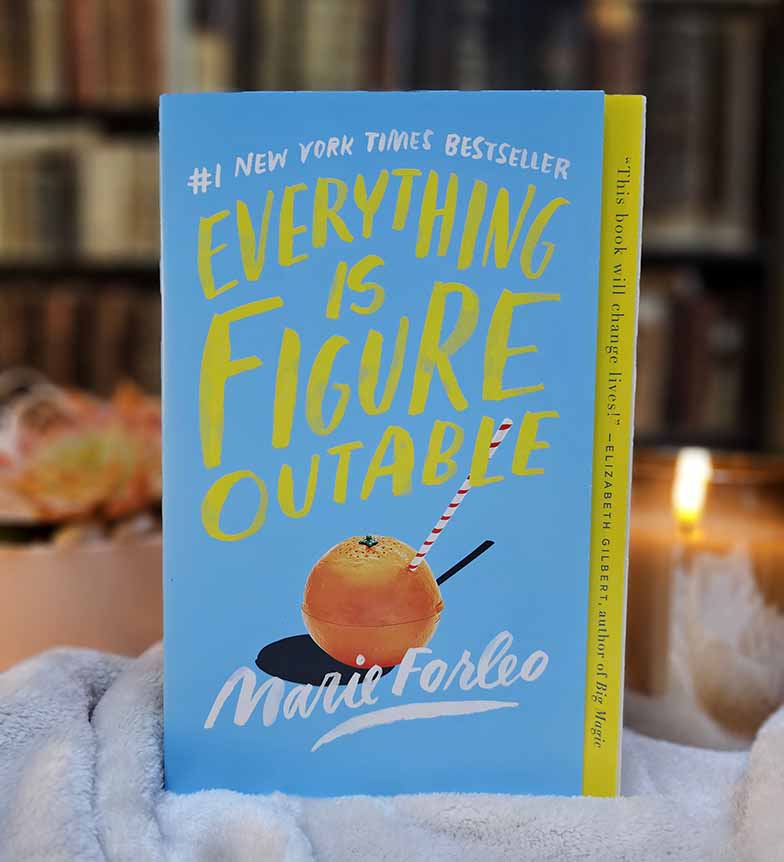
Everything is Figureoutable
by Marie Forleo
A revolutionary mindset and practical action plan for when you feel stuck, overwhelmed, or lost. Marie Forleo shares her philosophy that any problem, challenge, or dream is figureoutable.
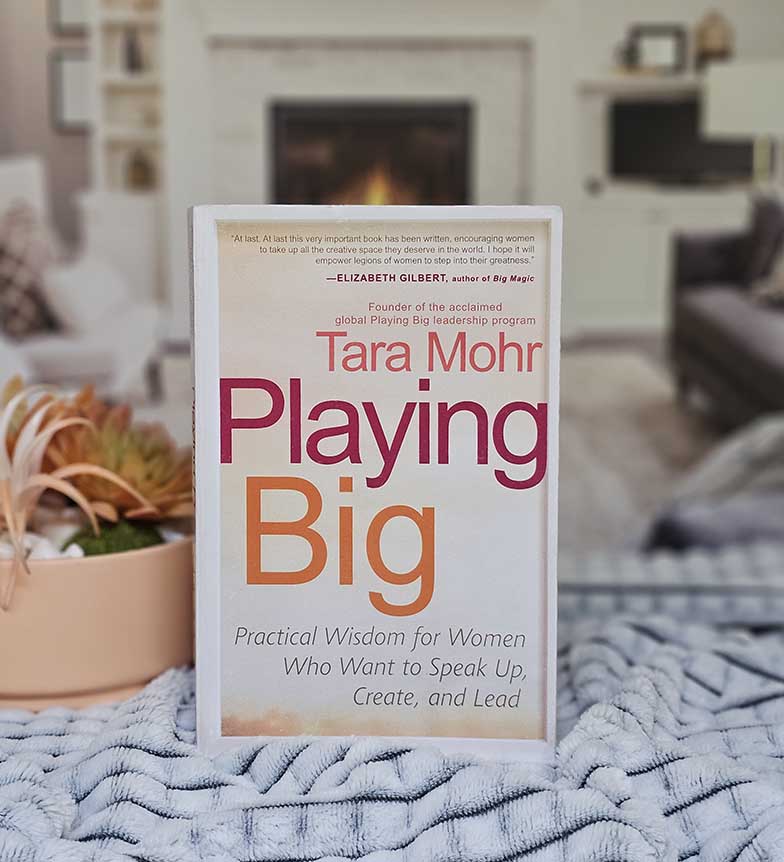
Playing Big
by Tara Mohr
A practical guide for women looking to step into their power and pursue their ambitions. Tara Mohr offers tools to quiet your inner critic, recognize your unique calling, and take bold action.
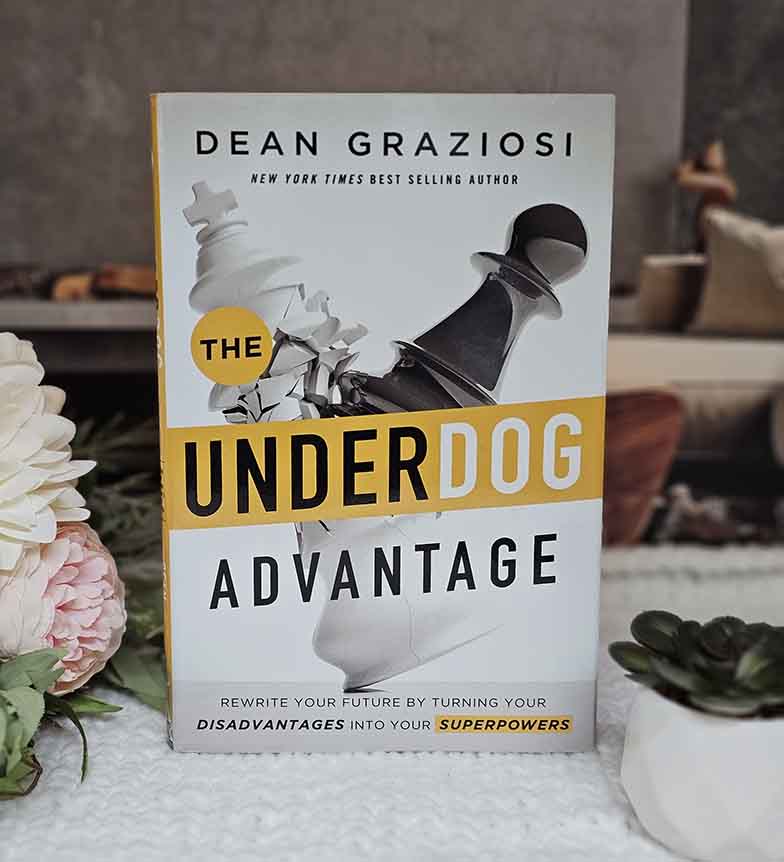
The Underdog Advantage
by Dean Graziosi
Dean Graziosi argues that being an underdog is actually an advantage in achieving success, providing strategies for leveraging disadvantages and turning obstacles into opportunities.