
The Hunger Games
by Suzanne Collins
On Reaping Day in the coal-mining poverty of District 12, sixteen-year-old Katniss Everdeen volunteers to take her younger sister Prim's place in the 74th annual Hunger Games - the televised arena battle in which the Capitol forces twenty-four teenage tributes from twelve districts to kill each other on live broadcast - and the book that follows became, fairly, the YA dystopian novel by which all subsequent YA dystopian novels would be measured.
Buy this book:
Spoiler Warning
This review may contain spoilers. Read at your own discretion if you haven't finished the book yet.
The Reaping, the Mockingjay Pin, and a Sixteen-Year-Old Who Will Not Stop Being a Problem for the Capitol
Suzanne Collins's 2008 novel opens on Reaping Day in District 12 - the coal-mining, Appalachian-coded, poorest of the twelve districts that the Capitol of Panem rules over. Twenty-four years before the book begins, in the seventy-fourth such ceremony, the districts of Panem rebelled against the Capitol and lost. The Hunger Games are the Capitol's annual reminder of what that loss cost: every year, each district sends one boy and one girl, aged twelve to eighteen, into a televised arena to kill each other until only one is left alive. The country is required to watch. Sixteen-year-old Katniss Everdeen has spent the years since her father's death in a mine explosion keeping her mother and her twelve-year-old sister Prim alive, mostly by hunting illegally in the woods outside the district fence with her best friend Gale Hawthorne. On the morning of the seventy-fourth Reaping, Prim's name is drawn. Katniss volunteers in her place. The book that follows is the volunteer's experience of what comes next.
A 4.5 reflects: a novel that has held up better than most of the YA dystopia that came in its wake; a protagonist whose voice is one of the more lasting things YA produced in the 2000s; a media critique that has aged from clever to alarming; and a few small reservations about prose style and the romance subplot's calibration that I'll get to.
District 12, the Reaping, and the Pin
The opening third is one of the more efficient world-builds in YA. We get District 12 - the coal seams, the Seam, the Hob (the black market), the Peacekeepers, the District 12 mayor's house where Madge Undersee, the mayor's daughter, gives Katniss a small gold pin in the shape of a mockingjay before Katniss leaves for the Capitol. We get Peeta Mellark, the baker's son who is the male tribute from District 12 - a boy Katniss has barely spoken to but who once, when she was a starving child outside his bakery, deliberately burned two loaves of bread so his mother would force him to throw them to her. We get Effie Trinket, the chirpy Capitol escort with the mannered Capitol accent, calling out names. We get the moment Prim's name is drawn from the bowl, and the moment Katniss steps forward and volunteers. The mockingjay pin will turn out to matter much more than a pin should; it becomes, across the trilogy, the symbol of the resistance the books are slowly building toward.
We also get Haymitch Abernathy - District 12's only living past victor, drunk most of the time, the official mentor Katniss and Peeta are stuck with - and the train ride to the Capitol that begins the first reframing of the book. Haymitch is, when Katniss can sober him up enough to deal with him, much smarter than he initially seems. He tells the kids what they need to do to stay alive, and chief among the things he tells them is that they need to make the audience love them.
The Capitol, the Stylists, and the Show Before the Games
The Capitol chapters are the book's media-critique chapters, and they have aged into the part of the novel that hits hardest in 2026. The Capitol citizens are styled, surgically altered, fashion-obsessed, food-and-spectacle drunk. The tributes arrive for what is, structurally, both an athletic competition and a reality-TV season - they are introduced on a chariot parade, given television interviews, posed for photographers, packaged for sponsors. Cinna, Katniss's stylist, is the first Capitol citizen Katniss meets who treats her like a person; he designs her chariot costume to make her look like she is on fire, and the look earns Katniss her early nickname (the Girl on Fire) and the audience attention sponsors will later use to keep her alive. The Career tributes - the trained, well-fed teenagers from the wealthier Districts 1, 2, and 4 who volunteer specifically to win the Games - are introduced in this stretch, and the book makes very clear that the deck is meant to be stacked against District 12.
What Collins is doing in these chapters - and the trick that distinguishes the book from a hundred imitators - is letting the reader feel the cost of having to perform under conditions where performance is the only currency available. Katniss is not a natural performer. Peeta is. The romance Peeta declares between them in his pre-Games interview - which Katniss does not entirely realize is a strategic move at the time - is the book's first hard look at the question of what's real versus what's calculated under cameras. That question never resolves, which is the book's argument.
The Arena: Tracker Jackers, Rue, and the Cave
Once the Games begin, Collins is brutal in the way she has decided the book has to be. Twenty-four kids enter the arena. Half of them are dead by the end of the first day. The Career pack - Cato, Marvel, Glimmer, Clove, and the rest - hunts the smaller, less-equipped tributes early; Katniss takes to the trees and stays alive on her hunting skills. The Tracker Jacker scene, in which Katniss drops a hive of genetically modified Capitol wasps onto her sleeping pursuers, is one of the book's most vivid set pieces. The Career pack scatters. Glimmer dies. Katniss is stung enough to hallucinate.
When she recovers, she allies with Rue - a twelve-year-old tribute from District 11 (the agricultural district), who reminds Katniss of Prim and who is, in the alliance the two of them build, the closest the book gets to grace. They make a plan to destroy the Career pack's stockpile. The plan works. Rue dies anyway, speared by another tribute, and Katniss covers her body in flowers and sings to her until the cannon fires. The District 11 audience, watching at home, sends Katniss bread in tribute. It is the first ripple in the larger rebellion the trilogy is going to walk through.
The rule change halfway through the Games - the Capitol announces that two tributes from the same district can both win - sends Katniss looking for Peeta, whom she finds wounded and hiding by a stream. The cave chapters are the book's slowest stretch and its most calibrated; Katniss plays the doomed-romance angle for the cameras and discovers, while she's playing it, that some of what she's playing is real, and Peeta has been entirely sincere the whole time. The feast at the Cornucopia, where each tribute who shows up gets exactly the supplies they desperately need, is the book's last set piece before the final confrontation.
The Cornucopia, the Mutts, and the Berries
The closing sequence - Cato chased to the top of the Cornucopia by genetically engineered wolf-mutts the Capitol has released, the mutts wearing the eyes of the dead tributes, Katniss putting Cato out of his misery after the mutts have done what mutts do - is the book's most brutal stretch and one of the more unsettling closing-act sequences in YA. Skip the rest of this paragraph if you somehow haven't been spoiled on a 2008 novel. Once Katniss and Peeta are the last two left, the Capitol revokes the rule change: one of them has to kill the other for a winner to be declared. Katniss reaches for the nightlock - the poisonous berries she has been carrying - and gives a handful to Peeta, and the two of them prepare to eat them on a count of three so the Games end with no winner at all. The announcer Claudius Templesmith stops them in time. Both are declared victors of the seventy-fourth Hunger Games. Haymitch warns Katniss, on the train home, that the Capitol does not forgive what she has just done, and the rest of the trilogy is the consequence.
Why a 4
The strengths: Katniss's voice (terse, watchful, untrusting in the way a person who has been hungry for years is untrusting), the media critique that has aged into urgency, the moral weight of letting the protagonist actually have to kill, the structural cleverness of the berry-and-rule-change finale, the small grace notes (Cinna, Rue, Madge's pin), and the willingness to make the violence cost something. The reservations: Collins's prose is functional rather than dazzling and occasionally repetitive in ways an editor could have caught; the Katniss-Peeta-Gale triangle the trilogy will lean on is set up here a little too neatly; some of the early world-building chapters are sketched faster than the politics of the universe really need.
A 4.5 means: an essential YA novel, a book that earned every bit of the cultural weight it picked up, and one of the few times a phenomenon turned out to be standing on a phenomenon-grade book.
Rating: 4.5/5 ⭐
Perfect for: YA readers, fans of dystopian fiction with serious moral weight, readers who want a phenomenon novel that actually deserves its phenomenon, anyone returning to the book after the films and curious whether it holds up (it does).
Skip if: You're sensitive to violence involving teenagers, the love-triangle setup is going to bother you, or you've absorbed the cultural saturation and don't need the source material.
You Might Also Like

Catching Fire
by Suzanne Collins
President Snow visits Katniss at home, tells her the threat she didn't know she'd become, and watches her try to perform her way out of it on a Victory Tour that only spreads what she's accused of - and then announces the 75th Hunger Games will be a Quarter Quell drawn from the existing pool of victors, sending Katniss back into an arena designed as a clock with twelve hourly terrors and a force field at its edge.
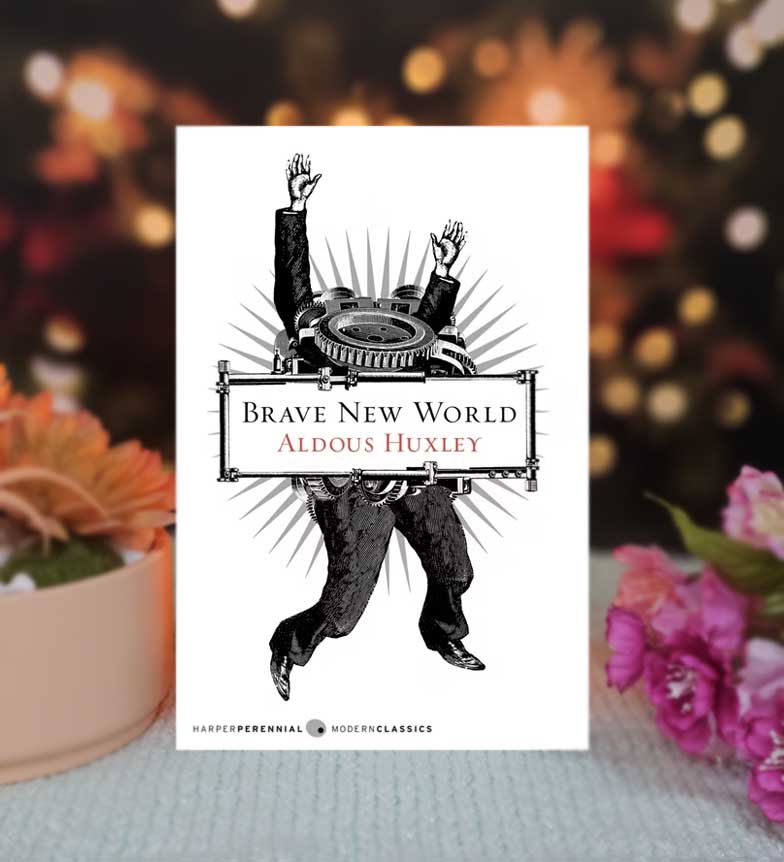
Brave New World
by Aldous Huxley
Aldous Huxley's 1932 dystopia of the World State - five castes grown in bottles, a population conditioned in its sleep to love its predetermined role, soma to manage anything that conditioning didn't reach - tested against an outsider named John, raised on a Reservation by a London Beta named Linda and brought back to a London where the freedom to suffer is the only freedom left to demand.
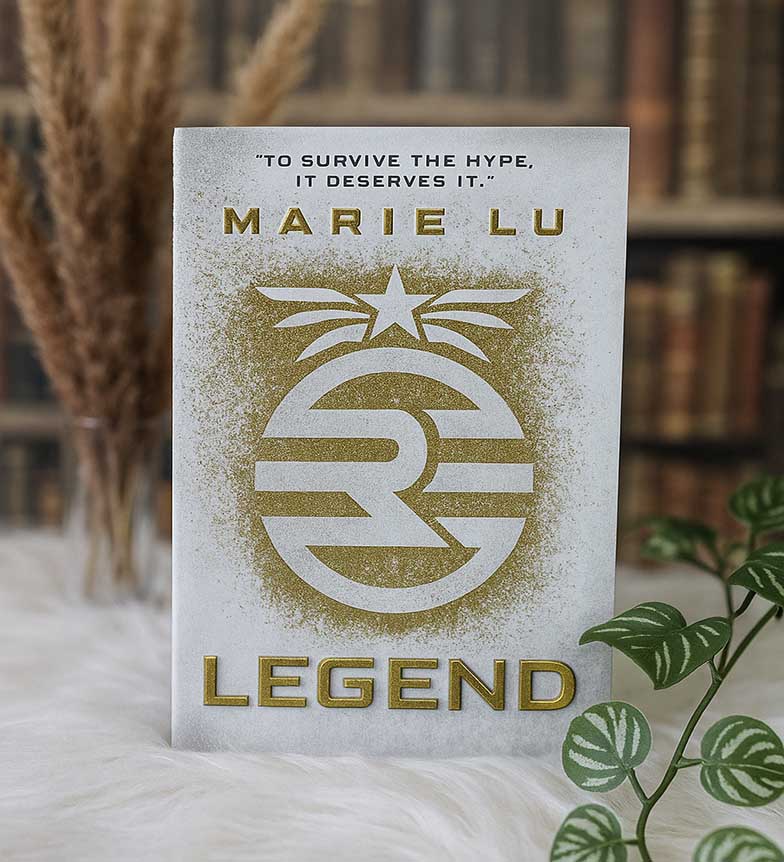
Legend
by Marie Lu
The first book in Marie Lu's dystopian trilogy about Day, the Republic's most wanted criminal, and June, the prodigy tasked with hunting him down.