
Catching Fire
by Suzanne Collins
President Snow visits Katniss at home, tells her the threat she didn't know she'd become, and watches her try to perform her way out of it on a Victory Tour that only spreads what she's accused of - and then announces the 75th Hunger Games will be a Quarter Quell drawn from the existing pool of victors, sending Katniss back into an arena designed as a clock with twelve hourly terrors and a force field at its edge.
Buy this book:
Spoiler Warning
This review may contain spoilers. Read at your own discretion if you haven't finished the book yet.
Snow Visits, the Quell Drops, and the Sequel That Doesn't Coast
Suzanne Collins's 2009 sequel does the thing middle volumes of trilogies almost never do: it gets better. Catching Fire opens with Katniss back in District 12, technically a Hunger Games victor, technically richer than anyone in her district, and technically supposed to be enjoying it. President Coriolanus Snow, the Capitol's leader, shows up at her house in person before the book is forty pages old to explain to her that the country has not stopped watching her. Katniss's berry-and-rule-change stunt at the end of the seventy-fourth Games has been read across the districts as defiance rather than as a love-struck girl saving her boyfriend. Snow needs Katniss to convince the country, on the Victory Tour she is about to take with Peeta, that the love story was real and the rebellion was an invention. If she fails, Snow tells her, the people Katniss loves will pay for it. Her family. Gale. Prim. He is specific. He is calm. He is not bluffing.
A 4.5 reflects: the rare middle book of a trilogy that justifies its existence on every page; the strongest worldbuilding chapters of the series; a Quarter Quell concept that should not work and does; and an ending so good that anyone who finishes the book and does not immediately need Mockingjay probably stopped reading the series at chapter three.
After Victory: The Tour, the Old Man, and Gale Under the Whip
The Victory Tour chapters are the book's most quietly devastating stretch. Katniss and Peeta are required to stop in each district before returning to the Capitol, give scripted speeches at every memorial, and demonstrate to the country - and to Snow - that the love story is genuine. The first stop is District 11, Rue's home. Katniss, off-script, speaks directly to Rue's family. An old man in the crowd lifts his fingers in the District 12 farewell salute and whistles Rue's four-note signal back to her. The Peacekeepers shoot him on the spot. Katniss has just learned, in real time, that her presence in any district is now a match in a room full of dry timber.
Back in District 12, the regime tightens. The previous Head Peacekeeper, Cray - a corruptible man Katniss has known her whole life - is replaced by Romulus Thread, who arrives with the Capitol's new appetite for cruelty. Gale is caught with a poached turkey and whipped publicly in the square; the old understanding that allowed District 12 to function on small illegalities has been revoked. The book is doing, very efficiently, what the first book had to assume the reader would understand about a totalitarian regime under pressure: the rules tighten, the enforcement gets more visible, and the people the regime has been quietly tolerating discover they were being tolerated rather than allowed.
The Quell: All Twenty-Four Tributes Are Existing Victors
The seventy-fifth Hunger Games is a Quarter Quell - every twenty-five years, Capitol tradition adds a special rule meant to remind the districts of the original rebellion's cost. Snow announces the Quell with theatrical formality: this year's tributes will be drawn from the existing pool of victors. Katniss, the only female victor District 12 has ever produced, knows immediately what this is. So does Peeta. So does Haymitch. The Capitol has, in effect, retroactively engineered a way to put Katniss back in the arena and end her cleanly while the country watches. Whether the rule was always going to be this rule or whether Snow rewrote it for this purpose is a question the book leaves hanging - the Quell card has been "written long in advance," but the timing is too convenient to read as accident.
In the run-up to the new Games, Cinna - Katniss's stylist from the first book, now openly making artistic choices that are also political ones - designs Katniss's pre-Games interview dress to shift, mid-spin, from a wedding gown into a mockingjay's plumage. The audience screams. Snow, watching, understands exactly what just happened. Just before Katniss enters the arena lift, Capitol Peacekeepers drag Cinna out of the prep room and beat him in front of her. He does not survive. The book's emotional cost has been raised dramatically by page three hundred.
The Clock, Mags, Wiress, and the Force Field
The arena, when the Games begin, is shaped like a clock - a circular jungle around a central Cornucopia, divided into twelve wedge-shaped sections, each containing a different deadly Capitol-engineered phenomenon (a fog of corrosive gas, a pack of monkey mutts, a wave, hallucinogenic insects, a blood rain) that activates for one hour at a time on a rotating schedule. Wiress, the soft-spoken District 3 victor who has been damaged by her previous Games, figures the pattern out before anyone else - "Tick tock," she keeps repeating, until Katniss understands her - and the alliance Haymitch has secretly arranged in advance starts working as a unit.
The alliance is the book's character work at its strongest. Finnick Odair, the impossibly good-looking District 4 victor who arrived as a prepubescent killer and has been used by the Capitol in ways the book hints at and Mockingjay will confirm; Mags, Finnick's eighty-year-old mentor and the volunteer who took Finnick's actual female tribute's place because she did not want her to die; Beetee and Wiress from District 3, the technologists whose plan with the lightning tree will save them; Johanna Mason, the angry District 7 victor whose contempt for the Capitol is the book's most enjoyable rage. Mags sacrifices herself in the toxic fog to save Finnick and the wounded Peeta. Wiress is murdered at the Cornucopia by Gloss, a District 1 Career. Beetee designs the plan that the closing pages will execute on.
The Force Field, the Hovercraft, the Last Line
Skip the rest of this paragraph if you somehow haven't been spoiled on this book's ending. Beetee's plan is to run his wire from the lightning tree to the salt water at the moment the lightning section activates, electrocuting any tribute in contact with the water. Katniss, separated from Peeta in the chaos of the closing chapter, realizes that what Beetee is actually doing is using the lightning tree's wire as a conductor to blow a hole in the force field at the edge of the arena. She wraps the wire around an arrow and shoots a flaw in the force field at the moment lightning strikes. The dome of the arena explodes. The Capitol scrambles. Katniss wakes up in a hovercraft with Haymitch, Finnick, an unconscious Beetee, and Plutarch Heavensbee - the new Head Gamemaker, who Haymitch now calmly explains has been part of an organized rebellion the whole time. They are headed to District 13, which the Capitol has insisted for seventy-five years was destroyed and which is, in fact, intact and operating as the rebellion's headquarters. The Capitol has captured Peeta. The Capitol has captured Johanna. The Capitol, in retaliation, has firebombed District 12 to the ground. The book closes on Gale telling Katniss the words the title of the third book is going to make her say: there is no District Twelve.
Why a 4.5
The strengths: the Victory Tour's slow-build dread; the Quarter Quell as a trap that should feel cheap and instead feels earned; Cinna; the trauma writing across the entire victors' alliance, which lets these characters be the damaged adults they are rather than reset versions of the first book's frightened teenagers; the political widening of the world; and a closing twenty pages that reframe the entire trilogy. The reservations: a few of the love-triangle beats feel a touch overworked, the Capitol-fashion satire that hit fresh in book one is starting to repeat, and the prose is, as in book one, functional rather than dazzling. None of that is enough to bring the rating below 4.5.
A 4.5 means: the best book in the trilogy by a meaningful margin, one of the few middle-trilogy entries that surpasses the first volume, and a sequel whose closing pages are doing structural work most series writers would not even attempt at this point in a story.
Rating: 4.5/5 ⭐
Perfect for: Hunger Games readers, fans of trilogies whose middle books actually escalate, anyone who appreciates trauma writing in YA that does not sand the edges, readers ready for the political widening the first book only hinted at.
Skip if: You haven't read* The Hunger Games *(this needs the foundation), love-triangle subplots in YA wear thin for you fast, or you bounce off books that end on a cliffhanger. This one ends on a cliffhanger.
You Might Also Like

The Hunger Games
by Suzanne Collins
On Reaping Day in the coal-mining poverty of District 12, sixteen-year-old Katniss Everdeen volunteers to take her younger sister Prim's place in the 74th annual Hunger Games - the televised arena battle in which the Capitol forces twenty-four teenage tributes from twelve districts to kill each other on live broadcast - and the book that follows became, fairly, the YA dystopian novel by which all subsequent YA dystopian novels would be measured.
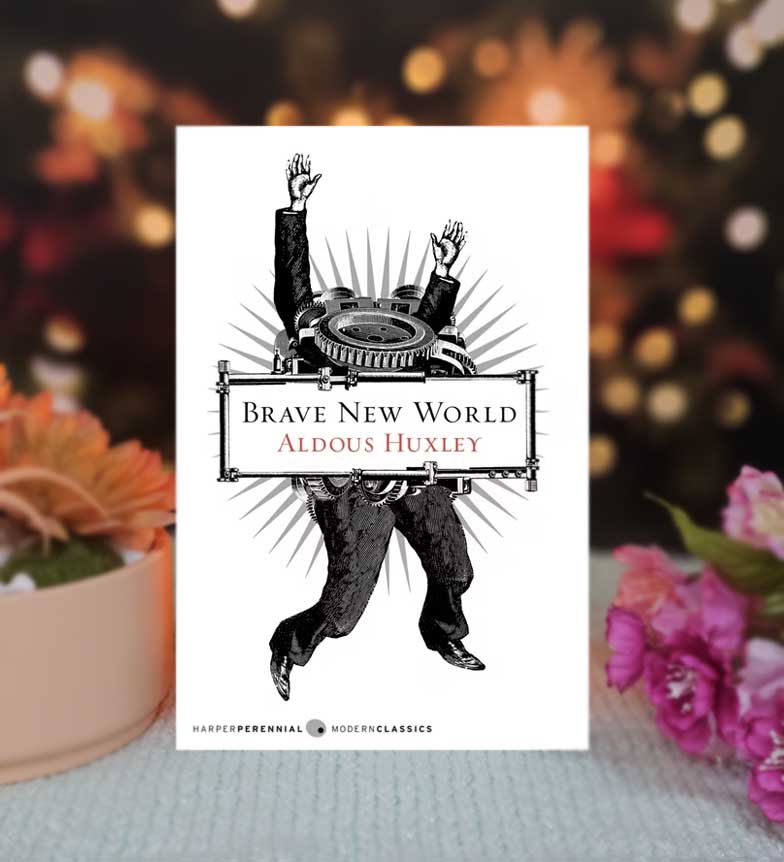
Brave New World
by Aldous Huxley
Aldous Huxley's 1932 dystopia of the World State - five castes grown in bottles, a population conditioned in its sleep to love its predetermined role, soma to manage anything that conditioning didn't reach - tested against an outsider named John, raised on a Reservation by a London Beta named Linda and brought back to a London where the freedom to suffer is the only freedom left to demand.

Prodigy
by Marie Lu
The second book in the Legend trilogy, where Day and June join the rebellion against the Republic, only to discover that the Patriots may be just as dangerous as their enemies.