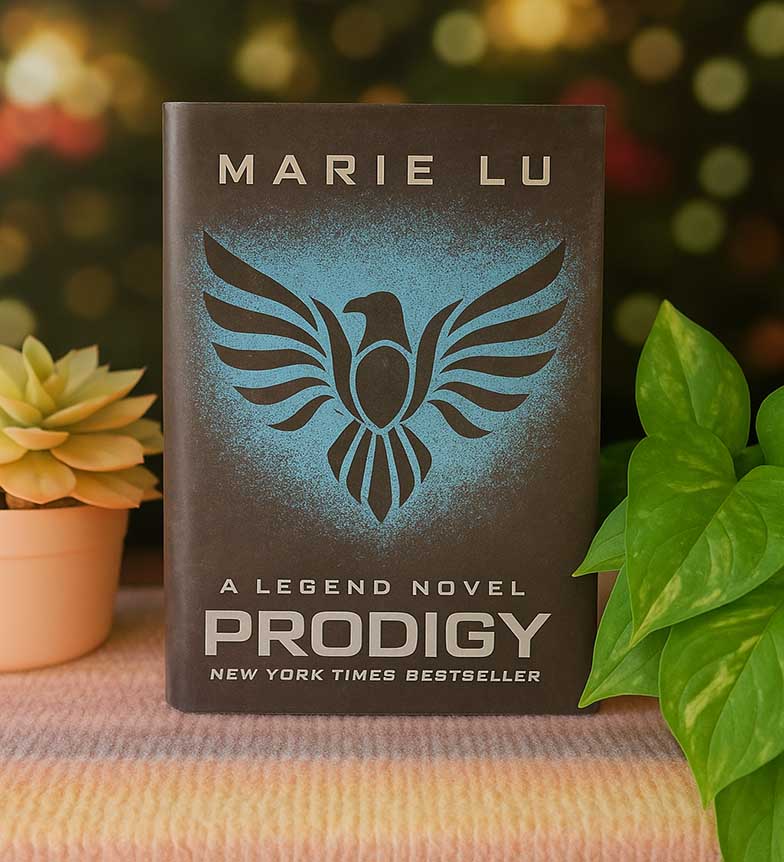
Prodigy
by Marie Lu
The second book in the Legend trilogy, where Day and June join the rebellion against the Republic, only to discover that the Patriots may be just as dangerous as their enemies.
Spoiler Warning
This review may contain spoilers. Read at your own discretion if you haven't finished the book yet.
When the Good Guys Become the Dangerous Ones
Here's the thing about revolutions: you spend so long fighting the villain that you never stop to wonder whether the people fighting alongside you are any better. Prodigy, the second book in Marie Lu's Legend trilogy, takes the relatively clean moral lines of its predecessor and drags them through the mud. Day and June are fugitives now, on the run after the events of Legend, and when the Patriots - the rebel group fighting to topple the Republic - offer them refuge, it feels like salvation. It is not. What follows is a twisty, politically charged middle chapter that asks harder questions than Legend ever did, even if it doesn't always have the narrative discipline to match its ambition.
We pick up with Day and June fleeing Republic territory, trying to reach the Patriots' base in Las Vegas. Day's injuries from Legend are worse than he's letting on - he's been shot in the leg, he's hiding how much pain he's in from June, and there's something else wrong that he doesn't fully understand yet. June, meanwhile, is carrying her own burden: the knowledge of how her brother Metias really died and the realization that everything the Republic taught her was a lie. They're both broken in different ways, clinging to each other because there's no one else left to trust. The Patriots' leader, Razor, offers them a deal - help us take down the Republic, and we'll protect you. The catch is what the Patriots actually want June to do: get close to the new young Elector, Anden Stavropolous, and assassinate him.
The Assassination Plot and Its Moral Tangles
The assassination mission is where Prodigy gets genuinely interesting and genuinely complicated. Anden isn't the tyrant his father was. He's young, idealistic, and apparently sincere about wanting to reform the Republic from within. He releases political prisoners. He talks about ending the Trials. He treats June with respect and intelligence, and there's a real attraction developing between them - which puts June in an impossible position. She's been sent to kill someone who might actually be the best chance the Republic has at peaceful change, on behalf of rebels whose methods increasingly mirror the oppression they claim to oppose.
Lu handles June's dilemma with sophistication. June is an analyst at her core, and watching her weigh Anden's sincerity against the Patriots' arguments is the book's most compelling thread. She notices things - the way Anden flinches when commanders reference his father's policies, the genuine horror on his face when he sees footage of what the plagues have done to the poor sectors, but also the way power structures around him resist every reform he proposes. Can he change the system if the system won't let him? Is assassination wrong if the alternative is slow reform that might never come while people are dying now? Lu doesn't give June - or readers - an easy answer, and the tension of not knowing what June will decide carries the political sections of the book.
The Patriots themselves are Lu's sharpest creation in Prodigy. Razor is charismatic and persuasive, his arguments against waiting for reform are genuinely compelling, and his willingness to sacrifice individuals for the greater good feels like the logical extension of revolutionary thinking. The uncomfortable truth the book forces you to sit with is that the Patriots use propaganda, manipulation, and violence in ways that aren't fundamentally different from the Republic's playbook. They just believe their cause justifies it. That distinction - between righteous violence and tyrannical violence, if such a distinction even exists - is what Prodigy is really about.
Day Becomes a Symbol
While June navigates the Elector's inner circle, Day is dealing with a different kind of crisis. The Patriots don't just want his skills - they want his brand. Day is the Republic's most famous criminal, and to the poor sectors, he's a folk hero. Razor and the Patriots want to use that image, to turn Day into a symbol of rebellion that they can deploy for maximum propaganda value. Day the person is less important to them than Day the idea, and watching him grapple with that realization is one of the book's strongest emotional arcs.
There's also the matter of what Day is hiding. The injuries from Legend are more serious than anyone realizes, and the medical truth he uncovers about his own condition adds a ticking clock to his story that raises the stakes in ways that feel genuinely devastating rather than manipulative. His relationship with Tess fractures under the pressure - she wants him to take care of himself, he can't stop fighting, and the distance that opens between them is one of the book's quieter heartbreaks. Meanwhile, his relationship with June strains under the weight of the secrets they're both keeping. They're on the same side but running different missions, making different compromises, and the trust they built in Legend starts cracking in ways that feel painfully realistic.
Where Prodigy stumbles somewhat is in the balance between its two storylines. June's political maneuvering with Anden is the more nuanced and interesting thread, but the book keeps cutting back to Day's action sequences - escape attempts, street fights, narrow brushes with capture - that, while exciting, sometimes feel like they belong in a more straightforward thriller. The alternating chapter structure that worked so well in Legend occasionally works against Prodigy because the two halves of the story are operating at different speeds and different levels of complexity. June is wrestling with the ethics of assassination while Day is running across rooftops, and the tonal whiplash can be disorienting.
Setting Up the Fall
The book's final act brings June and Day's storylines crashing back together in a way that redraws the entire political map. The Patriots' true plan is revealed, Anden's sincerity is tested under fire, and both Day and June are forced to make choices that will carry enormous consequences into Champion, the trilogy's conclusion. Without spoiling the specifics, the ending leaves the Republic, the Patriots, and the Colonies all in play, with alliances shattered and reformed in unexpected configurations.
Prodigy is that rare middle book that actually deepens its world rather than just treading water. We learn more about the Colonies - their capitalism-run-amok culture that's its own kind of dystopia - and about the plague's origins, which are more sinister than anything suggested in Legend. The political landscape gets richer and murkier, and the moral simplicity of "Republic bad, rebels good" is thoroughly demolished. Lu is asking her YA audience to think about power, compromise, and whether peaceful change is possible within systems designed to resist it - and she's trusting them to handle the ambiguity.
That said, the book does occasionally buckle under the weight of everything it's trying to do. The romance between June and Anden sometimes feels like it exists more for plot utility than emotional truth, a way to complicate June's mission rather than a relationship that earns its own space. Some of the action set pieces in Day's storyline feel padded, as if Lu needed to maintain a thriller pace even when the story's real energy is in the political chess game. And the cliffhanger ending, while effective, leans on a revelation about Day's health that borders on melodramatic. These are the flaws of ambition rather than laziness - Prodigy is reaching for something more complex than Legend, and it doesn't always stick the landing, but the reach itself is impressive.
Rating: 4.0/5 ⭐
Perfect for: Readers who loved Legend and want to see the story deepen into genuine political complexity, fans of morally ambiguous factions, anyone tired of revolutions with clear-cut heroes.
Skip if: You haven't read Legend (this absolutely won't work standalone), or you prefer your dystopian fiction with cleaner moral lines and faster resolution.
You Might Also Like

Champion
by Marie Lu
The epic conclusion to the Legend trilogy, where Day and June face impossible sacrifices as a deadly plague threatens to plunge the Republic and the Colonies back into war.
Legend
by Marie Lu
The first book in Marie Lu's dystopian trilogy about Day, the Republic's most wanted criminal, and June, the prodigy tasked with hunting him down.

Forever in Blue: The Fourth Summer of the Sisterhood
by Ann Brashares
The summer after freshman year of college - the friends are scattered, changed, and struggling. The pants bring them together as they navigate who they're becoming.