
Champion
by Marie Lu
The epic conclusion to the Legend trilogy, where Day and June face impossible sacrifices as a deadly plague threatens to plunge the Republic and the Colonies back into war.
Spoiler Warning
This review may contain spoilers. Read at your own discretion if you haven't finished the book yet.
When Saving Everyone Might Mean Losing Everything
Eight months have passed since the events of Prodigy, and things have only gotten worse. Day is dying - a brain tumor, courtesy of the Republic's experiments on him when he failed his Trial as a kid, is slowly killing him. He's told he has maybe two months. He hasn't told June. Meanwhile, a deadly plague is devastating the Colonies, who are convinced the Republic engineered it and are threatening full-scale invasion unless a cure is delivered. The fragile peace treaty is crumbling, and the Republic's young Elector Anden is desperate enough to ask the one person who has every reason to refuse: Day. Specifically, Anden wants access to Day's brother Eden - the boy the Republic already experimented on, already infected, already used as a biological weapon - because Eden's exposure to the original virus might hold answers.
Champion brings Marie Lu's trilogy to a devastating, earned conclusion that refuses to offer easy answers. This is how you end a series. Lu doesn't play it safe, pushing her characters toward choices that hurt, consequences that stick, and a conclusion that satisfies without betraying everything that came before.
A Crisis on Every Front
The plague crisis forces a fundamental shift in the trilogy's dynamics. The Colonies are dying, and they're not going to die quietly. They've allied with the Confederate Nations of Africa, promising them half the Republic's land in exchange for military support, and their ultimatum is clear: deliver the cure or face invasion. Elector Anden - young, earnest, trying to reform a corrupt government while it's collapsing around him - is running out of options.
Lu handles the political layers intelligently. The collaboration between former enemies doesn't magically resolve decades of hatred. Characters must choose cooperation while remaining suspicious, work together while holding onto grievances, hope for the best while preparing for betrayal. When the peace treaty finally shatters and the Colonies invade Denver, the fighting is brutal and the stakes feel real. This isn't a backdrop war - it's a full-scale conflict that puts every character in danger.
What makes the crisis even more compelling is that the Republic's request is genuinely reasonable from a political standpoint. Eden was exposed to the original plague strain. Testing his biology could save thousands of lives. But Day watched the Republic murder his mother - shot in the head by Thomas under Commander Jameson's orders - and execute his brother John, who sacrificed himself pretending to be Day. Asking Day to hand his last surviving family member back to the system that destroyed the rest of them is asking something monstrous, no matter how logical the reasoning.
Day's Impossible Sacrifice
Day's arc reaches its emotional peak in Champion, and it's agonizing. He's dying and he knows it - the headaches are getting worse, the spasms more frequent, the medications less effective. The tumor is eating away at his hippocampus, the part of the brain that stores memories. He's kept this from June because telling her would mean watching her grieve while he's still alive, and he can't bear that.
Then the Republic comes asking for Eden. Day's instinct is to refuse - he's spent years protecting his brother from exactly this kind of exploitation. But Eden, now partially blind from the government's previous experiments, makes his own choice. He agrees to the testing. It's a gut-punch moment because Eden's willingness to help the system that hurt him shows a generosity that Day, for all his heroism, can't quite manage. And when the lab results come back showing that Eden can't provide a cure after all - the plague has mutated beyond what his biology can address - the sacrifice feels even more painful for being pointless.
The real cure comes from an unexpected source. June, piecing together the timeline, realizes that the infection she caught while being treated in a Colonies hospital during Prodigy might be connected to the current plague strain. Her blood holds enough of the virus for doctors to develop an antidote. It's a twist that works because it's been quietly set up across books, and because it puts June at the center of the solution in a way that's earned rather than convenient.
June's Leadership Comes Full Circle
June Iparis has transformed completely from the loyal Republic prodigy who scored a perfect 1500 on her Trial. Now she's training as Princeps - Anden's second-in-command - navigating impossible political circumstances while carrying the weight of everything she's learned about her government's corruption. Her growth across three books feels earned because we've watched every painful step.
Her relationship with Anden adds complications that Lu handles deftly. He's a genuinely good leader trying to reform a broken system, and his feelings for June are real - they share a kiss that's tender and complicated, born out of shared exhaustion and mutual respect. But June's heart still belongs to Day, even when Day has pushed her away. The triangle never feels manufactured because each connection serves the story. Anden represents the future June could build - stable, purposeful, politically powerful. Day represents the person she can't stop loving, even when loving him means accepting she might lose him.
When Commander Jameson resurfaces and shoots Day - bullets in his chest and hip - June is the one who takes her down, ordering soldiers to fire. It's a moment that shows how far June has come from the girl who once served under Jameson without question.
An Ending That Earns Every Tear
Here's where Lu earns her place among the best YA writers working today. Day survives the shooting, but his brain can't wait any longer. Doctors operate on his hippocampus to remove the tumor, and the surgery saves his life. The cost: five months in a coma, and when he wakes, he's lost the past year of memories. He doesn't remember June. He doesn't remember falling in love. He doesn't remember any of it.
June makes the hardest choice of her life. She could tell him everything - show him their history, try to rebuild what they had. Instead, she lets him go. She decides that Day deserves a life free from the pain of their shared past, free from the grief and the guilt and the weight of everything the Republic put them through. It's devastating because it's selfless in a way that feels honest rather than noble.
The epilogue jumps ten years forward. Day - going by Daniel now - has moved to Antarctica with Eden, who's become a successful engineer. June has become the youngest commander in Republic history. When they cross paths on June's twenty-eighth birthday, Day approaches her on the street. He can't remember who she is, but he knows he's been searching for her. He takes her hand and introduces himself, and the book ends with the possibility of a new beginning - two strangers meeting for the first time, except one of them remembers everything and the other remembers only the feeling.
It's the kind of ending that wrecks you and heals you in the same breath. Lu respects both her characters and her readers enough to deliver something true rather than tidy. Hope persists, even when hope is painful. Change is possible, even when change requires sacrifice. That's what makes Champion not just a good conclusion, but a great one.
Rating: 4.0/5 ⭐
Perfect for: Anyone who's read Legend and Prodigy and wants to see the story through, fans of conclusions that don't take the easy way out, readers who appreciate emotional devastation done well.
Skip if: You haven't read the first two books (you'll be completely lost), or you prefer neat, tidy endings that wrap everything up happily.
You Might Also Like
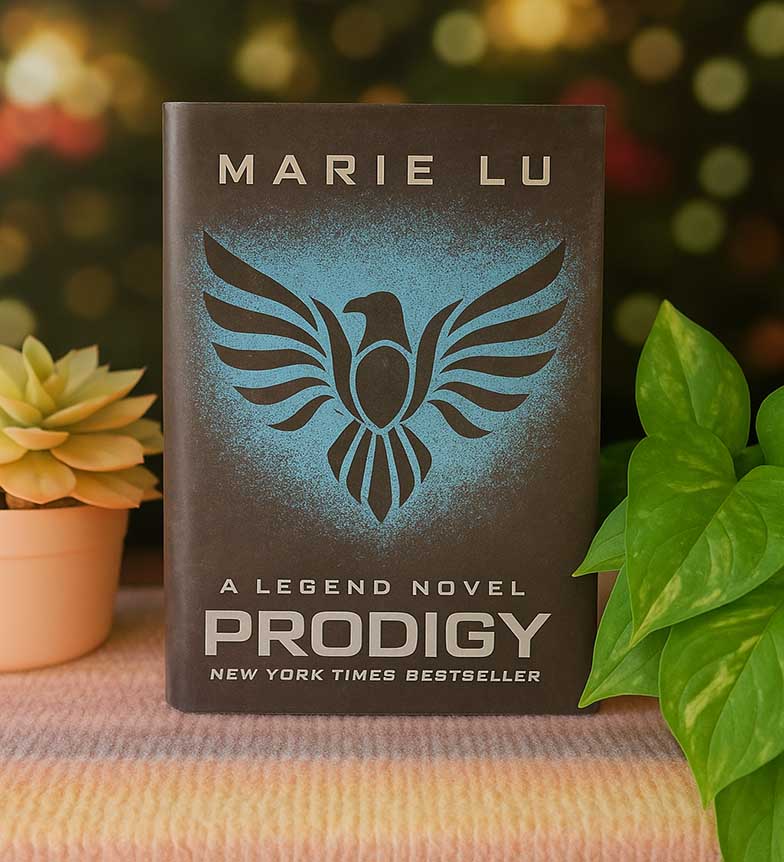
Prodigy
by Marie Lu
The second book in the Legend trilogy, where Day and June join the rebellion against the Republic, only to discover that the Patriots may be just as dangerous as their enemies.
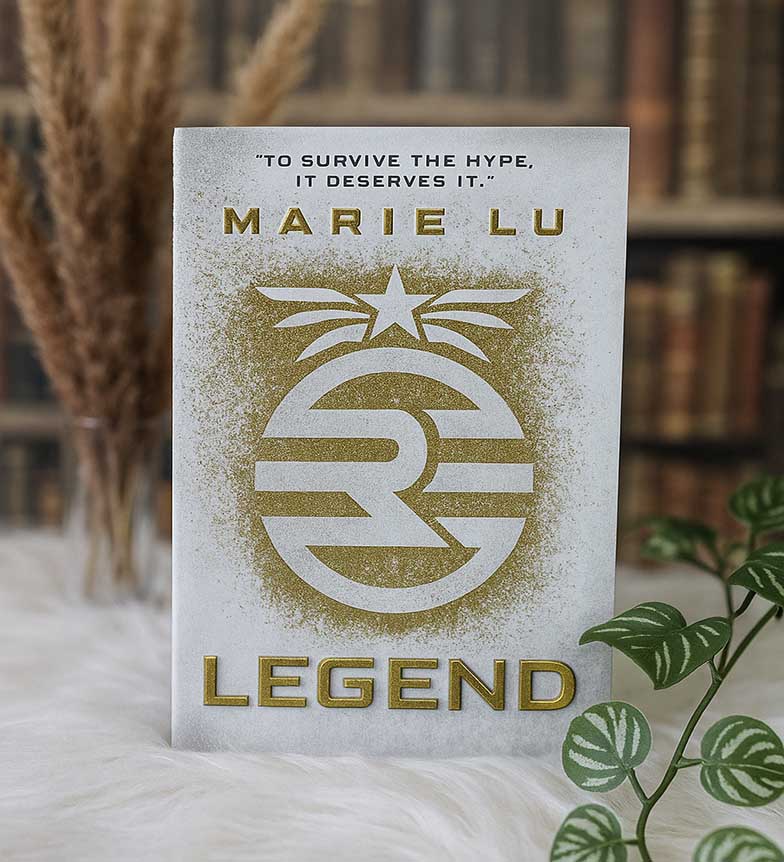
Legend
by Marie Lu
The first book in Marie Lu's dystopian trilogy about Day, the Republic's most wanted criminal, and June, the prodigy tasked with hunting him down.

Forever in Blue: The Fourth Summer of the Sisterhood
by Ann Brashares
The summer after freshman year of college - the friends are scattered, changed, and struggling. The pants bring them together as they navigate who they're becoming.