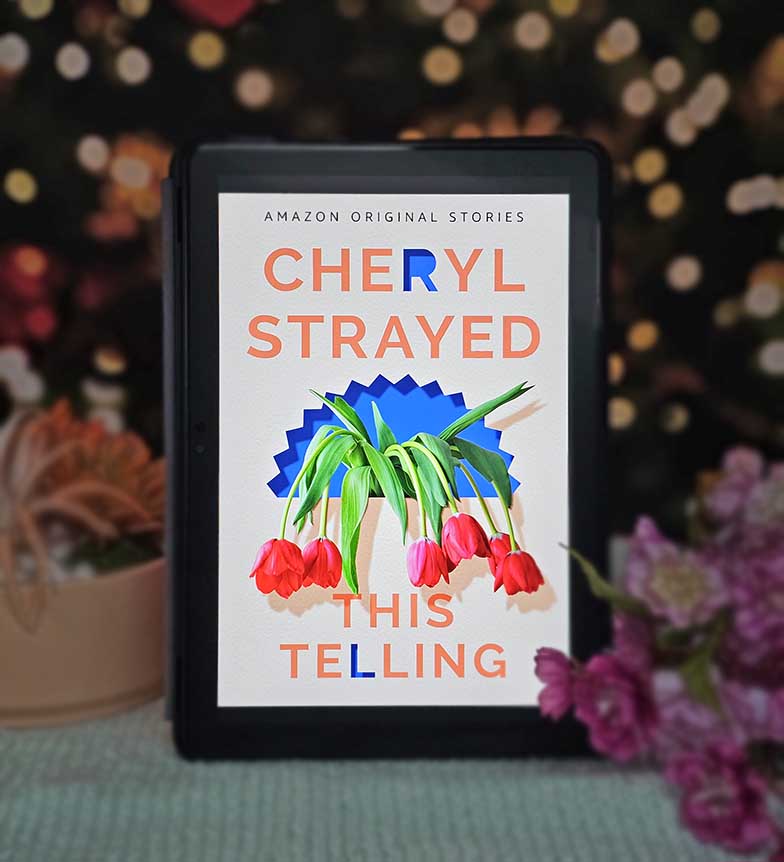
This Telling
by Cheryl Strayed
An Ancestry.com match arrives in the inbox of a woman who has spent forty-plus years pretending the baby she gave up for adoption in 1964 never existed - and Cheryl Strayed traces, in a tight short story for Amazon's Out of Line collection, what happens when a teenager named Geraldine Waters has to integrate the life she actually lived with the one she's been telling.
Buy this book:
Spoiler Warning
This review may contain spoilers. Read at your own discretion if you haven't finished the book yet.
A DNA Match in the Inbox of a Woman Who Has Been Telling It Differently for Forty Years
Geraldine Waters has spent her adult life telling a version of herself that does not include 1964. The version she tells leaves out the under-the-table doctor's office she walked into and walked out of without going through with the abortion her boyfriend Jim wanted. It leaves out the courthouse where her parents had talked her and Jim into getting married, where Jim - on his way to Vietnam, on his way out of her life - did not show up. It leaves out the unwed mothers' home she was sent to after that, the daughter she gave birth to and called Caroline before signing her over to an adoption agency, and the silence that closed around it all when she went home. For more than forty years, Geraldine has been working with a different narrative, the one in which none of that happened. Then she gets an email from Ancestry.com.
This Telling is Cheryl Strayed's contribution to Amazon's Out of Line short-story collection - a series of women-on-the-edge-of-something pieces by writers including Strayed, Roxane Gay, and others - and it runs about fifty pages on Kindle, forty minutes on Audible with Kristen Bell narrating. It is the most economical thing Strayed has written, and one of the more emotionally precise. The 4.0 here reflects what a short story can and can't do at this length: it lands its central blow, doesn't have room for everything that follows, and leaves the reader holding it.
1964: The Doctor's Office, the Courthouse, the Home
The backstory is rendered in flashes. Geraldine was a fresh high-school graduate who had been with only one boy, Jim. When she found out she was pregnant, Jim - facing his draft notice, terrified, certain - said the answer was an abortion, and they found a doctor in the era before Roe willing to perform one off the books. She went to the appointment. She walked out of it before it happened. She told her parents instead. The parents agreed Jim and Geraldine should marry; Jim agreed; then on the day, Jim didn't come. Geraldine's family decided, with the shame logic of 1964, that she would be sent away. She had her baby in an unwed mothers' home. She named her Caroline before signing her over. She came home. She did not speak about it. The narrative she told herself, and the world, started after.
Strayed renders the sequence with precision rather than melodrama. Each step of it - the abortion clinic, the courthouse, the home - is a place Geraldine walks into one person and walks out as someone whose ability to refuse what is happening is shrinking. By the time she gives up the baby, the version of her life she will spend forty years telling has begun to write itself.
Forty Years of Telling It Differently
The years between are mostly absence. Strayed lets the reader feel them rather than narrate them. Geraldine builds a life. She does not look up Caroline. She does not tell anyone about her. She manages the secret the way her generation was taught to manage these secrets: as if naming the absence would make it bigger than continuing to walk past it. The cultural argument the story is making, without leaning hard on it, is that the privacy this generation of unwed mothers was asked to perform was not in fact privacy - it was suppression, dressed up as discretion, and what it produced was a wound that never closed because no one was allowed to look at it.
Ancestry.com, Jim's Facebook Message, and Rose
The DNA test the story turns on isn't Geraldine's. The match goes through Jim - or rather Jim's son from another life, who tested - and lands on a young woman in her mid-twenties who turns out to be Geraldine's biological granddaughter. Jim, after forty years of his own silence, sends Geraldine a Facebook message: they have found Caroline. Caroline is Susan Lopez now, the name her adoptive family gave her. Susan has a daughter, Rose, who has just sent Geraldine an email asking to meet, with some background on the family Geraldine has never known. The cascade of names and relations is a quiet structural piece of the story: the daughter Geraldine never raised has a daughter of her own, who is now writing to a grandmother she has just learned exists.
Strayed lets that cascade do its own work without overplaying. The decision Geraldine has to make is no longer whether to integrate this part of her life into the one she's built; the integration is happening to her in real time. The question is what she will say back, and to whom, and what version of herself she is going to tell from here.
What Fifty Pages Can Hold
This is a short story doing the job of a short story. It cannot give the reunion the texture of a novel. It cannot follow Susan's life under her adoptive name, or render the weight of forty silent years from the inside, or sit with Rose long enough to make her a fully drawn character. It can do the moment of the email arriving, and it can do the small scenes in 1964 that explain why the email matters as much as it does. Strayed - drawing on the same vulnerable plain-spokenness that made her advice column Dear Sugar and her memoir Wild land - keeps the prose unornamented and the emotional accounting honest. She does not turn this into a triumph. She does not turn it into a tragedy. She lets it be what it is: a woman, late in life, finally having to tell it the way it actually happened.
A 4.0 means: precisely written, emotionally exact, and limited by the format. If you have an hour, this is well worth one of them. If you wanted a novel about Geraldine and Susan and Rose, you'll want one - and this story is sharp enough to make you want one.
Rating: 4.0/5 ⭐
Perfect for: Cheryl Strayed readers, fans of short fiction about family secrets and the ways genetic testing has rewritten the rules around them, anyone who has an hour and wants to be quietly knocked sideways.
Skip if: You want the longer arc the premise could carry, stories about closed adoptions and hidden children are too close to your own life right now, or you prefer fiction that resolves more than it lets sit.
You Might Also Like
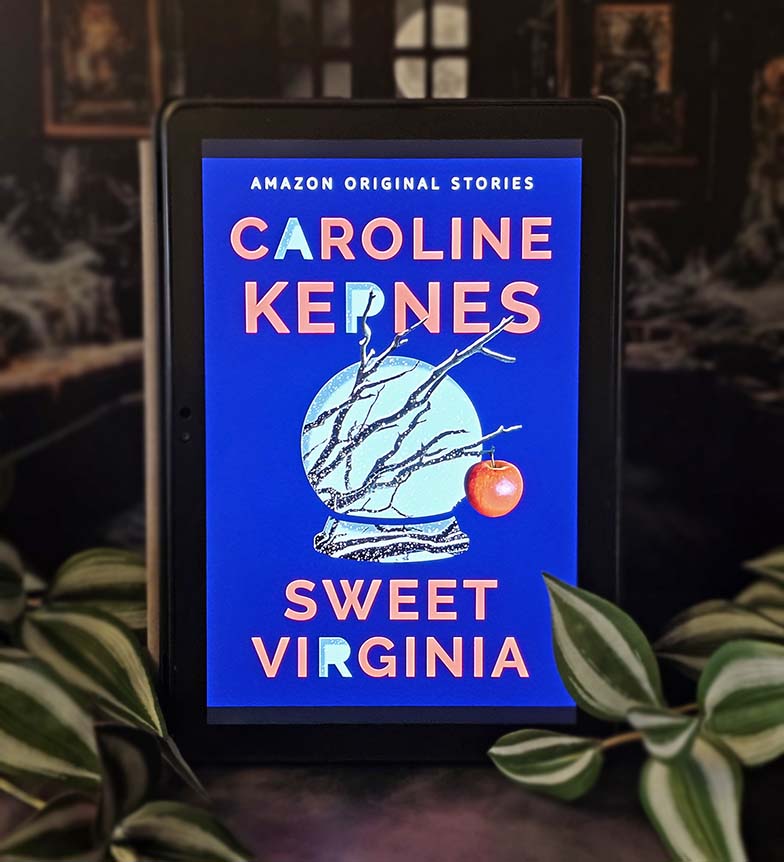
Sweet Virginia
by Caroline Kepnes
Caroline Kepnes's contribution to Amazon's Out of Line collection sends an exhausted, recently-fired new mother named Shelby chasing a Hallmark-movie fantasy with a secret admirer - and lands her, in a darkly comic Stepford Wives-meets-The Prisoner pivot, on a rehabilitation ranch for women classified W2 who must be retrained into W1 before they're allowed to go home.
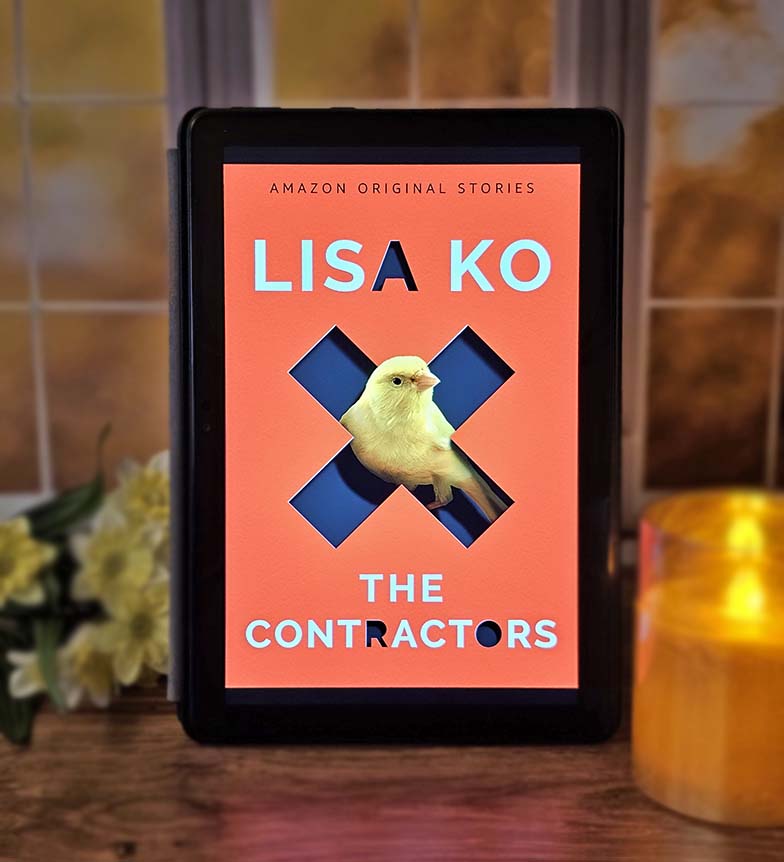
The Contractors
by Lisa Ko
A tech reporter's misdirected email connects two women eight thousand miles apart - both named Sandra Guzman, both contract content moderators for the same mega social media platform, one in New Jersey and one in the Philippines - and the friendship that grows between them across the inbox starts to look, by the end, like the beginning of a campaign.
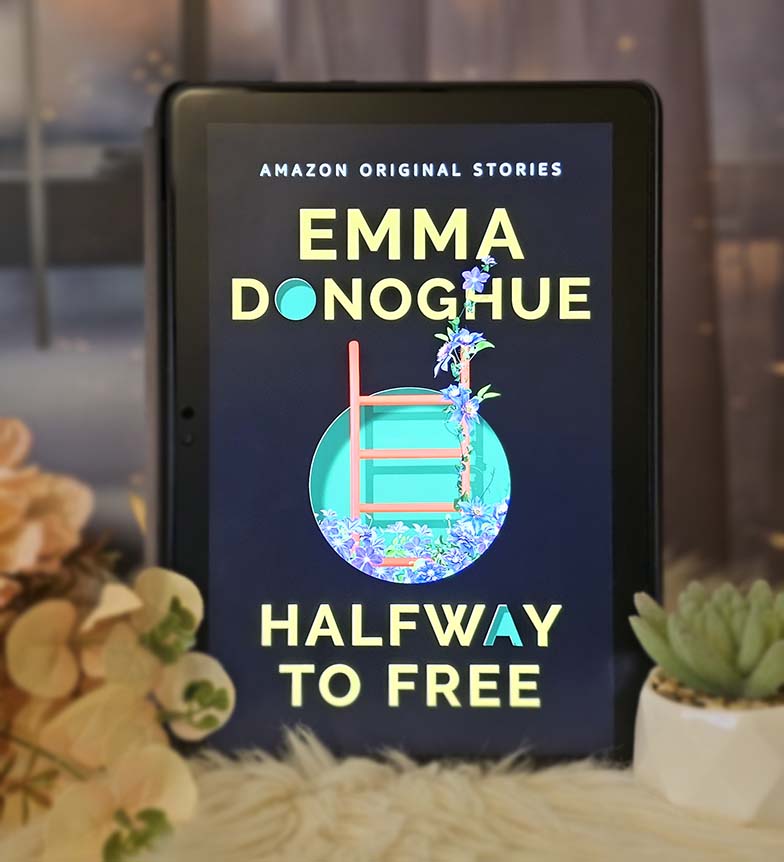
Halfway to Free
by Emma Donoghue
Emma Donoghue's contribution to Amazon's Out of Line collection imagines a 2060 in which the climate crisis has been answered by a society that strongly disincentivizes having children - and Miriam, who has accepted the rules her whole life, finds at a work retreat that she and a coworker named Ned both want what almost no one is allowed to want anymore.