
The Call of the Wild
by Jack London
Jack London's 1903 short novel: Buck, a 140-pound St. Bernard / Scotch Shepherd mix living the comfortable life on Judge Miller's California ranch, is stolen one night by a gambling-debt-saddled gardener's helper, sold into the Klondike Gold Rush as a sled dog, and slowly discovers - through cold, club, fang, and the man named John Thornton he comes to love - the wolf that has always been inside him.
Buy this book:
Spoiler Warning
This review may contain spoilers. Read at your own discretion if you haven't finished the book yet.
A 140-Pound California Dog Becomes a Yukon Wolf, and Both Things Are True at Once
Buck is a 140-pound St. Bernard / Scotch Shepherd mix who has spent his entire life as the unofficial king of Judge Miller's sprawling ranch in the Santa Clara Valley. He is not, technically, a house dog - he carries himself with too much dignity for that - but he has been thoroughly domesticated, comfortable, and certain of his place. Then one night, Manuel, the gardener's helper, steals him. Manuel has gambling debts. Buck is the asset Manuel is willing to sell. Within a few chapters, Buck has been beaten into submission by a man with a club, sold into a sled-dog team headed for the Klondike, and dropped into a world London calls, in one of the more famous formulations in the book, "the law of club and fang." Buck adapts. The book is the story of what adapting costs and what, underneath the costs, it reveals.
Jack London's 1903 short novel - he sailed to the Klondike himself in 1897, when he was twenty-one, and the Yukon details have the unmistakable authority of a writer who had hauled the actual sleds in the actual cold - is one of those classics that has earned every page of its survival. A 4.5 reflects: a book whose muscular prose, brutal honesty about animal nature, and emotional weight all hold up over a century later, with the small reservation that some of London's underlying Social Darwinism has aged in ways the modern reader will register.
The Education of a Predator
The early Yukon chapters track Buck through the brutal apprenticeship of a sled-dog team owned by François and Perrault, two French-Canadian government couriers who run their dogs hard but fairly. Buck learns to pull a sled. He learns to sleep buried in the snow. He learns to fight for his food, and then to steal it. He also learns - this is the part London is most interested in - that he is good at this. Better than good. The book's first major set piece is Buck's confrontation with Spitz, the cunning lead dog who has had it in for him since Buck arrived. The fight that finally happens, around a rabbit chase, is one of London's most precisely choreographed scenes. Buck does not just defend himself. He uses strategy, breaks Spitz's front legs deliberately, and then lets the rest of the pack close in. London writes the moment without flinching and without celebrating; Buck has done what survival required, and what survival required was something Judge Miller's ranch could not have produced in him.
What lifts these chapters past adventure is the psychological pivot London is tracking. Each fight Buck wins, each rival he displaces, each cold night he survives, an older reflex in him gets a little louder. He starts dreaming - in the book's most lyrical passages - of a primitive hairy man crouching by a fire, of running through forests with creatures who are not dogs. The domestic dog is dissolving. What is emerging is something the ranch could not have named.
The Worst and Best of Owners
The book's argument is in part about the human end of the leash. After François and Perrault, Buck is sold along with the rest of the team to Hal, Charles, and Mercedes - a trio of clueless American stampeders who have no idea what they are doing in the Yukon and refuse to believe the people around them who try to tell them. They overload the sled. They run out of food. They beat the dogs when the team can't move. Mercedes insists on riding instead of walking. Charles is weak. Hal is violent and stupid. The dogs start dying. London's portrait of these three is one of the better short studies of incompetence-as-cruelty in the canon: Hal, Charles, and Mercedes do not mean to be the villains of the book, but they don't have to mean to.
Then the trio meets John Thornton, who has set up camp on the riverbank where the trail is now too thin to safely cross. Thornton tells them the ice ahead is rotten. They don't listen. Buck, half-dead, refuses to get up; Hal beats him; Thornton, witnessing the beating, intervenes, cuts Buck loose from the harness, and stands the man off. Charles, Hal, Mercedes, and the remaining dogs press on, the ice gives way under them not long after, and the entire group goes into the freezing water. Buck's instinct was right. The one human who listened to Buck was the one who survived.
The bond between Buck and Thornton is the heart of the novel, and London writes it with a tenderness that is, given the rest of his prose register, surprising. Thornton talks to Buck as if he were a friend. Buck responds with a devotion that reads as worship. The book's most famous set piece is the bet at the Eldorado Saloon, where Thornton claims Buck can break a thousand-pound load of flour out of the frozen runners and pull it a hundred yards. A man named Matthewson takes the bet at one thousand dollars; Thornton, having boasted himself into a corner, borrows the money from his friend O'Brien; the odds settle at three to one; Matthewson raises the bet by six hundred more; the crowd assembles on the street outside. Buck does it on pure love and willpower. Thornton, kneeling beside him before the pull, whispers "As you love me, Buck. As you love me," and you feel the weight of every word.
The Pull Between Two Worlds
What lifts the book past sentimental dog story is that even at the height of his love for Thornton, Buck cannot stop hearing the wild. He disappears into the forest for days at a time. He hunts moose. He runs alongside a lone wolf who has crossed his path and who he has not killed and has not been killed by. He always comes back to Thornton's camp - until the day he comes back to find the camp destroyed, Thornton dead, and the people responsible identifiable. The Yeehats - the indigenous group London writes into the closing section, in language that has aged in ways modern readers will note - have killed Thornton. Buck's grief becomes the most violent action in the book. He attacks the Yeehats with a fury they cannot answer, and then, with the last human tie that bound him to the camp gone, he keeps walking into the forest. The closing chapters are Buck running with a wolf pack, fully himself in a way the book has been preparing him to be from the first sled-dog beating.
That London's framework - civilization as a thin leash, evolution as a force pulling individuals back toward what they were - is shaped by the Social Darwinism of his era is fair to flag. The argument has aged. The emotional accuracy of the journey has not. London is not romanticizing Buck's transformation any more than he is condemning it. He is letting it be what it is.
What 1903 Still Holds
The book's specific gifts are the cold (which kills in minutes if the rules are not followed), the dog-team hierarchy (which is brutal and accurate), and London's prose, which is muscular, efficient, and only occasionally over-reaches. The closing image - Buck running at the head of a wolf pack so fearsome that the Yeehats whisper of a Ghost Dog who haunts the valley where Thornton died, and who returns each year to mourn at the spot - is one of the most enduring last pages in nineteenth- and early-twentieth-century American adventure fiction.
A 4.5 reflects: an essential short novel whose authority comes from a writer who had been there, whose central transformation reads as honest rather than mystical, and whose ending earns the wildness it sends Buck into. The half-star comes off for the era's dated framework around Buck's Yeehat-killing rampage, which a contemporary reader will register even as the rest of the book lands.
Rating: 4.5/5 ⭐
Perfect for: Fans of adventure classics, dog-story readers who want their dog stories with teeth, anyone interested in nature writing built on lived experience, readers drawn to transformation narratives.
Skip if: The era's depiction of indigenous people is a hard limit, animal suffering is too difficult to read, or you prefer your classics more genteel.
You Might Also Like
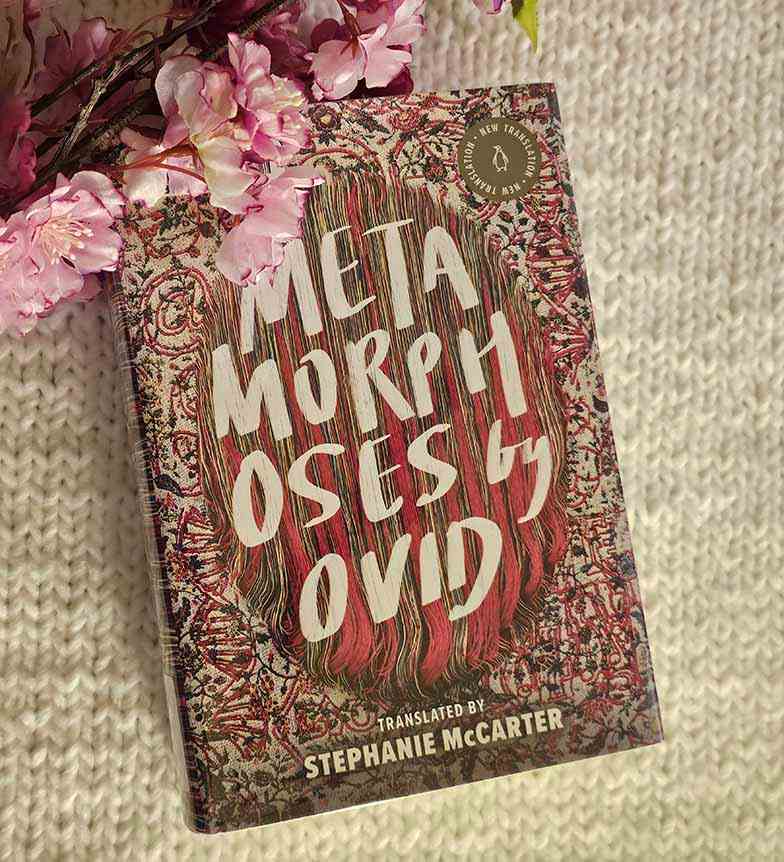
Metamorphoses
by Ovid
A masterful collection of mythological tales exploring themes of transformation, love, and power through the lens of Roman poetry. Ovid weaves together over 250 stories from Greek and Roman mythology into an epic narrative.

My Ántonia
by Willa Cather
Willa Cather's American masterpiece about Ántonia Shimerda, a Bohemian immigrant girl on the Nebraska prairie, told through the nostalgic memories of childhood friend Jim Burden. Luminous prose, elegiac tone, and one of literature's most enduring portraits of pioneer life and immigrant experience.
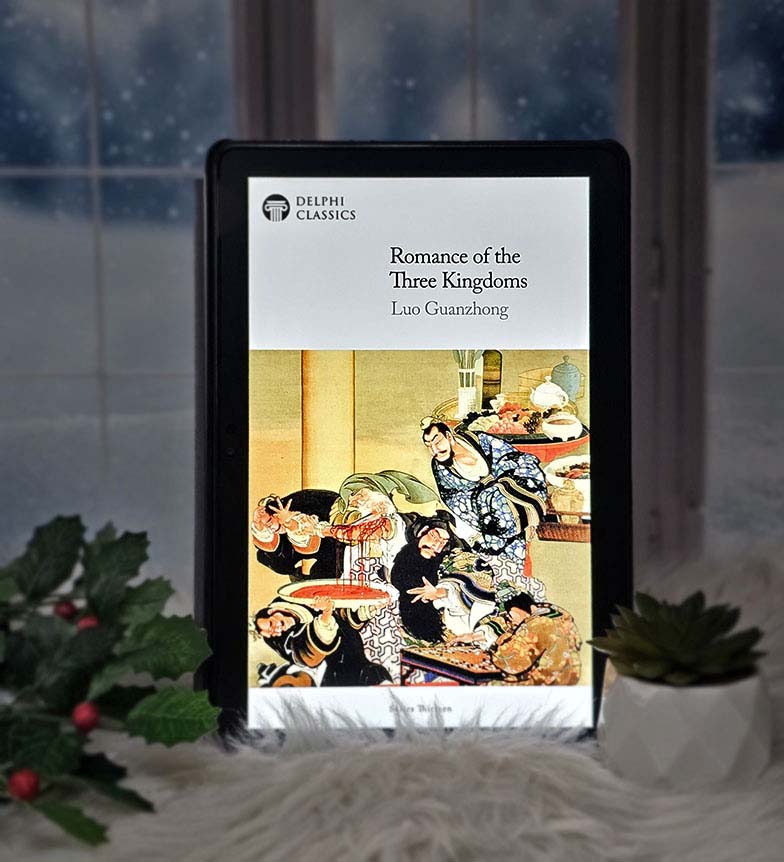
Romance of the Three Kingdoms
by Luo Guanzhong
In 184 CE the Yellow Turban Rebellion broke the Han dynasty, and the next hundred years of warlord chaos resolved into three rival kingdoms - Cao Cao's Wei in the north, Liu Bei's Shu-Han in the west, Sun Quan's Wu in the south - before the Sima family quietly inherited everything and reunified China as the Jin dynasty in 280 CE; more than a thousand years later, in the 14th century, Luo Guanzhong took the long accumulation of historical chronicle, opera, and storytellers' embellishment around that century and produced one of the Four Great Classical Novels of Chinese literature, which Moss Roberts has rendered into 2,300-plus unabridged English pages featuring the Oath of the Peach Garden between Liu Bei, Guan Yu, and Zhang Fei; the strategist Zhuge Liang treated as something close to a demigod; the Battle of Red Cliffs as the inflection point; and hundreds of warlords, surrenders, sieges, and stratagems any modern Western reader is going to have to commit to in a way most modern novels do not ask for.