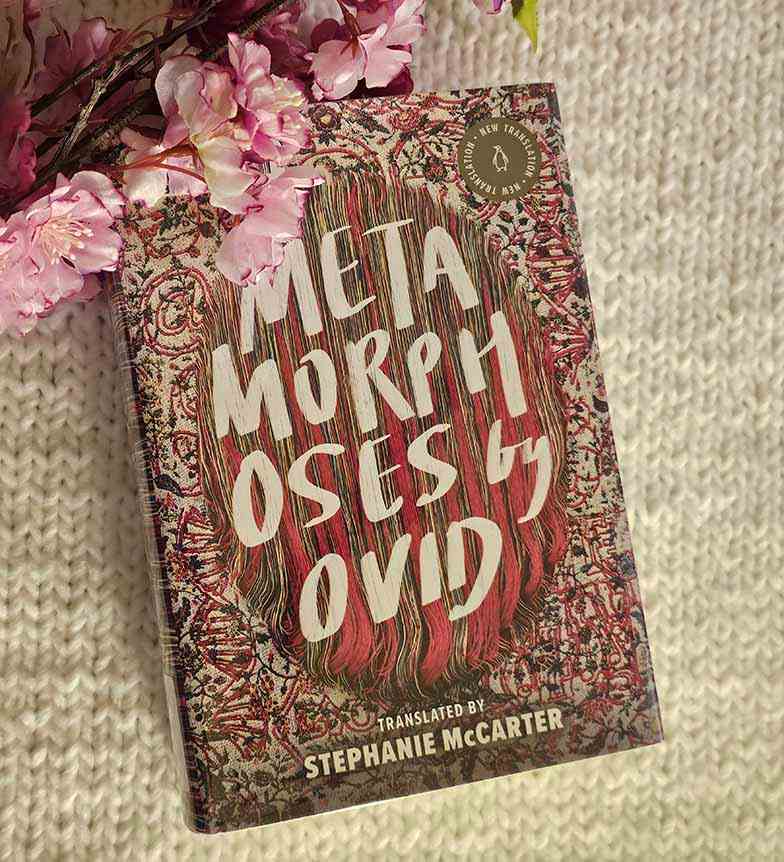
Metamorphoses
by Ovid
A masterful collection of mythological tales exploring themes of transformation, love, and power through the lens of Roman poetry. Ovid weaves together over 250 stories from Greek and Roman mythology into an epic narrative.
Spoiler Warning
This review may contain spoilers. Read at your own discretion if you haven't finished the book yet.
Everything Changes, Nothing Is Lost
Two thousand years ago, a Roman poet named Publius Ovidius Naso - Ovid - decided to retell every myth he knew, connected by a single theme: transformation. The result was Metamorphoses, a fifteen-book epic running from the creation of the universe to the deification of Julius Caesar, containing over 250 stories in which gods become animals, humans become trees and flowers and constellations, and nothing - not bodies, not kingdoms, not the gods themselves - stays fixed in a single form. Painters from Titian to Picasso drew on it; Shakespeare borrowed from it constantly; Dante ranked Ovid beside Homer and Virgil. You've met its stories even if you've never heard Ovid's name - every reference to Narcissus or Icarus reaches back to this text.
I read the Penguin Classics edition, translated by David Raeburn into verse that preserves the hexameter rhythm while staying readable. At 723 pages it's a commitment, and not always an easy one: some sections are breathtaking, some are a slog, and some are genuinely disturbing in ways that need more than a passing content warning. A 3.5 probably sounds low for one of the most important poems in Western civilization, so let me be honest about why: the brilliance is undeniable, but so are the elements that make it a difficult, sometimes deeply uncomfortable reading experience now.
The Myths That Still Live in Us
When Ovid is at his best, there's nothing else like it. Daphne and Apollo opens the mythological narrative and sets the tone: Apollo pursues a nymph who doesn't want him, she prays to her river-god father for escape, and he transforms her into a laurel tree - bark crawling up her legs, hair sprouting into leaves - just before Apollo reaches her. The god, denied, claims the laurel as his sacred tree anyway. It's a story about autonomy and its violation, about a woman who would rather stop being human than submit, and about the way power answers refusal by rewriting the story so it still gets what it wants. That could have been written yesterday.
Echo and Narcissus is even more psychologically precise - the girl cursed to repeat others' words loving a boy who falls for his own reflection, each trapped in a loop the other can't break, rendered with a tenderness that pities more than it condemns. And Orpheus and Eurydice is the poem's great heartbreak: the musician whose song moves Hades himself, the one condition, the backward glance steps from the surface. Ovid understood that the worst tragedies aren't caused by fate but by the human inability to simply not do the one thing you've been told not to do. These episodes have been retold for two millennia because the psychology underneath the mythology is exact.
The Troubling Heart of the Poem
Here's what I can't gloss over, and the main reason this lands at 3.5: a significant number of these myths center on sexual violence, and Ovid's treatment of it is wildly inconsistent. At one pole, the Philomela episode - rape, mutilation, and the tapestry that tells the story her cut-out tongue cannot - is one of the most harrowing passages in ancient literature, and it is unmistakably on the victim's side; Ovid gives Philomela and her sister their fury in full. At the other pole, Jupiter's serial assaults on mortal women are rendered as comic misadventure - the god as bull, swan, shower of gold, the tone closer to bedroom farce than horror. Whether that disconnect reflects Ovid's attitudes, his culture's, or a deliberate satire of divine power is a centuries-old scholarly debate; regardless of intent, reading these passages in sequence ranges from uncomfortable to genuinely upsetting.
That's not a reason not to read Metamorphoses - it's a reason to read it with your eyes open. Engaging with it honestly means neither excusing the disturbing material nor dismissing the whole work because of it. But the experience is not the uncomplicated pleasure a "greatest hits of mythology" framing suggests.
The Long Poem Problem
The other challenge is structural. Fifteen books of continuous verse, no chapter breaks, and a narrative strategy that works more like a river than a road: stories flow into each other, characters from one tale narrate the next, stories nest inside stories. Some of these transitions are virtuosic. Across 723 pages, the cleverness becomes its own endurance test - there's no sustained narrative to carry you, and once you're past the famous episodes, the lesser-known tales blur, especially in the later books where Ovid works through Trojan War material on territory that isn't his strongest. Raeburn's translation reads cleanly and the notes are helpful, but no translation solves the fundamental fact that this poem assumes you already know the stories and are here for Ovid's spin on them. First-time mythology readers may be better served starting with a prose retelling like Edith Hamilton's Mythology and coming to the original afterward.
My honest recommendation: read Books I through IV, which hold Daphne, Echo and Narcissus, and Phaethon among others. If those grab you, keep going; if the verse wears thin, give yourself permission to skip to the episodes that interest you. This work has been read in fragments for two thousand years, and there's no shame in joining that tradition. Either way, what you gain is the raw material that shaped Western art at a foundational level - and a poet who understood, two millennia early, that transformation isn't the exception to human experience. It's the whole of it.
Rating: 3.5/5 ⭐
Perfect for: Classics enthusiasts, mythology lovers, readers interested in the source material behind countless works of Western art and literature, anyone willing to wrestle with a difficult text for genuine rewards.
Skip if: Ancient poetry doesn't appeal to you, you need sustained narrative to stay engaged, or the sexual violence in classical mythology is something you'd rather not encounter in detail.
You Might Also Like
Aesop's Fables
by Aesop
A timeless collection of brief stories featuring animals and mythical creatures that convey moral lessons about human nature, virtue, and wisdom through simple but profound narratives.

Your Perfect Year
by Charlotte Lucas
When a mysterious diary falls into his hands on New Year's Day, a rigid businessman embarks on a life-changing journey of tasks and self-discovery that connects him with a free-spirited woman and changes both their lives forever.

The Late Show
by Michael Connelly
LAPD Detective Renée Ballard works the graveyard shift, catching cases no one else wants. When two cases intersect dangerously, she must go rogue to find justice.