
Someone Else's Secret
by Julia Spiro
In the summer of 2009, recent college graduate Lindsey takes a nanny job for an influential Martha's Vineyard family and becomes close to their nearly-fifteen-year-old daughter Georgie - until a night by the lighthouse breaks the friendship and locks both women into a ten-year silence about what happened, in Julia Spiro's debut novel about class, complicity, and why people who survive things don't always speak.
Buy this book:
Spoiler Warning
This review may contain spoilers. Read at your own discretion if you haven't finished the book yet.
A Vineyard Summer, a Lighthouse, and Two Women Carrying the Same Silence for Ten Years
The summer is 2009, and Lindsey is the kind of recent college graduate the late-aughts economy was producing in volume - educated, ambitious, broke, taking a nanny job for an influential family on Martha's Vineyard partly because she needs the money and partly because she suspects, with the careful instincts of someone whose career is still entirely hypothetical, that the connections you make watching wealthy people's children might matter more than her degree. The family has a daughter, Georgie, nearly fifteen, the eldest of the kids and old enough to be more company than charge. Georgie is the dreamy, restless, almost-grown teenager who watches her parents' adult world with the specific frustration of a kid who wants in but is still being given craft projects. Lindsey is exactly the kind of older-sister figure Georgie has been waiting for. They click. The friendship that grows between them across the early summer is one of the more carefully written intergenerational female friendships in recent commercial fiction.
Then there is a night by the lighthouse.
Julia Spiro's 2020 debut Someone Else's Secret is, structurally, two books at once. It is a Vineyard summer novel doing the work the genre asks of it - the beach houses, the dinner parties, the year-rounder/seasonal-worker class membrane that makes the Vineyard a perfect setting for a novel about who belongs and who is allowed to think they belong. It is also a serious novel about sexual assault, complicity, the specific reasons survivors don't speak, and the way ten years of silence can be carried by two different women for two different reasons that are both, in their own ways, unanswerable. A 4.0 reflects: a strong debut that takes its hard material seriously and earns the slow burn its first half asks of the reader.
Lindsey, Georgie, and the Vineyard They Don't Belong to in the Same Way
Spiro's clearest gift in the early chapters is the layered class observation. Lindsey is on the Vineyard but not of it; Georgie is of the Vineyard but does not yet understand what that means. The friendship is built on a kind of mutual mis-recognition - Georgie sees Lindsey's freedom (the apartment alone, the boyfriend back on the mainland, the agency Georgie does not yet have) without seeing the precarity that comes with it; Lindsey sees Georgie's privilege (the house, the family, the assumed future) without entirely registering how invisible the youngest-of-the-adults-not-yet-an-adult position is to a teenager surrounded by performative grown-ups. They give each other something the others in the house can't, and the chapters in which they get to know each other are some of the more pleasurable summer-novel writing in 2020.
The Vineyard itself is rendered with care and not idealized. The summer-people networking circuit, the parties Lindsey is at as staff-with-benefits, the way money makes invisible walls even at supposedly shared events - Spiro is good at this register, and it does the structural work of laying out who has power and who can be made to disappear from a story by the people with it.
The Lighthouse, and What Spiro Refuses to Spectacularize
The book is built around the lighthouse night without depicting it in graphic detail, and that is a deliberate authorial choice. Spiro is not interested in the assault as a set-piece. She is interested in what happens around it - the silence that closes over it, the way the people who could have known choose not to know, the particular way a young woman who has been treated as a guest in someone else's house can be made to feel responsible for the comfort of the people who hurt her. The book's central argument, which it makes patiently rather than declaratively, is about why the women who do not speak don't - and Spiro takes the question seriously enough that the answers she lets each of her two characters arrive at are different from each other and equally legible.
The dual timeline (summer 2009 / a decade later) creates the specific kind of dread that knowing something is coming produces. The reader does not have a mystery to solve about what happened. The reader has a friendship to watch take shape with the awareness that the night by the lighthouse is going to break it.
The Ten-Year Silence, and Why Each of Them Kept It
The decade-later chapters are the book's quieter half, and they're where the moral seriousness shows. Lindsey's reasons for not speaking are different from Georgie's, and Spiro is fair to both. There is the question of whose word would be believed against whose. There is the question of what speaking would cost - the futures both women have built around not speaking, the relationships, the careers. There is the harder question of whether the women themselves have allowed their own memories of that night to soften, distort, or become uncertain in the way trauma is allowed to do when a survivor has nowhere else to put it. The book takes each of these seriously without packaging the silence as a single explanation.
When Lindsey and Georgie finally meet again, the conversation does not resolve in the cathartic way a less serious novel would have written it. It resolves in the way these conversations actually resolve, which is partial.
Why a 4
The strengths: the friendship in the first half, the patience of the dual-timeline structure, the moral seriousness about silence, the Vineyard as actual setting rather than postcard. The reservations - and they're the same ones several reviewers have flagged - are mostly about the closing pages, which arrive a touch too tidily for what the book has built. After three hundred patient pages about the impossibility of clean answers, the resolution has the slightly compressed feel of an editor's deadline. Some of the supporting characters around the central pair are sketches rather than people. None of that is enough to dock more than half a star. A 4.0 reflects: a debut that handles difficult material with care and earns its emotional payoff, even where the closing pages telegraph the rush.
Rating: 4.0/5 ⭐
Perfect for: Readers of literary-leaning women's fiction, fans of dual-timeline novels about female friendship, anyone who wants a Vineyard summer novel that takes class and consent seriously without sermonizing.
Skip if: Sexual assault content is too close to your reading limits right now, you need fast pacing in your contemporary fiction, or you find debut-novel resolutions in this register predictably tidy.
You Might Also Like

Big Little Lies
by Liane Moriarty
Liane Moriarty's 2014 novel about three mothers at a Sydney kindergarten - Madeline, Celeste, and Jane - whose first school year together is structured around the countdown to a Trivia Night that ends with somebody dead on the pavement, and around the much smaller and much larger lies the rest of the parent community has been telling itself the whole time. Domestic-suspense with actual satire and an actual position on what it is taking on.
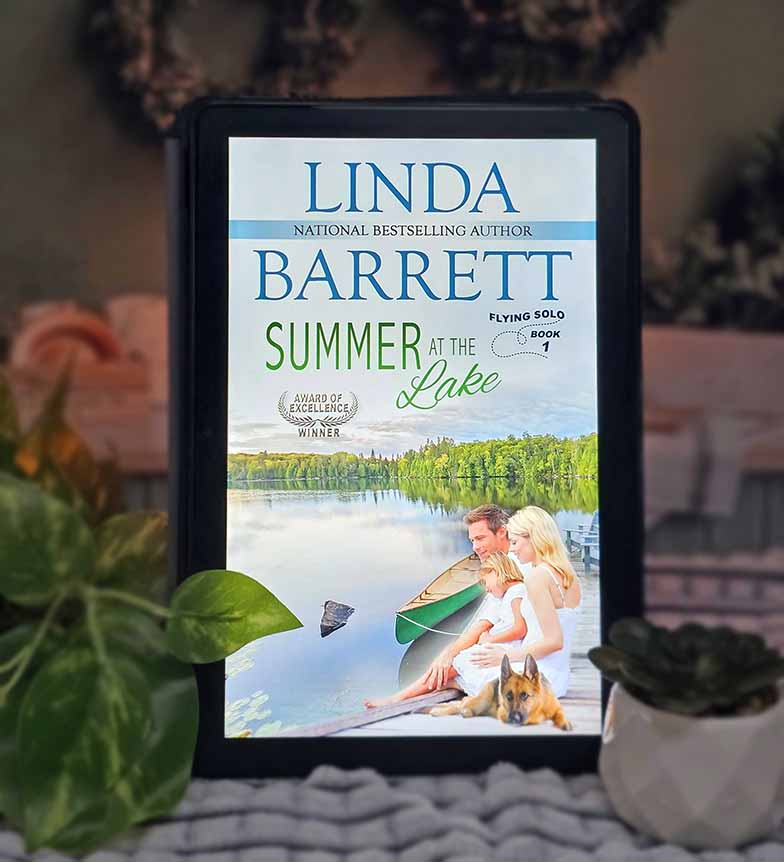
Summer at the Lake
by Linda Barrett
An NYPD veteran who lost a child during a hostage negotiation retreats to Morningstar Lake with his German Shepherd Quincy and his saxophone; a widow named Kristin McCarthy borrows her friend Marsha's Catskills cottage and brings her eleven-year-old daughter Ashley, a recent rape survivor who has stopped being able to be in her own house - and the music carries across the water in Linda Barrett's first Flying Solo novel.

Honeysuckle Season
by Mary Ellen Taylor
Wedding photographer Libby McKenzie - newly home to Virginia after a divorce, multiple miscarriages, and her father's death - takes a job photographing a wedding at the Woodmont estate in the Blue Ridge Mountains, becomes drawn to its honeysuckle-overgrown greenhouse, and pulls a thread that runs back through the estate's owner Elaine, a 1940s teen named Sadie, and the closed adoption Libby has carried questions about her whole life.