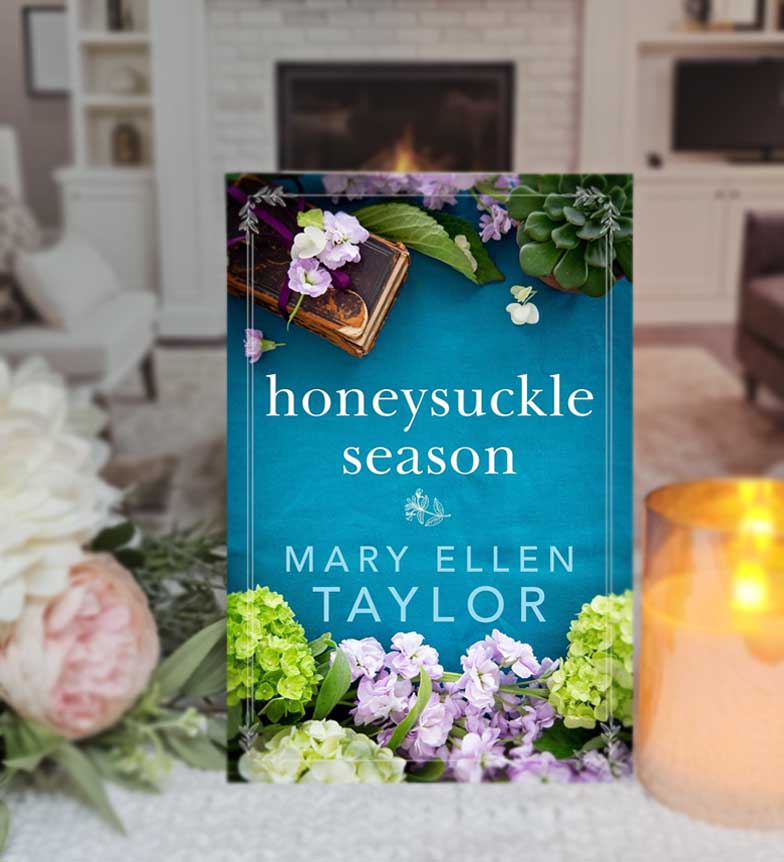
Honeysuckle Season
by Mary Ellen Taylor
Wedding photographer Libby McKenzie - newly home to Virginia after a divorce, multiple miscarriages, and her father's death - takes a job photographing a wedding at the Woodmont estate in the Blue Ridge Mountains, becomes drawn to its honeysuckle-overgrown greenhouse, and pulls a thread that runs back through the estate's owner Elaine, a 1940s teen named Sadie, and the closed adoption Libby has carried questions about her whole life.
Buy this book:
Spoiler Warning
This review may contain spoilers. Read at your own discretion if you haven't finished the book yet.
A Greenhouse Covered in Honeysuckle, a Wedding That Pulls a Thread, and the Birth Mother at the Other End
Libby McKenzie has had the kind of recent year that doesn't admit a graceful summary. Her marriage ended. She lost multiple pregnancies, the kind of grief that doesn't get its own funeral. Her beloved father died. Back in her Virginia hometown, she has reorganized her life around the wedding-photography business that gives her a reason to leave the house and a way to be useful at other people's happy days. When a job lands at Woodmont - the historic Blue Ridge Mountains estate that her father always seemed quietly attached to in ways he never quite explained - Libby takes it. She meets the owner, Elaine Grant, a woman whose interest in her photographer is going to turn out to be more specific than the wedding warranted. And on the grounds, half-buried in years of overgrowth, is the greenhouse: an old glass building so completely consumed by honeysuckle vines that Libby cannot quite tell its shape, and that she cannot stop thinking about.
Mary Ellen Taylor's 2020 novel Honeysuckle Season is the kind of contemporary women's-fiction-plus-historical novel that has its own predictable shelf at this point - dual timelines, a long-held secret, an estate, an unlikely-but-foretold romance, an adopted daughter pulling at threads. It is also, within that genre's expectations, executed cleanly and with real warmth. A 4.0 reflects: a satisfying book that does the work the genre asks of it, with characters that feel inhabited, and one of the better Blue Ridge settings I've read recently.
Libby, Elaine, and the Woodmont Job
The opening chapters do the patient work of letting the reader feel Libby's grief without leaning on it. Wedding photography is, structurally, a job that puts a recently-divorced woman in front of other people's happiness for a living - Taylor writes that contradiction with respect rather than pathos. The Woodmont assignment is a turning point not because anything dramatic happens at the wedding itself, but because Elaine Grant, the estate's owner, takes an immediate interest in Libby that doesn't quite fit the photographer-and-client relationship. Elaine asks Libby to come back - not just for the wedding shoot, but to document the broader restoration project Elaine has been planning for the grounds. The greenhouse is the part that catches Libby. The honeysuckle has consumed it for so long that the building underneath is going to take serious work to recover.
Elaine's reasons for wanting the greenhouse restored, and for wanting this particular photographer documenting the project, are part of what the novel patiently unfolds.
Olivia and Sadie, 1940s
The historical timeline drops the reader into the same Blue Ridge Mountains in the 1940s, where two women's lives collide in a way that will reach forward eight decades. Sadie is a poor teen, scrappy, capable behind the wheel in a way that not all the men in town are. Olivia is married to a wealthy man whose insistence on controlling her includes, among other things, his refusal to let her learn to drive. He hires Sadie to drive Olivia around town. Sadie, who recognizes the situation she has been hired into, secretly teaches Olivia to drive anyway. The friendship between the two women - one of them privileged but trapped, the other broke but free in the ways that count - is the historical timeline's emotional engine. When Sadie has to go on the run, the two women's paths separate, but the bond they formed is going to outlast the distance, and the secret they share is the thing that keeps it alive.
What Taylor does well in these chapters is render the period without leaning too hard on the period-novel tics that often pad these timelines. Sadie has a real interior life. Olivia's marriage is rendered with the specificity that abuse-and-control marriages require. The driving lessons - which sound, summarized, like a charming trope - are written as the small, dangerous defiance they actually are.
Colton, the Slow Romance, and the Reveal That Reframes Everything
Colton Reese, the young widower Elaine has hired to help with the restoration, is the contemporary romance the genre requires, and Taylor handles him with restraint. He is recently widowed. He is raising his daughter alone. He is not in any hurry to be in love with anyone, and Libby is not in any condition to be loved. The two of them work alongside each other on the grounds, become careful with each other, and then become more than careful - on a timeline the book never rushes. Colton-and-Libby is one of the more measured romance arcs in this corner of the genre, and it is the better for it.
The plot's larger reveal, which the book builds toward steadily rather than springing, is that Libby was adopted - which Libby has always known - and that the closed adoption she has been quietly curious about her whole life runs directly through the people she has just met. Skip the rest of this paragraph if you want the reveal fresh. Elaine is Libby's biological mother. Sadie - now living in New Jersey, decades after the events of the 1940s timeline - was the friend Elaine stayed with during the pregnancy. The greenhouse, the estate, Elaine's specific interest in this particular photographer, her father's quiet attachment to Woodmont - all of it organizes itself, in the closing chapters, into an answer Libby's father carried his entire life and never quite told her.
Why a 4
The strengths: characterization across both timelines, the patience of the romance arc, the Blue Ridge setting rendered with affection, the way the honeysuckle-greenhouse metaphor (overgrowth covering something worth recovering) carries the book without becoming heavy-handed. The reservations: the genre's predictability is here in full - readers who have read three books in this dual-timeline-secret-estate space will see most of the beats coming - and a few of the supporting characters (Libby's friends, Elaine's broader circle) are sketched cleanly without much depth. None of that is fatal. A 4.0 reflects: a book that delivers what its genre promises, with above-average emotional truthfulness about grief and adoption.
Rating: 4.0/5 ⭐
Perfect for: Readers of dual-timeline women's fiction (Kate Quinn, Kristin Hannah, Patti Callahan), fans of estate-and-secret historical-contemporary blends, anyone who wants a slow romance built on shared grief rather than instant chemistry.
Skip if: You bounce off dual-timeline structures, you find adoption-reveal plots predictable in the genre, or you want women's fiction with sharper prose than Taylor's deliberately accessible register provides.
You Might Also Like
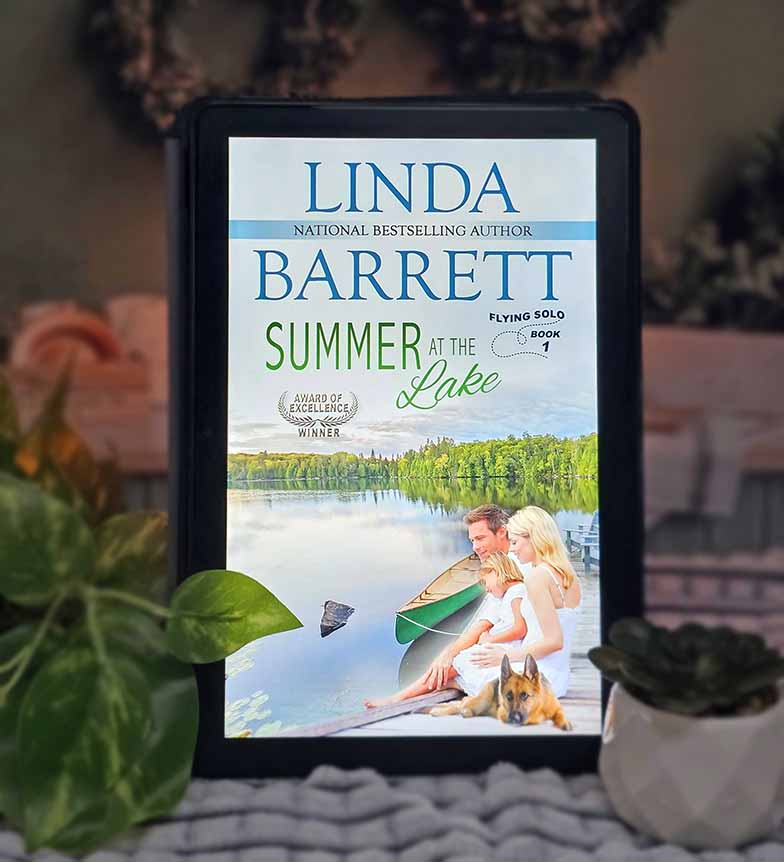
Summer at the Lake
by Linda Barrett
An NYPD veteran who lost a child during a hostage negotiation retreats to Morningstar Lake with his German Shepherd Quincy and his saxophone; a widow named Kristin McCarthy borrows her friend Marsha's Catskills cottage and brings her eleven-year-old daughter Ashley, a recent rape survivor who has stopped being able to be in her own house - and the music carries across the water in Linda Barrett's first Flying Solo novel.
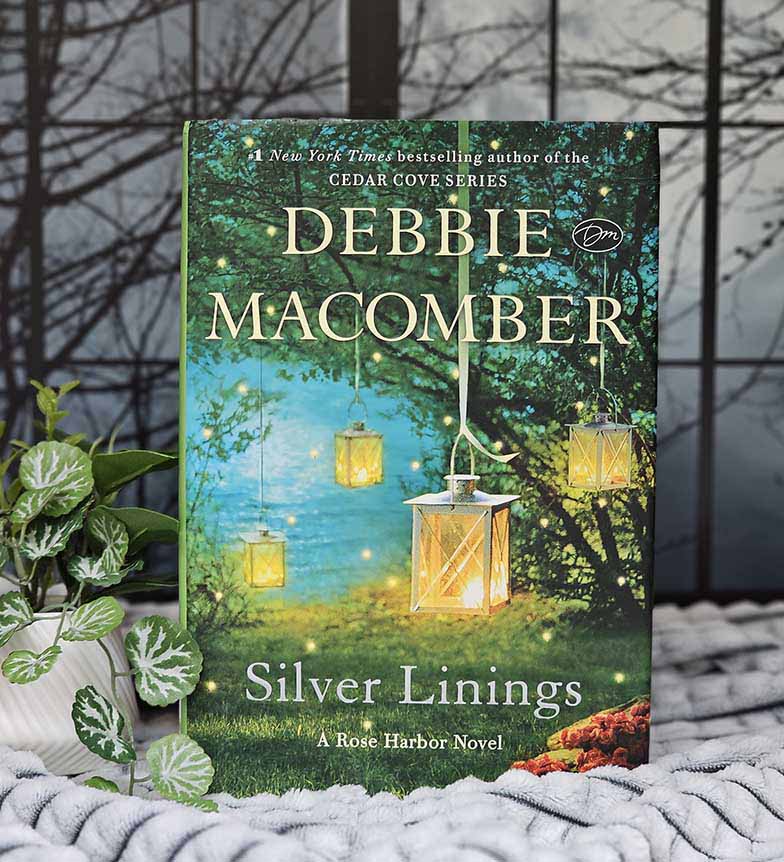
Silver Linings
by Debbie Macomber
When two wounded souls cross paths in a small Washington town, they discover that sometimes the hardest battles are fought in the heart. A heartwarming story about finding hope and love after loss.

Your Perfect Year
by Charlotte Lucas
When a mysterious diary falls into his hands on New Year's Day, a rigid businessman embarks on a life-changing journey of tasks and self-discovery that connects him with a free-spirited woman and changes both their lives forever.