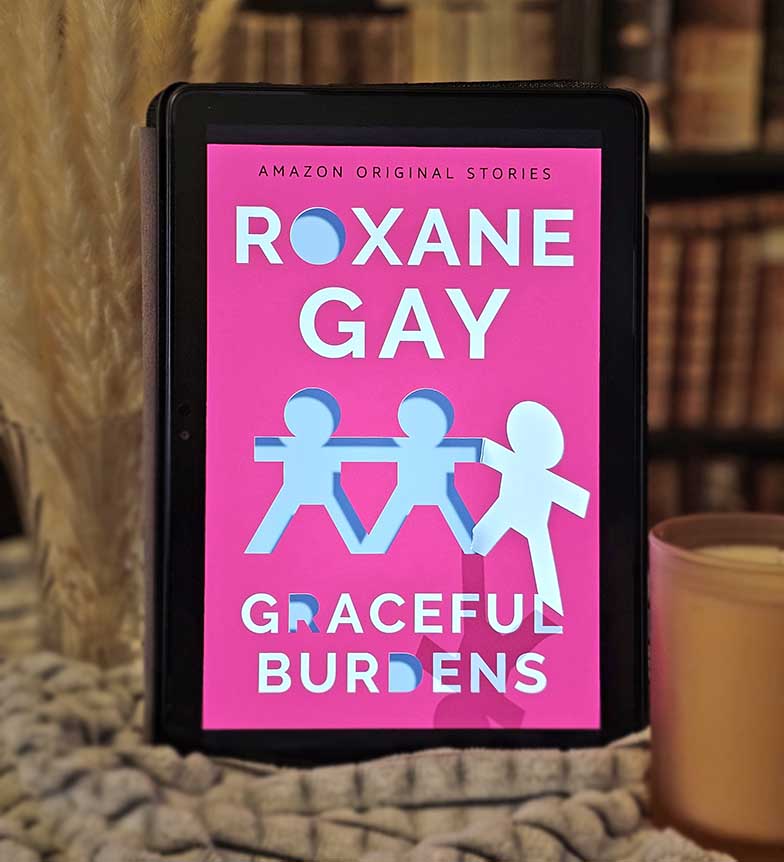
Graceful Burdens
by Roxane Gay
In Roxane Gay's short, administrative dystopia, every girl is tested at sixteen to see whether the state will license her to have a child of her own; Hadley failed, so she goes to the baby library, where unlicensed women can borrow an infant girl on a two-week loan.
Buy this book:
Spoiler Warning
This review may contain spoilers. Read at your own discretion if you haven't finished the book yet.
At Sixteen, the State Decides Whether You Get to Be a Mother
The premise is sharp enough to land before the second paragraph. In Roxane Gay's Graceful Burdens, a 2020 short story for Amazon's Out of Line collection, every girl is genetically tested at age sixteen to determine whether the state will issue her a license to procreate. The genetically privileged few - Seraphina, the story's licensed counterpoint character, is one of them - are permitted to have children of their own. Everyone else is filed away as unfit. Hadley, the protagonist, was filed. The closest she will be allowed to come to motherhood is the baby library: a calmly bureaucratic facility where unlicensed women can check out an infant girl on a two-week loan, the way you'd check out a book, except the book in this case is a baby that has to be returned.
Gay packs all of that, plus a full character arc, into about forty-five pages. The audiobook (forty-something minutes, narrated by Samira Wiley - the casting choice doing thematic work for anyone who has watched The Handmaid's Tale) is the form most readers will want; this is a story that benefits from being heard. A 4.0 here means the premise is excellent, the prose is razor-clean, and the scope is exactly what the form can carry - not more.
The Library and the Two-Week Loan
The central image is what stays. A facility that smells like soap. Shelves, in effect, of infants. A check-out desk. Hadley fills out the paperwork, takes the baby home, feeds her, holds her at three in the morning, and at the end of two weeks brings her back. There is a curiously endless supply of babies; Gay, with deliberate restraint, does not explain where they come from. The horror is denser for that withholding. The story's argument is not about a particular sourcing scandal - it's about a system that has commodified maternal longing into a regulated short-term loan and convinced the women using it that this is mercy. One thread of the worldbuilding worth noticing: only girl babies are available at the library. The boys are not in the catalog. Whatever that means, Gay lets it sit on the page without underlining.
What makes the dystopia work is its register. Gay's bureaucracy isn't loud or cruel; it's polite and procedural, the kind of system that comes with a customer service line and a satisfaction survey. Hadley is treated with consideration at every interaction. The kindness is part of the violence.
Hadley, Seraphina, and the Dual View
The structural smartness is that Gay gives the reader both sides of the licensing line. Seraphina, who is licensed, lives the version of motherhood the state has approved - and Gay does not let the licensed life off the hook either. Inside the same regime, the licensed woman is also being managed; the choice the state has made for her is just a different choice. Hadley, on the other hand, is finding inside the temporary, regulated comfort of borrowed motherhood a self-knowledge she did not have before her sixteen-year-old test result decided her future for her. The borrowed baby is not a substitute for the life she was denied. It is the thing that finally makes her ask whether the system gets to define what her life means.
The arc the story walks Hadley through is the kind of slow internal pivot that, in a novel, would take two hundred pages. Here it happens in the white space between scenes, and Gay trusts the reader to be paying attention. That trust is one of the more pleasurable things about the piece.
What Forty-Five Pages Can Hold
Like most of the best Out of Line entries, this story is doing the work a short story can do: deliver a premise, render its emotional register, and stop before the world it's built starts to wear at the edges. Gay's prose is direct, unfussy, and confident. The story does not spell out what happens after Hadley's quiet revolt; it doesn't have to. What it spells out is enough. If you've read Bad Feminist or Hunger or any of Gay's essays on bodily autonomy, you'll recognize the moral spine of this piece. If you haven't, this is a forty-five-page on-ramp.
A 4.0 here is for what Gay actually pulls off in this length. Half a star comes off only because the premise is generative enough to support a novel, and on a second read I caught myself wishing for the longer version. That's the cost of a sharp short story: it makes you want more of it.
Rating: 4.0/5 ⭐
Perfect for: Roxane Gay readers, fans of Atwood-style speculative fiction about reproductive control, listeners who'd happily hand Samira Wiley an hour of their day, anyone with an evening and an appetite for a dystopia that whispers rather than shouts.
Skip if: You want the worldbuilding fully explained rather than implied, dystopian premises about state-controlled motherhood are too close to current events for comfort, or you bounce off short stories that decline to tie themselves up.
You Might Also Like
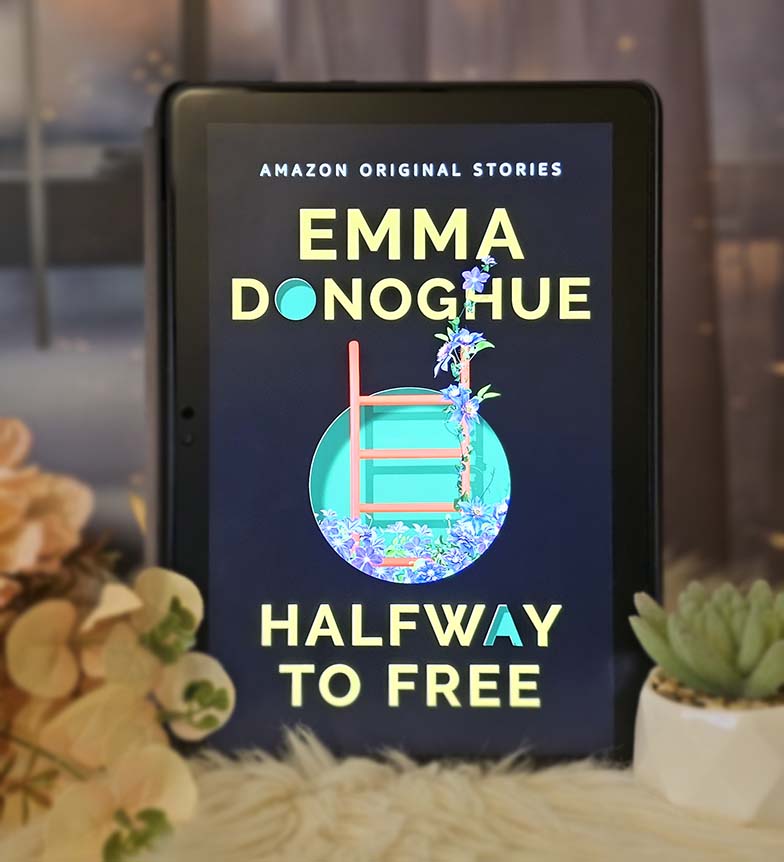
Halfway to Free
by Emma Donoghue
Emma Donoghue's contribution to Amazon's Out of Line collection imagines a 2060 in which the climate crisis has been answered by a society that strongly disincentivizes having children - and Miriam, who has accepted the rules her whole life, finds at a work retreat that she and a coworker named Ned both want what almost no one is allowed to want anymore.
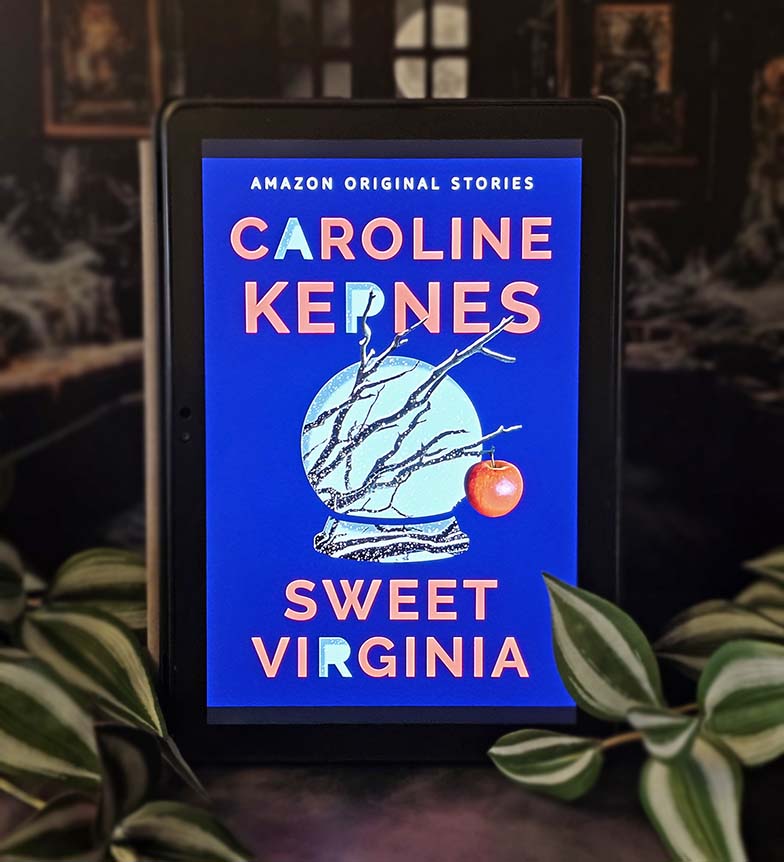
Sweet Virginia
by Caroline Kepnes
Caroline Kepnes's contribution to Amazon's Out of Line collection sends an exhausted, recently-fired new mother named Shelby chasing a Hallmark-movie fantasy with a secret admirer - and lands her, in a darkly comic Stepford Wives-meets-The Prisoner pivot, on a rehabilitation ranch for women classified W2 who must be retrained into W1 before they're allowed to go home.
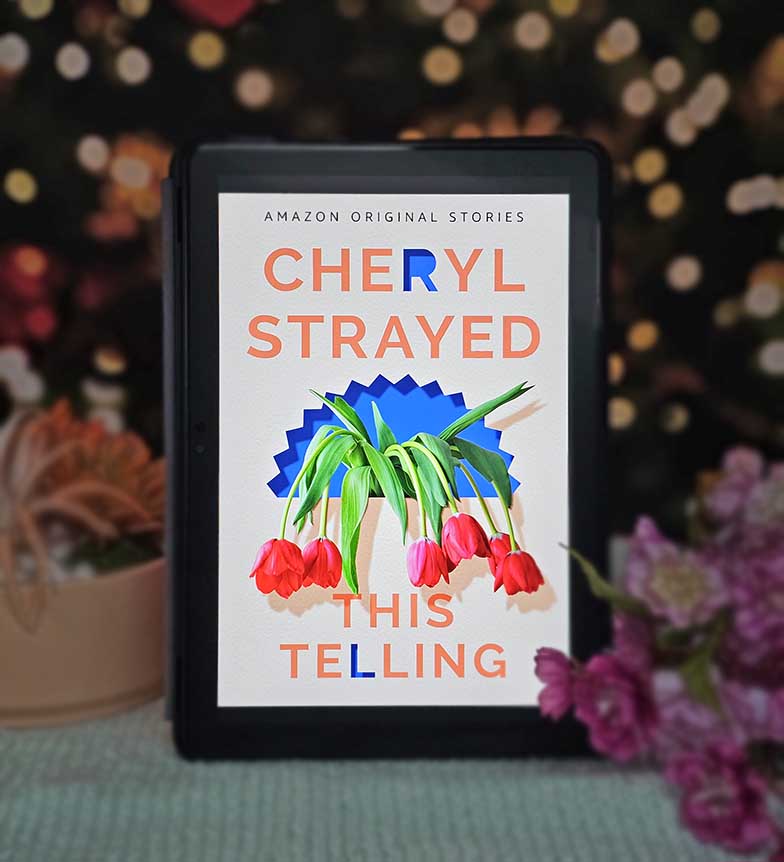
This Telling
by Cheryl Strayed
An Ancestry.com match arrives in the inbox of a woman who has spent forty-plus years pretending the baby she gave up for adoption in 1964 never existed - and Cheryl Strayed traces, in a tight short story for Amazon's Out of Line collection, what happens when a teenager named Geraldine Waters has to integrate the life she actually lived with the one she's been telling.