
The Revisioners
by Margaret Wilkerson Sexton
A multi-timeline Louisiana novel that braids Josephine - born into slavery, a farm-owning widow in 1924, befriended by a white neighbor whose husband joins the Klan - with her biracial great-granddaughter Ava, who in 2017 New Orleans moves in with her wealthy white grandmother Martha and finds the arrangement curdling into something dangerous.
Spoiler Warning
This review may contain spoilers. Read at your own discretion if you haven't finished the book yet.
Two Black Women, Two White Houses, One Spiritual Lineage
Margaret Wilkerson Sexton's second novel braids together two stories that are, structurally, the same story. In 1924 rural Louisiana, Josephine is a Black widow who owns a thriving farm and has just been befriended, with what feels like sincerity, by Charlotte, the white woman next door. In 2017 New Orleans, Ava Jackson is a biracial single mother who has lost her paralegal job and moves into the comfortable home of her wealthy white grandmother, Martha Dufrene, who has offered to pay her to live there as a companion. In both timelines, a Black woman accepts a kind of white intimacy that ought to be safe and discovers, slowly, that it isn't. Around and beneath both stories runs a third: Josephine's mother was a Revisioner - a member of a secret sect of Black spiritual healers with what the book calls second sight, women who could fix the present, see the future, and reach back to call to the past.
The Revisioners is, on the page, an ambitious book. It spans roughly five generations of women, slips back to 1855 to show Josephine escaping slavery as a child by drawing on inherited Revisioner power, and reaches into 2017 with a contemporary thread that one Kirkus reviewer compared to a "Get Out-flavored claustrophobia." The novel won the NAACP Image Award for Outstanding Literary Work in fiction, was a New York Times Book Review Notable Book, and earned the 2020 George Garrett New Writing Award. The recognition is real and the project is real. For me the execution didn't quite land at the ambition's altitude, which is what a 3.0 means here - not a dismissal, but a book I admired more than I felt.
Josephine, the Farm, and Charlotte's Husband
The 1924 chapters are the book at its strongest. Josephine, a former slave, is now a respected farm-owning widow in rural Louisiana - not just surviving but thriving in a world that has every structural incentive to take what she has built. Charlotte, her white neighbor, comes around with the careful overtures of someone who seems to want a friend. The friendship that grows between them is genuinely uneasy and genuinely mutual, and Sexton lets the unease sit on the page; this isn't a novel that telegraphs what white friendliness across a property line cost a Black landowner in 1924, it lets the reader feel it. Then Charlotte's husband joins the Klan. Then Charlotte does. Then one of Josephine's workers cuts down a tree near the property line, and the polite friendship begins to give the Klan exactly the pretext it has been waiting for. Violence escalates, and Josephine is suddenly aware that the woman who came over for coffee is now part of an organization that wants her family gone.
What works in these chapters is the historical specificity and the moral patience. Sexton doesn't make Charlotte a monster from the first page; she makes her a woman who is lonely and curious and capable of warmth, and who chooses the wrong side anyway when the cost of choosing it is low for her. Josephine's slow recognition of what her trust has bought her is one of the truest pieces of writing in the book, and her chapters have a momentum and density the contemporary thread can't quite match.
Ava, King, and the Grandmother Who Pays Her
The 2017 timeline introduces Ava, biracial, recently unemployed, raising her twelve-year-old son King mostly on her own. Ava's mother Gladys works as a doula to pregnant teenagers and has inherited what the family calls the sight - the same Revisioner gift that runs back through the line. When Martha, Ava's wealthy white grandmother, offers Ava a place to live in exchange for being her companion, the arrangement looks like a soft landing during a hard year. It curdles. Martha's mind begins slipping in a way that lets the prejudice she has spent decades managing rise to the surface; her warmth dissolves into anger, suspicion, and the kind of neurotic possessiveness that turns an offer of shelter into a kind of captivity. The Get Out comparison the reviews keep reaching for is fair - Ava is a Black woman in a beautiful, comfortable, white house that is gradually revealing itself to be a trap - and Sexton handles the shift with restraint rather than horror-movie crescendos.
What I found harder to sit with is the way the book uses Martha's dementia as the vehicle for her bigotry. The structural argument - that a person's racial politics aren't necessarily extinct when their inhibitions go - is a real and defensible one, and Sexton is not careless about it. But it can also feel like a way of letting a contemporary white character be a threat without giving her full responsibility for the threat she becomes, and that softness around Martha's decline is one of the few places the book seemed to me to flinch.
The Revisioners and the Lineage Between
The spiritual material is the load-bearing wall of the book, and the title commits to it. Josephine's mother was a Revisioner, a Black healer who used mind magic to envision other enslaved people to freedom. Josephine inherits the gift in childhood and uses it, in 1855, to free herself. Gladys carries the sight in 2017; visions come to her of long-ago violence; Josephine appears to her, in one of the book's most striking late images, holding two children's hands. The lineage is the point: the gifts and the wounds run together down the line, and the women on either end of the timeline are not metaphorically connected, they are literally the same family, drawing on the same power.
For some readers the spiritual frame is the most beautiful thing about the book, the part that lifts it past family saga into something closer to myth. For me the integration was uneven. The 1924 chapters earn the spiritual register - the violence is grounded enough that the visions feel like real refuge - while the contemporary chapters sometimes felt like they were leaning on the lineage to give them weight that the present-day plot wasn't quite carrying on its own. That's a personal read, and the awards committees clearly disagreed; if the lineage works for you on the page, this is a stronger book than my rating suggests.
What Works, What Doesn't, and Why It's a 3 for Me
The strengths I'd name without qualification: Josephine, the historical specificity of 1924 Louisiana, the moral seriousness of the Charlotte plotline, the gorgeous late image of Josephine appearing to Gladys, and the willingness to take a multi-generational structure seriously rather than treat it as a frame. Sexton's prose is, as Kirkus put it, lushly readable; the storytelling gift is real. What kept the rating at three for me is execution - Ava's contemporary chapters never matched Josephine's in density, the Martha plotline leans on dementia in ways I wished it hadn't, and the connection between timelines sometimes felt declared rather than dramatized. Themes named are not the same as themes lived, and the book occasionally asks me to take its weight on faith rather than letting me feel it accumulate. The ambition is admirable. The novel I admired most was the one inside this one, set wholly in 1924, that this book half-contains.
Rating: 3.0/5 ⭐
Perfect for: Readers drawn to multi-generational Black women's stories, fans of literary fiction with spiritual lineage, book clubs ready to argue about Martha and Charlotte, anyone who loved the historical bones of Homegoing or Sing, Unburied, Sing.
Skip if: You want a novel that fully integrates its supernatural framing rather than holding it slightly to one side, you find dementia-as-bigotry-vehicle uncomfortable, or you prefer dual-timeline books in which both timelines pull equal weight.
You Might Also Like

Nemesis
by Philip Roth
In the summer of 1944, a polio epidemic sweeps through Newark's Jewish community. Playground director Bucky Cantor watches helplessly as children in his care fall ill - then flees to a mountain camp where he believes he brings the disease with him, destroying his life with guilt.
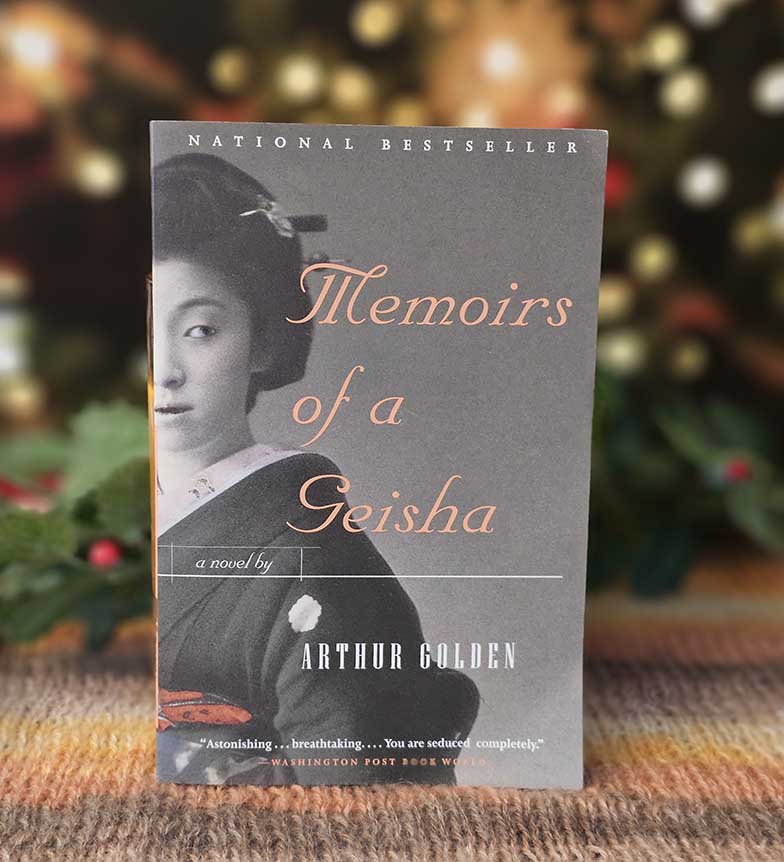
Memoirs of a Geisha
by Arthur Golden
A stunning portrait of a geisha's life in pre-war and wartime Japan. Through the eyes of Sayuri, we witness the beauty, artistry, and complex world of geisha culture.
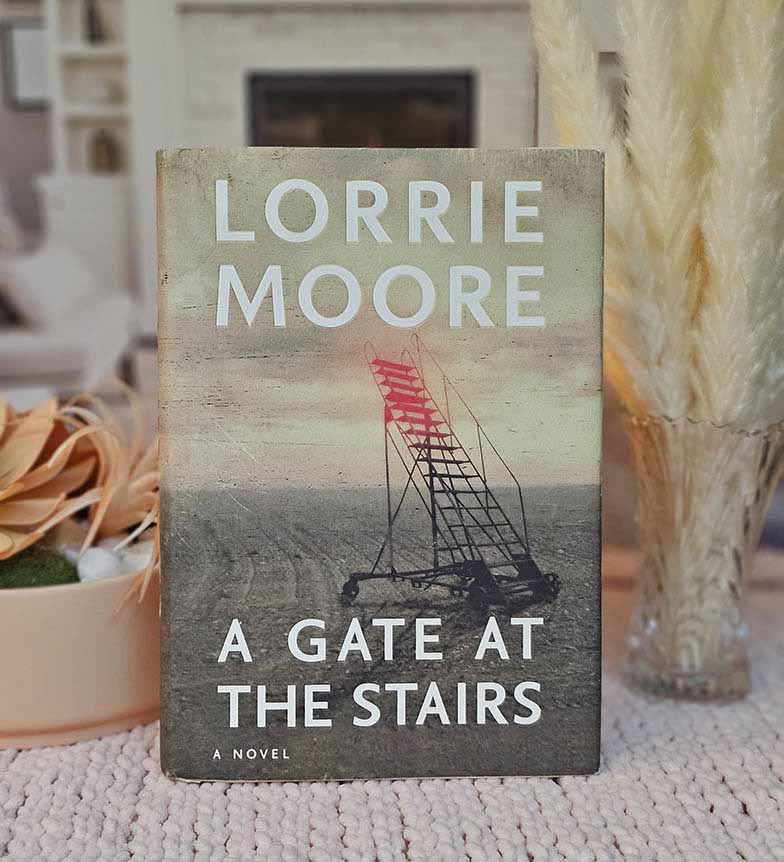
A Gate at the Stairs
by Lorrie Moore
A coming-of-age story set in the Midwest after 9/11. Tassie Keltjin takes a job as a nanny and finds herself drawn into a complex family dynamic that challenges her understanding of race, identity, and belonging.