
Nemesis
by Philip Roth
In the summer of 1944, a polio epidemic sweeps through Newark's Jewish community. Playground director Bucky Cantor watches helplessly as children in his care fall ill - then flees to a mountain camp where he believes he brings the disease with him, destroying his life with guilt.
Spoiler Warning
This review may contain spoilers. Read at your own discretion if you haven't finished the book yet.
When Children Die, Who Is to Blame?
Philip Roth's final novel - he announced his retirement from writing in 2012, two years after its publication, and never wrote another word of fiction before his death in 2018 - asks questions that have no good answers. In Nemesis, set during a polio epidemic in the summer of 1944 in Newark, New Jersey, a young man watches children he's responsible for fall ill and die, and he cannot stop asking why. Is it God's punishment? Random chance? Somehow his fault? The questions consume him far more than the disease itself ever could, and the guilt he builds from the answers he constructs - irrational, self-destructive, impossible to dislodge - becomes its own kind of affliction, a paralysis of the spirit that mirrors the physical paralysis the disease inflicts on the body.
Eugene "Bucky" Cantor is twenty-three years old, a playground director at the Chancellor Avenue School playground in the Weequahic section of Newark - a close-knit Jewish neighborhood where families know each other, where children play outdoors all summer, and where the arrival of polio is experienced not as an abstract public health crisis but as an intimate terror. Bucky is a javelin thrower, a weightlifter, and a competitive diver - strong, dedicated, defining himself by his physical capabilities and his duty to the children in his care. But his poor eyesight has kept him out of World War II while other men serve overseas, a fact that gnaws at him constantly. His friends are fighting. He's running a playground. When polio arrives and his children start getting sick - some dying, some left paralyzed - his strength means nothing against an invisible enemy he can't fight, can't confront, can't throw a javelin at. The helplessness compounds the guilt he already carries about not serving, and the combination begins to eat him alive.
The Playground and the Summer of 1944
The novel opens with a provocation that sets the tone. A group of Italian toughs from a neighborhood already devastated by polio show up at the Weequahic playground and threaten to spread the disease. One of them spits on the sidewalk near Bucky's feet. Bucky confronts them, calls the police, forces them to leave, and disinfects the sidewalk - an act that makes him a hero to the boys on the playground. But days later, two of those boys come down with polio. The shock of their senseless suffering begins to erode Bucky's belief that the world operates according to rules he can understand. Did the Italians bring the disease? Was it already there? Is there any meaning to any of it?
The children keep getting sick. Parents are terrified. Rumors spread about how polio transmits - through swimming pools, through hot dogs, through the very air. Nobody knows. Before the Salk vaccine, polio epidemics terrorized American communities every summer, and Roth captures that specific dread with historical precision - the dread of a disease nobody understood, that struck children more than adults, that seemed to punish the innocent with a randomness that felt deliberate. Bucky stands on the playground watching boys he knows by name carried away in ambulances, and the question that will destroy his life begins to form: why them and not me?
The Escape to Indian Hill
Bucky's girlfriend Marcia Steinberg - a fellow teacher at Chancellor Avenue School - is spending the summer working at Indian Hill, a camp in the Poconos. She calls frequently, begging him to leave Newark, to take a waterfront job at the camp, to escape the epidemic. He refuses at first - how can he abandon his children? Leaving feels like desertion, a second failure after being kept out of the war. But after speaking with Marcia's father, who gives his blessing for the engagement, Bucky proposes to Marcia over the phone and agrees to come to Indian Hill.
The camp is paradise. Cool mountain air instead of Newark's suffocating heat. No polio cases. Children swimming, laughing, healthy. Each night Bucky and Marcia canoe to a secluded island and make love. He befriends Donald Kaplow, a seventeen-year-old at the camp whom he mentors in diving. For a brief, shimmering stretch, Bucky can breathe. The guilt about leaving Newark hasn't disappeared, but the relief of being somewhere safe - somewhere the disease hasn't reached - temporarily holds it at bay.
Then Donald comes down with polio. He's taken to Stroudsburg Hospital, where he dies in an iron lung. Other cases follow. And Bucky is certain - with a certainty that has nothing to do with epidemiology and everything to do with his need to find meaning in suffering - that he brought the disease with him. He carried death from Newark into this sanctuary. The escape he allowed himself to take became the vehicle for exactly the destruction he was trying to escape.
Character as Fate
What makes this novel unsettling isn't the disease itself but Bucky's response to it. He cannot accept randomness. He cannot accept that children die for no reason, that tragedy strikes without pattern or purpose. So he searches for blame - in God, whom he comes to see as cruel and arbitrary, in himself, whom he condemns as a carrier of destruction, in fate, which he interprets as specifically targeting him for punishment. The guilt he accumulates becomes its own kind of paralysis, more crippling than the physical disability that follows.
Bucky contracts polio days after Donald. He's hospitalized in Philadelphia. He survives but is left partially paralyzed, needing a brace and losing the use of one of his legs. For three months he doesn't contact Marcia. When she finally finds him at the hospital and declares she loves him and wants to marry him regardless, he refuses. He insists she leave him and find a husband who isn't disabled. He won't allow her to sacrifice her life for a cripple. He never marries. He never forgives himself. He never stops believing that he was the agent of destruction - God's instrument for punishing the innocent children of Weequahic and Indian Hill.
Twenty-seven years later, in 1971, the narrator reveals himself. His name is Arnie Mesnikoff - one of the boys from the Weequahic playground who contracted polio during that same summer of 1944. Arnie, unlike Bucky, adapted. He married, had children, built a life around his disability rather than defining himself by it. When he encounters Bucky - now in his fifties, alone, bitter, still consumed by the same guilt he carried at twenty-three - the contrast is devastating. Two men marked by the same disease, one who survived psychologically and one who didn't. The narrator's identity is concealed for most of the book; when it emerges, it reframes everything we've read, because the story of Bucky's destruction has been told by someone who faced the same catastrophe and chose differently.
The Tragedy Roth Constructed
Roth structures Nemesis as a Greek tragedy - explicitly, deliberately. The narrator tells us early that things won't end well. We watch Bucky make choices that seem reasonable in the moment but lead inexorably toward destruction. His flight from Newark to Indian Hill, intended as escape, becomes the thing he can never forgive himself for. His refusal to marry Marcia, intended as self-sacrifice, becomes the loneliness that defines the rest of his life. His need to find meaning in suffering, intended as a form of faith, becomes the bitterness that replaces it. Character is fate, the Greeks said, and Roth structures the novel to prove them right - except that Arnie's existence suggests character isn't the only fate available. The same disease, the same loss, didn't have to lead where Bucky went. He chose his interpretation of events, and his interpretation destroyed him more thoroughly than the polio did.
J.M. Coetzee praised the novel's moral depth. Some critics called it Roth's best work in a decade. The historical detail about the polio epidemic is meticulous - Roth captures the specific terror of pre-vaccine America, where every summer brought the possibility that your child would be the next one paralyzed. The taut construction - only 280 pages, no fat, every scene serving the tragic arc - demonstrates a mastery of form that less disciplined novels envy.
But the novel's limitations are real, and they're the reason this lands at 3.5 rather than higher. Bucky is a good man, a simple man, a man defined by duty and physical strength who lacks the psychological complexity of Roth's greatest protagonists. He doesn't change. He doesn't grow. He doesn't discover anything about himself that wasn't already there from the first chapter. His guilt calcifies early and remains calcified for twenty-seven years, and watching a character refuse every opportunity for insight or healing - while understanding exactly why he's refusing - creates a reading experience that's more admirable than moving. Michiko Kakutani called the novel "a modest undertaking" compared to Roth's longer, richer works, and the criticism is fair: this is a fable, not a full portrait of a life.
Marcia Steinberg is the clearest casualty of the novel's focus. She's the perfect girlfriend, the loyal fiancée, the woman who would marry Bucky despite everything - and she never becomes more than that. She exists to demonstrate what Bucky sacrifices, not as a person with her own interior life. Roth, who wrote some of the most complicated women in American fiction, gives Marcia almost nothing to do except love Bucky and be rejected. The secondary characters from the playground are similarly thin, serving as victims rather than people.
And the dialogue in the final section - the reunion between Arnie and Bucky in 1971 - reads more like philosophical speeches than natural conversation. Bucky delivers monologues about God's cruelty and his own culpability that feel like essays embedded in the narrative rather than things a real person would say, even a person as consumed by guilt as Bucky is.
I admire this book - its craft, its moral seriousness, its willingness to sit with unanswerable questions about suffering and meaning. Roth was a master, and the skill is evident on every page. But I finished it feeling more impressed than moved, more thoughtful than affected. It's the kind of book you're glad you read, the kind you think about for weeks afterward, but not the kind that breaks your heart - and for a novel about children dying of a disease nobody could stop, the absence of heartbreak feels like a limitation of the book's approach rather than a feature of its intelligence.
Rating: 3.5/5 ⭐
Perfect for: Philip Roth completists, readers interested in 1940s American Jewish life and the pre-vaccine polio era, anyone who appreciates literary fiction tackling fate, guilt, and theodicy through the lens of American history.
Skip if: You need emotional warmth from your fiction, protagonists who refuse to change frustrate you, or philosophical heaviness without catharsis isn't what you're looking for.
You Might Also Like
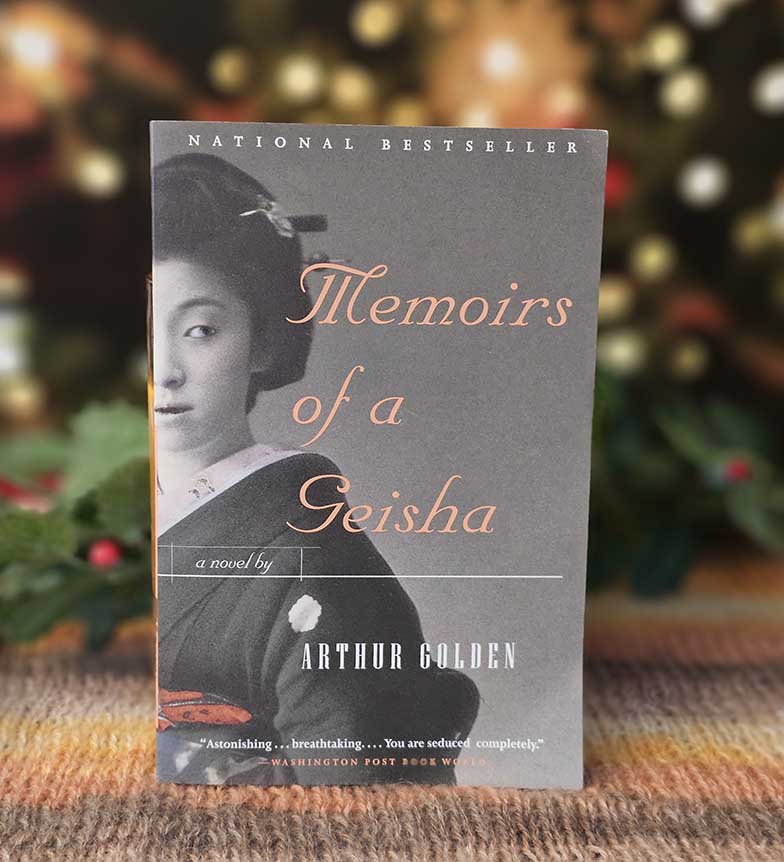
Memoirs of a Geisha
by Arthur Golden
A stunning portrait of a geisha's life in pre-war and wartime Japan. Through the eyes of Sayuri, we witness the beauty, artistry, and complex world of geisha culture.
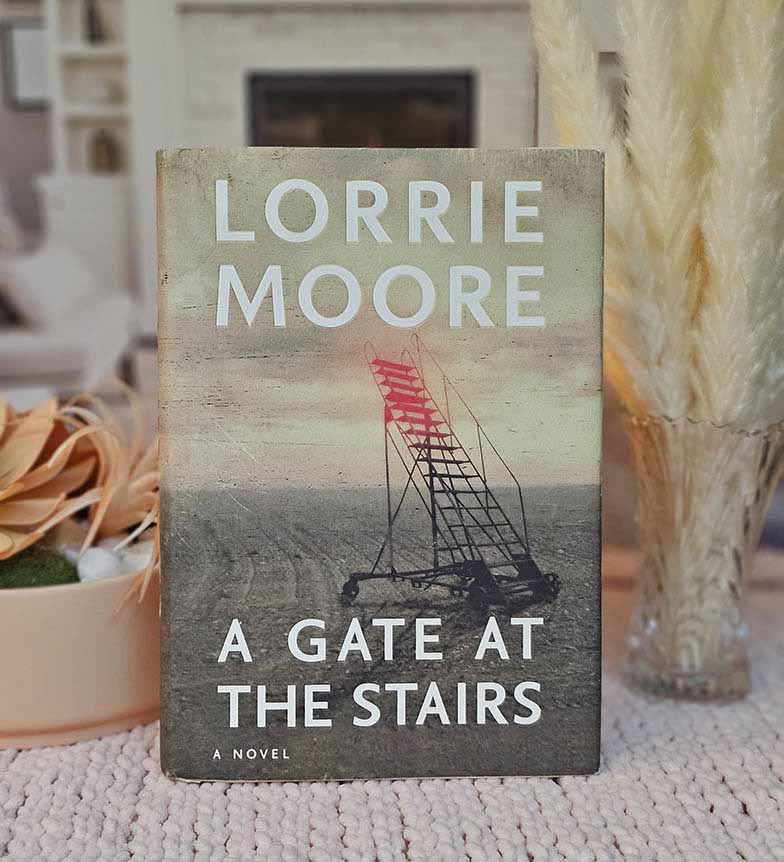
A Gate at the Stairs
by Lorrie Moore
A coming-of-age story set in the Midwest after 9/11. Tassie Keltjin takes a job as a nanny and finds herself drawn into a complex family dynamic that challenges her understanding of race, identity, and belonging.
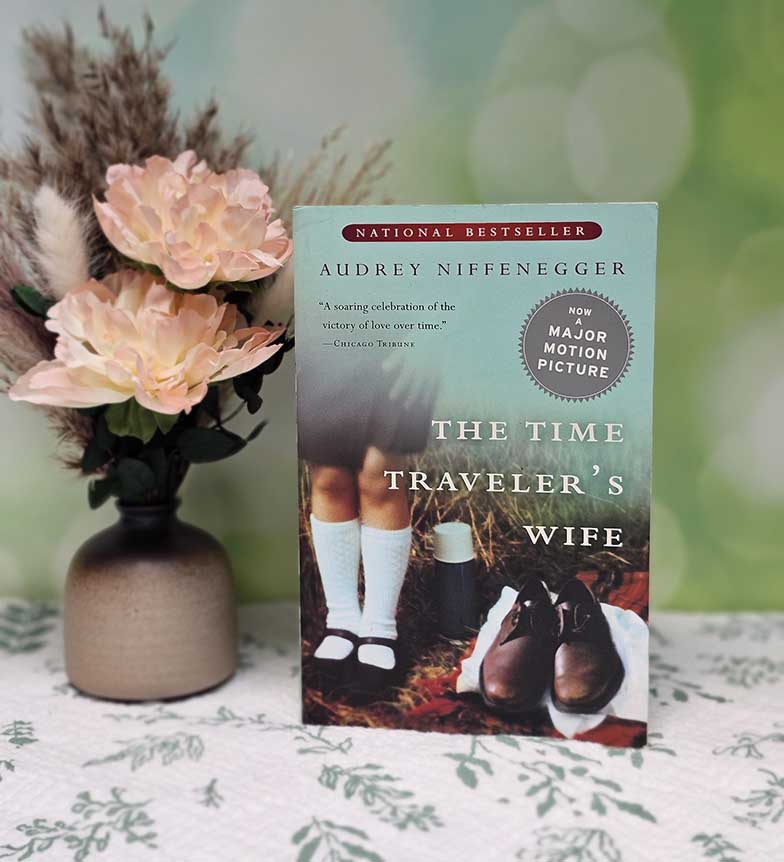
The Time Traveler's Wife
by Audrey Niffenegger
Audrey Niffenegger's 2003 debut: a love story between Henry DeTamble - a Chicago librarian with a genetic disorder she calls Chrono-Displacement that pulls him involuntarily through his own timeline and other people's, naked and out of clothes he cannot take with him - and Clare Abshire, the artist he meets in person at twenty-eight at the Newberry Library, who has known him since she was six because he has been visiting her in the meadow behind her family's South Haven house from a future version of himself for fourteen years already by the time she finally meets him in his own present.