
Pride and Prejudice
by Jane Austen
Jane Austen's 1813 masterpiece follows Elizabeth Bennet through misjudgment and revelation - a Hunsford proposal that goes horribly, a letter that rearranges everything, a visit to Pemberley that changes what she thought she knew - in the great Regency comedy of manners about what we get wrong about other people and ourselves.
Spoiler Warning
This review may contain spoilers. Read at your own discretion if you haven't finished the book yet.
Two Hundred Years and Still the Best Argument She Ever Wrote
"It is a truth universally acknowledged, that a single man in possession of a good fortune, must be in want of a wife." That sentence has been quoted to death and somehow still works on me every time. The whole novel is in it - the social truth that isn't quite a truth, the comedic certainty that isn't quite certain, the narrator who is smarter than every character in the room and trusts you to keep up. Pride and Prejudice is 212 years old this year. It has been adapted, parodied, sequel-ized, BBC-ed, Hollywood-ed, Bollywood-ed, zombie-ed, and reread until the spine cracks. It is also still, sentence for sentence, scene for scene, one of the most satisfying novels in English. This was my fourth time through, and I am still finding things.
Austen is doing two books at once and somehow makes them the same book. One is a slow-burn romance between Elizabeth Bennet and Fitzwilliam Darcy that takes both of them - both - all the way through the volume to deserve each other. The other is a sharp, comic dissection of a society where five unmarried daughters and an entailed estate is a financial emergency, where the wrong proposal accepted means survival and the right one refused means catastrophe, where surfaces lie about people in every direction. The romance is the engine; the social critique is the chassis. Take either out and the other doesn't run.
The Meryton Ball, and a Slight Elizabeth Is Going to Make Pay For
Their first meeting is famous because it sets the wrong tone on purpose. At the ball at Meryton, Mr. Darcy - newly arrived in the neighborhood with his friend Bingley, who has just leased Netherfield Park - declines to dance with Elizabeth, dismissing her in her hearing as "tolerable, but not handsome enough to tempt me." She catalogs the insult immediately and decides, with the satisfying decisiveness of a sharp twenty-year-old, that the man is exactly as proud as he looks. The judgment is too quick. It is also Elizabeth, and one of the small miracles of the novel is that Austen lets her be wrong without making her less of a heroine for it. Elizabeth's intelligence isn't infallibility; it's the equipment she'll need to revise herself once the evidence demands it. The book is essentially the long, careful process of that revision.
Around this central pair, Austen seeds her cast with the precision of a watchmaker. Jane is gentle and slow to think ill of anyone, which is a moral position the book takes seriously even when it costs her. Mr. Collins, the clergyman who will inherit Longbourn under the entail and who is patronized by the formidable Lady Catherine de Bourgh, arrives to look the daughters over with the manners of an oblivious cousin and the prose style of a man who has never cut a sentence in his life. Mr. Wickham, an officer in the militia, arrives with charm and a story about Darcy that Elizabeth, already disposed to dislike Darcy, accepts whole. None of these introductions feels like setup at the time. All of them are.
The Hunsford Proposal, and the Letter That Rearranges Everything
The book's first great pivot is Mr. Collins's preposterous proposal to Elizabeth - a scene that is funny in the moment, terrifying in its implications (refusing him puts the family's future in real jeopardy), and resolved when Charlotte Lucas, Elizabeth's clear-eyed best friend, marries him herself. Charlotte does it for the security and a house of her own, and Austen does not condemn her for it. The book understands, with a clarity nineteenth-century English fiction rarely matches, exactly how short the runway was for a woman without independent income. Charlotte's calculation isn't a moral failure; it is the rational response to a system, and Elizabeth's inability to make peace with it is one of her own privileges showing.
But the real pivot is at Hunsford parsonage, where Darcy proposes for the first time. He confesses love and asks her to marry him while explicitly cataloging all the reasons he shouldn't have to - her family's vulgarity, her mother's behavior, her sisters' silliness, the lowness of her connections. Elizabeth refuses him with a fury that is one of the great moments in English literature: she tells him he is the last man in the world she could ever be prevailed upon to marry. The next morning he hands her a letter. In it, he explains his role in separating Bingley from Jane (he believed Jane indifferent), and he explains Wickham - the actual Wickham, the gambler who tried to elope with Darcy's fifteen-year-old sister Georgiana for her fortune. Elizabeth reads the letter. Then she reads it again. Then she keeps reading it. That re-reading is the engine of her change. "Till this moment, I never knew myself," she will say to herself, and the line earns itself because Austen has shown us, page by page, how much she didn't.
Pemberley, the Gardiners, and Lydia
The summer journey with her aunt and uncle Gardiner - the warm, intelligent, tradesman-class relatives Austen pointedly draws as the most admirable adults in the book - takes Elizabeth past Pemberley, Darcy's Derbyshire estate, when she has been assured he isn't home. She agrees to tour the house, and what she finds reframes him entirely. The grounds are beautiful without being ostentatious. The housekeeper, Mrs. Reynolds, speaks of him with a steady, unforced love - he is, she says, the best master, the best brother, the best landlord - the kind of testimony from a domestic servant that Austen knew her readers would weight heavily. Then Darcy himself appears, having come home a day early, and is gracious to the Gardiners in a way the man at Hunsford could not have managed. Elizabeth's prejudice begins, audibly, to come apart.
It is at this moment that Lydia, the youngest and silliest Bennet sister, runs off with Wickham - not eloping to be married, just eloping. The disgrace threatens to ruin all five sisters' marriage prospects at once, including Jane's and Elizabeth's. Darcy, learning of it, hunts the pair down in London and pays Wickham off to marry Lydia properly, all without telling Elizabeth. He does it because he holds himself responsible for not exposing Wickham's character publicly when he had the chance. The scale of that gesture - the social humiliation of negotiating with Wickham, the money, the silence - is the proof Elizabeth doesn't need but gets. By the time Lady Catherine de Bourgh shows up at Longbourn to demand that Elizabeth swear off marrying her nephew, the only effect of the demand is to make clear that Darcy still wants her. The second proposal, on a walk, is one of the quiet ones. Both have done the work. Both know it.
The Comedy and Its Teeth
What the romance plot can sometimes obscure is how funny this book is and how merciless its comedy can get. Mrs. Bennet's nerves and Mr. Bennet's sardonic refusal to take any of his domestic obligations seriously are funny on the page and a slow-motion disaster in the family - Austen lets you laugh at Mr. Bennet's library retreat and also lets you see exactly what it has cost his daughters. Mr. Collins is comedy and threat at once: a man who would not be funny if his proposal came with no consequences. Lady Catherine's pretensions are skewered with such formal courtesy that you sometimes don't notice how vicious the satire is until you reread. Mary Bennet's improving extracts. Kitty's sniff. Caroline Bingley's icy maneuvers. Lydia's giddiness curdling into something worse. Every voice is perfectly itself, and every voice is doing structural work. There are novels that are funnier in single jokes. There are very few in which every minor character is also a load-bearing wall.
The miracle of Pride and Prejudice is that the social comedy and the love story aren't competing. They share an argument: that we constantly confuse first impressions for character, that we mistake our own pride for clarity, that growth is possible but expensive, and that a good marriage - which in Austen's vocabulary means a marriage of equals who have actually seen each other - is one of the few solid goods available in a world otherwise structured to commodify women. Two centuries on, that argument still moves. The prose still glitters. The pacing is still, somehow, perfect. If you have not read it, you have one of the great pleasures in the language ahead of you. If you have, you already know that next time you pick it up, it will somehow find you new.
Rating: 5.0/5 ⭐
Perfect for: Everyone, honestly. Romance readers, literary readers, anyone who wants the sharpest comedy of manners in the language and one of the great character arcs in fiction. First-timers and rereaders alike.
Skip if: You genuinely cannot tolerate Regency dialogue, you bounce off any novel where the courtship is the plot, or you've decided in advance that two-hundred-year-old novels can't speak to you - and even then, give it a chapter.
You Might Also Like
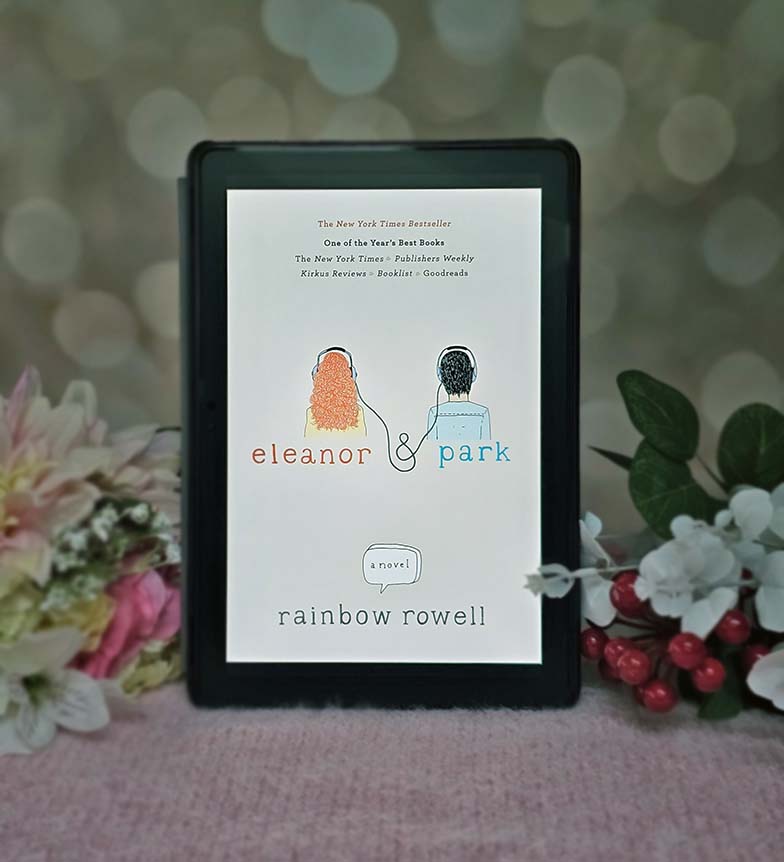
Eleanor & Park
by Rainbow Rowell
Rainbow Rowell's beloved YA novel about two misfit teenagers who fall in love on the school bus in 1986 Omaha. A tender, painful story about first love, abuse, racism, and finding someone who sees you - praised for representation but not without controversy.
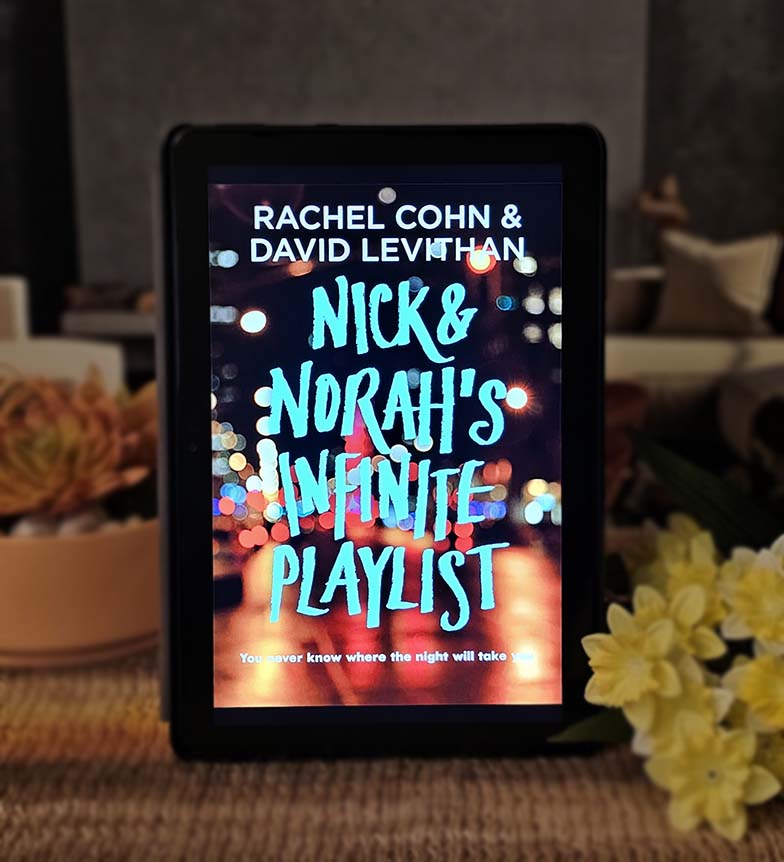
Nick & Norah's Infinite Playlist
by Rachel Cohn, David Levithan
Nick - the only straight member of a New York queercore band, working through his breakup with the complicated Tris by making her mix CDs she throws away - is at a Lower East Side club for a show when he sees Tris walk in with another guy, panics, and asks the nearest girl to pretend to be his girlfriend for five minutes; the girl turns out to be Norah, daughter of a well-known music producer, a classmate of Tris's at the Convent of the Sacred Heart, and the person who has been retrieving Nick's discarded mix CDs from Tris's trash and loving them without knowing he made them; the kiss they share to sell the cover is the first event in a single Manhattan night that will involve Norah's drunk friend Caroline, Norah's complicated ex Tal, and a citywide search for the secret late-night show of their favorite band, Where's Fluffy. Rachel Cohn and David Levithan's 2006 YA collaboration, with Cohn writing Norah's chapters and Levithan writing Nick's, told in alternating first-person POV over the course of a single night.
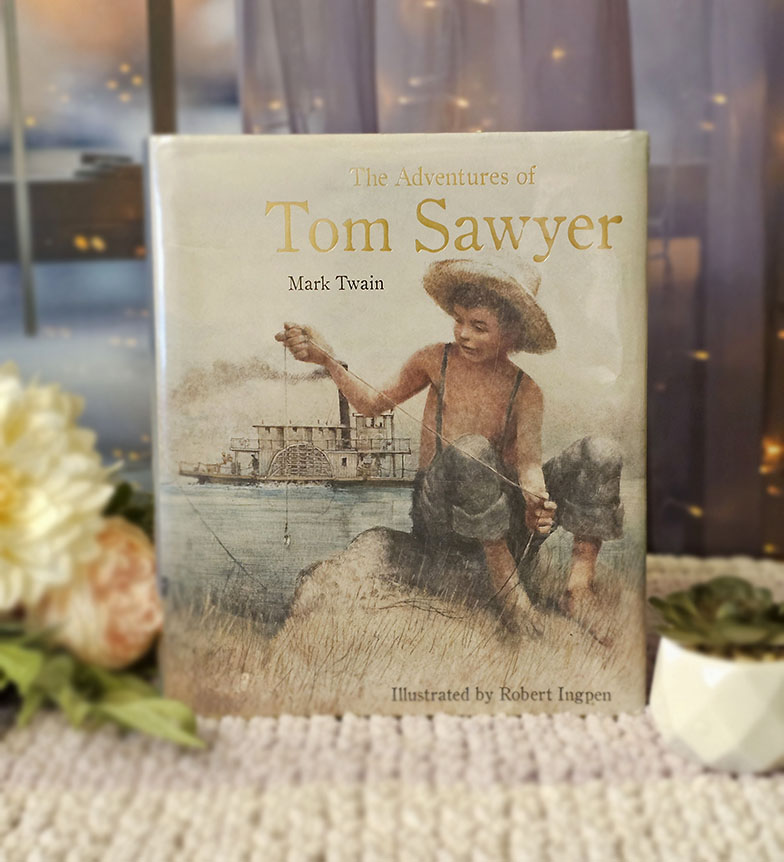
The Adventures of Tom Sawyer
by Mark Twain
Tom Sawyer - a clever, talkative, frequently dishonest small-town Missouri boy living with his Aunt Polly and his brother Sid in the fictional St. Petersburg, modeled on Mark Twain's own boyhood Hannibal - whitewashes a fence by selling the right to whitewash it, falls for the new judge's daughter Becky Thatcher, witnesses the murder of Dr. Robinson by Injun Joe one midnight in the graveyard with his friend Huckleberry Finn, swears a blood oath of silence and breaks it on the witness stand at the wrong man's trial, runs away with Huck and Joe Harper to Jackson's Island and returns in time to attend his own funeral, gets lost with Becky in McDougal's Cave on a school picnic, and ends the novel splitting twelve thousand dollars in buried gold with Huck. Mark Twain's 1876 boyhood novel, set on the 1830s-1840s Mississippi, and read for a century and a half as the canonical version of American childhood - alongside racial content that still requires the reader to do the work.