
Tombstone Courage
by J.A. Jance
Two months into her job as the first female sheriff of Cochise County, Joanna Brady investigates when rancher Harold Patterson is found dead at the bottom of a mine pit - along with a second, older set of remains that raises disturbing questions about long-buried family secrets.
Spoiler Warning
This review may contain spoilers. Read at your own discretion if you haven't finished the book yet.
Learning to Be Sheriff
Winning an election is one thing. Actually doing the job is something else entirely. In Tombstone Courage, the second Joanna Brady mystery, J.A. Jance strips away the campaign drama and funeral emotion that drove Desert Heat and shows us a woman figuring out how to be sheriff - Cochise County's first female sheriff, to be specific, a former insurance office worker with no formal law enforcement training, two months into a job she won on courage and grief rather than experience. She won't attend police academy until book three (Shoot/Don't Shoot). Right now she's learning everything on the fly - departmental politics, evidence protocols, how to manage men who resent taking orders from a woman who got the badge through election rather than the ranks - and the case that lands on her desk is a family nightmare that would test a veteran.
The Patterson Ranch and the Glory Hole
Eighty-four-year-old Harold Patterson is the owner of the Rocking P Ranch, a respected figure in Cochise County - until his daughter Holly comes home with accusations that shake the community. Holly left Bisbee years ago, once had brush with fame, but returned as a destitute substance abuser. She's arrived with a lawyer and a hypnotherapist, claiming repressed memories of childhood sexual abuse by her father and suing Harold for half the ranch.
The community is divided. Holly's sister Ivy stayed behind - running the Rocking P, caring for their ailing mother Emily (who was, by accounts, an invalid both physically and mentally) until Emily died, doing the backbreaking work of keeping the ranch alive while Holly was gone. Their mother had insisted on naming her daughters after the Christmas carol "The Holly and the Ivy" - Harold had wanted different names entirely - and the sisters have grown into mirror opposites: one who fled and one who stayed, one who claims trauma and one who claims sacrifice, neither able to see the other's version of their shared childhood.
Before Harold can respond to the lawsuit - before he can make amends or defend himself - someone kills him. His body is found at the bottom of the Glory Hole, an open mine pit, partially buried on the rock-strewn floor with a ten-pound boulder crushing part of his skull. But Harold's aren't the only remains discovered there. Beneath his body lies a second skeleton, far older - decades old - and that discovery transforms a murder investigation into an excavation of family secrets stretching back generations.
A Case with No Shortage of Suspects
Jance populates the suspect list with enough plausible candidates to keep the investigation genuinely uncertain. Holly, the accusing daughter, has motive if Harold was threatening to fight back against the lawsuit. Ivy, the loyal daughter, has motive if Harold was considering settling and giving away the ranch she spent her life preserving. Burton Kimball, Harold's attorney and nephew, had a drunken blowup with his uncle before the murder - publicly witnessed, impossible to deny. And there's Yuri, a Russian immigrant engaged to Ivy, whose background Joanna's department investigates.
Jance doesn't take easy sides on the repressed memory question, which is the book's most intellectually provocative element. Is Holly a genuine victim finally demanding justice for something that was done to her as a child? Or has her hypnotherapist manipulated her into believing things that never happened - manufacturing memories that serve the therapist's financial interests more than Holly's healing? The 1990s context matters here: this novel was published during the height of the "recovered memory" controversy, when the psychological community was bitterly divided over whether repressed memories could be reliably recovered through therapy. Jance weaves that real-world debate into the family drama without resolving it polemically, letting the evidence and the characters drive the reader's conclusions rather than imposing a thesis.
The resolution reveals that the manipulation ran deeper than anyone suspected. Harold had actually been planning to come clean and compensate Holly - but before he could, the hypnotherapist, who stood to profit from the lawsuit and the chaos, orchestrated events that ensured he never got the chance. The older skeleton beneath Harold connects to a separate, older family secret that adds another layer of darkness to the Rocking P's history.
Tombstone Courage and What It Costs
The title refers to one of the ten tragic errors that get law enforcement officers killed: "tombstone courage" - the failure to call for backup when you need it. It's an error born from pride, from stubbornness, from the belief that handling things alone is strength rather than recklessness. Joanna, who has spent her entire life managing things on her own - who investigated her husband's murder without help, who ran for sheriff without a political machine, who is raising Jenny as a single mother while fighting for credibility in a department that didn't choose her - hasn't learned this lesson yet. Her independence is both her greatest strength and her most dangerous vulnerability.
The departmental dynamics are one of the book's most realistic threads. Joanna's deputies didn't elect her. Some actively campaigned against her. The resistance she faces isn't dramatic insubordination - it's subtler and more corrosive. Ignored suggestions. Delayed responses. The particular brand of condescension that men in hierarchies direct at women they consider unqualified. Jance captures this with the specificity of someone who's watched it happen, and Joanna's navigation of it - sometimes clumsily, sometimes brilliantly - is as compelling as the murder investigation.
Her relationship with Jenny provides the emotional counterweight. Jenny is still processing her father's death from the first book, and Joanna is trying to be present for a grieving child while also running a department and investigating a murder that involves questions about parental abuse she can barely bring herself to consider. The tension between motherhood and the job - not as an abstract work-life-balance cliché but as a daily, grinding, specific set of impossible choices - gives Joanna's character a texture that most fictional sheriffs don't have.
Where the Second Book Settles
The mystery is well-constructed, though it's not the book's primary achievement. Publishers Weekly noted that the ending feels "somewhat overwrought" after a slow build, and the resolution comes faster than the careful setup earns. The pacing is front-loaded with character work and backstory - the first half establishes the Patterson family dynamics, Joanna's departmental struggles, and her personal life in granular detail, while the investigative momentum doesn't fully kick in until the second half. Some readers find the early pacing deliberate and immersive; others find it slow, with "filler" material that could have been trimmed.
The mystery itself is "somewhat predictable" if you're reading carefully - the clues point in a direction that experienced mystery readers will anticipate before Joanna does. And a few of the supporting characters feel stock rather than specific, filling functional roles in the investigation without developing enough personality to distinguish them.
But the book's real value isn't in the whodunit. It's in watching Joanna Brady figure out who she's becoming. She's not a confident sheriff by the end of Tombstone Courage. She's a sheriff who's starting to understand what the job actually requires - training she doesn't have, backup she needs to accept, and the wisdom to know when her stubbornness is serving the case and when it's serving her ego. The growth is incremental and believable, and it establishes a trajectory that the next twenty books in the series will follow.
Rating: 4.0/5 ⭐
Perfect for: Fans of the Joanna Brady series, readers who enjoy watching characters grow into challenging roles, anyone interested in mysteries that explore family secrets, repressed memory controversies, and generational trauma.
Skip if: You need faster pacing in the first half, predictable mystery resolutions frustrate you, or you prefer protagonists who already have things figured out.
You Might Also Like

Dead to Rights
by J.A. Jance
When the town veterinarian who killed a woman while driving drunk is found murdered by pitchfork in his burning barn, Sheriff Joanna Brady must prove that the obvious suspect - the victim grieving widower - is innocent while juggling multiple crises including a hostage situation involving her own daughter.
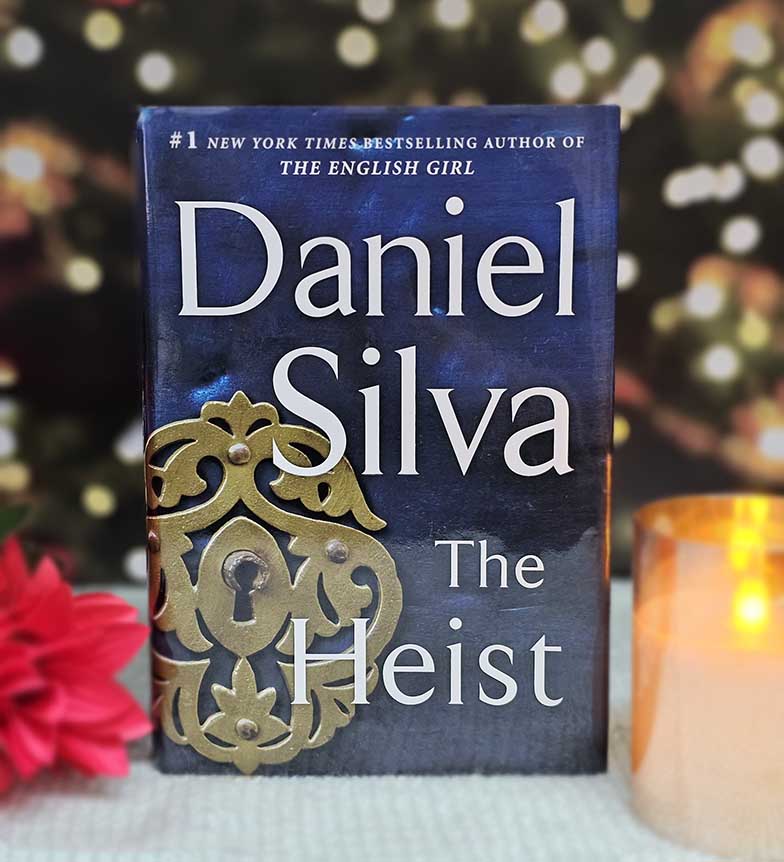
The Heist
by Daniel Silva
Daniel Silva's fourteenth Gabriel Allon novel: when London art dealer Julian Isherwood finds his colleague Jack Bradshaw - a former British intelligence officer turned art trafficker - tortured and murdered at a villa on Lake Como, Allon, the Israeli spy and master art restorer, is pulled in by the Italian Art Squad to recover a Caravaggio stolen in 1969, and the hunt leads through the Geneva Freeport and a private Austrian bank to the looted billions that Syria's Bashar al-Assad has hidden across Europe.
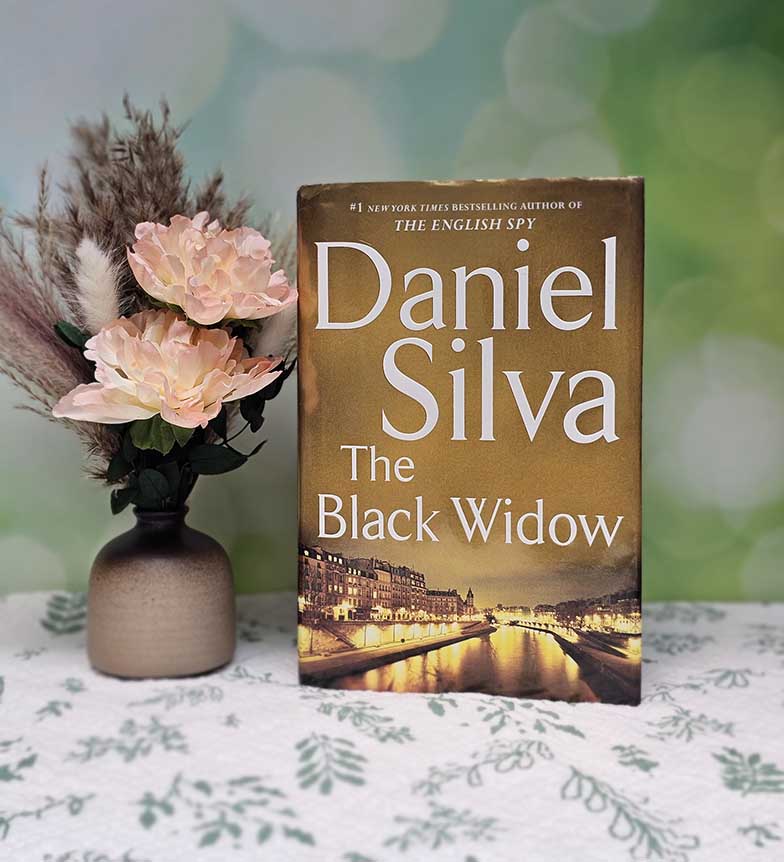
The Black Widow
by Daniel Silva
The sixteenth Gabriel Allon novel: when an ISIS bomb in the Marais kills the Israeli intelligence officer Gabriel Allon's longtime friend Hannah Weinberg at a Paris conference on antisemitism, Allon - already on the cusp of taking over the Office, the Israeli intelligence service he has spent his life serving in the field - is pulled into a French-and-Jordanian counterterrorism operation against a shadowy ISIS architect called Saladin, who is recruiting young European women into a network of suicide bombers, and recruits Natalie Mizrahi, a French-born physician now practicing in Israel, to take a new identity as a Palestinian refugee and infiltrate the caliphate from the inside.