
Dead to Rights
by J.A. Jance
When the town veterinarian who killed a woman while driving drunk is found murdered by pitchfork in his burning barn, Sheriff Joanna Brady must prove that the obvious suspect - the victim grieving widower - is innocent while juggling multiple crises including a hostage situation involving her own daughter.
Spoiler Warning
This review may contain spoilers. Read at your own discretion if you haven't finished the book yet.
Justice Delayed, Justice Denied
A year ago, Bonnie Morgan was crossing the street with her husband Hal on their nineteenth wedding anniversary when a pickup truck struck and killed her. The driver was Amos Buckwalter - known around Bisbee as "Bucky" - the local veterinarian. He was drunk. The courts gave him two months in jail and a fine for vehicular manslaughter. Hal Morgan, a former cop who lost his wife to what amounted to a slap on the wrist, has spent a year living with that injustice. He's been picketing Buckwalter's animal hospital. He's been distributing MADD literature around town. He's been making sure nobody in Cochise County forgets what Bucky did - and what the justice system let him get away with.
Now Bucky is dead - found in his burning barn, killed by pitchfork, a brutal end for a man many in town felt got away with murder. And Hal Morgan, discovered unconscious at the scene, is the obvious suspect. Motive, opportunity, location - the case practically closes itself. In Dead to Rights, the fourth Joanna Brady mystery, everyone wants to wrap this up quickly. Everyone except Joanna. Jance was inspired to write this book by the real-life death of a friend killed by a drunk driver, and that personal anger gives the story's exploration of failed justice a weight that extends beyond the genre.
The Wrong Suspect and the Right One
Joanna's instinct that Hal Morgan isn't the killer puts her at odds with her own department. The evidence points his way. His rage is documented and public. Her chief deputy pushes for an immediate arrest. But Joanna has spent three books learning to distrust obvious answers, and something about this case doesn't sit right - the staged quality of the crime scene, the too-neat alignment of motive and opportunity, the feeling that someone wanted Hal Morgan found at the barn.
Her investigation turns toward Bucky's widow, Terry Buckwalter, and what she finds is damning in ways that have nothing to do with grief. Terry shows no sorrow over her husband's death. The day after the murder, she plays a round of golf and gets a makeover. She's already making plans to sell the veterinary practice. She's pursuing a career as a golf pro with an enthusiasm that suggests Bucky's death wasn't an interruption to her life but a removal of an obstacle. A cheating husband, a wife who was already planning her exit - maybe the real motive for Bucky's murder isn't revenge for Bonnie Morgan's death. Maybe it's something far more mercenary.
Terry Buckwalter turns out to be the killer - motivated not by passion or revenge but by financial gain. She wanted Bucky's assets, his insurance, and the freedom to pursue her golf career without a drunken, unfaithful husband dragging her down. She orchestrated his murder and framed Hal Morgan, exploiting his public rage to create a suspect the entire town would believe was guilty. It's a resolution that's clever in its construction - the misdirection works because the reader, like the community, wants the obvious answer to be right - though some readers have found Terry's motivations thin for the severity of her actions. The mystery "falls a little flat at the end" according to several reviewers, with the killer's psychology never quite matching the brutality of the crime.
The Crises That Don't Wait
Jance loads this book with more simultaneous demands on Joanna than any previous entry, and the accumulation is the point. This is what being a small-county sheriff actually looks like: not one case at a time, but everything at once, every crisis competing for attention that can't stretch far enough.
A man named Reed Carruthers is found murdered in Sunizona. His fugitive daughter Hannah Green becomes the primary suspect - and when she's cornered, she takes Jenny hostage at Joanna's own home. It's every parent's nightmare made operational: Joanna must manage an active investigation, coordinate with her deputies, and negotiate for her daughter's life simultaneously. The hostage subplot is the book's most visceral sequence, and it works because Jance has spent four books establishing how much Jenny means to Joanna and how much the fear of losing her - a single mother's fear, sharpened by having already lost a husband - shapes every decision she makes.
Meanwhile, Joanna's best friend Reverend Marianne Maculyea and her husband Jeff Daniels are in the process of adopting a baby girl from China. Jeff has flown overseas for the adoption, but his phone calls home - monitored, constrained - keep requesting additional money without adequate explanation. Is it legitimate adoption bureaucracy, or is something going wrong on the other end? The subplot provides a counterpoint to the violence of the main cases: a story about building a family rather than destroying one, though the uncertainty about Jeff's situation creates its own anxiety.
And then there's the van accident near the Tombstone Municipal Airport - eighteen people locked in a speeding van that flips, all of them undocumented immigrants. It's a subplot that shows the reality of Cochise County's border proximity: the sheriff's department doesn't get to choose which crises to respond to, and the resources are never enough. This thread has drawn some criticism from readers for the language the protagonist uses to describe the immigrants - a derogatory term that feels inconsistent with Joanna's characterization in the rest of the series and that Jance may not have scrutinized carefully enough before publication.
Eleanor's Secret and What It Means
The personal revelation that catches Joanna off guard has nothing to do with murder. Her mother Eleanor has been secretly dating Dr. George Winfield, the Cochise County Coroner. For readers following the series, this is a significant development - George Winfield will become Eleanor's husband in later books, and the couple will be together until their deaths (by freeway sniper, as revealed in Downfall). Here, the relationship is new and secret, and Joanna's reaction to it reveals something about the mother-daughter dynamic that the first three books only hinted at.
Eleanor keeping a romantic secret - Eleanor having a life that doesn't revolve around criticizing Joanna - forces Joanna to confront the fact that her mother is a person with her own desires and fears, not just an obstacle to be managed. The tension in this subplot isn't about whether George is a good man (he is). It's about Joanna's discomfort with her mother being happy in a way that doesn't include or require her daughter's approval. It's a smaller, quieter thread than the murders and the hostage situation, but it's the one that does the most to develop Joanna as a character beyond her professional role.
The Arizona Landscape as Investigative Terrain
Jance trails the investigation from a ghostly mining camp to the rocky spires of Chiricahua National Monument, and the landscape continues to function as more than scenery. Publishers Weekly praised how Jance "skillfully ties the mystery to the southeastern Arizona landscape, its historic mining towns and their modern problems," and that integration is increasingly seamless by book four. The isolation of the ranches, the proximity of the border, the small-town visibility that makes every suspect's behavior public knowledge - all of it shapes how the investigation unfolds and limits the ways secrets can be kept.
Where the Fourth Book Lands
Dead to Rights is the most plot-dense Joanna Brady novel to date, and the ambition is both its strength and its strain. The multiple cases and subplots create a realistic portrait of a small-county sheriff's workload - the kind of job where a murder investigation, a hostage situation, and a van full of injured immigrants all land on the same desk in the same week. That realism keeps the series grounded in a way that single-case mysteries can't achieve.
But the density also means no single thread gets the depth it might deserve as a standalone. The Buckwalter mystery, which should be the emotional center, resolves with a killer whose motivations feel underdeveloped - Terry's decision to murder her husband for financial freedom and a golf career doesn't fully track as a motive for the kind of premeditated violence she committed. The hostage subplot is terrifying but brief. The adoption storyline is touching but peripheral. And the immigrant subplot, while adding texture to the border setting, introduces language choices that weaken rather than strengthen the book.
Joanna herself continues to grow in ways that reward the series investment. She's more confident now, more willing to trust her instincts over her department's consensus, more capable of managing the competing demands of the job without losing herself in any single crisis. Four books in, she's become a protagonist worth following not because she's exceptional but because she's competent and principled and human - a woman doing a hard job in a hard place, getting better at it one case at a time.
Rating: 4.0/5 ⭐
Perfect for: Fans of the Joanna Brady series, readers who enjoy mysteries where the obvious suspect is wrong, anyone who appreciates the realism of a sheriff juggling multiple crises in a border county.
Skip if: You prefer streamlined single-case mysteries, the killer's motivations need to be psychologically deep to satisfy you, or you want to start the series from the beginning.
You Might Also Like
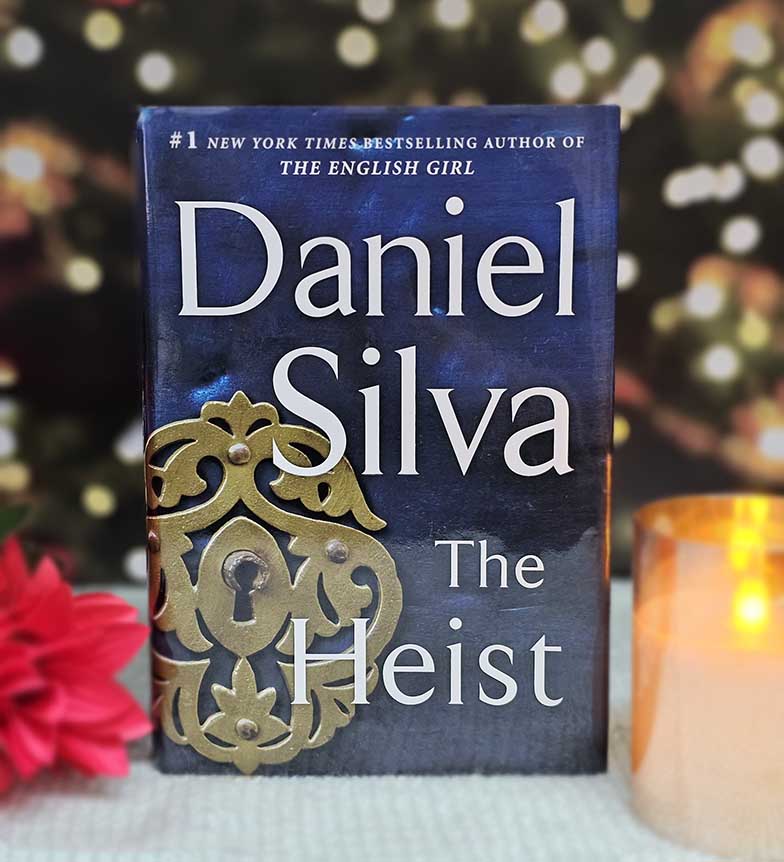
The Heist
by Daniel Silva
Daniel Silva's fourteenth Gabriel Allon novel: when London art dealer Julian Isherwood finds his colleague Jack Bradshaw - a former British intelligence officer turned art trafficker - tortured and murdered at a villa on Lake Como, Allon, the Israeli spy and master art restorer, is pulled in by the Italian Art Squad to recover a Caravaggio stolen in 1969, and the hunt leads through the Geneva Freeport and a private Austrian bank to the looted billions that Syria's Bashar al-Assad has hidden across Europe.
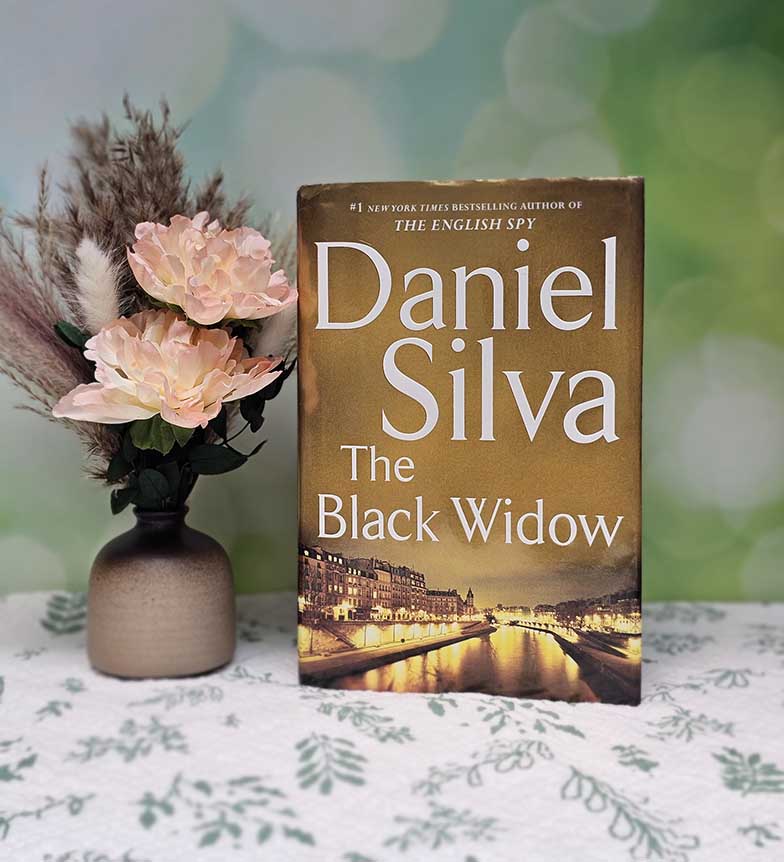
The Black Widow
by Daniel Silva
The sixteenth Gabriel Allon novel: when an ISIS bomb in the Marais kills the Israeli intelligence officer Gabriel Allon's longtime friend Hannah Weinberg at a Paris conference on antisemitism, Allon - already on the cusp of taking over the Office, the Israeli intelligence service he has spent his life serving in the field - is pulled into a French-and-Jordanian counterterrorism operation against a shadowy ISIS architect called Saladin, who is recruiting young European women into a network of suicide bombers, and recruits Natalie Mizrahi, a French-born physician now practicing in Israel, to take a new identity as a Palestinian refugee and infiltrate the caliphate from the inside.
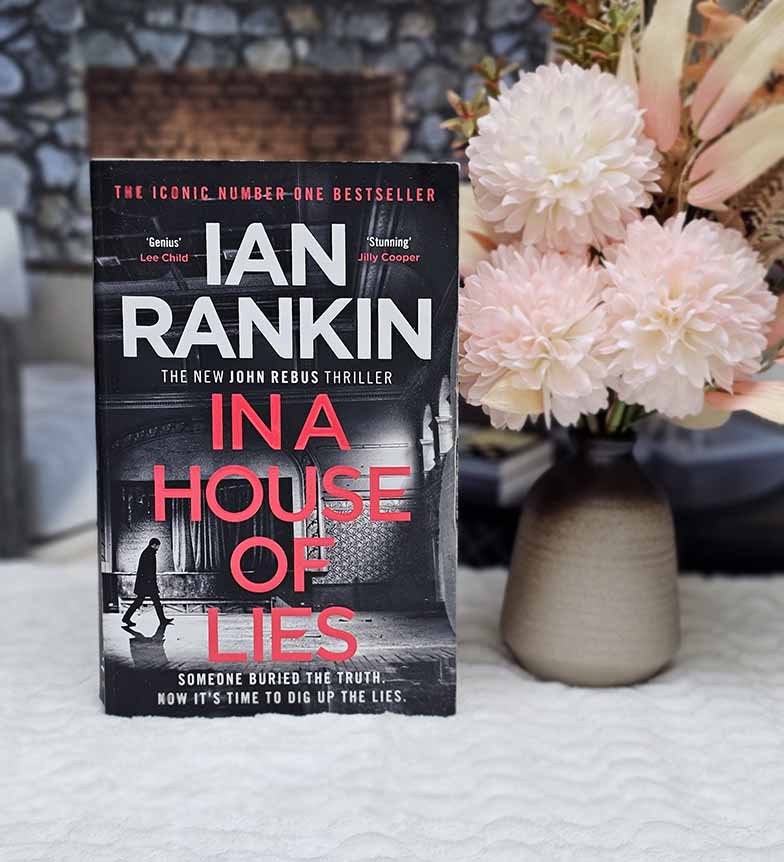
In a House of Lies
by Ian Rankin
The twenty-second Inspector Rebus novel: when a car is found deep in an Edinburgh wood with the body of private investigator Stuart Bloom in its boot and his ankles bound by police-issue handcuffs, a cold case more than a decade old reopens - and retired DI John Rebus, who worked the original botched investigation, finds himself implicated alongside DI Siobhan Clarke and Malcolm Fox as the rot in that first inquiry comes to light.