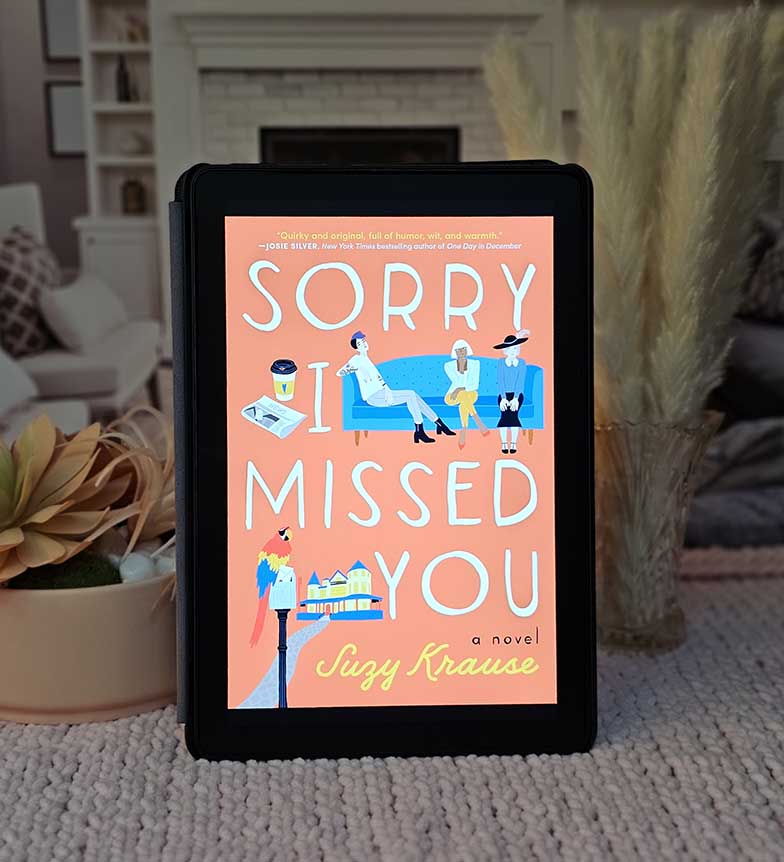
Sorry I Missed You
by Suzy Krause
Three lonely women living in the same apartment building form an unlikely friendship through notes, chance encounters, and the slow realization that connection is worth the risk.
Spoiler Warning
This review may contain spoilers. Read at your own discretion if you haven't finished the book yet.
The Letter in the Mailbox
Mackenzie, Sunna, and Maude all live in the same converted house in Regina, Saskatchewan - a creaky old place that Larry Finley inherited from his deceased aunt Rebecca and divided into three rental units: basement, first floor, and second floor. They share a mailbox. They share walls. They share the specific loneliness of living in close physical proximity to other people while knowing absolutely nothing about them. Then a letter arrives in the shared mailbox - damaged, nearly indecipherable, beginning with "Sorry I missed you" and mentioning a coffee shop called The Paper Cup. Each woman reads it and assumes it's meant for her, from the person who ghosted her. Each woman has someone who disappeared from her life without explanation. And that shared assumption - that this letter is from the one who got away - is what finally brings three isolated strangers together.
Suzy Krause's Sorry I Missed You - her second novel, following Valencia and Valentine - is a quirky, bittersweet story about loneliness, ghosting, and the terrifying prospect of letting new people in when the old ones have taught you that people leave. It's set in Krause's hometown of Regina, and the specificity of the setting gives the book a grounded quality that its more eccentric plot elements need. Because this novel goes to some genuinely strange places - a house with a reputation for being haunted, furniture that moves on its own, sounds that can't be explained - and the Saskatchewan winter outside the windows keeps everything tethered to something real even when the story gets weird.
Three Women, Three Kinds of Being Left
What makes the novel work is how distinct each woman's experience of abandonment is. Mackenzie is roughly nineteen, a college student with social anxiety so severe that when her coworker Grant asked her out, she agreed and then threw up and ran back inside. Her anxiety isn't generic - it's rooted in specific trauma. Her twin sister Tanya sneaked out a window one night when they were teenagers and was never seen again. That disappearance broke something in Mackenzie that hasn't healed, and her fear of people leaving - of anyone she cares about simply vanishing - shapes every relationship she tries to build. Her chapters are tense in a way that has nothing to do with plot and everything to do with the claustrophobia of being trapped inside a mind that won't stop generating worst-case scenarios.
Sunna is a thirty-something personal trainer whose loneliness comes from a different kind of loss - not death or mystery, but the slow, humiliating fade of a friendship she thought was permanent. She and Brett Zaleschuck met in college and were inseparable for years. Then Brett became a famous Instagram influencer, their dynamic shifted, and things fell apart. Brett called Sunna jealous. Sunna called Brett fake. Then Brett simply stopped showing up to their coffee dates and ghosted her entirely. Sunna's chapters are driven by bitterness and the specific frustration of watching someone who used to be your person become a stranger - not because anything dramatic happened, but because one of you changed and the other didn't.
Maude is sixty-eight, retired from a flower shop, and carrying a wound that's decades old. After a lifetime spent alone, she met Richard at a singles speed-dating event. He was a widower, kind and attentive, and they fell in love. They planned a wedding. On the day of the ceremony, Richard never showed up. When she called him, he was drunk, said he had cold feet, laughed, and hung up. She never heard from him again. Maude has spent years wondering what she did wrong, replaying every conversation for the clue she must have missed, and the quiet devastation of her chapters - the loneliness of someone who got close to having a partner and then lost them to something she'll never understand - is the book's most affecting emotional thread.
The Paper Cup Stakeout
The letter in the mailbox becomes the novel's central device - and its most charming structural choice. Each woman, convinced the letter is from her particular ghost, decides to stake out The Paper Cup, the coffee shop mentioned in the message. When they discover they're all watching the same door for different people, the awkwardness of the situation forces a conversation that none of them would have initiated on their own. They start going together. They bicker - Sunna and Maude's generational clashes provide some of the book's best comedy - they share too much, they share too little, they irritate each other and then show up again the next day because having somewhere to go and someone to sit with turns out to matter more than compatibility.
Krause handles the friendship's development with a patience that matches the characters' resistance to it. These aren't women who bond instantly over shared vulnerability. They're women who've been taught by experience that people leave, and their slow, grudging decision to trust each other anyway is more convincing than a quicker connection would have been. The Paper Cup scenes - three women at a table, watching the door, arguing about whose ghost is most likely to walk through it - are funny and poignant in equal measure.
Larry, the House, and the Attic
The fourth POV character, Larry Finley, is the landlord - a middle-aged former punk rocker who works as a janitor at an art gallery and inherited the house from his aunt Rebecca with a set of eccentric stipulations (no selling the house, no punk music, no planting flowers). Larry has his own ghost: a girl he once asked for her number who laughed nervously and walked away. He's been replaying that moment for years, convinced she was mocking him. The letter, it eventually turns out, is from her - an apology she wrote because the laugh was nerves, not cruelty, and she'd wanted to say yes.
And then there's the house itself, which has been making noises. Furniture moves. Items disappear and reappear. The tenants whisper about ghosts, and the house's reputation in the neighborhood doesn't help. The explanation, when it arrives, is one of the novel's most surprising turns: Rebecca Finley and several other elderly people faked their deaths and have been hiding in the attic as part of an elaborate art scam. It's a plot development that will either delight you with its absurdity or frustrate you with its implausibility, and your reaction will say a lot about whether this book's particular blend of quirky and sincere works for you.
Where the Quirk Outpaces the Emotion
Here's what keeps this at four stars: Krause has a genuine gift for writing loneliness - the specific, unglamorous, daily texture of being alone in a world that seems to come easily to everyone else. Mackenzie's anxiety, Sunna's bitterness, Maude's quiet grief - these are drawn with enough specificity that they feel observed rather than invented. The friendship that develops between them is earned and affecting, and the Paper Cup scenes have a warmth that doesn't rely on sentimentality.
But the novel's tonal shifts are sometimes jarring. The haunted-house elements and the attic reveal sit uneasily alongside the emotional realism of the character work. Krause is trying to blend quirky, almost farcical comedy with genuine psychological depth, and the seams show in places. The art-scam-in-the-attic plotline is entertaining but tonally distant from Maude's heartbreak over Richard or Mackenzie's trauma over Tanya's disappearance. The book can feel like two different novels sharing the same pages - one a warm, character-driven study of lonely women finding each other, the other a screwball comedy about fake deaths and eccentric landlords - and the transitions between them don't always land smoothly.
The resolution of the character arcs is satisfying if slightly tidy. Maude and Richard eventually reconnect and get married. Mackenzie calls Grant and decides to try dating again. Sunna decides to let go of her bitterness about Brett. Each ending makes emotional sense, but they arrive in close succession and with a neatness that the messy middle of the book didn't quite earn. Real healing from the kinds of wounds these women carry - a sister's disappearance, a friendship's betrayal, an abandonment at the altar - doesn't resolve this cleanly, and the book's desire to send everyone off with hope sometimes overrides its commitment to honesty about how long that hope takes to arrive.
None of which should stop you from reading it. Krause writes loneliness better than most authors I've encountered, and the friendship at the center of the book - built not on shared interests or natural chemistry but on the simple, desperate need to not be alone anymore - is the kind of story that stays with you. The quirky elements may not all work, but the emotional ones do, and in a novel about connection, that's the part that matters.
Rating: 4.0/5 ⭐
Perfect for: Readers who enjoy quirky character-driven fiction, anyone who's felt the specific loneliness of living near people you don't know, fans of unlikely female friendships built through awkwardness rather than instant connection.
Skip if: Tonal shifts between comedy and emotional depth frustrate you, you need tightly plotted narratives, or eccentric plot twists in otherwise realistic fiction break your immersion.
You Might Also Like

The Cast
by Danielle Steel
A 54-year-old advice columnist creates a TV show inspired by her grandmother's WWII story, and the cast becomes the family she didn't know she needed.

Your Perfect Year
by Charlotte Lucas
When a mysterious diary falls into his hands on New Year's Day, a rigid businessman embarks on a life-changing journey of tasks and self-discovery that connects him with a free-spirited woman and changes both their lives forever.

Sisterhood Everlasting
by Ann Brashares
Ten years after college, the Sisterhood reunites in Greece for what should be a joyful reunion. Then tragedy strikes, changing everything forever.