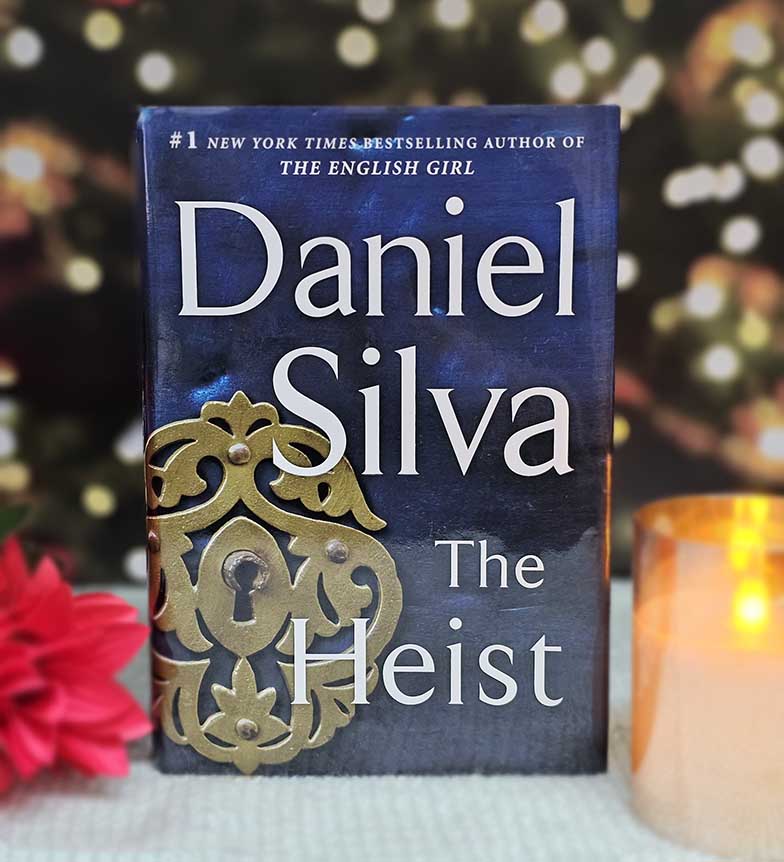
The Heist
by Daniel Silva
Daniel Silva's fourteenth Gabriel Allon novel: when London art dealer Julian Isherwood finds his colleague Jack Bradshaw - a former British intelligence officer turned art trafficker - tortured and murdered at a villa on Lake Como, Allon, the Israeli spy and master art restorer, is pulled in by the Italian Art Squad to recover a Caravaggio stolen in 1969, and the hunt leads through the Geneva Freeport and a private Austrian bank to the looted billions that Syria's Bashar al-Assad has hidden across Europe.
Spoiler Warning
This review may contain spoilers. Read at your own discretion if you haven't finished the book yet.
A Stolen Caravaggio, a Corpse on Lake Como, and the Hidden Billions of a Dictator at War
Daniel Silva's fourteenth Gabriel Allon novel opens, as these books like to, with Allon somewhere quiet and beautiful, doing the work that is supposedly his real life rather than his cover. He is in Venice, restoring an altarpiece, with his wife Chiara pregnant and the prospect of something like a normal future briefly in view. It does not last past the first phone call. Julian Isherwood, the London art dealer who has been orbiting Allon's life for the length of the series, has gone to a villa on Lake Como to look at a painting and found instead the body of the man who owned it. The dead man is Jack Bradshaw - a former British intelligence officer turned dealer and trafficker in stolen art - and he has been tortured before he was killed. Isherwood is briefly held as a suspect, which is how Allon gets pulled back in, and the thing Bradshaw was apparently trafficking in turns out to be one of the most famous missing pictures in the world.
That picture is Caravaggio's Nativity with St. Francis and St. Lawrence, stolen in Palermo in 1969 and never recovered - a real-world theft Silva builds his fiction on top of. General Cesare Ferrari of the Italian Art Squad wants it back, and he wants Allon, the spy who is also a master restorer, to be the one who finds it. What starts as the recovery of a single masterpiece becomes, in the way of these novels, something much larger: the looted art turns out to be a thread that runs straight into the hidden fortune of Bashar al-Assad, billions of euros moved out of a country coming apart and parked where the rest of the world cannot reach it. A 4.5 reflects a Silva operating at the confident upper end of what he does - the art-world erudition deployed as actual plot rather than decoration, a genuine emotional center that the series does not always bother to build, and a late-book turn that changes the trajectory of the whole franchise - with the half-star held back for the simple fact that the machinery here is the same machinery the series has run thirteen times before.
The Body on Lake Como and the Caravaggio That Vanished in 1969
The setup is the most satisfying stretch of the book, because it is the part that lets Silva be what he is best at: a writer who actually knows the art world and uses that knowledge as the engine rather than the wallpaper. The Caravaggio at the center of the plot is real, the 1969 Palermo theft is real, and Silva's decision to make the most famous unrecovered painting in the world the thing everyone is chasing gives the early chapters a weight that an invented MacGuffin would not carry. Bradshaw's murder is the loose thread; Ferrari and the Art Squad are the pressure; and Allon, working a problem that begins as connoisseurship before it becomes anything more dangerous, is in his element.
What I appreciated is that Silva does not rush past the art to get to the spycraft. The provenance, the freeports where the wealthy store paintings they never intend to hang, the gap between what a picture is worth on a wall and what it is worth as a portable, untaxed, untraceable store of value - all of that is the actual subject here, not the flavor text. By the time the trail leads out of Italy, the book has quietly taught the reader why stolen art and hidden money are the same problem wearing two different costumes, and that lesson is what the rest of the novel is built on.
The Forged Van Gogh, the Austrian Bank, and a Dictator's Money
Once the recovery becomes an intelligence operation, the book shifts into the elaborate-con register Silva handles so well. The plan, broadly, is to follow the money: the art is collateral and camouflage for the fortune Assad's regime has spirited out of Syria, and Allon's team sets out to find it, get inside it, and make it disappear. To do that, Allon does the thing only this particular spy could do - he paints a forgery, a Van Gogh good enough to be dangled in front of the regime's buyer, and turns a fake picture into the bait for a very real bank.
The trail runs through the kind of geography the series collects like passport stamps - Marseilles and Corsica, where Christopher Keller, the former SAS commando turned Corsican assassin, lends his particular talents; Paris; the Geneva Freeport; and finally a small private bank in Linz, Austria, where the regime's money is being quietly managed. The set pieces are clean and the tradecraft is convincing, and if you have read enough Allon you will recognize the shape of the thing even as you enjoy watching it assemble. This is the formula working at a high level: the multinational team, the long con, the forgery-as-key, the patient construction of an operation that has to fool people who are very hard to fool.
Jihan Nawaz and the Survivor at the Center
The reason this entry lands at the top of its tier rather than the middle is Jihan Nawaz. She is an account manager at that private bank in Linz, and she is also a survivor of the 1982 Hama massacre - the slaughter the Assad regime carried out against its own people a generation before the war that frames the novel. When Allon's team recruits her, she does not at first know she is working for Israeli intelligence; what she knows is the shape of her own history, and Silva lets that history do real emotional work rather than treating her as a disposable asset. The thread connecting Hama to the present-day looting of Syria gives the book a moral spine that a lot of glossy espionage thrillers never reach for, and Jihan is the most fully alive character in it.
Without spoiling the late turns: the Caravaggio finds its way home and Allon's operation strikes hard at the hidden fortune that has been the real quarry all along. He goes to considerable lengths to protect Jihan when the operation puts her in danger, and that choice is the human cost the book has been quietly building toward. And then there is the franchise-level development that long-time readers will feel the ground shift under: by the close, Allon has finally agreed to become the next chief of the Office when Uzi Navot's term ends, a decision the series has been circling for years. Whatever you think of the book on its own, it is a hinge in the larger story.
Why a 4.5
The strengths are the ones Silva has spent a career sharpening: the art-historical knowledge used as genuine plot rather than ornament; the Caravaggio and the 1969 theft grounding the fiction in something real; the Hama thread and Jihan giving the novel a center of gravity heavier than the usual chase; the clean, well-engineered set pieces; and a late turn in Allon's career that rewards the reader who has stayed with the series. It is, by the broad consensus of its readership, a solid and well-liked entry - comfortably around the high bar the Allon novels tend to clear.
The reservation is the honest one, and it is the reason for the half-star rather than the whole: this is a formula, and by the fourteenth book it is a familiar one. Allon is pulled from his restoration work, a team assembles, a long con is built around his unique double talent, exotic capitals are visited in sequence, and the operation succeeds against a villain the reader is never really invited to fear will win. Silva executes it beautifully, but execution is what it is - the surprise is in the craft, not in the outcome. A 4.5 means one of the more emotionally grounded entries in a reliably excellent series, a book that uses its art-world expertise better than almost anyone writing in the genre, and a turning point for its hero - held just short of a five by the fact that you have, in the structural sense, been here before.
Rating: 4.5/5 ⭐
Perfect for: Gabriel Allon readers, fans of art-world espionage and intelligent spy fiction, anyone who likes a thriller that does real research and means it, readers who want a series entry with an actual emotional core and a franchise-shifting turn.
Skip if: You need your spy thrillers to break their own formula rather than perfect it, you are brand new to Allon and would rather start at the beginning of the series, or geopolitics-of-the-Syrian-war framing is not the backdrop you want behind your escapism.
You Might Also Like
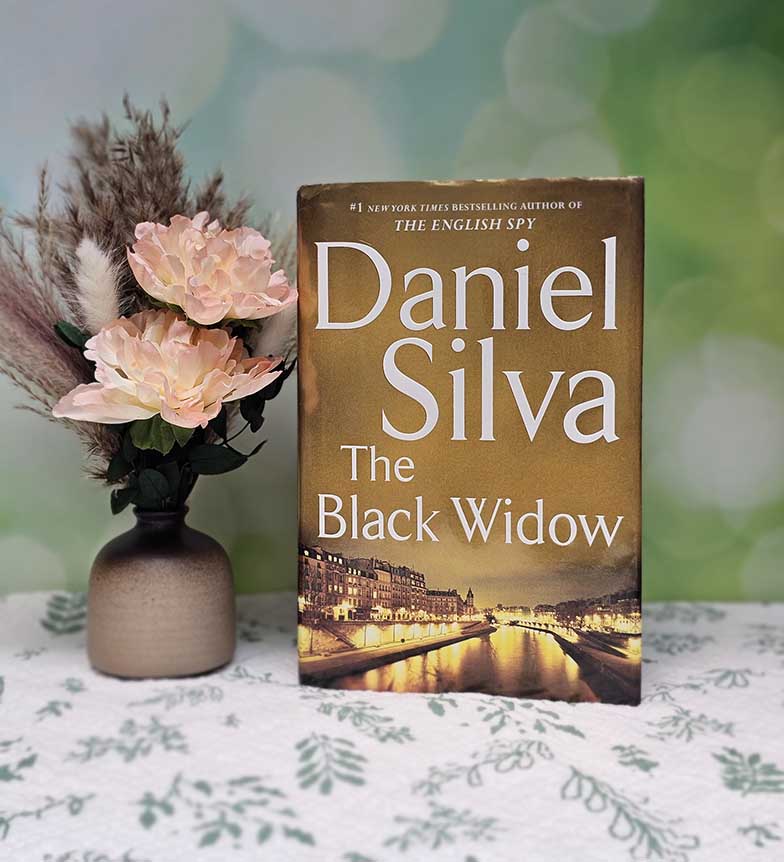
The Black Widow
by Daniel Silva
The sixteenth Gabriel Allon novel: when an ISIS bomb in the Marais kills the Israeli intelligence officer Gabriel Allon's longtime friend Hannah Weinberg at a Paris conference on antisemitism, Allon - already on the cusp of taking over the Office, the Israeli intelligence service he has spent his life serving in the field - is pulled into a French-and-Jordanian counterterrorism operation against a shadowy ISIS architect called Saladin, who is recruiting young European women into a network of suicide bombers, and recruits Natalie Mizrahi, a French-born physician now practicing in Israel, to take a new identity as a Palestinian refugee and infiltrate the caliphate from the inside.
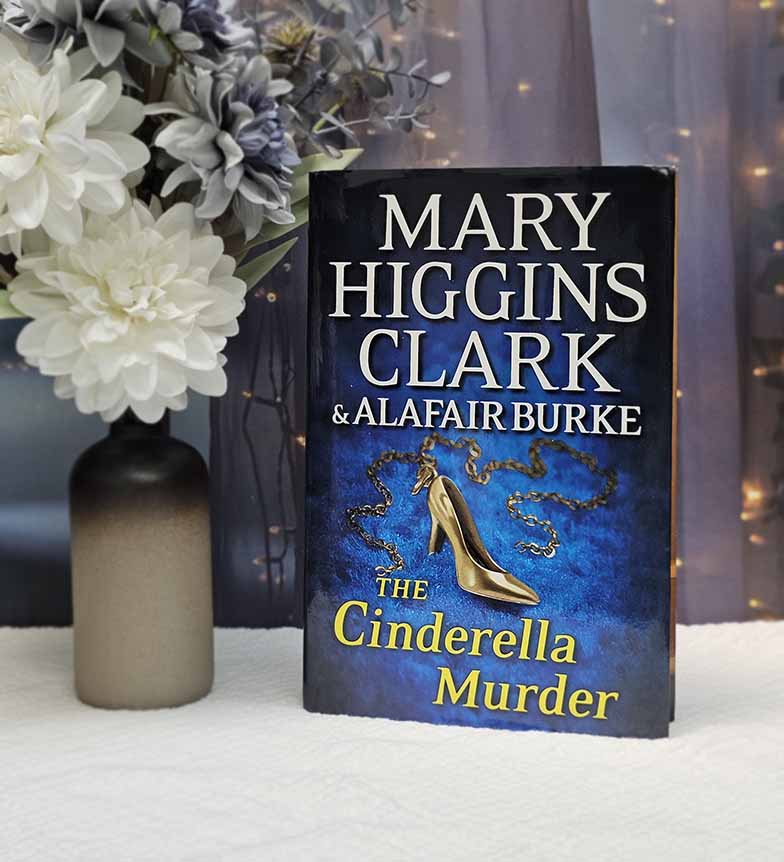
The Cinderella Murder
by Mary Higgins Clark & Alafair Burke
The second Under Suspicion novel and the first Mary Higgins Clark / Alafair Burke collaboration: Laurie Moran, producer of a cold-case television show, reopens the twenty-year-old murder of UCLA student Susan Dempsey - found strangled in Laurel Canyon Park missing a single shoe, the 'Cinderella Murder' of the tabloids - by reuniting the suspects on camera, from Susan's grieving mother and womanizing boyfriend to the now-famous director she was auditioning for, her former roommates, a tech billionaire who was her classmate, and the computer-science professor who taught them both.
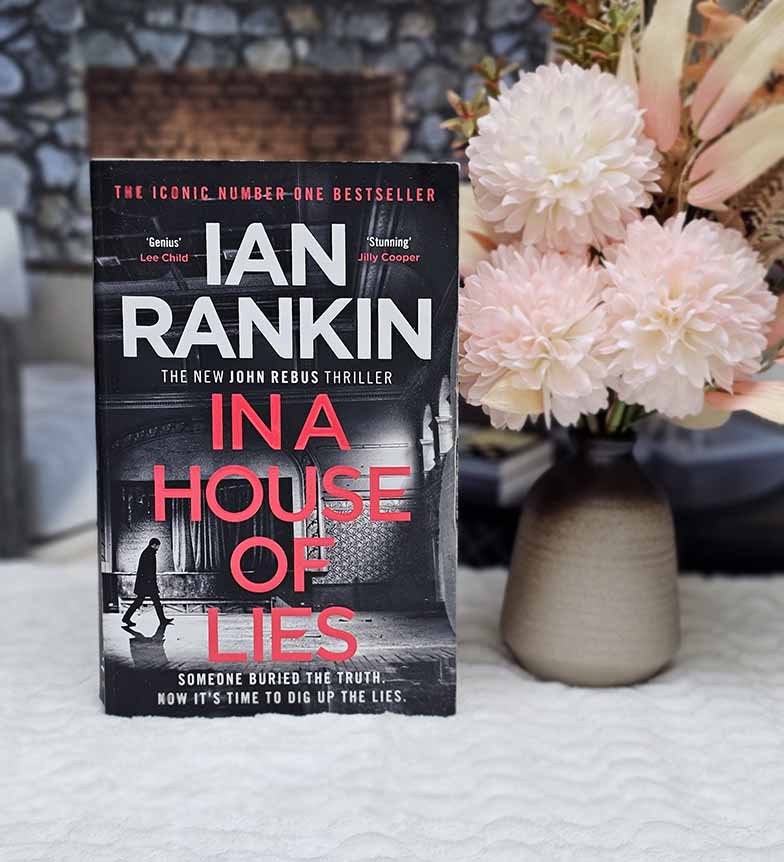
In a House of Lies
by Ian Rankin
The twenty-second Inspector Rebus novel: when a car is found deep in an Edinburgh wood with the body of private investigator Stuart Bloom in its boot and his ankles bound by police-issue handcuffs, a cold case more than a decade old reopens - and retired DI John Rebus, who worked the original botched investigation, finds himself implicated alongside DI Siobhan Clarke and Malcolm Fox as the rot in that first inquiry comes to light.