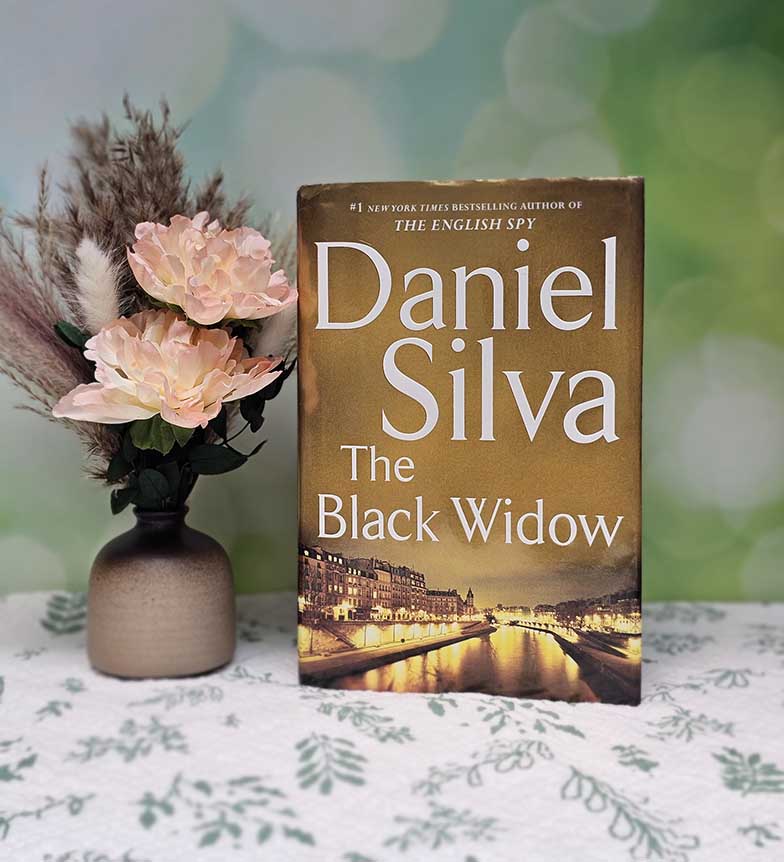
The Black Widow
by Daniel Silva
The sixteenth Gabriel Allon novel: when an ISIS bomb in the Marais kills the Israeli intelligence officer Gabriel Allon's longtime friend Hannah Weinberg at a Paris conference on antisemitism, Allon - already on the cusp of taking over the Office, the Israeli intelligence service he has spent his life serving in the field - is pulled into a French-and-Jordanian counterterrorism operation against a shadowy ISIS architect called Saladin, who is recruiting young European women into a network of suicide bombers, and recruits Natalie Mizrahi, a French-born physician now practicing in Israel, to take a new identity as a Palestinian refugee and infiltrate the caliphate from the inside.
Spoiler Warning
This review may contain spoilers. Read at your own discretion if you haven't finished the book yet.
A Paris Bombing, a Shadowy ISIS Architect Named Saladin, and the French-Israeli Doctor Sent Into the Caliphate to Find Him
Daniel Silva's 2016 sixteenth Gabriel Allon novel is the entry in his long-running spy series in which the geopolitics of the actual world caught up with the geopolitics of the fictional world more uncomfortably than at any other point in the run. Silva wrote the foreword to the book specifically to acknowledge that the manuscript had been substantially complete before the November 2015 Bataclan and Stade de France attacks in Paris, that he had considered shelving it, and that he had ultimately decided the novel he had written was the novel the moment required. The book that resulted is the most current-events-shaped entry in the Allon series to that point, a thriller that opens on a bombing in the Marais at a Paris conference on antisemitism and that does not allow the reader, the protagonist, or the publisher's marketing copy any of the comfortable separations between the page and the news.
The bombing kills Hannah Weinberg, the curator of a small Holocaust-history archive who has been a recurring figure across earlier Allon novels and one of the few non-Office friends Gabriel has allowed himself. The Israeli operative is by this point in the series no longer the field operative he used to be. He is the senior Office figure poised to take over as the next chief of the Office (the Israeli intelligence service), and the novel opens at the moment the institutional weight of that promotion is about to land on him. The bombing in the Marais is the personal-and-professional cost of one last operation he had not been planning to run. The French DGSI and the Jordanian GID, the two services with the best information on the man calling himself Saladin who organized the Marais bombing, ask Israel for help. Allon agrees. The asset he proposes to put inside the network is a French-born Jewish physician named Natalie Mizrahi, now practicing medicine in Israel, whose Arabic is fluent and whose temperament, training, and cover possibilities make her the only candidate in the room for the operation she is about to be asked to take on.
A 4.5 reflects: a Silva at the peak of what he does, with the geopolitical specificity, the procedural detail, and the moral seriousness that have made the Allon series a fixture of the spy-thriller shelf since 2000; a co-protagonist in Natalie who carries some of the novel's hardest material with her own kind of patience; a Paris-to-caliphate-to-Washington plot that maps the ISIS network the actual world was learning about in the same months the book was being released; a foreword that acknowledges the unease of the project rather than running from it; and a few reservations about a series-fan-service back-half beat or two that long-time Allon readers will recognize.
Gabriel Allon, Hannah Weinberg, and the Marais
The opening sequence in the Marais is some of Silva's better thriller writing. The Centre Isaac Weinberg - the small archive Hannah has been running on the rue des Rosiers, named after her grandfather - is hosting a conference on antisemitism in France when the bomb goes off. Silva renders the bombing with the kind of restraint he has earned across fifteen previous Allon novels, which is to say he does not write it for shock; he writes it for the political fact it is. Gabriel arrives in Paris and walks the wreckage. The choice to put Hannah at the center of the blast is not a small one - readers of the series have known her since The English Assassin in 2002 - and the novel is honest about what her death costs Gabriel as a person rather than as an operative. The grief is not performed. It is, in the way the series has come to do quiet things well, the thing that decides what kind of operation Gabriel is going to agree to run.
The institutional setup is the second pleasure of the front half. Silva is good at the small-room scenes where the French DGSI (here represented by Paul Rousseau of the Alpha Group, the counterterrorism unit) and the Jordanian GID (here represented by the longtime Allon ally Fareed Barakat) and the Office sit down together and work out what each of them knows and what each of them can afford to do with what they know. The book is patient about the bureaucratic and political constraints inside which the operation will have to live, and about the way each service is hedging against the others even while collaborating. Saladin, the man behind the Marais bombing, is the kind of antagonist the series has been building toward across several books - an operational architect rather than a true believer, an Iraqi-trained professional who has put together a network of women recruited as black widows to do the work the men in the network can no longer do without being flagged. Tracking him is the operation. Getting someone close enough to identify him is the operation inside the operation. That someone is Natalie.
Natalie Mizrahi, and the Cover That Has to Hold
The book's structural achievement is Natalie. Silva spends the kind of patient pages on her recruitment, her training, her family, and the construction of her cover identity that the average commercial thriller of this length would not spend on a character introduced this late in a series. Natalie's parents had emigrated from France to Israel during the rising European antisemitism of the early 2000s; she is the daughter of that emigration and has the bilingual, bicultural, medically-trained adult life the cover identity she is about to take on requires. The cover is a Palestinian refugee named Leila Hadawi, an ER doctor who has watched Israeli forces kill her family and who has been radicalized toward the cause. Silva walks the reader through the training - the language work, the religious work, the operational work, the slow construction of a person Natalie has to become well enough to live inside of for months at a time - with the care a writer takes when he knows the believability of the back half depends on the believability of this part.
Once Leila is real, the operation deploys her. Through the restive Paris suburbs, into a recruitment network that vets her, then to Santorini for a handoff, then across the border into the territory the Islamic State at the time of the novel's writing controlled in Syria and Iraq, where the actual Saladin is. The chapters inside the caliphate are the hardest writing in the book. Silva renders the world Natalie has walked into with the kind of journalistic specificity the rest of the Allon series has primed readers to expect, and with a refusal to either sensationalize or sanitize the violence and the structure of the regime she is operating inside. Natalie's interior - the operational discipline of staying in character, the constant micro-calculation of how much of the regime's logic she has to embody to remain credible without breaking, the fear that is the texture of every page - is the book's most affecting writing.
Saladin, Washington, and the Limit of What Even a Perfect Operation Can Stop
The third act delivers what the book has been building toward and what the reader has been hoping the book will not have to deliver. Natalie reaches Saladin. The intelligence she brings back is real. The operation, by the standards of the operation, is a success. The follow-on attack - which the novel moves to American soil for the climax - is not stopped. Silva is candid about this. The book ends not on a thwarted-attack triumph but on the difficult institutional question of what intelligence services do when they have done the work well and the attack happens anyway, and on the personal question of what Gabriel does with the chief-of-the-Office promotion that is now waiting for him in Tel Aviv. The closing chapters return Gabriel to Israel, to his wife Chiara, and to the first birthday of his children, in the kind of domestic register the series has earned by spending fifteen previous books in the field with him.
Why a 4.5
The strengths: the geopolitical timeliness, which the foreword acknowledges and the novel does not flinch from; Natalie as a co-protagonist who carries an enormous share of the book and whose interior is rendered with the kind of patience the series's secondary leads do not always get; the Paris-DGSI/Jordanian-GID/Office collaboration written with the procedural specificity Silva is known for; the climax that refuses the comfortable thriller-ending triumph; Hannah Weinberg's death as a series-fan loss the book takes seriously rather than uses for shock; and a Saladin built with the cold professionalism that makes him a genuinely menacing antagonist rather than a cartoon.
The reservations: long-time Allon readers will recognize some of the moves - the recruitment of a brilliant woman who has every reason to refuse, the operational set pieces in Mediterranean locations, the procedural beats inside the Office's training apparatus - that the series has used before, and a couple of the back-half coincidences land tighter than the front-half patience would have predicted. The Washington climax is propulsive but is also the kind of sequence whose specifics, in the post-2016 light, some readers will find more triggering than thrilling. None of this breaks the book; the half-star off is for the genre-fan-service beats more than for any failure of nerve.
A 4.5 means: a Silva at the top of his form, one of the better entries in a long-running spy series, and a book that takes the specific historical moment it was written into seriously enough to acknowledge it in a foreword rather than pretending the line between fiction and reportage was holding. The right entry to read if you have been reading the Allon books in order; the right entry to start on if you have not.
Rating: 4.5/5 ⭐
Perfect for: Daniel Silva readers, fans of the Gabriel Allon series, spy-thriller readers who want geopolitical specificity and procedural seriousness rather than just chase sequences, anyone interested in fiction that engaged honestly with the rise of ISIS in the mid-2010s, readers who like a co-protagonist whose mission is the structural engine of the book.
Skip if: ISIS, suicide bombings, and the specific violence of the post-2015 European terror landscape are subjects you cannot be in the same room as right now, you need a thriller that ends with the climactic attack thwarted, or you are picking up your first Allon novel and would prefer to start at an earlier entry in the series for the cumulative weight of Gabriel's history.
You Might Also Like
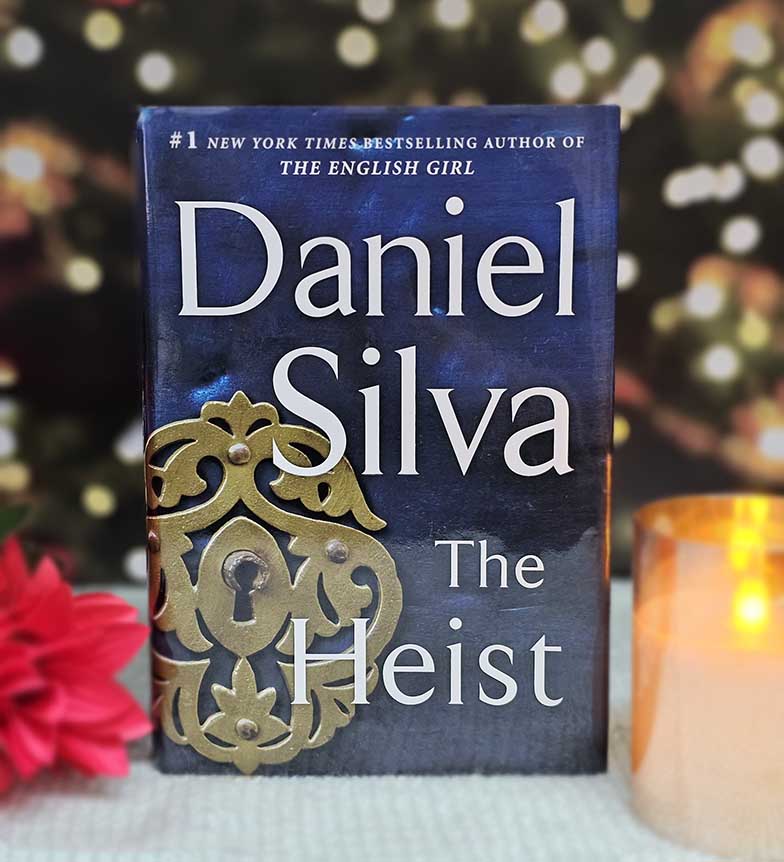
The Heist
by Daniel Silva
Daniel Silva's fourteenth Gabriel Allon novel: when London art dealer Julian Isherwood finds his colleague Jack Bradshaw - a former British intelligence officer turned art trafficker - tortured and murdered at a villa on Lake Como, Allon, the Israeli spy and master art restorer, is pulled in by the Italian Art Squad to recover a Caravaggio stolen in 1969, and the hunt leads through the Geneva Freeport and a private Austrian bank to the looted billions that Syria's Bashar al-Assad has hidden across Europe.
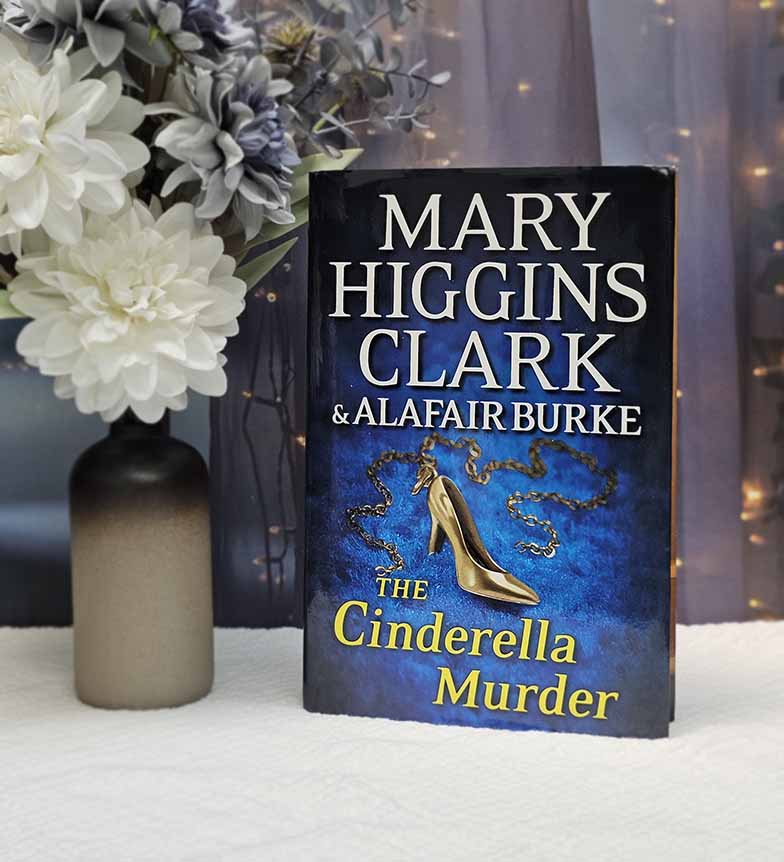
The Cinderella Murder
by Mary Higgins Clark & Alafair Burke
The second Under Suspicion novel and the first Mary Higgins Clark / Alafair Burke collaboration: Laurie Moran, producer of a cold-case television show, reopens the twenty-year-old murder of UCLA student Susan Dempsey - found strangled in Laurel Canyon Park missing a single shoe, the 'Cinderella Murder' of the tabloids - by reuniting the suspects on camera, from Susan's grieving mother and womanizing boyfriend to the now-famous director she was auditioning for, her former roommates, a tech billionaire who was her classmate, and the computer-science professor who taught them both.
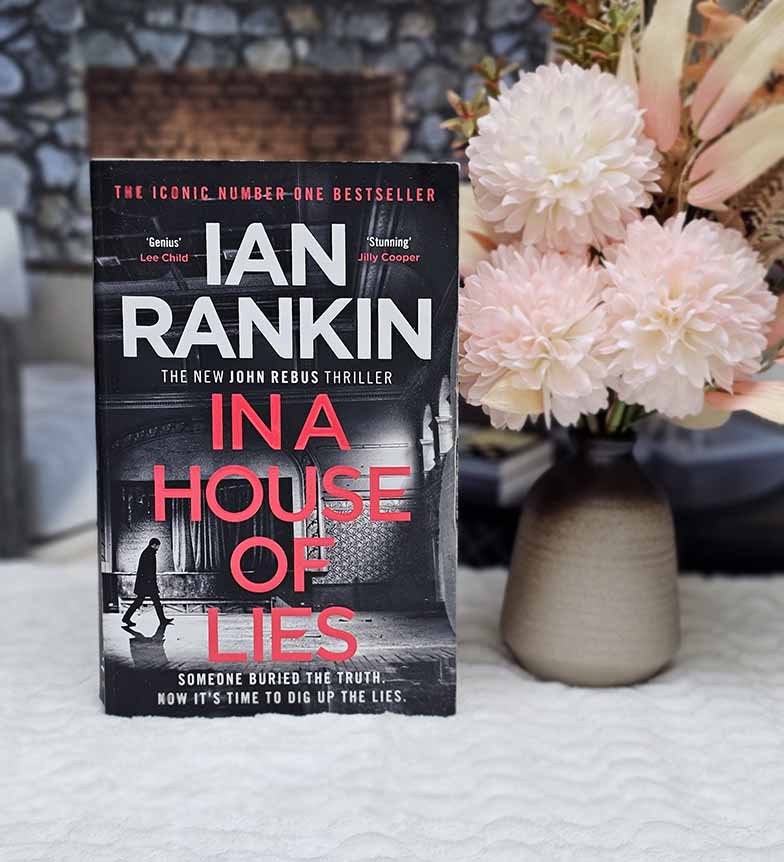
In a House of Lies
by Ian Rankin
The twenty-second Inspector Rebus novel: when a car is found deep in an Edinburgh wood with the body of private investigator Stuart Bloom in its boot and his ankles bound by police-issue handcuffs, a cold case more than a decade old reopens - and retired DI John Rebus, who worked the original botched investigation, finds himself implicated alongside DI Siobhan Clarke and Malcolm Fox as the rot in that first inquiry comes to light.