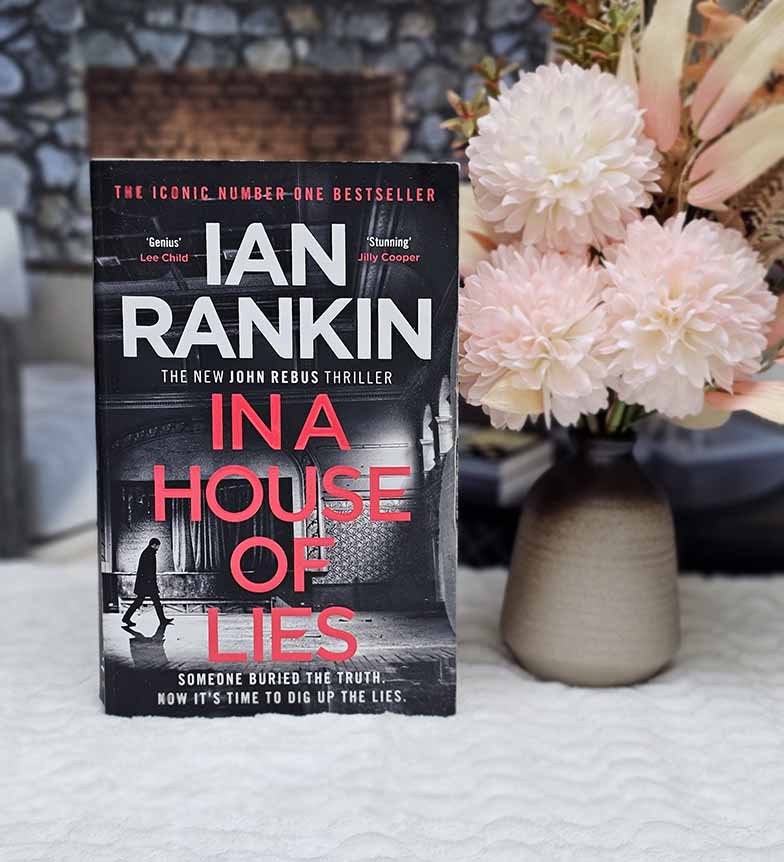
In a House of Lies
by Ian Rankin
The twenty-second Inspector Rebus novel: when a car is found deep in an Edinburgh wood with the body of private investigator Stuart Bloom in its boot and his ankles bound by police-issue handcuffs, a cold case more than a decade old reopens - and retired DI John Rebus, who worked the original botched investigation, finds himself implicated alongside DI Siobhan Clarke and Malcolm Fox as the rot in that first inquiry comes to light.
Spoiler Warning
This review may contain spoilers. Read at your own discretion if you haven't finished the book yet.
A Private Eye's Body in the Boot of a Car, the Botched Investigation That Buried Him, and the Retired Detective Who Was There the First Time
The twenty-second Inspector Rebus novel opens the way the best cold-case stories do: with the ground finally giving something back. A car is found deep in Poretoun Woods outside Edinburgh, and in its boot are the remains of Stuart Bloom, a private investigator who vanished more than a decade earlier and was never found. The detail that turns a sad discovery into a scandal is at his ankles - police-issue handcuffs. Whoever put Bloom in that boot either was a cop or wanted everyone to believe one was, and either way the original investigation that failed to find him for all those years is now itself under the lights. That original investigation is where John Rebus comes in, because Rebus worked it, and the questions about how badly it was handled are, inevitably, questions about him.
Rebus is retired now, his lungs going from COPD, the warrant card long surrendered, and Rankin has spent the last several books being honest about what age and illness do to a man who defined himself entirely by the job. He is pulled back into Bloom's case not as a detective but as a witness and, uncomfortably, a person of interest - the man who was there the first time, who may have cut a corner, who may have protected someone. Around him the present-day investigation belongs to DI Siobhan Clarke, while Malcolm Fox works the same files from Police Scotland's Major Crime base at Gartcosh, reviewing the old inquiry for exactly the kind of misconduct the handcuffs imply. A 4.0 reflects a richly constructed, character-deep late-series procedural that does its information control masterfully and lets its three leads carry real weight - held a little short of higher by a dense first half and a web of threads and names that asks a lot of the reader.
The Body in the Woods and the Case Nobody Solved
The pleasure of the setup is how completely it implicates everyone. Bloom had been hired by Jackie Ness, a low-budget film producer with a sideline in cheap schlock, to dig into Sir Adrian Brand, a wealthy and well-connected property developer. The two men were locked in a feud over a piece of land - Ness had shot some of his films on it, Brand wanted it for a golf course - and Bloom, poking into Brand on Ness's behalf, was exactly the kind of man who collects enemies on both sides of a fight like that. When he disappeared, the investigation flailed, and the suspicion that has hung over it ever since is that it flailed on purpose, that someone with a badge had reasons to keep it from going anywhere.
Rankin is excellent at the texture of a reopened case: the boxes of old files that don't quite add up, the retired officers who close ranks, the witnesses whose stories have hardened over a decade into something smoother than the truth. Bloom's family, his former boyfriend Derek Shankley - the son of an old-school detective - and the officers who ran the first inquiry all come back into frame, and the deeper Clarke and Fox push, the clearer it gets that the failure to find Bloom was not simply incompetence. The book is in no hurry, and it earns the patience: this is a procedural that wants you to feel the weight of an institution protecting itself.
Rebus, Clarke, and Fox
The reason longtime readers will rate this highly is the three-hander at its center. Rebus, diminished and implicated, is a different animal from the bull he used to be, and the novel is quietly devastating about it - the man who cannot let go of the work even as the work no longer belongs to him, and even as the work is now examining him. Siobhan Clarke gets the strongest material; she runs the live investigation while simultaneously being harassed by a mysterious watcher and investigated by the Anti-Corruption Unit over an alleged leak to a journalist, and she learns things about her old mentor that complicate the loyalty she has always given him. Malcolm Fox, the former internal-affairs man, is perfectly cast in a story about whether the police can be trusted to investigate themselves.
And then there is Big Ger Cafferty, Rebus's lifelong criminal nemesis, working the edges as he always does, because no Edinburgh of Rankin's is complete without the two old men circling each other one more time. If the book has a thesis, it is in the way these relationships have aged - the mentor and the protege, the cop and the gangster, the institution and the people who gave it their lives - and Rankin trusts the reader to have grown up alongside them.
Why a 4
The strengths are the ones Rankin has spent a career sharpening: masterful control of when the reader learns what; a cold case whose corruption angle gives it genuine moral stakes; and a Rebus-Clarke-Fox dynamic that feels lived-in rather than recycled, with Clarke's arc the standout. For a twenty-second entry in a series, it is remarkably unfatigued - it has something to say about what these characters have become, and it says it without coasting on nostalgia.
The reservations are real and they're about density. The first half is a slow burn that leans hard on procedure, paperwork, and setup before the momentum kicks in, and the cast of names - old officers, family members, suspects, the film-world figures around Ness and Brand - is large enough that a reader can lose the thread of who's who. Rebus himself, by design, is a more sidelined and sombre presence than the firebrand newcomers may expect, and some will feel this reads as much as a Clarke-and-Fox novel as a Rebus one. A 4.0 means a very good, intelligent, emotionally honest late-career procedural that rewards the patient and the long-committed - a half-step short of the leaner, faster Rebus novels only because it asks the reader to carry so much at once.
Rating: 4.0/5 ⭐
Perfect for: Ian Rankin and Inspector Rebus readers, fans of Scottish crime and Edinburgh-set police procedurals, anyone who loves a corruption-tinged cold case and character work that has aged in real time, patient readers who enjoy a slow burn that pays off.
Skip if: You're brand new to Rebus and want a fast standalone, you find large casts and many interlocking threads hard to track, or you need your detective at the center of the action rather than retired and implicated on its edges.
You Might Also Like

The Cinderella Murder
by Mary Higgins Clark & Alafair Burke
The second Under Suspicion novel and the first Mary Higgins Clark / Alafair Burke collaboration: Laurie Moran, producer of a cold-case television show, reopens the twenty-year-old murder of UCLA student Susan Dempsey - found strangled in Laurel Canyon Park missing a single shoe, the 'Cinderella Murder' of the tabloids - by reuniting the suspects on camera, from Susan's grieving mother and womanizing boyfriend to the now-famous director she was auditioning for, her former roommates, a tech billionaire who was her classmate, and the computer-science professor who taught them both.

In the Woods
by Tana French
Tana French's 2007 Edgar-winning debut and the first book of the Dublin Murder Squad series: in 1984, a twelve-year-old boy named Adam Ryan walked out of the woods outside Knocknaree, near Dublin, with the blood of his two missing friends in his shoes and no memory of what had happened to them; twenty years later, the man he has become - Detective Rob Ryan, the same boy under a different name and with an English boarding-school accent - is assigned, with his partner and best friend Detective Cassie Maddox, to investigate the murder of a twelve-year-old ballet student named Katy Devlin whose body has been found on the stone altar of an archaeological dig in the same woods, and the case is the long return of a memory Rob has spent two decades not having.
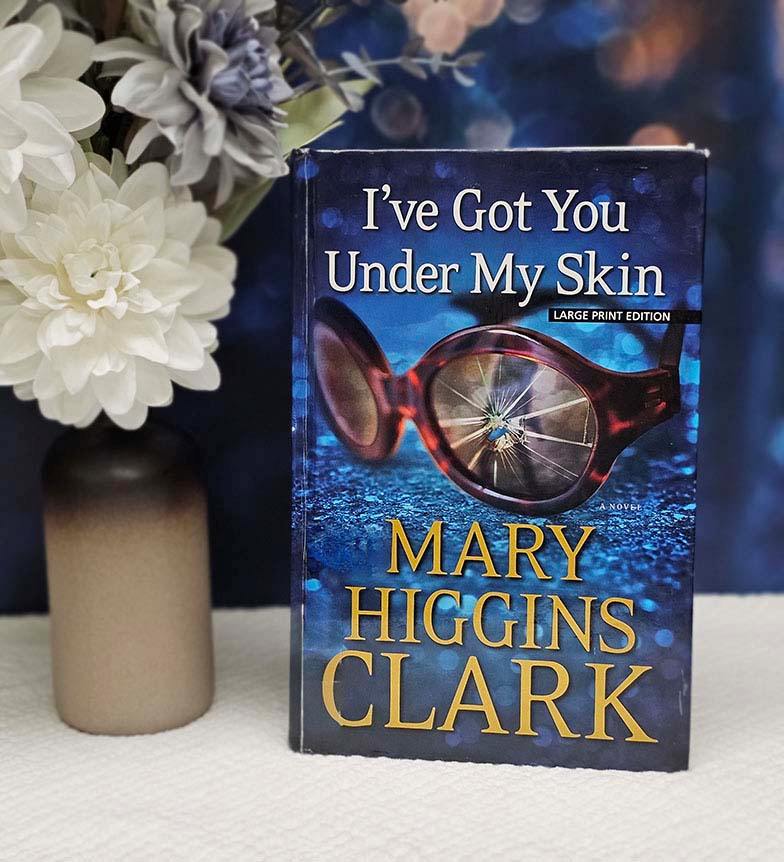
I've Got You Under My Skin
by Mary Higgins Clark
TV producer Laurie Moran - whose husband was murdered five years ago in front of their three-year-old son by a killer the boy can only describe as 'Blue Eyes' - launches a true-crime show that reopens cold cases on camera, starting with the twenty-year-old suffocation of socialite Betsy Powell after her daughter's Graduation Gala; as the four women who were under that roof reunite for filming, both unsolved murders start moving toward the same ending.