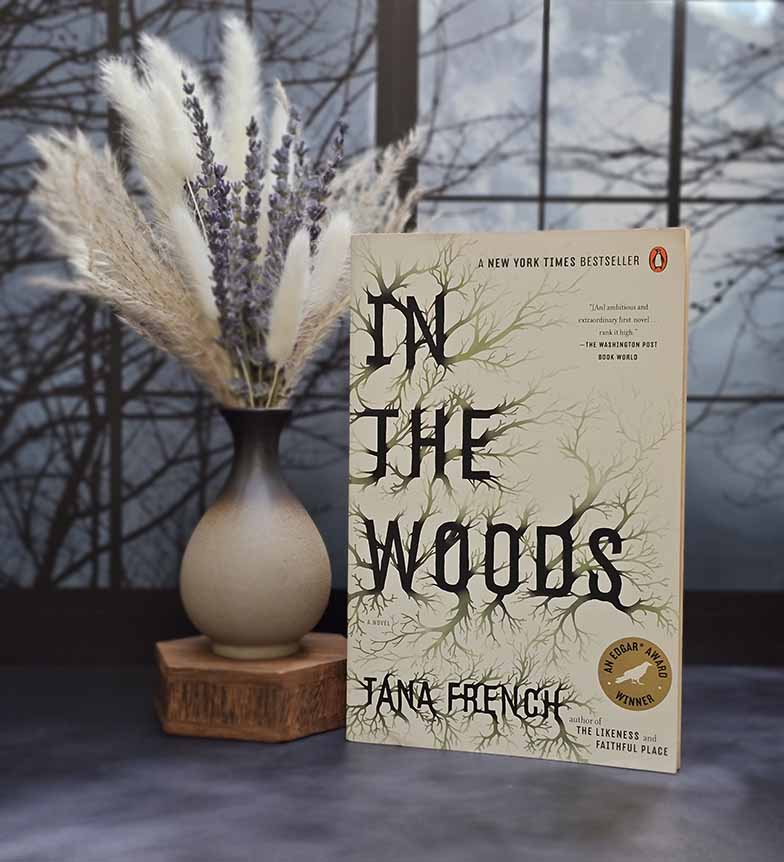
In the Woods
by Tana French
Tana French's 2007 Edgar-winning debut and the first book of the Dublin Murder Squad series: in 1984, a twelve-year-old boy named Adam Ryan walked out of the woods outside Knocknaree, near Dublin, with the blood of his two missing friends in his shoes and no memory of what had happened to them; twenty years later, the man he has become - Detective Rob Ryan, the same boy under a different name and with an English boarding-school accent - is assigned, with his partner and best friend Detective Cassie Maddox, to investigate the murder of a twelve-year-old ballet student named Katy Devlin whose body has been found on the stone altar of an archaeological dig in the same woods, and the case is the long return of a memory Rob has spent two decades not having.
Spoiler Warning
This review may contain spoilers. Read at your own discretion if you haven't finished the book yet.
A Boy Who Walked Out of the Woods Outside Dublin in 1984, the Two Friends Who Did Not, and the Twelve-Year-Old Girl Whose Body Turns Up Twenty Years Later in the Same Woods
Tana French's 2007 debut is the kind of literary mystery novel that does the work of two mysteries at once and trusts the reader to live inside the discomfort of the gap between them. The older mystery is the one the prologue tells. It is the summer of 1984. Three twelve-year-old children - Peter, Jamie, and Adam - go into the woods outside the Dublin housing estate of Knocknaree to play. They have been doing this all summer. When the search parties arrive that night, two of the children are not there and the third, Adam, is found gripping a tree with his shoes full of blood that is not his own, unable to speak. Peter and Jamie are never found. Adam survives. He is sent to boarding school in England, comes back with an English accent, takes to using his middle name Rob, and becomes - across the years the novel is not interested in spending on the page - a Detective on the Dublin Murder Squad, whose colleagues do not know that the Detective Rob Ryan they work with is the boy from the famous unsolved case that none of them have ever connected to him.
The second mystery is the one the present-day chapters tell. Twenty years after Peter and Jamie disappeared, a twelve-year-old girl named Katy Devlin - a talented ballet student about to leave Knocknaree for the Royal Ballet School, the daughter of a local activist named Jonathan Devlin who has been organizing residents against a motorway about to be cut through the woods - is found murdered on the stone altar at the edge of an archaeological dig that has been excavating the woods ahead of the construction. The case lands on Rob's desk and on the desk of his partner and best friend, Detective Cassie Maddox, the only woman on the Murder Squad. He does not tell their boss, Superintendent O'Kelly, that he was once Adam Ryan. He tells Cassie. Cassie agrees to keep his secret. The decision is the decision around which the rest of the book unwinds.
A 4.5 reflects: the most ambitious literary-mystery debut of the late 2000s in the English-language commercial-fiction space; a first-person narrator French sets up from page one as the kind of unreliable voice the genre's readers will only fully understand by the end; a Knocknaree setting rendered with the layered specificity of woods that have been used by Bronze Age communities, modern children, the rape culture of a particular generation of local teenagers, and an archaeological dig all on top of each other; an ending that splits the genre's readers on whether French is being honest or cruel; and a Cassie-and-Rob partnership that is one of the better-written professional friendships in modern crime fiction.
Knocknaree, the Dig, the Devlins, and the Case
The pleasure of the front half of the book is the Knocknaree case itself. French is good at the local-Ireland-specifics of a housing estate that was built on top of farmland in the seventies, of an archaeological dig that exists because a motorway is about to destroy what it is excavating, and of a community that has been arguing about the motorway through several local-election cycles. Katy Devlin is the daughter of the most public figure in the anti-motorway campaign. Her murder is, the squad has to consider, possibly political. It is also, as the medical examiner determines, the death of a child who had been quietly poisoned for years - her bouts of mysterious illness throughout her childhood that ended right before the murder are the part of the case the squad spends the second-act trying to find a frame for. Katy was attacked and suffocated on a Monday night, kept somewhere else, and moved to the dig site Tuesday night before being discovered Wednesday morning. The procedural specificity French puts into the timeline reconstruction is the kind that elevates the book past the police-procedural average of its publication moment.
The dig itself is French's structural device. The archaeologists working at the site - Dr. Ian Hunt running the project, the university students under him - are the part of the cast Rob does not have a personal history with, which makes them the part of the cast he can navigate. The site is layered, in the literal sense; the Bronze Age use of the stone altar, the medieval use of the surrounding land, and the current use as the children's playground that Adam, Peter, and Jamie had used in 1984 are all stacked on the same patch of ground that the squad is now treating as a crime scene. French does not over-explain the symbolism. She trusts the layering itself to do the work, and the work the layering does is the slow argument the book is making that the past is not something the present can step around. It is something the present is on top of.
Rob, Cassie, and the Partnership That Is the Book's Quiet Engine
The structural achievement of the novel is the Rob-Cassie partnership. They are, when the book opens, the closest thing to a professional ideal the squad has - a male-and-female detective pair whose communication is so practiced it does not require words, whose friendship is genuine, whose work is good. The early chapters spend real pages on what it looks like for two adults in the police to actually be friends in the specific way the job rewards, and the reader is asked to invest in the partnership at a level that the back half of the book is going to spend its capital on. Cassie is the book's quiet protagonist in some ways. Her interior is more accessible to the reader than Rob's, in part because Rob's first-person narration is studiedly evasive about himself in ways neither he nor the reader has the tools to name on a first reading.
What French is doing with Rob's voice is the book's hardest and least-discussed achievement. He is telling the story to the reader in retrospect, from a vantage point he hints at on page one and that the reader will only have the full shape of by the last chapter. The narration is precise, often beautiful, occasionally evasive, and increasingly unreliable as the case begins to surface the memories he has been not having for twenty years. The drinking starts. The unprofessional behavior with a suspect starts. The choices a competent detective would not be making compound across the second half of the book at a rate that pays out in the third act. French is honest that Rob is not, by the standards of the procedural genre, a good detective on this case. He is a man having a crisis whose job is to investigate a murder, and the book is candid about the difference.
The Devlin Family, the Reveal, and the Mystery That Stays Open
The third-act resolution of the Katy case lands hard. Without spoiling the specifics, the killer is closer to home than the squad has spent two-thirds of the book hoping she was, and the figure whose identification of the killer is the closing breakthrough of the case is the partner whose trust Rob has spent the back half of the book burning. The Devlin family is the engine of the reveal; French has been building the family's interior across the case with the patience required to make the resolution feel inevitable in retrospect, and the late-book chapters in the Devlin house are some of the most disquieting writing in the book.
The other mystery - the 1984 disappearance of Peter and Jamie - does not resolve. The recovered memories Rob has been waiting on do not provide an answer. The woods do not give Adam back what they took from him. The closing chapters of the novel return Rob to the question of who he is now that the case is closed and the partnership that defined his professional life has not survived the case, and the answer the novel gives him is a refusal. Readers of mystery fiction split, hard, on whether this refusal is the book's most honest move or its most frustrating one. French has said in interviews that the unresolved older mystery is the point. The genre's readers have not all agreed.
What Works, and the Ending That Divides the Reception
The strengths: French's prose, which is among the most consistently literary in commercial mystery fiction of the 2000s; the Knocknaree setting; the layered-time premise; the Cassie-Rob partnership; the case mechanics in the front and middle of the book; the late-book interior of the Devlin household; and the Edgar-winning ambition of a debut that decided to do the harder thing rather than the more crowd-pleasing one.
The reservations: the unresolved 1984 mystery is the book's central commitment to the kind of mystery novel French wanted to write, and it is also the thing readers picking the book up because they want a mystery to close cleanly will find unsatisfying. Rob's first-person narration, which is the book's structural achievement, is also occasionally exhausting in the middle stretch where the unreliability is hard to read for several chapters at a stretch. A few of the procedural beats around the rape backstory of Jonathan Devlin's teenage years land tighter than the book's overall patience would have predicted. None of these are dealbreakers, and most of them are, on reread, more clearly the book's intentional choices than they were the first time through.
Why a 4.5
A 4.5 means: one of the most consequential debuts in modern English-language mystery fiction; a first book in the Dublin Murder Squad series that does what only a first book can do, which is set up a world the next five books will explore from different first-person narrators; an ending the genre's readers will argue about; and a Cassie Maddox the reader is going to want to follow into the second book, which is exactly what French gives them. The half-star off is for the unresolved 1984 mystery only if you are the reader for whom that resolution is a dealbreaker; for the reader who is willing to live inside the refusal, the rating is a 5.
Rating: 4.5/5 ⭐
Perfect for: Tana French readers, fans of literary crime fiction, anyone who loved Kate Atkinson or Donna Tartt and wants the Irish-procedural cousin, readers who can sit with an unreliable first-person narrator for the length of a long novel, readers who want a series-opener that does the work of one and the setup for the next, anyone interested in the Cassie Maddox character the second book will then make the protagonist of.
Skip if: You need every mystery in the book to be solved by the last page, an unreliable narrator who actively misleads the reader is a structural choice you have hit your limit on, the rape-and-murder territory of small-town Ireland is more than you have bandwidth for right now, or you are looking for a faster-paced procedural rather than a literary novel that is also a procedural.
You Might Also Like
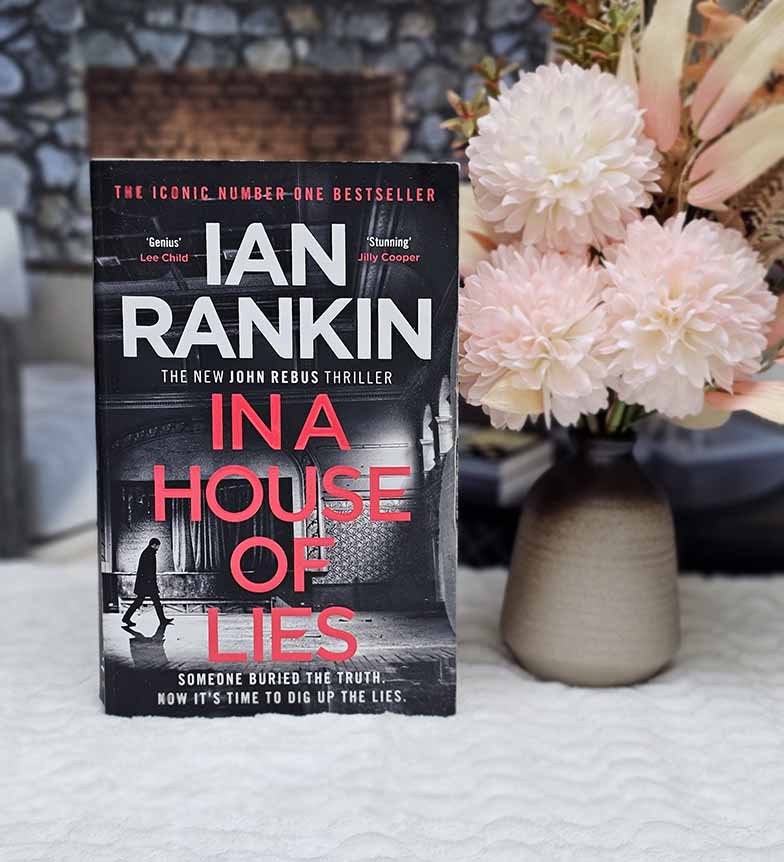
In a House of Lies
by Ian Rankin
The twenty-second Inspector Rebus novel: when a car is found deep in an Edinburgh wood with the body of private investigator Stuart Bloom in its boot and his ankles bound by police-issue handcuffs, a cold case more than a decade old reopens - and retired DI John Rebus, who worked the original botched investigation, finds himself implicated alongside DI Siobhan Clarke and Malcolm Fox as the rot in that first inquiry comes to light.
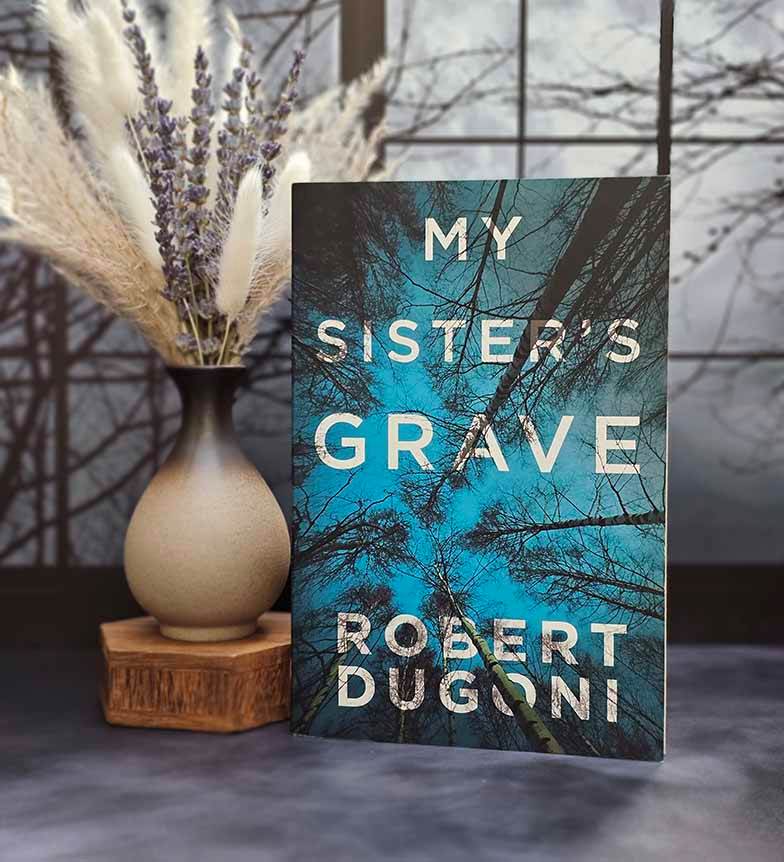
My Sister's Grave
by Robert Dugoni
Twenty years ago, Tracy Crosswhite's younger sister Sarah vanished one summer night on a county road outside the small Cascade-mountain town of Cedar Grove, Washington; a recently paroled rapist named Edmund House was convicted on circumstantial and partly planted evidence and given a life sentence, Tracy and Sarah's grief-shattered father took his own life, and Tracy left Cedar Grove to become a Seattle homicide detective. When Sarah's remains are uncovered in the dam-flooded land outside town, Tracy comes home to reopen the case alongside her childhood friend Dan O'Leary - now a small-town lawyer - against the sheriff and prosecutor she has known her whole life.
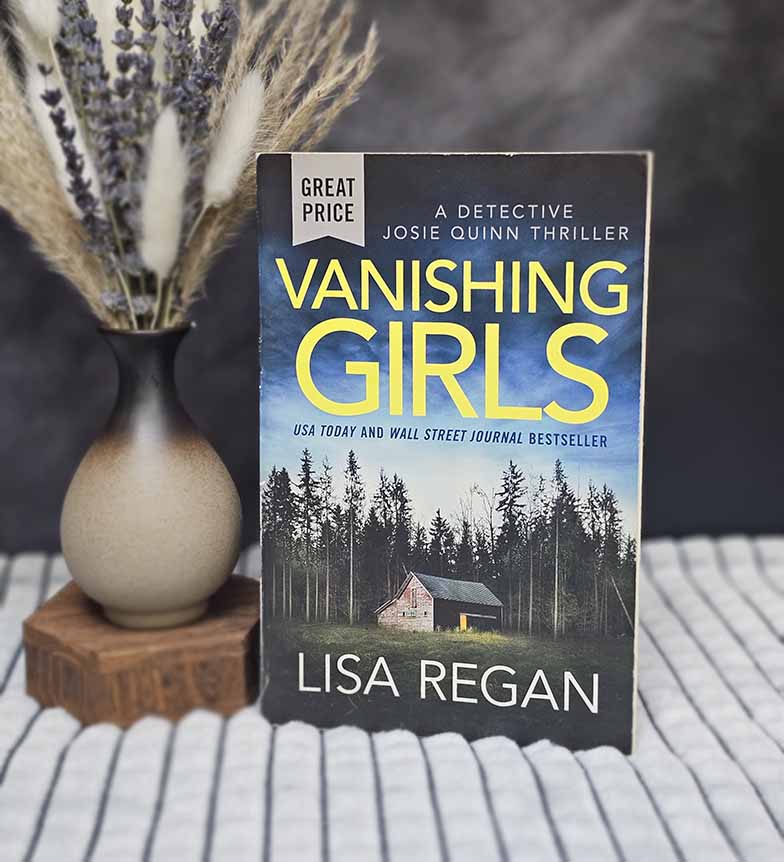
Vanishing Girls
by Lisa Regan
The first Detective Josie Quinn novel: a seventeen-year-old named Isabelle Coleman vanishes from the small Pennsylvania town of Denton, and the suspended detective who shouldn't be working the case finds a second girl - mute, traumatized, and able to give up only one name, Ramona - whose neon tongue piercing matches Isabelle's, pulling Josie into a cold case the department had filed away as a hoax.