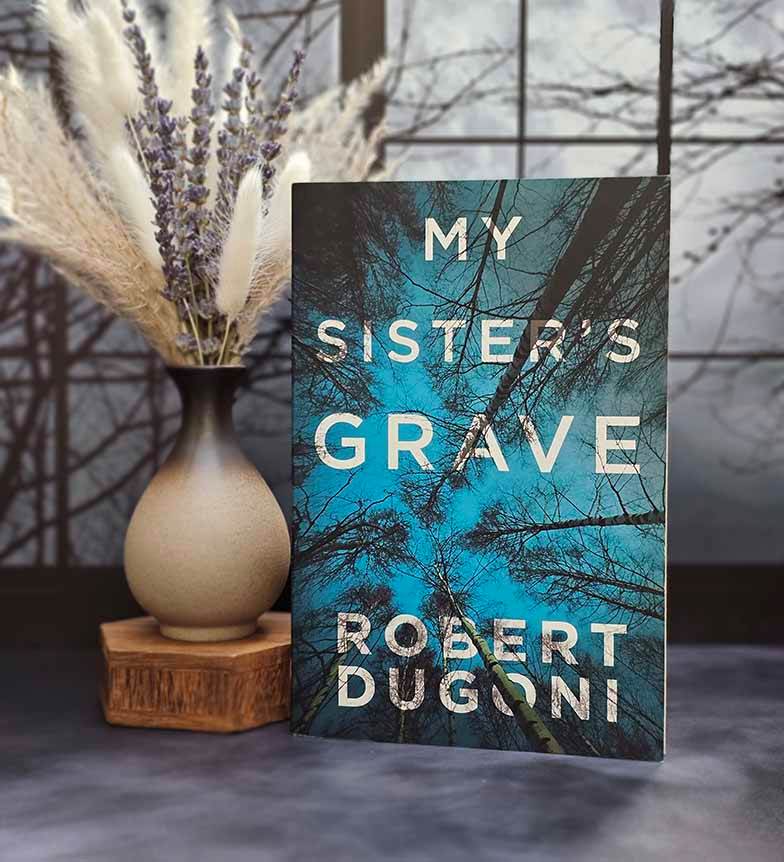
My Sister's Grave
by Robert Dugoni
Twenty years ago, Tracy Crosswhite's younger sister Sarah vanished one summer night on a county road outside the small Cascade-mountain town of Cedar Grove, Washington; a recently paroled rapist named Edmund House was convicted on circumstantial and partly planted evidence and given a life sentence, Tracy and Sarah's grief-shattered father took his own life, and Tracy left Cedar Grove to become a Seattle homicide detective. When Sarah's remains are uncovered in the dam-flooded land outside town, Tracy comes home to reopen the case alongside her childhood friend Dan O'Leary - now a small-town lawyer - against the sheriff and prosecutor she has known her whole life.
Spoiler Warning
This review may contain spoilers. Read at your own discretion if you haven't finished the book yet.
A Seattle Homicide Detective, the Sister Who Disappeared Twenty Years Earlier Wearing Her Hat, and the Small Cascade Town Where Nobody With Authority Wants the Case Reopened
Robert Dugoni's 2014 series opener is the kind of crime novel that does the police-procedural and the courtroom-procedural in the same book without either of them feeling like a duty the other one is making it perform. The setup is a cold-case reopening with the temperature dialed up by personal stakes: forty-two-year-old Tracy Crosswhite is a Seattle PD homicide detective, and the case she is about to find herself working is her own sister's. Sarah Crosswhite was twenty years old in 1993 when she vanished one summer night on a county road outside Cedar Grove, Washington, a small town tucked into the northern Cascade mountains where Tracy and Sarah had grown up as competitive single-action shooters. Sarah had just lost the Washington State Single Action Shooting Championship to Tracy that afternoon - she had thrown the match on purpose, because Tracy's boyfriend Ben was planning to propose that night and she wanted Tracy to be in the right kind of mood for it. Tracy had given Sarah her black Stetson hat as a thank-you, pressed the championship belt buckle into her hand, and told her not to drive home alone on the county road. Sarah, as younger sisters do, took the hat and the buckle and the truck and went anyway.
What happened next is the case the novel was built on. A recently paroled rapist named Edmund House was arrested. The evidence was thin: a traveling salesman named Ryan Hagen testified he saw House's truck on the road that night; Tracy and Sarah's father, James Crosswhite, told the sheriff he had found some blonde hairs and a pair of Sarah's earrings at House's property; Sheriff Roy Calloway said House had confessed to him in an unrecorded conversation. House got a life sentence. Sarah's body was never found. Tracy's father, undone by the loss, took his own life. Tracy left Cedar Grove, finished a science degree, gave up on the chemistry job she had been heading toward, and reinvented herself in Seattle as the kind of cop who would never let a circumstantial case rest on a sheriff's word again. Twenty years later, a dam project that had flooded the land outside Cedar Grove is being partially drained for maintenance, and Sarah's remains - and the missing championship belt buckle that has been buried with her the whole time - are pulled out of the ground.
A 4.5 reflects: a debut Tracy Crosswhite that does the long memory-of-a-small-town work better than the typical commercial thriller in the same lane; a Cedar Grove rendered with the kind of specificity Dugoni can render because he is from the Pacific Northwest and knows how the towns up there were built and what holds them together; a courtroom hearing that is one of the more procedurally interesting set-pieces in commercial crime fiction of the mid-2010s; a series opener that does what a series opener has to do and a few things it does not strictly have to do; and the kind of last-act twist that, when you go back and look, the book had been telling you about since chapter one.
Tracy, Sarah, the Single-Action Shooting Championship, and the Hat
What makes the opening half of the book sit above the genre average is that Dugoni does not rush past the sisters. The flashbacks to 1993 - the shooting championship, the engagement-ring weekend, the conversation by the truck Tracy and Sarah have before Sarah drives off, the morning Sarah does not come home - are written with the patience of a writer who knows that the cold-case reopening only works if the reader has been made to live inside the loss with Tracy first. Sarah is a younger sister with the specific kind of brightness younger sisters get when an older sister has been their whole frame of reference. The relationship is the engine. The Stetson and the belt buckle - which the reader will see again at the end of the book in ways the opening pages have been waiting to deliver on - are introduced with the kind of attention that turns physical objects into structural devices. By the time the dam comes down and the body comes up, the reader is not just invested in the case. The reader is invested in the version of Tracy that has been carrying these objects, and this absence, for twenty years.
Tracy as the present-day character is the other achievement. She is forty-two. She has not married. She has organized a career around the case she has not been allowed to work, and she has done it with the kind of self-aware grim humor a Seattle homicide detective who has spent two decades waiting for something to give would have. Dugoni does not romanticize the badge or the grief; he writes them both as the daily texture of a working life, and the reader who comes to the series for Tracy is going to find a protagonist with the kind of interior that justifies the next twelve books.
Dan O'Leary, the Post-Conviction Petition, and the Courtroom in Cedar Grove
The mechanism by which the case actually gets reopened is one of the better-handled procedural turns in the book. Tracy cannot, as a Seattle homicide detective, walk into a Cedar Grove courtroom and rerun a case she is personally involved in. She turns to Dan O'Leary, who grew up with her and Sarah, who has come back to Cedar Grove to practice small-town law, and who agrees to take the post-conviction relief petition before Judge Burleigh Meyers. Dan's work in that hearing is the closest thing the book has to a love letter to the procedural discipline of a defense attorney who has the time to do something right. He systematically takes apart Hagen's testimony. He gets the forensic anthropologist Kelly Rosa onto the stand to explain what Sarah's remains actually show, which is that she did not die immediately after the disappearance and was not buried where the prosecution at the original trial said she had been buried. He gets a hair-and-fiber expert named Harrison Scott to walk through the DNA work that complicates the planted-evidence story. He cross-examines the sheriff who put the original case together. The hearing is set in the Cedar Grove courthouse, in a town where most of the people in the gallery have known Tracy and Dan and the sheriff and the prosecutor since they were teenagers, and Dugoni is patient about the way the small-town context warps every piece of the testimony.
The thing the book is doing with that courtroom that lifts it past the standard cold-case-reopens template is the question of who Tracy is fighting in there. She is not fighting Edmund House at this point in the book. She is fighting the version of the original prosecution that her own father helped construct - the planted hairs, the planted earrings - and that the sheriff and the prosecutor were willing to ride to a conviction because the man in the box was someone everyone in town agreed was guilty of something. Some reviewers found the hearing chapters slow; others, including Kirkus, called the retrial pages overlong. The novel asks for patience there. For readers who give it the patience, the courtroom material is some of the strongest in the book.
The Twist the Book Has Been Telegraphing the Whole Time
The last act is where Dugoni does the trick that makes the rest of the book retroactively heavier. Judge Meyers rules that Edmund House's original conviction cannot stand. House is released. And then, in a sequence the book has been quietly setting up since the opening shooting championship, Tracy learns the part of the story nobody had been in a position to see until now: Edmund House had been the killer the whole time, but not for the reasons the original prosecution had charged him with. He had been stalking Tracy. The night Sarah drove home wearing Tracy's hat and carrying Tracy's belt buckle and driving Tracy's truck, he had taken her because he thought she was Tracy. He had held her in an abandoned mine for several weeks before killing her, and had buried her body in a place that he knew the dam was about to flood. The exoneration Tracy and Dan had just won had freed the man who had done it. The pages that follow - the confrontation, the shooting, the way Tracy chooses to handle the small-town conspirators after the fact - are the kind of pages that make a series-opening thriller work as a complete novel rather than as a setup.
What the book ultimately is, in the rear view, is a novel about the long cost of small-town certainty. The town had been certain Edmund House was guilty. The town had been certain enough to convict him on partly invented evidence. The town had been wrong about how, and right about who, and the cost of being right the wrong way is the whole shape of Tracy's life.
Why a 4.5
The strengths are the Tracy-and-Sarah relationship; the Cedar Grove setting and the long-memory texture of the small town; the procedural specificity of Dan's hearing work; the way Dugoni paces a 416-page thriller without the structural sag commercial crime novels of this length often have; the planting of the Stetson and the belt buckle in chapter one and the payoff of both in the last twenty pages; and the last-act twist, which is the kind that earns the reread.
The reservations are honest. Kirkus called the retrial pages overlong, and a reader coming to the book for fast-paced thriller momentum will feel the hearing chapters as a slowdown. The conspiracy in Cedar Grove (the sheriff, the prosecutor, the planted evidence, the recruited witness) involves more moving pieces than the climax strictly needs, and a reader who likes the corruption arc clean will find a few of those threads tidier than the book had earned. Tracy and Dan's reconnection arrives slightly faster than the rest of the book's patience would suggest. None of these are dealbreakers; the half-star off is for the back-third pacing more than for any structural fault in the case.
A 4.5 means: one of the better series openers in commercial crime fiction of the mid-2010s, a Tracy Crosswhite the reader is going to want to spend the next ten books with, and a small-town cold-case novel that handles its sisters with the kind of patience and its conspirators with the kind of specificity that genre-tourists tend to fly past.
Rating: 4.5/5 ⭐
Perfect for: Crime-thriller readers, fans of cold-case reopenings and small-town conspiracies, readers who like a courtroom set-piece inside a procedural, anyone starting a long-running series who wants a strong first entry, Pacific Northwest setting enthusiasts, readers who came up on John Sandford or Tana French and want a Dugoni voice next.
Skip if: Detailed courtroom retrial pages are something you have hit your limit on, sexual violence and stalking are subjects you would rather not read on the page (Edmund House's backstory is what the book says it is), you need a sole-survivor thriller rather than a sister-grief thriller, or you are not in the mood for a small-town novel where the bad actors have known the protagonist since she was seventeen.
You Might Also Like
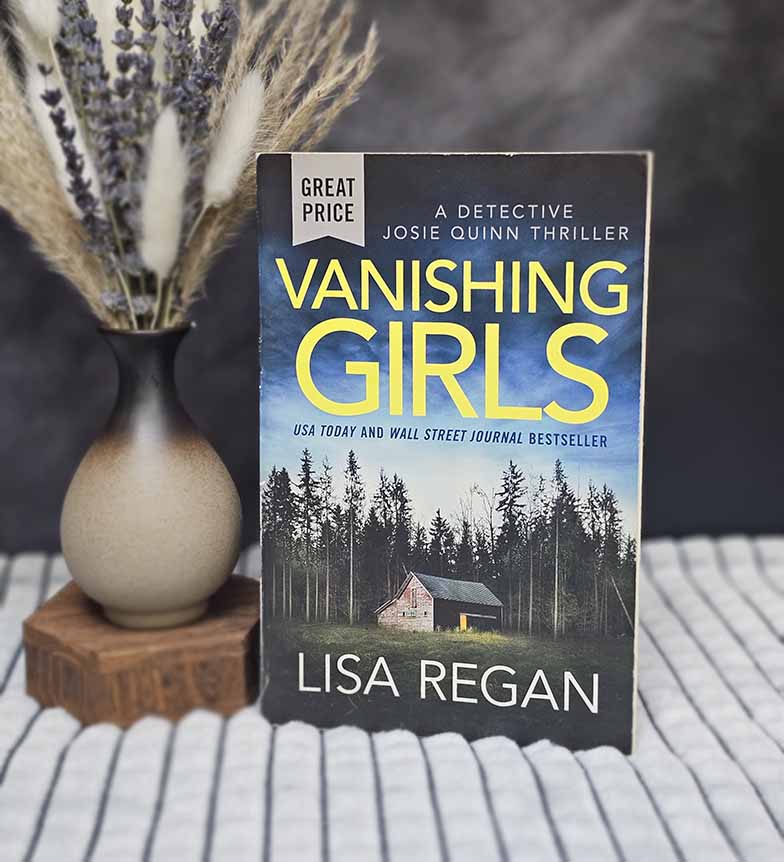
Vanishing Girls
by Lisa Regan
The first Detective Josie Quinn novel: a seventeen-year-old named Isabelle Coleman vanishes from the small Pennsylvania town of Denton, and the suspended detective who shouldn't be working the case finds a second girl - mute, traumatized, and able to give up only one name, Ramona - whose neon tongue piercing matches Isabelle's, pulling Josie into a cold case the department had filed away as a hoax.

In the Woods
by Tana French
Tana French's 2007 Edgar-winning debut and the first book of the Dublin Murder Squad series: in 1984, a twelve-year-old boy named Adam Ryan walked out of the woods outside Knocknaree, near Dublin, with the blood of his two missing friends in his shoes and no memory of what had happened to them; twenty years later, the man he has become - Detective Rob Ryan, the same boy under a different name and with an English boarding-school accent - is assigned, with his partner and best friend Detective Cassie Maddox, to investigate the murder of a twelve-year-old ballet student named Katy Devlin whose body has been found on the stone altar of an archaeological dig in the same woods, and the case is the long return of a memory Rob has spent two decades not having.

All Dressed in White
by Mary Higgins Clark & Alafair Burke
The third Under Suspicion novel: five years after bride-to-be Amanda Pierce vanished the night of her pre-wedding celebration at a luxury Palm Beach resort, television producer Laurie Moran reopens the cold case for her cold-case show - reuniting the wedding party, including the fiance who has since married one of Amanda's own bridesmaids, to find out whether the runaway bride ran or was made to disappear.