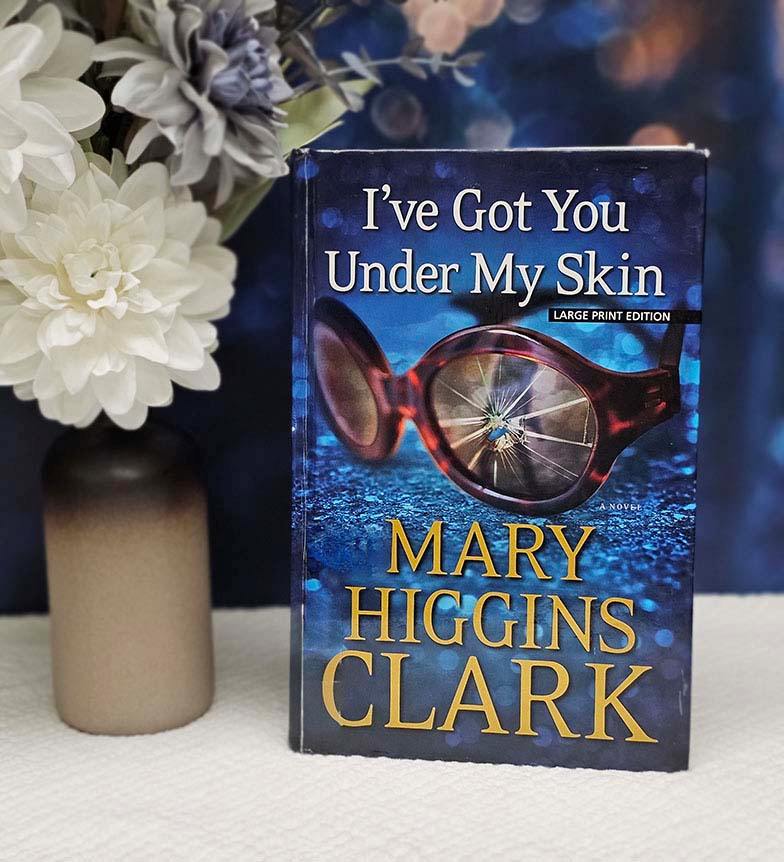
I've Got You Under My Skin
by Mary Higgins Clark
TV producer Laurie Moran - whose husband was murdered five years ago in front of their three-year-old son by a killer the boy can only describe as 'Blue Eyes' - launches a true-crime show that reopens cold cases on camera, starting with the twenty-year-old suffocation of socialite Betsy Powell after her daughter's Graduation Gala; as the four women who were under that roof reunite for filming, both unsolved murders start moving toward the same ending.
Spoiler Warning
This review may contain spoilers. Read at your own discretion if you haven't finished the book yet.
A Cold-Case TV Show, Four Women With Secrets, and a Killer Who Watches the Reunion
Laurie Moran has the kind of idea that gets a television producer noticed: a reality series that reopens famous unsolved crimes by putting the people who lived through them back on camera, in the same rooms, twenty years later. The show is called Under Suspicion, because that is the point of it - everyone who was in the house that night has spent two decades being looked at sideways, and the show offers them a trade: sit for the cameras, answer the questions the police never closed out, and maybe walk away with your name finally cleared. What her network doesn't fully appreciate is that Laurie knows the weight of an unsolved murder from the inside. Five years ago her husband Greg, a young doctor, was gunned down in a city park in front of their three-year-old son, Timmy. The only witness was a toddler, and the only description he could give was the one that still wakes him up at night: blue eyes. The killer's parting words to the child - "Tell your mother she's next, then it's your turn" - are the reason Laurie's father, Leo Farley, retired as the NYPD's First Deputy Commissioner and now organizes his life around walking his grandson to school.
That double structure - a professional cold case in front of the cameras, a personal one circling behind them - is the engine of the first Under Suspicion novel, and it's a genuinely good engine. Clark was in her mid-eighties when she launched this series, and the premise is the sharpest thing she'd built in years: a format that generates suspects, motive, and forced proximity all by itself, plus a heroine with a reason to care about cold cases that no amount of network cynicism can touch.
The Graduation Gala
The case Laurie picks for the pilot is irresistible television. Twenty years ago, socialite Betsy Bonner Powell hosted a lavish "Graduation Gala" celebrating her daughter Claire and Claire's three college friends - Regina Callari, Alison Schaefer, and Nina Craig. By morning, Betsy was dead in her bed, suffocated, and every person under that roof - the four young women plus Betsy's wealthy husband, Rob Powell - has lived under suspicion ever since. Nobody was ever charged. The women scattered across the country and into lives that, one way or another, the murder bent out of shape. Now the show is offering each of them $50,000 from the network to participate, and Rob Powell has sweetened it with $250,000 apiece from his own pocket, because he says he wants the truth before he dies. Everyone says yes. Nobody says yes for the reason they claim.
The middle of the book is classic Clark machinery: the reunion at the Powell estate, the on-camera interviews conducted by Alex Buckley - the famous criminal defense attorney Laurie hires as the show's host and interrogator - and a rotating set of viewpoint chapters that let each of the four women rehearse what she's hiding before she has to sit down under the lights. Each of them has a secret; some are small and shabby, some are large enough to hang a motive on. Clark deals them out with the patience of somebody who has been running this exact con on readers since the seventies: you get just enough of each woman to keep re-ranking your suspects, and just little enough to be wrong.
Blue Eyes in the Background
What makes this book more than a competent country-house mystery in TV-production clothes is the second thread. Blue Eyes is not a memory - he is a presence, checking in on Laurie and Timmy throughout the book, in short chapters that establish he has been watching, and waiting, for five years. As the show ramps up and Laurie's name gets more visible, the two storylines begin to converge, and the last stretch of the book runs both fuses at once. It's an effective piece of construction, and it does something the standalone Clark novels of this era often didn't: it gives the suspense a personal floor. The Powell case is a puzzle; Blue Eyes is a threat, and the book is careful never to let you forget the difference.
I'll keep both endings unspoiled. What I'll say is that the Betsy Powell resolution plays fair with most of its cards, the Blue Eyes climax lands harder because Clark spent the whole book quietly investing in Leo and Timmy, and the final chapters are visibly in a hurry - a common Clark trait, and the main thing keeping this from a higher rating.
Vintage Machinery, Some Visible Gears
Honest caveats for a 4.0. The cast is big - four suspects, their husbands and entanglements, the production team, the Powell household - and Clark manages it with heavy exposition and short, choppy chapters that jump between heads, which reads efficiently but occasionally feels like a screenplay treatment. A couple of the late reveals arrive with less setup than they deserve. And the prose is late-period Clark: clean, fast, unadorned, more interested in what happens next than in how any sentence sounds. Readers who grew up on her classic standalones tend to rank this below the vintage material, and that's fair.
But the format is the star, and the format works. The show-within-the-book generates real momentum, Laurie is a sturdier heroine than the genre requires - competent, grieving, unwilling to be scared out of her own idea - and the Leo-Timmy-Laurie household gives the thriller an emotional anchor that most of the whodunit competition doesn't bother with. It's easy to see why this became a series: Clark built a machine here that can take a new cold case every book. As the machine's first run, this one earns its keep.
Rating: 4.0/5 ⭐
Perfect for: Cold-case fans, readers who like their mysteries in the classic everyone's-hiding-something country-house mold, true-crime-show watchers curious about the format turned into fiction, and Mary Higgins Clark readers looking for the start of her last big series.
Skip if: Large casts juggled in short POV-hopping chapters wear you out, you want prose with more texture than late-period Clark delivers, a child witness living under a killer's threat is heavier than you want your comfort thriller, or rushed endings spoil the trip for you.
You Might Also Like
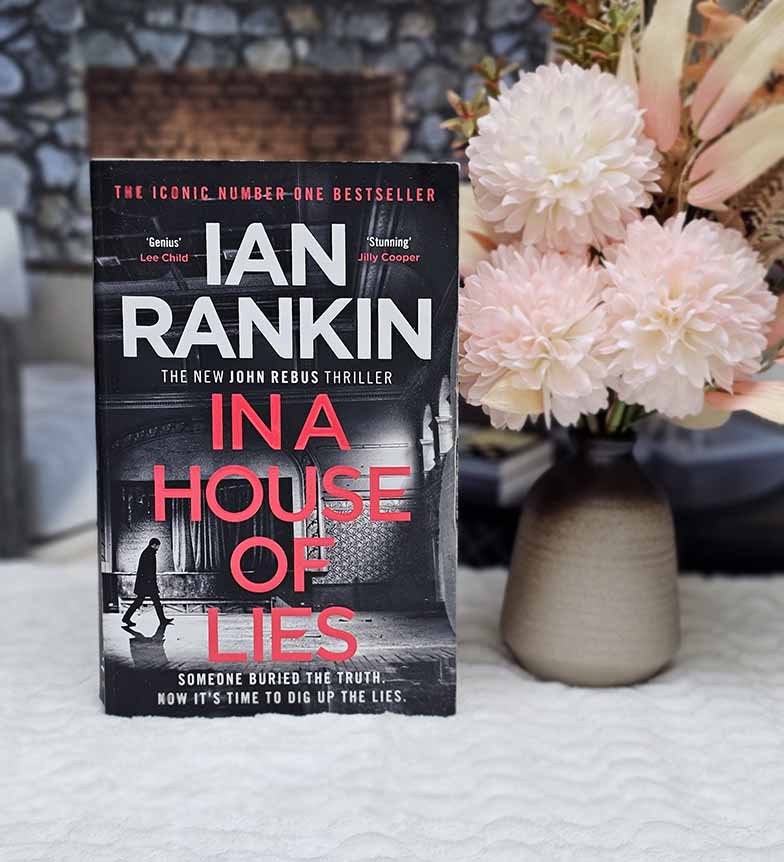
In a House of Lies
by Ian Rankin
The twenty-second Inspector Rebus novel: when a car is found deep in an Edinburgh wood with the body of private investigator Stuart Bloom in its boot and his ankles bound by police-issue handcuffs, a cold case more than a decade old reopens - and retired DI John Rebus, who worked the original botched investigation, finds himself implicated alongside DI Siobhan Clarke and Malcolm Fox as the rot in that first inquiry comes to light.

The Heist
by Daniel Silva
Daniel Silva's fourteenth Gabriel Allon novel: when London art dealer Julian Isherwood finds his colleague Jack Bradshaw - a former British intelligence officer turned art trafficker - tortured and murdered at a villa on Lake Como, Allon, the Israeli spy and master art restorer, is pulled in by the Italian Art Squad to recover a Caravaggio stolen in 1969, and the hunt leads through the Geneva Freeport and a private Austrian bank to the looted billions that Syria's Bashar al-Assad has hidden across Europe.

In the Woods
by Tana French
Tana French's 2007 Edgar-winning debut and the first book of the Dublin Murder Squad series: in 1984, a twelve-year-old boy named Adam Ryan walked out of the woods outside Knocknaree, near Dublin, with the blood of his two missing friends in his shoes and no memory of what had happened to them; twenty years later, the man he has become - Detective Rob Ryan, the same boy under a different name and with an English boarding-school accent - is assigned, with his partner and best friend Detective Cassie Maddox, to investigate the murder of a twelve-year-old ballet student named Katy Devlin whose body has been found on the stone altar of an archaeological dig in the same woods, and the case is the long return of a memory Rob has spent two decades not having.