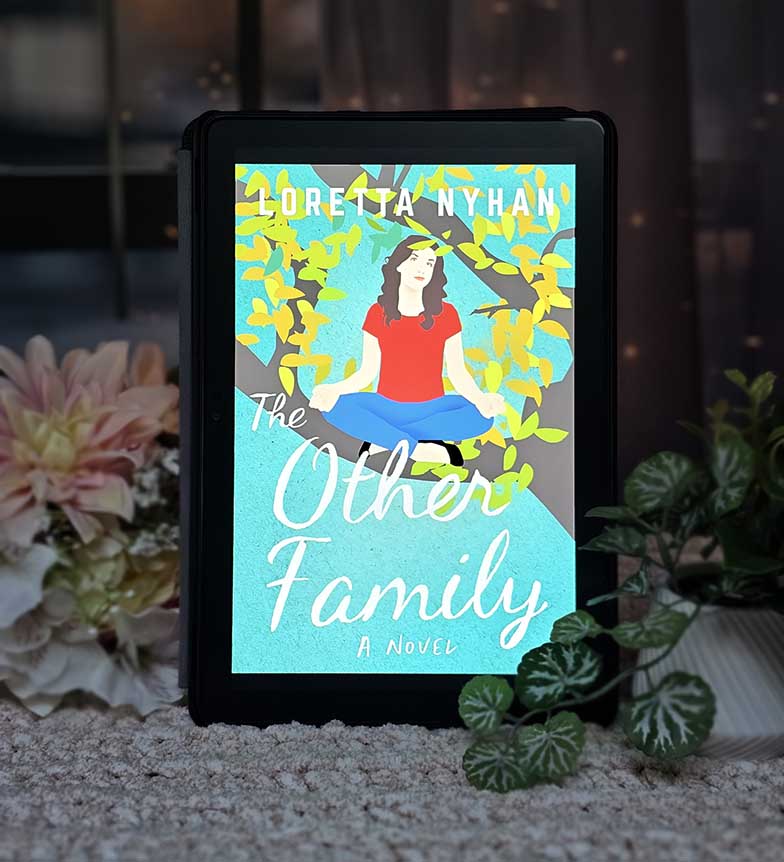
The Other Family
by Loretta Nyhan
When Ally Anderson takes a DNA test to help diagnose her daughter Kylie's mysterious illness, she discovers she was adopted - and that her biological family has been out there all along, waiting to be found.
Spoiler Warning
This review may contain spoilers. Read at your own discretion if you haven't finished the book yet.
What Does Family Mean When Everything You Knew Was Wrong?
Ally Anderson's ten-year-old daughter Kylie is sick, and nobody can figure out why. She has food allergies that keep multiplying, joint pain that comes and goes, headaches, skin irritations - a constellation of autoimmune symptoms that don't add up to a clear diagnosis. Ally has been to doctor after doctor, and when traditional medicine stalls out, she takes a DNA test, hoping the genetic data might offer clues about what's happening in her daughter's body. What the test reveals has nothing to do with allergies. Ally was adopted. The parents who raised her - her mother Sophie in particular - never told her. And somewhere out there, a biological family exists that Ally never knew about.
That's the premise of Loretta Nyhan's The Other Family, and the "other family" of the title isn't what you might assume from the domestic-fiction packaging. It's not a secret affair or a hidden second life. It's the biological relatives Ally discovers through her DNA results - most significantly an aunt named Micki, who is warm, welcoming, and eager to build a relationship with the niece she didn't know existed. The tension isn't between a wife and a mistress. It's between Ally's adoptive mother Sophie, who is devastated and defensive about the adoption secret being exposed, and this new biological family that's offering Ally answers, connection, and a sense of identity she didn't know she was missing.
Ally Between Two Families
The book's strongest element is the emotional tug-of-war Ally experiences between the family that raised her and the family she shares blood with. Sophie, her adoptive mother, reacts to Ally's DNA discovery with fear disguised as anger - she's terrified of losing her daughter to a biological connection she can't compete with, and her resistance to Ally's exploration of her roots creates real friction between them. Nyhan captures Sophie's defensiveness with empathy rather than judgment. Sophie isn't the villain. She's a mother who kept a secret she shouldn't have kept, and now she's watching the consequences unfold in real time with no way to undo the damage.
Micki, the biological aunt, provides the counterpoint - open where Sophie is guarded, enthusiastic where Sophie is withdrawn, offering the kind of unconditional acceptance that Ally has been craving without knowing it. The scenes between Ally and Micki have a particular warmth: two strangers discovering shared mannerisms, shared preferences, the genetic echoes that adoption concealed. Nyhan is good at rendering the specific pleasure of recognition - the moment Ally realizes she laughs like Micki, or that they both tilt their heads the same way when they're thinking.
The complication is that Ally's growing bond with Micki feels, to Sophie, like a betrayal. Every dinner with the biological family is a dinner not spent with the adoptive one. Every question Ally asks about her birth parents is a question that implies Sophie's version of motherhood wasn't enough. Nyhan navigates this dynamic with more sensitivity than the setup might suggest - she doesn't make Ally choose, and she doesn't pretend there's an easy resolution to a situation where loving one family feels like abandoning another.
The Marriage and the Daughter
Ally's relationship with her husband Matt adds another layer of strain. They're already separated when the book begins - the stress of Kylie's illness, the financial pressure of endless medical appointments, and the ordinary erosion of a marriage under sustained crisis have pushed them apart. Matt isn't absent from the story, but he's at a distance, and his reactions to Ally's adoption discovery are complicated by his own feelings of displacement. Ally is reorganizing her entire sense of identity, and Matt isn't sure where he fits in the new configuration.
Kylie herself is the emotional through-line that connects everything. Her illness is what drove Ally to the DNA test in the first place, and the biological family's medical history offers potential insights into what's going on with her body. But Kylie is also a ten-year-old dealing with chronic illness, parental separation, and now the revelation that her mother's family is larger and more complicated than anyone told her. Nyhan doesn't give Kylie as much page time as the adults, which is one of the book's missed opportunities - more scenes from Kylie's perspective would have grounded the family drama in the person all of it is ostensibly about.
Where the Book Stays Surface
Here's what keeps this at three stars: Nyhan has a genuinely interesting premise - the collision between adoptive and biological family, complicated by a child's illness and a crumbling marriage - but she doesn't dig deep enough into any of these threads to produce the emotional payoff the setup promises. The Ally-Sophie conflict generates real tension, but it resolves more neatly than the wound warrants. The Ally-Micki bond is warm but develops quickly enough that it sometimes feels like the book is fast-forwarding through the complicated middle stages of building trust with a stranger who happens to share your DNA. Matt's perspective gets too little space for the marriage subplot to carry real weight.
The writing is clean and readable - Nyhan has a professional competence that keeps the pages moving - but it rarely surprises. The emotional beats land where you expect them to land, and the prose doesn't have the kind of specificity or texture that would elevate familiar domestic-fiction territory into something more distinctive. The book asks a question worth asking - what is family, really, when the family you grew up in turns out to be built on a secret? - and then answers it a little too quickly and a little too cleanly, as if the question itself was more interesting than Nyhan's willingness to sit in the discomfort of not knowing.
It's the kind of book that works well in the moment - the premise is compelling, you care about Ally, you want to know how the competing family loyalties resolve - but doesn't linger. The emotional complexity is there in the setup. The execution smooths it down rather than leaning into it.
Rating: 3.0/5 ⭐
Perfect for: Readers who enjoy domestic drama and women's fiction, book clubs looking for discussion-rich material about adoption, family identity, and competing loyalties.
Skip if: You need your domestic fiction to go psychologically deep, or you want a book that sits longer in the uncomfortable spaces between its questions and answers.
You Might Also Like

The Cast
by Danielle Steel
A 54-year-old advice columnist creates a TV show inspired by her grandmother's WWII story, and the cast becomes the family she didn't know she needed.
Silver Linings
by Debbie Macomber
When two wounded souls cross paths in a small Washington town, they discover that sometimes the hardest battles are fought in the heart. A heartwarming story about finding hope and love after loss.
Something in the Water
by Catherine Steadman
Catherine Steadman's 2018 debut psychological thriller opens with London documentary filmmaker Erin Roberts digging a grave alone in the woods, then flashes back to the Bora Bora honeymoon - already trimmed from three weeks to two after her banker husband Mark lost his job - where a sealed duffle bag the couple pulls from the water turns out to contain a great deal more than they were prepared to be in possession of.