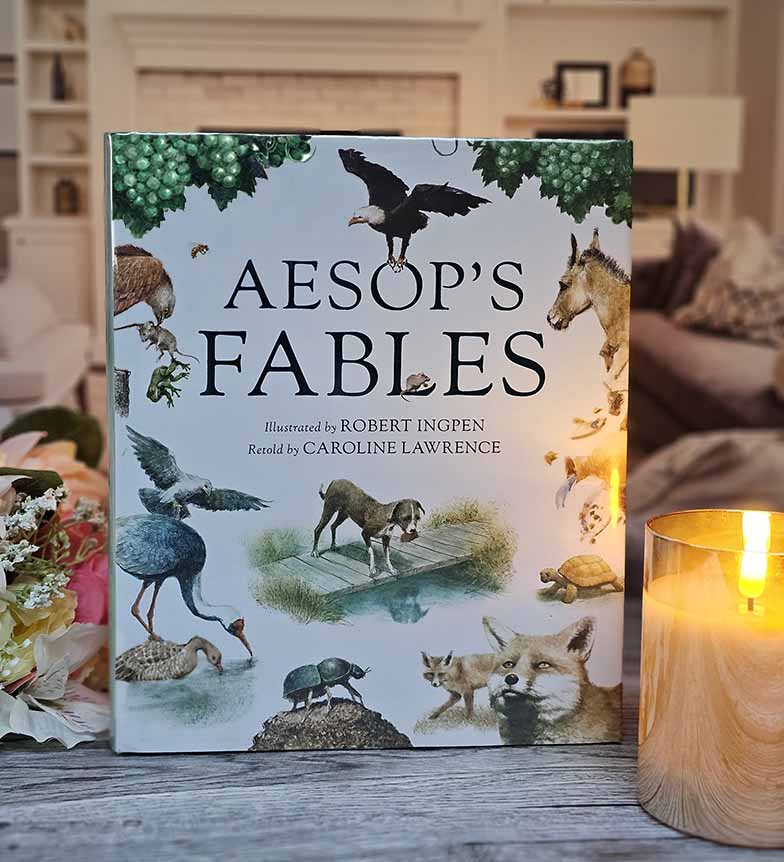
Aesop's Fables
by Aesop
A timeless collection of brief stories featuring animals and mythical creatures that convey moral lessons about human nature, virtue, and wisdom through simple but profound narratives.
Spoiler Warning
This review may contain spoilers. Read at your own discretion if you haven't finished the book yet.
Slow and Steady Still Wins the Race
You know these stories even if you've never read them. The tortoise beats the hare. The fox dismisses grapes he can't reach as sour. A boy who cries wolf once too often discovers no one believes him when wolves actually appear. Aesop's Fables have embedded themselves so deeply in our cultural DNA that we quote them without knowing we're quoting anything at all - "sour grapes," "the lion's share," "a wolf in sheep's clothing" are all Aesop's phrases, repurposed so thoroughly that their origin has vanished. So what's the point of actually sitting down and reading a complete collection of these things in the twenty-first century?
Quite a lot, as it turns out. This Penguin Classics edition gathers several hundred fables attributed to Aesop - a figure who may or may not have been a real person, possibly a Greek slave living in the sixth century BC, possibly a composite of multiple storytellers whose work accrued under a single name over centuries. The scholarly debate about Aesop's historicity is its own rabbit hole, but what matters for readers is what's on the page: dozens upon dozens of tiny, compressed narratives, most only a paragraph or two long, each built around a single observation about human nature delivered through animals, gods, and the occasional hapless traveler. Reading them straight through is a strange experience - repetitive if you try to power through them like a novel, but genuinely rewarding if you take them in small doses and let them sit with you.
The Ones You Know (and What You Missed About Them)
Start with the famous ones, because even the fables you think you know have more going on than you remember. "The Tortoise and the Hare" isn't really about the virtue of slowness - it's about the danger of contempt. The hare doesn't lose because he's fast; he loses because his talent made him arrogant enough to take a nap mid-race. The tortoise doesn't win because persistence is inherently superior to speed; he wins because he's the only one who showed up to the finish line. Read that way, the moral isn't "slow and steady wins the race" - it's "talent without discipline loses to discipline without talent," which is a sharper and more uncomfortable point.
"The Fox and the Grapes" is even better than its reputation. A fox sees grapes hanging high on a vine, leaps for them repeatedly, fails, and walks away muttering that they were probably sour anyway. We use "sour grapes" to describe someone dismissing what they can't have, but Aesop's version is more psychologically precise than the idiom suggests. The fox doesn't just dismiss the grapes - he reframes his failure as discernment. He wasn't defeated; he was selective. It's a fable about the stories we tell ourselves to protect our egos from the fact of our limitations, and it's uncomfortably recognizable to anyone who's ever rationalized a rejection as "I didn't want it that much anyway."
"The Ant and the Grasshopper" is the one that's aged most interestingly. The ant works all summer storing food; the grasshopper plays music and enjoys the sun. Winter comes, the grasshopper starves, the ant survives. Simple enough as a parable about industriousness. But there's something cold about it that's worth sitting with - the ant doesn't share, doesn't help, doesn't hesitate. The moral is "be prepared," but the subtext is that the prepared have no obligation to the unprepared, which is a worldview that some readers will find pragmatic and others will find ruthless. Aesop doesn't seem conflicted about it. Whether you are says more about you than about the fable.
The Ones You Don't Know (and Should)
The real pleasure of reading the full collection is discovering the fables that didn't make it into the children's picture books. "The Belly and the Members" is a political fable about the body's limbs going on strike against the stomach, refusing to feed it because it seems to do nothing but consume. The limbs starve, of course - they didn't understand that the belly was distributing nourishment to the entire body. It's a fable about interdependence that's been used to justify everything from monarchies to labor unions, and its ambiguity is the point. Aesop gives you the observation; what you do with it politically is your problem.
"The Dog and the Shadow" is a tiny masterpiece of greed psychology. A dog carrying a bone sees his reflection in a river, thinks it's another dog with a bigger bone, lunges for it, and loses the real bone in the water. It's only a few sentences long, but it captures something essential about the human tendency to sacrifice what we have by grasping for what we imagine we could have. There's a cousin fable - "The Fisherman and the Little Fish" - where a fisherman catches a small fish and the fish begs to be thrown back, promising to grow larger and be a more worthwhile catch later. The fisherman keeps the small fish, reasoning that a bird in the hand is worth two in the bush. Together, these two fables present competing wisdoms: don't grasp for more than you have, but also don't gamble on future promises. Aesop is comfortable with contradiction in a way that more systematic philosophers aren't.
"The Frogs Who Desired a King" is one of the collection's darkest entries. The frogs ask Zeus for a king. He sends them a log, which sits in the pond doing nothing. They complain it's too passive. He sends them a stork, which eats them. The moral - be careful what you ask for, especially when it comes to power - is pointed enough that you can see why Aesop (if he existed) was supposedly a slave. There's a subversive edge to many of the fables that gets lost when they're sanitized for children. The animals aren't cute - they're greedy, foolish, cruel, and occasionally cannibalistic. Aesop doesn't particularly believe in human goodness. He believes in human predictability, which is a different thing entirely.
Twenty-Five Centuries of Shelf Life
What keeps these fables alive isn't their morals - most of which are obvious to the point of cliché - but their compression. Aesop says in four sentences what most writers need four chapters to convey, and the images he creates are so efficient that they become permanent mental shortcuts. You will never again see someone rationalize a failure without thinking "sour grapes." You will never watch someone sacrifice a real good for an imagined better one without seeing the dog and the shadow. That kind of cognitive permanence is extraordinarily rare in literature, and it's worth asking how he achieves it.
Part of the answer is the animal casting. When a fox schemes or a lion bullies or a mouse shows unexpected courage, we recognize the behavior instantly - we know these people - but we're not defensive the way we'd be if the story accused us directly. The emotional distance of the animal fable lets the lesson bypass our ego, which is why these stories work on five-year-olds and fifty-year-olds simultaneously. A child sees a funny story about animals. An adult sees a precise observation about their coworker, their neighbor, or themselves. The fable doesn't change; the reader does.
That said, reading the full collection exposes patterns that individual fables conceal. Aesop's moral universe is consistently pragmatic - he's interested in what works, not what's righteous. The clever survive. The strong take what they want. The trusting get exploited. Several fables essentially counsel deception as a survival strategy, and quite a few have morals that amount to "know your place and don't challenge the powerful." There's a strain of fatalism running through the collection that reflects the perspective of someone (or a tradition of storytellers) living at the bottom of a rigid social hierarchy - the wisdom of the powerless, which is: understand the rules of the game, because you can't change them. Some of these fables feel timeless. Others feel like the advice of a society that hadn't yet imagined a world where the rules could be rewritten.
The Penguin Classics edition handles this well, providing enough context in its introduction to frame the fables historically without over-explaining them. The translation is clean and readable, prioritizing clarity over literary flourish - which is the right choice for material that's meant to be direct. My only complaint about the format is that reading hundreds of fables sequentially does get repetitive. Each one is excellent on its own, but stacked together they start to blur - the moral patterns become predictable, the animal types feel formulaic, and the brevity that's a strength in any individual fable becomes a limitation across 320 pages. This is a book best kept on the nightstand and read two or three at a time, not consumed cover to cover in a weekend.
Rating: 4.0/5 ⭐
Perfect for: Readers interested in foundational Western literature, parents looking for discussion starters with kids, anyone who enjoys wisdom compressed to its sharpest possible form.
Skip if: Simple moral lessons feel too didactic for your taste, or you prefer narratives that grapple with systemic complexity rather than individual behavior.
You Might Also Like
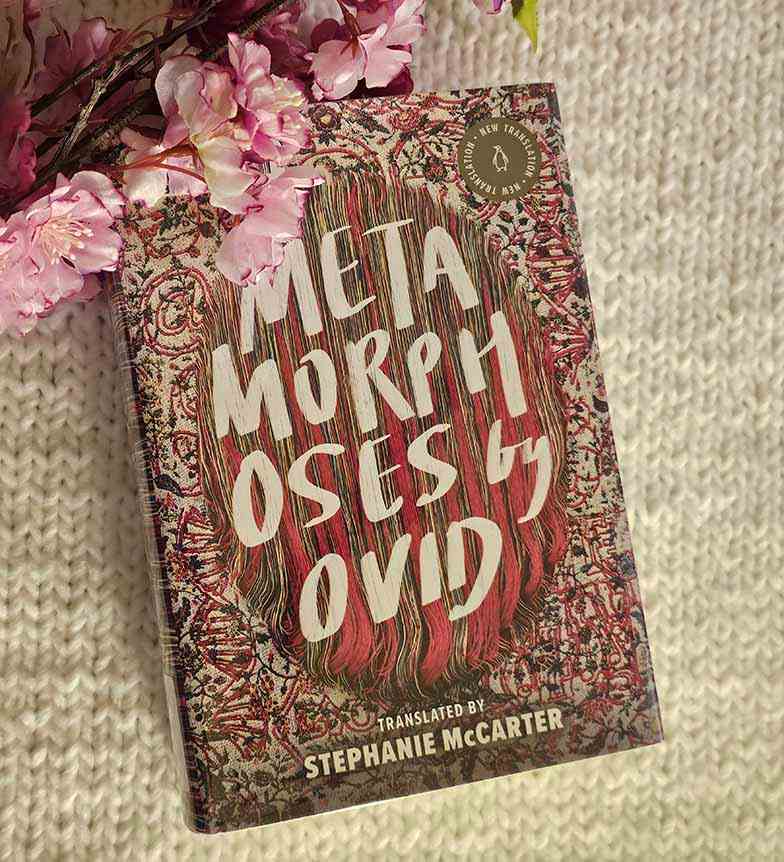
Metamorphoses
by Ovid
A masterful collection of mythological tales exploring themes of transformation, love, and power through the lens of Roman poetry. Ovid weaves together over 250 stories from Greek and Roman mythology into an epic narrative.

Your Perfect Year
by Charlotte Lucas
When a mysterious diary falls into his hands on New Year's Day, a rigid businessman embarks on a life-changing journey of tasks and self-discovery that connects him with a free-spirited woman and changes both their lives forever.

Sisterhood Everlasting
by Ann Brashares
Ten years after college, the Sisterhood reunites in Greece for what should be a joyful reunion. Then tragedy strikes, changing everything forever.