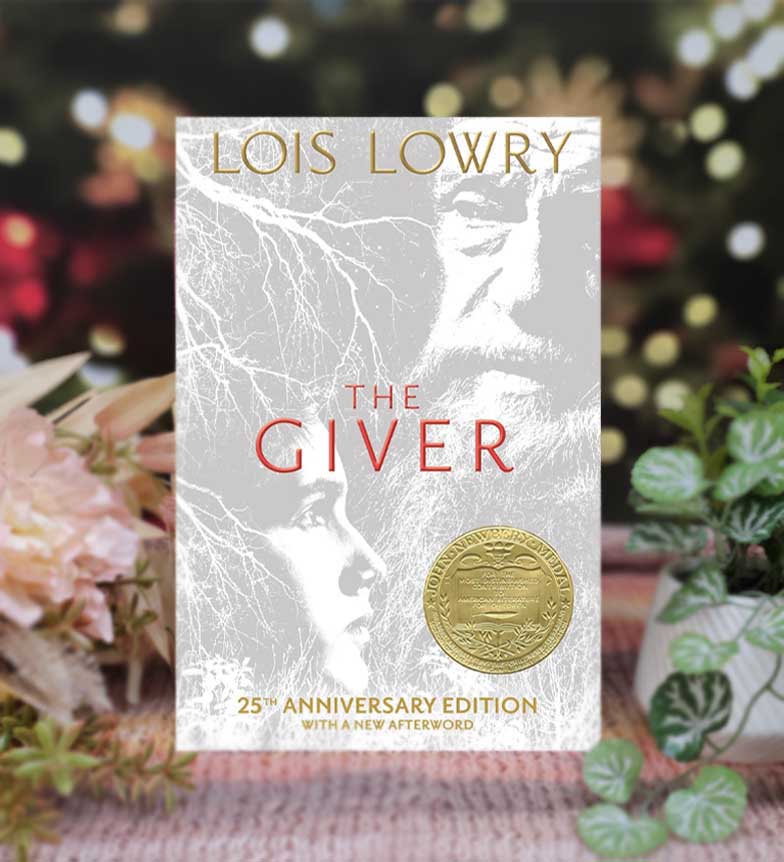
The Giver
by Lois Lowry
In a seemingly perfect society without pain, suffering, or conflict, twelve-year-old Jonas is selected to inherit the position of Receiver of Memory and discovers the dark truth behind his community's utopia.
Spoiler Warning
This review may contain spoilers. Read at your own discretion if you haven't finished the book yet.
The Cost of Sameness
The Giver is a landmark work of young adult dystopian fiction that asks a profound question: What would we sacrifice for a world without pain?
The Story
Jonas lives in a Community that has eliminated suffering by eliminating choice. Everything is controlled - from careers to families to feelings. When Jonas is selected to be the Receiver of Memory, he begins to learn what humanity has given up for this "perfect" world.
Why It Resonates
Deceptively Simple
The straightforward prose makes this accessible to young readers while containing depths that reward adult reflection.
Powerful Central Question
The trade-off between safety/sameness and freedom/feeling is presented without easy answers. The Community isn't purely evil - it arose from understandable desires.
Memorable Moments
The revelation scenes - learning about color, music, love, and eventually "release" - are handled with devastating effect.
The Giver Himself
The relationship between Jonas and the Giver is beautifully portrayed - two people sharing an impossible burden.
Considerations
Ambiguous Ending
The ending is intentionally open to interpretation, which some readers find frustrating.
Brief Length
At under 200 pages, some readers wish for more exploration of this world.
Final Thoughts
The Giver is a modern classic for good reason. It presents complex philosophical questions in accessible ways and trusts young readers to grapple with difficult ideas. Essential reading for anyone interested in dystopian fiction.
Rating: 4.0/5
Best for: Readers of all ages who enjoy thought-provoking dystopian fiction that values ideas over action
You Might Also Like
Mockingjay
by Suzanne Collins
The explosive finale of The Hunger Games trilogy. Katniss Everdeen becomes the symbol of rebellion as she leads the fight against the Capitol, facing impossible choices and devastating losses.

Catching Fire
by Suzanne Collins
The second book in the Hunger Games trilogy. Katniss and Peeta's victory tour sparks rebellion across Panem, and President Snow forces them back into the arena for the Quarter Quell—a special Games featuring previous victors. The stakes have never been higher.

The Hunger Games
by Suzanne Collins
In a dystopian future, sixteen-year-old Katniss Everdeen volunteers to take her sister's place in the Hunger Games—a televised fight to the death where only one of twenty-four tributes can survive. A cultural phenomenon that revitalized YA dystopian fiction.