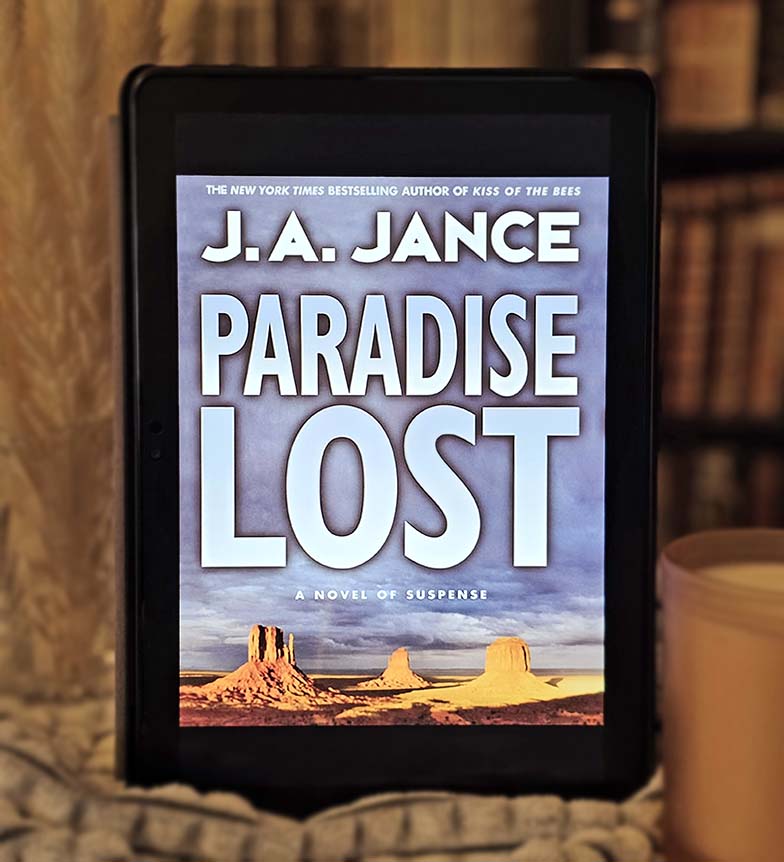
Paradise Lost
by J.A. Jance
On a Memorial Day weekend Girl Scout campout at Apache Pass, twelve-year-old Jenny Brady and her tentmate Dora Matthews sneak off to smoke a cigarette and stumble onto the body of a murdered Phoenix heiress; when Dora turns up dead two days later, Sheriff Joanna Brady has to figure out who left the body for her own daughter to find before they come back for the second witness.
Buy this book:
Spoiler Warning
This review may contain spoilers. Read at your own discretion if you haven't finished the book yet.
A Girl Scout Campout, a Body in Apache Pass, and a Sheriff Whose Daughter Is the Witness
The opening of Paradise Lost is the kind of setup the Brady series has gotten very good at. Jenny Brady is twelve. She is on a Memorial Day weekend Girl Scout campout in Apache Pass, in the Arizona high desert outside Bisbee. Her tentmate is a girl named Dora Matthews. Sometime after lights-out, the two girls sneak out of their tent to smoke a cigarette, which is the kind of trouble a sheriff's twelve-year-old daughter is exactly old enough to get into and exactly young enough to get caught at. Out in the dark, they find a body. The body is the desecrated, naked, abandoned remains of a missing Phoenix heiress named Constance Haskell, left in the desert for the local jurisdiction to find. The local jurisdiction's sheriff is, of course, Jenny's mother.
This is the ninth Joanna Brady novel, published in 2001, the first one set after Joanna's wedding to Butch Dixon. By this point Jance has the pieces in their grooves: the Cochise County setting, the small-town intimacy of Bisbee, the Brady-Dixon household trying to settle into being a household, and a mystery that is going to land harder than it should because the discovery is happening to Joanna's own daughter. A 4.0 reflects: a confident, well-paced entry in a series that, by book nine, knows exactly what it is, with the central plot working harder than the personal subplots and the kind of reader-grabbing setup the series will keep returning to.
The Campout, the Cigarette, and the Body
The structural cleverness of the opening is that Jenny gets in trouble for the cigarette before anyone gets a chance to take seriously what she also saw. Joanna's initial reaction, on getting the call, is parental fury - her twelve-year-old has been smoking, after sneaking out, on a supervised camping trip, with a girl from the tougher side of school whose home life has not given her many of the structural advantages Jenny has - and it takes Joanna a beat to recover from the smoking and start hearing what Jenny is also telling her. There was a body. Two girls, twelve years old, were the people who found it. Jance plays this transition as the small but real recalibration parents make under stress: this is no longer a discipline conversation; this is now a homicide investigation that has, through no fault of her own, made Joanna's daughter and her daughter's friend the witnesses.
The victim - Constance Haskell - is a Phoenix heiress whose disappearance has not made it onto Joanna's radar at the level of detail the case will eventually require. The case opens up across jurisdictions: Phoenix is several hours away, the body is in Cochise County, the victim's life and her enemies are mostly in the city, and the question of who drove her south to leave her in Apache Pass is the question the investigation runs on.
When Dora Dies
The book's pivot is when Dora Matthews, two days after the campout, is murdered. Until that moment, the case has been a Phoenix-victim case Joanna is processing on her side of the state line. The Dora killing reframes everything. The killer, the implication is unmistakable, is now eliminating the witnesses to the body's discovery. Joanna's daughter is the other witness. Jance does not over-cook this into thriller-by-numbers; she lets Joanna's fear sit on the page with the specific, inarticulate dread of a parent who has been told the math but cannot quite get her own twelve-year-old's daily schedule to feel safe.
The chapters in which Joanna has to balance the protective parent and the working sheriff - Jenny needs her at home, the case needs her in the field, the killer is choosing whom to come for next - are some of the strongest in this entry. Jance is very good at this register, where the personal and professional pressures are the same pressure read in different rooms.
The Marriage Trouble, the Dream House, and the Reelection
The personal subplots are the part of the book that get the reader either nodding along or rolling their eyes, depending on tolerance for series-romance maintenance work. Joanna and Butch are married now. They are trying to build a dream house. Jenny is twelve and behaving in ways that suggest she is rehearsing for fifteen. There is a complication around Butch and a former girlfriend - one of those plotlines a series introduces to put a little adversarial pressure on a marriage the previous book just earned - that the reader will either find an honest texture of how marriages settle into themselves or a slightly pat soap-opera beat. I lean toward the second view of it; Jance's central marriage in the series is one of her strongest character renderings, and the temptation to wobble it for plot purposes is the part of book nine that I most wished she had resisted. The reelection subplot is in the background and lighter.
What This Entry Is
The strengths are the central case, the campout-discovery setup that puts the sheriff's own child in the case from page one, the Cochise County texture, and the pacing - which Publishers Weekly correctly called nicely-built page-turning. The reservations are mostly the reservations the series has been earning for several books: the personal subplots can read as soap-opera adjacent, and the prose is functional rather than dazzling. None of that is enough to dock more than half a star. A 4.0 means: a solid, well-paced ninth installment with one of the better setups in the series, recommended for readers who have followed Joanna this far and worth picking up if you have.
Rating: 4.0/5 ⭐
Perfect for: Readers continuing the Joanna Brady series, fans of small-town sheriff procedurals where the personal stakes touch the case, anyone who likes a setup that puts the protagonist's family at risk from page one.
Skip if: You prefer to start a series at book one (please don't start here), you find marriage-in-trouble subplots formulaic, or you want literary-fiction prose with your mystery.
You Might Also Like
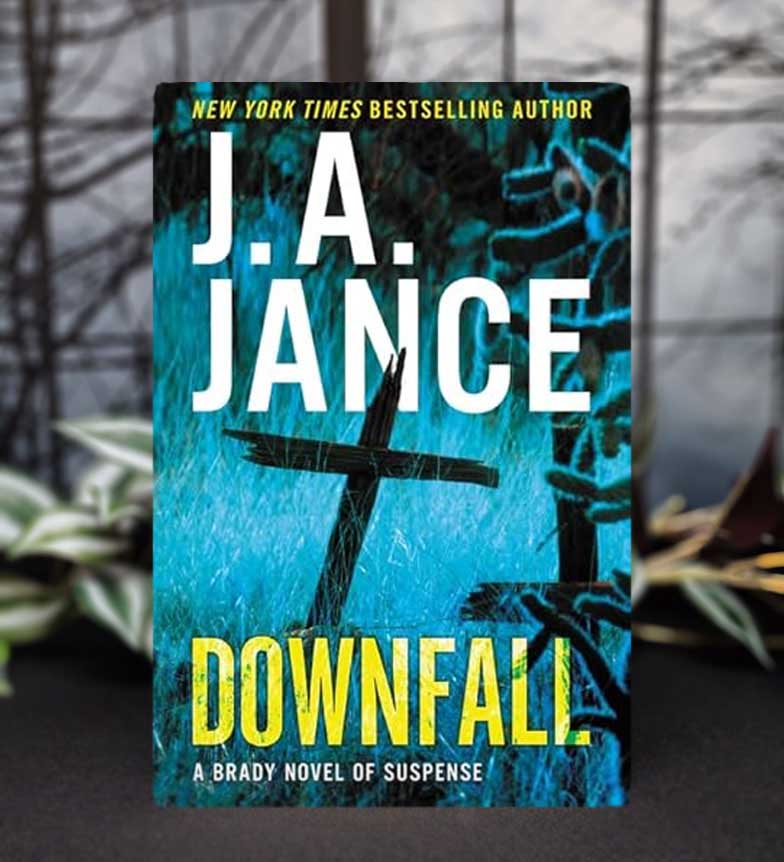
Downfall
by J.A. Jance
Cochise County Sheriff Joanna Brady investigates when two women with no apparent connection fall to their deaths from a local peak, uncovering a web of dark secrets in this seventeenth installment of the beloved series.

Outlaw Mountain
by J.A. Jance
When free-spirited elderly widow Alice Rogers is found dead in the desert clutching an insulin vial - despite not being diabetic - Sheriff Joanna Brady investigates her greedy children, her mysterious younger boyfriend, and a web of land development corruption.
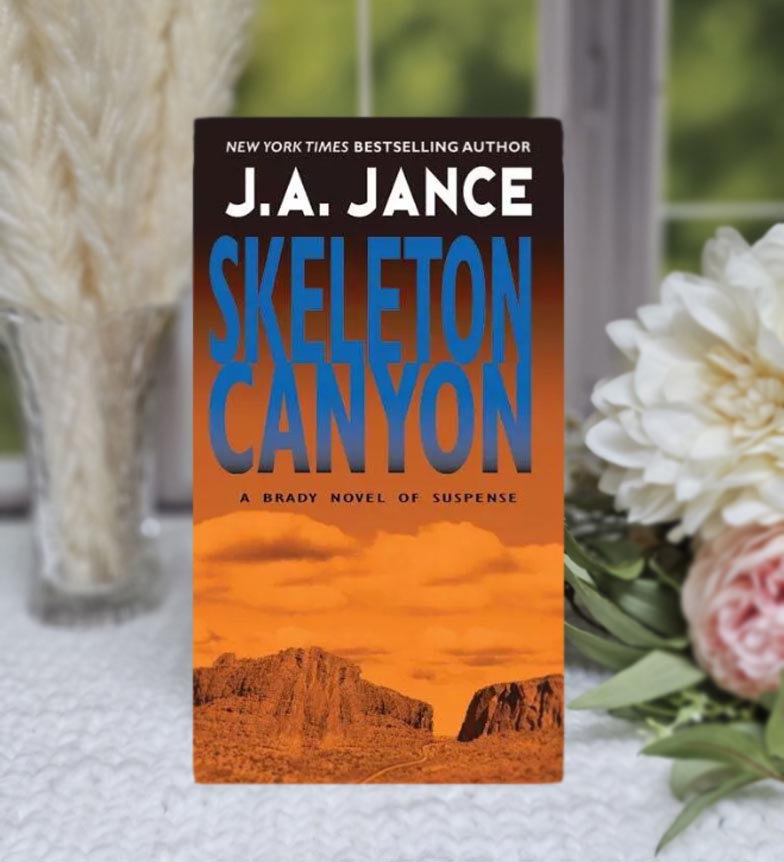
Skeleton Canyon
by J.A. Jance
When high school valedictorian Brianna O'Brien is found murdered in remote Skeleton Canyon, her wealthy parents blame her forbidden Hispanic boyfriend - but Sheriff Joanna Brady suspects the family racism masks darker secrets involving smugglers using their land.