
The Goldfinch
by Donna Tartt
Donna Tartt's Pulitzer-winning third novel: thirteen-year-old Theo Decker survives the bombing of the Metropolitan Museum that kills his mother, walks out of the rubble with Carel Fabritius's tiny 1654 painting of a chained goldfinch, and spends the next fourteen years carrying it from Park Avenue to Las Vegas to Amsterdam, alongside the most unforgettable problem child in recent fiction.
Spoiler Warning
This review may contain spoilers. Read at your own discretion if you haven't finished the book yet.
A Bomb at the Met, a Painting in a Bag, and Eight Hundred Pages
Thirteen-year-old Theodore Decker is at the Metropolitan Museum of Art with his mother, looking at an exhibition of Dutch masterpieces, when a bomb goes off. His mother, in a different gallery at the moment of the explosion, dies. Theo, dazed and bleeding, finds an elderly man dying in the rubble - Welton "Welty" Blackwell - who presses an antique ring into his hand, gives him an address to deliver it to, and gestures at one of the paintings on the wall: Carel Fabritius's The Goldfinch, a small 1654 oil of a tethered yellow bird. Theo, in shock, takes the painting from the wreckage and walks out with it. He is fourteen years old when he leaves the museum, and he will be carrying that painting, and what it represents, for the next fourteen years.
Donna Tartt's third novel - published in 2013, eleven years after The Little Friend and twenty-one after her debut The Secret History - won the 2014 Pulitzer Prize for Fiction and prompted, almost simultaneously, one of the most public critical schisms in recent American letters. Michiko Kakutani at the New York Times called it "a rapturous, symphonic whole" with "the immersive, stay-up-all-night pleasures of reading"; Vanity Fair documented "some of the severest pans in memory" from the country's most important critics, who argued, with real seriousness, that the book's enthusiastic reception said something alarming about the future of reading. Both sides have a case. The Goldfinch is enormous, plotted at the unembarrassed scale of a nineteenth-century novel, occasionally indulgent, often brilliant, and built around one of the great supporting characters in contemporary fiction. A 4.0 lands here on the strength of what it does well and the visibility of what it doesn't.
Park Avenue, Hobie's Back Room, and Pippa
After the bombing, Theo is informally absorbed by the Barbours - the wealthy Park Avenue family of his school friend Andy - who take him in while social services try to locate his absent father. The Barbours' apartment is a setting Tartt does extraordinarily well: cool, formal, slightly chilly, full of furniture and protocols Theo doesn't know how to read. Eventually he carries the ring Welty gave him to the address Welty named, which leads him to Hobie - the gentle, antiquarian-furniture-restorer who was Welty's business partner and now lives alone in a downtown townhouse full of beautiful damaged things. Hobie becomes the closest thing to a father Theo has ever had. The painting, wrapped and hidden, becomes a secret Theo cannot bring himself to surrender or to give up.
Through Hobie, Theo also meets again the red-haired girl he had noticed in the gallery the day of the bomb: Pippa. She is Welty's niece - the daughter of his late half-sister - and she was injured in the bombing too, with damage that is still being measured. Theo's love for Pippa, which begins in that gallery and never quite recedes, is one of the book's quietest engines, a grief that wears the shape of a romance. Tartt is sharp on the way the ones who survived the same disaster carry it differently, and never together.
Las Vegas, and the Boy Named Boris
Theo's father Larry - long absent, an alcoholic with a history of disappearing - reappears with his Las Vegas girlfriend Xandra and pulls Theo away from New York and into a half-empty exurban subdivision baking in the desert. Larry's relationship to Theo is one of casual neglect; Xandra contributes mostly silence and pills. Around the only-half-occupied development, Theo meets Boris Pavlikovsky, a Ukrainian-born, polyglot, equally neglected boy whose itinerant father has dragged him through a string of countries on mining-industry contracts. Boris is the book's beating heart. Drinker, thief, philosopher, fierce friend, capable of any cruelty and any tenderness, speaking in a multilingual stew that gives every chapter he's in its own atmosphere. Tartt's command of his voice is one of the strongest sustained pieces of characterization in contemporary fiction. Whatever else you take or leave about this book, Boris stays.
Larry dies in a car accident, mid-debt, mid-disaster, and Theo flees Vegas back to New York with the painting still in his luggage. Boris does not come with him. The Vegas section, which is where the book's harshest critics start sharpening their knives - it does run long, and Tartt's willingness to follow Theo through every drug, every drink, every drift can read as indulgence - is also some of her best writing about ruined American spaces. Whether the second hundred pages of it earns the first is a fair question. I came down on the side of yes, with reservations.
New York Again, and the Long Slide Toward Amsterdam
Back in New York, Theo grows up. He becomes Hobie's apprentice and then partner, but a corrupt one - he begins selling Hobie's restorations as authentic antiques, building a quiet fraud underneath the older man's reputation. He gets engaged to Andy Barbour's sister Kitsey, in a relationship that is fundamentally about belonging rather than love. Pippa drifts in and out of his orbit and never quite settles. The painting remains hidden, wrapped and stored, the secret that has organized his entire adult life.
Then Boris reappears. The reveal is the book's most devastating structural turn: Boris stole The Goldfinch from Theo years ago in Las Vegas, replacing it with a wrapped textbook. Theo has been guarding nothing for the better part of a decade. The actual painting has been moving through European art-trafficking networks the entire time, used as collateral in deals Theo had no idea were happening, while Theo's whole interior life has been organized around a paperback in a pillowcase. Boris has come to make it right.
Amsterdam
The trip to Amsterdam is the book's thriller, and it is genuinely tense. Boris seizes the painting from the criminals holding it at gunpoint; they are ambushed by another set of criminals; Boris kills one assailant and is shot himself; Theo, desperate, kills another in self-defense; a third escapes with the painting again. Boris and Theo make it out, barely. Theo, in a hotel room and convinced he has nothing left, contemplates suicide. A week later, Boris reappears with a large amount of money: he has tipped off the international art police, who recovered The Goldfinch and a number of other stolen works as part of the bust, and collected a reward Boris is now sharing with him. The painting goes back to where it belongs. Nobody is exactly clean. Theo, finally, can breathe.
The closing pages, in which Theo addresses the reader directly about beauty, art, and survival, are the most divisive thing in the book - philosophical, summative, and as several of the Vanity Fair critics complained, somewhat overwrought. The case against them is real. The case for them is that Tartt has been writing toward exactly this argument for eight hundred pages, and to refuse to make it explicitly would be a kind of cowardice. I land mostly on her side.
What Lifts It, and What Pulls
What the book does at its best is remarkable: the Park Avenue chapters, Hobie's back room, the Vegas adolescence, Boris's voice, the bombing itself, the Amsterdam set piece. What pulls is the length and the indulgence - the Vegas section's worst quarter, the philosophical coda's worst paragraph, the moments where Tartt's confidence in her reader's patience exceeds the reader's actual patience. The Vanity Fair critics had a real point about the gap between literary novel and Dickensian pageturner, and The Goldfinch sits, deliberately, on that seam. Whether you find that exhilarating or compromising depends on how you feel about the seam. A 4.0 here means: brilliant in long stretches, baggy in others, unmissable for Boris alone, and the kind of book whose flaws are inseparable from what makes it work.
Rating: 4.0/5 ⭐
Perfect for: Readers who want their literary fiction long, plot-driven, and ambitious, fans of nineteenth-century-scale narrative with twenty-first-century interiors, anyone who has been told Boris Pavlikovsky is one of the great fictional friendships and wants to find out.
Skip if: You can't tolerate eight hundred pages, you bounce off philosophical authorial summations in the closing chapters, or you want a literary novel that is suspicious of plot rather than committed to it.
You Might Also Like

A Visit from the Goon Squad
by Jennifer Egan
A Pulitzer Prize-winning novel that weaves together interconnected stories about a group of characters connected to the music industry, exploring themes of time, memory, and aging through an innovative narrative structure.
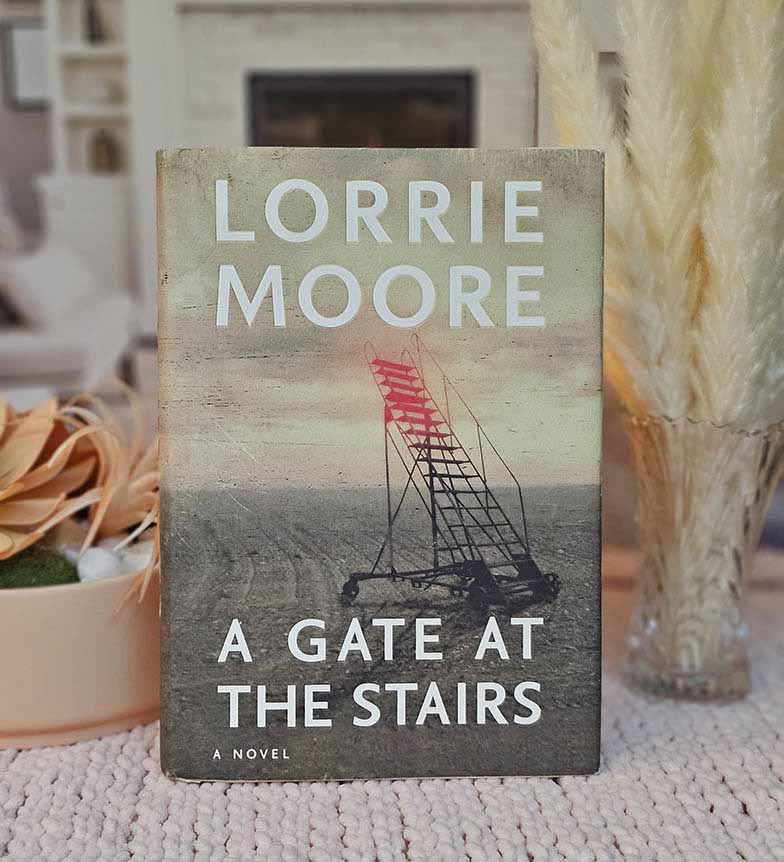
A Gate at the Stairs
by Lorrie Moore
A coming-of-age story set in the Midwest after 9/11. Tassie Keltjin takes a job as a nanny and finds herself drawn into a complex family dynamic that challenges her understanding of race, identity, and belonging.

Station Eleven
by Emily St. John Mandel
On the night a famous actor dies performing King Lear in Toronto, a deadly flu pandemic begins. Twenty years later, a traveling theater troupe performs Shakespeare for scattered survivors - and one of them carries a mysterious comic book given to her by the actor the night he died.