
The Sleeping Beauty Killer
by Mary Higgins Clark
Fifteen years after Katherine 'Casey' Carter was convicted of shooting her fiancé Hunter Raleigh III - a famed philanthropist and Raleigh Foundation heir - she gets out of prison and brings her case to Laurie Moran's true-crime show Under Suspicion, hoping the cameras can find what the original investigation didn't.
Spoiler Warning
This review may contain spoilers. Read at your own discretion if you haven't finished the book yet.
The Woman Who Slept Through Murder
The prosecution's case against Katherine "Casey" Carter was the kind of case prosecutors love. Her fiancé, the famed philanthropist Hunter Raleigh III, was found shot upstairs in his bedroom with his own handgun. Casey's fingerprints were on the weapon and nobody else's. There were Rohypnol tablets in her purse. There was no sign of forced entry beyond an unlocked door. Casey's defense was that she'd been drugged and had slept through the entire crime in the living room while her fiancé was murdered upstairs - which produced, with the speed only a tabloid is capable of, the nickname that has followed her for fifteen years: the Sleeping Beauty Killer. She served her sentence. She came out the other side of it. She still can't get a job, her own mother still won't quite look her in the eye, and she has decided that the only thing left to try is bringing her case to Laurie Moran's true-crime show Under Suspicion.
This is the third entry in the Under Suspicion series Mary Higgins Clark co-wrote with Alafair Burke (and, depending on how you count the standalone I've Got You Under My Skin that launched the show, can be reasonably called the third or fourth book in the broader sequence). It is a Mary Higgins Clark book in all the ways longtime readers expect: smooth, brisk, peopled with suspects who each have something to hide, plotted at the speed of a network procedural, never in real danger of unsettling anyone. Kirkus's verdict that it is "fleet, conscientious, and utterly true to its carefully wrought formula" is harsh and fair at the same time. The formula works. The formula is also exactly what it is.
A New Host with Sharp Elbows
The series subplot getting most of the oxygen this time around is the show itself. Alex Buckley, the lawyer-turned-host who has been Laurie's potential romantic interest across the previous books, has stepped back from the show and from the slow-cooking will-they-won't-they with Laurie. Into the vacancy steps Ryan Nichols - Harvard Law, a Supreme Court clerkship, a stint as a federal prosecutor, regular hits on the cable news circuit, and the kind of confidence those credentials produce in a man before he has actually been challenged. Ryan is convinced Casey is guilty within roughly two conversations and has no compunction about steering the show in that direction over Laurie's objections. The friction between producer and host gives the book its non-mystery engine; it is also a recognizable type that the authors handle with enough lightness that he never tips over into pure caricature.
The Under Suspicion format - filmed reenactments, on-camera interviews with suspects and witnesses, archival footage layered with new investigative material - gives the book its structure. Each suspect gets a sit-down. Each interview turns up something that recontextualizes a piece of the case. Clark and Burke use the production beats as natural cliffhangers: a setup before a reenactment, a confrontation during one, a revelation in the editing room afterward. It's an efficient delivery system for a mystery, and it is one of the reasons the series has been popular even when the individual mysteries are not especially dazzling.
The Gala List
Casey hands Laurie a roster of people who were at the gala the night Hunter died, each of whom had a reason to want him gone. Jason Gardner is Casey's ex-boyfriend, the man who showed up that night hoping to rekindle their relationship; he later wrote a successful memoir trading on the case, which is the kind of detail that should disqualify a person from being trusted but doesn't necessarily make them a murderer. Gabrielle Lawson is Hunter's former flame, the woman he left for Casey, still nursing the wound. Mary Jane Finder is the secretary to Hunter's father, scheming in the way only fictional secretaries are allowed to be scheming, a person Hunter himself never trusted. Mark Templeton is Hunter's best friend and the former CFO of the Raleigh Foundation, dogged by quiet rumors of embezzlement - and the question of whether Hunter found out something he wasn't supposed to. Andrew Raleigh is Hunter's younger brother, perpetually in the older brother's shadow, the kind of figure who could be either a tragedy or a killer depending on how the camera lights him.
The investigation does what these investigations do: each suspect takes a turn under the spotlight, each has something genuinely incriminating in their orbit, each is gradually moved off center stage as the story tightens. Along the way the picture of Hunter himself becomes more complicated. The golden philanthropist had compromises in his life that the public face didn't show, and the Raleigh Foundation's polished surface is, as several of these subplots imply, not necessarily as clean as the donor brochures.
The Cousin Nobody Was Watching
The killer, when the book finally puts her on screen, is none of the gala suspects. It is Angela, Casey's own cousin - the family member who has visited her in prison, who has stood by her in public, who has presented herself across fifteen years as Casey's staunchest supporter. The reveal is the kind of choice the Under Suspicion books like to make: not the dramatic stranger but the person you already trusted. The climactic sequence puts Laurie in position to stop Angela from killing again to cover the original crime, and Angela is arrested. Casey, this time, is properly exonerated. After fifteen years of being the woman who slept through it, she gets her name back.
The book's strengths and weaknesses are the same set Kirkus named. The pacing is clean. The cast of suspects is competently drawn. The Under Suspicion machine continues to be a useful frame for delivering a mystery in episodic chunks. The mystery itself, several reviewers have flagged, telegraphs its solution earlier than it should - some readers say they pegged the killer well before the reveal - and the formula is, as always with Clark, a formula. A 3.5 feels right. This is comfort food crime fiction - reliable, professional, not in the business of surprising you, executed at exactly the level its readers come for. If that is the bargain you signed up for, it delivers; if you wanted the genre stretched, the next book is somewhere else.
Rating: 3.5/5 ⭐
Perfect for: Mary Higgins Clark longtimers, fans of the Under Suspicion series, readers who want a brisk cold-case mystery with a TV-production frame, comfort-food suspense for a flight or a beach chair.
Skip if: You want mysteries whose solutions resist you to the last chapter, you find genre formula limiting rather than reassuring, or office-romance-and-rivalry subplots inside a procedural take you out of the case.
You Might Also Like
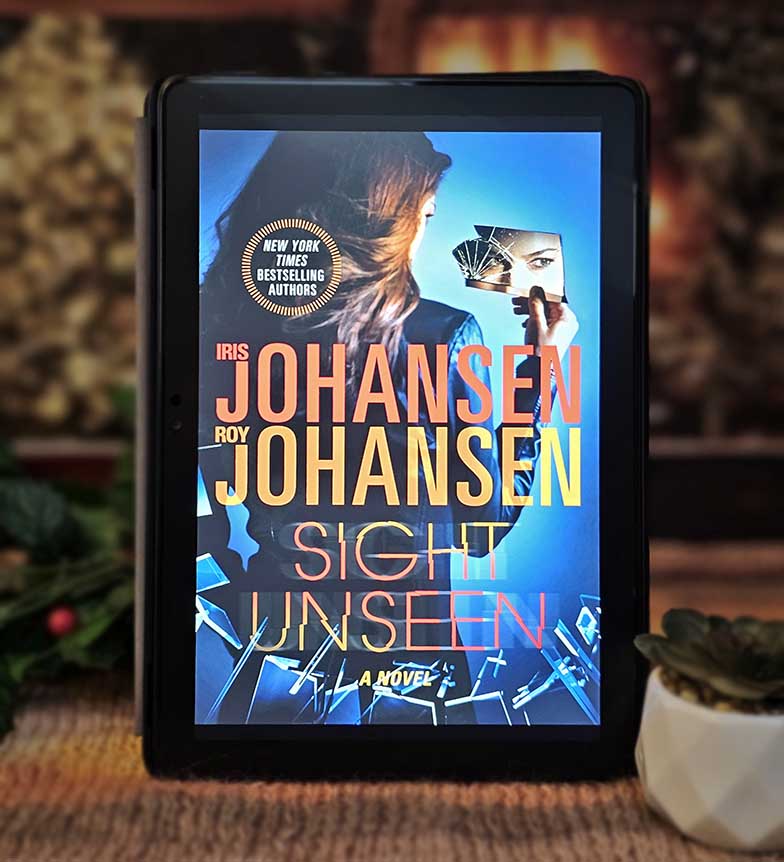
Sight Unseen
by Iris Johansen
The second Kendra Michaels thriller from Iris and Roy Johansen opens with a multi-car pile-up on San Diego's Cabrillo Bridge that Kendra - a music therapist who was blind from birth until experimental surgery gave her sight in her twenties - sees instantly is no accident, and the case turns personal fast when the new killings start mirroring her own most famous past cases. Fast-paced commercial suspense with a strong premise undercut by formula and an obligatory romance beat.
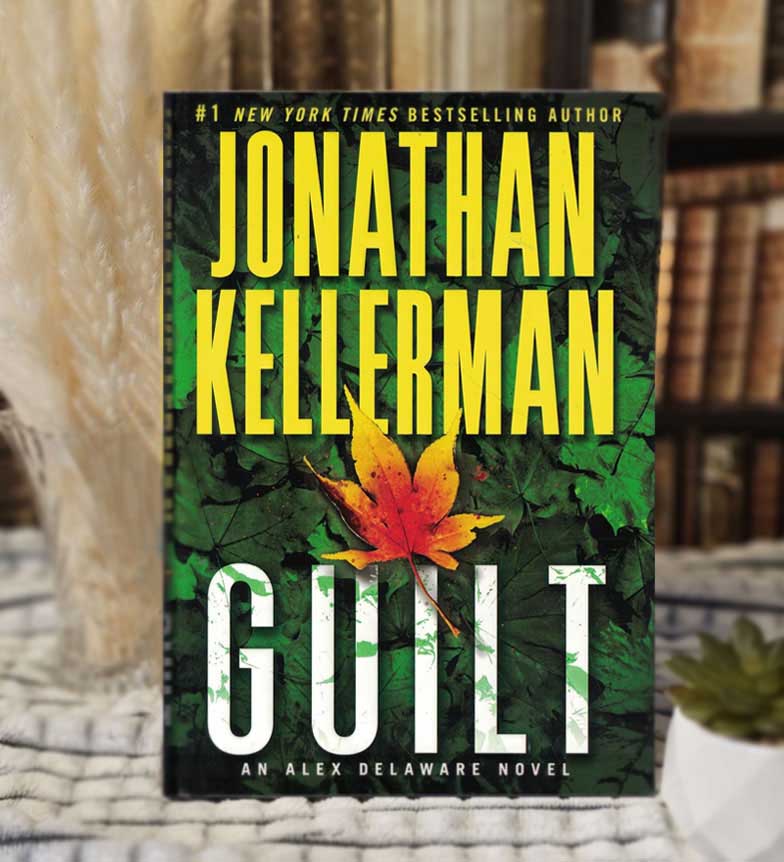
Guilt
by Jonathan Kellerman
When a Cheviot Hills couple unearths an old hospital supply box with an infant skeleton from the early 1950s, then a nanny is found shot in a nearby park beside more recent infant bones picked clean and coated in beeswax, Alex Delaware and Milo Sturgis follow two trails - one back to a 1950s pediatric nurse and a doctor in a rare Duesenberg, the other into the gated estate of movie stars Donny Rader and Prema Moon.

Paradise Lost
by J.A. Jance
On a Memorial Day weekend Girl Scout campout at Apache Pass, twelve-year-old Jenny Brady and her tentmate Dora Matthews sneak off to smoke a cigarette and stumble onto the body of a murdered Phoenix heiress; when Dora turns up dead two days later, Sheriff Joanna Brady has to figure out who left the body for her own daughter to find before they come back for the second witness.