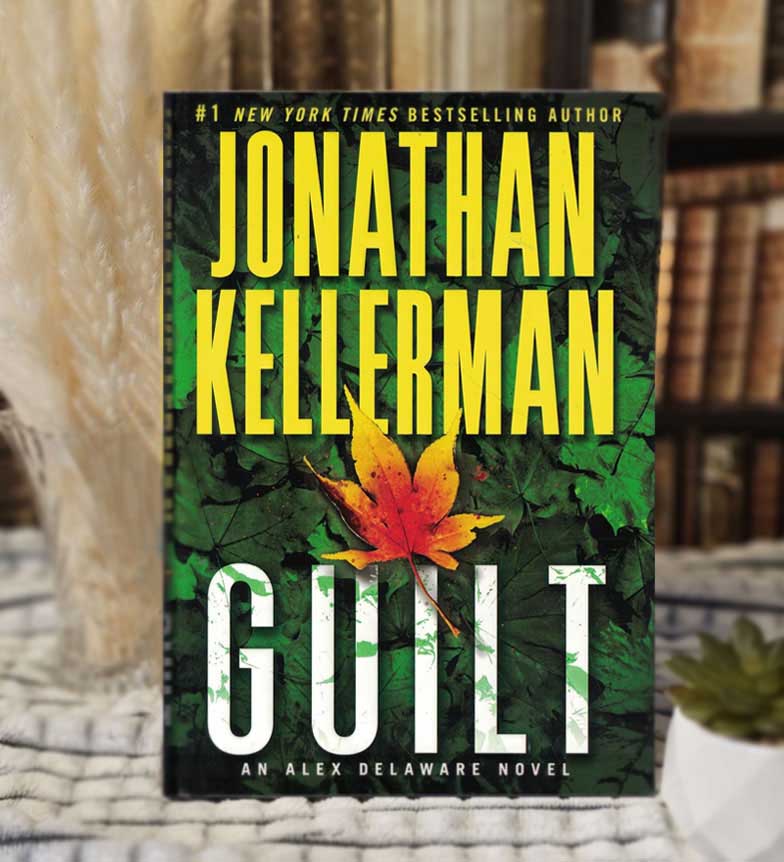
Guilt
by Jonathan Kellerman
When a Cheviot Hills couple unearths an old hospital supply box with an infant skeleton from the early 1950s, then a nanny is found shot in a nearby park beside more recent infant bones picked clean and coated in beeswax, Alex Delaware and Milo Sturgis follow two trails - one back to a 1950s pediatric nurse and a doctor in a rare Duesenberg, the other into the gated estate of movie stars Donny Rader and Prema Moon.
Spoiler Warning
This review may contain spoilers. Read at your own discretion if you haven't finished the book yet.
Two Babies, Sixty Years Apart, and a Box Nobody Was Supposed to Find
Holly Ruche is renovating the backyard of her newly bought Victorian in Cheviot Hills when the workmen turn up an old metal hospital supply box. Inside is the skeleton of an infant, buried, by the look of the materials, in the early 1950s. Within days, a second discovery in a nearby park: another set of infant bones, far more recent, and disturbingly tended to - flesh stripped clean by what forensics will identify as flesh-eating beetles, then coated, deliberately, in beeswax. Lying beside the second set of remains is the body of Adriana Betts, a straitlaced and religious young nanny, shot through the head. Two infants, six decades apart. One executed woman. And a single LA neighborhood in which both ended up in the ground. Detective Milo Sturgis brings his oldest professional friend, the child psychologist Alex Delaware, in on the case.
This is the twenty-eighth Alex Delaware novel, which is a number that should give a longtime reader pause - by book twenty-eight, even the strongest series have started phoning it in. Guilt is mostly the exception. It is, as Kirkus tartly noted, "too slick, too generous with coincidences and too cute by far"; it has all the marks of a writer working comfortably inside a formula he invented. It is also genuinely engaging at the level of plot construction, with two parallel investigations that are interesting on their own and become more interesting as they pull toward each other. A 4.0 lands here on craft rather than originality.
The Box, the Duesenberg, and the Doctor With War Wounds
The historical thread is the more elegant of the two cases. Tracking down former tenants of the Cheviot Hills house turns up a beautiful pediatric nurse who lived there in the early 1950s and was visited late at night by a man driving a rare Duesenberg - the kind of car so distinctive that, sixty years later, ownership records still narrow the field considerably. The Duesenberg trail leads to a now-deceased doctor with severe war wounds, the kind of figure whose practice could plausibly have included the discreet, off-the-books "services" that women without other options sought out before Roe v. Wade. The hospital where the box originated had, the investigation finds, a reputation for that particular discretion. The 1950s portion of the book has the texture of historical mystery at its best: small material clues - the box, the car, the vintage of the wrappings around the body - leading by inference rather than confession into a buried structure of complicity that involved doctors, nurses, and patients all keeping the same silence.
What Kellerman gets right in these chapters is the moral register. He doesn't editorialize about the conditions women lived under in the era before legal abortion, but the case is unmistakably about those conditions, and about who paid the human cost of an infrastructure that wasn't supposed to exist. The cold-case texture is some of the strongest material in the book.
Adriana Betts, the Park, and Delaware's Angry Father
The contemporary case is, by genre necessity, more lurid. Adriana Betts is dead because she stumbled into something; the question is what. The second set of infant remains - those flesh-eating beetles, the careful beeswax coating - reads, to Delaware, as the work of a person who is both mourning and disturbed. He floats early the theory of an angry father: someone who lost a child, kept the bones, treated them with a care that doesn't excuse anything but explains the strange chemistry of grief and fixation Kellerman has spent his career writing about. Whether the theory holds up is part of what the investigation is for.
The connection between the dead nanny and the beeswax bones is, at first, tenuous - which the book itself acknowledges through Delaware. He is a psychologist, not a forensic technician, and what he can offer Sturgis is pattern recognition. The strength of the Delaware-Sturgis partnership at this point in the series is exactly that: Delaware doesn't perform magic, he reads people, and his reads are a form of evidence the procedure can use.
Donny, Prema, and the Estate That Loses Nannies
The thread that pulls the book toward its present-day climax involves Adriana's previous employment. She had recently left a former position to help a friend who had taken a job with the movie-star couple Donny Rader and Prema Moon - youngish, semi-retired, parents to several adopted children, gated, insulated, the whole Hollywood-couple package. The investigation, once it reaches their estate, finds the seams. The marriage is, by multiple accounts inside the household, "a sham." The estate manager is found dead of gunshot wounds. And, most damningly, multiple nannies have left the Rader-Moon employ without explanation across recent years - not the kind of staff turnover a normal household generates. Around all of it, the police department's higher-ups are visibly more concerned about the celebrity couple's media exposure than about whether someone in that house has been killing babies, killing nannies, or both.
The celebrity-privilege material is the one place Kellerman leans a little hard. The Rader-Moon household is drawn with more melodramatic sheen than the rest of the book - there is a degree to which their part of the plot reads like a writer's revenge against a class of people the LAPD can't touch. That said, it is also genuinely pulpy fun, and Kellerman has earned the right, at this point in his career, to enjoy himself with the rich and famous.
What Works, and Where It Wobbles
The procedural texture is what I came for and what I got. Sturgis is gruff and exasperated and decent. Delaware is observant, cooler than Sturgis, sharp on the edges where someone's story doesn't quite line up with their affect. The two of them have been doing this for twenty-eight books and they are still good company. Kellerman is a working psychologist by training, and the way Delaware reads people - the small inconsistencies, the things people give away when they're trying not to - feels earned rather than imposed.
What keeps this from a 4.5 is the criticism Kirkus and others were right about. There are coincidences the book leans on too heavily; a couple of the late-stage connections feel imposed rather than discovered; the ending, several reviewers including the Crime Review have noted, is sparser and sketchier than the careful build-up deserves. None of that disqualifies the book. It is a satisfying late-series mystery that handles two cases competently and binds them at the right moments. If you have been reading the Delaware books, you'll find this one comfortable and reliably engineered. If you haven't, you can start here, but you'll get more out of it with a little of the partnership's history under your belt.
Rating: 4.0/5 ⭐
Perfect for: Longtime Alex Delaware readers, fans of psychological mysteries that play out across two timelines, anyone who enjoys cold-case threads about women who had nowhere else to go before Roe and the people who quietly helped them.
Skip if: Crimes against infants are too disturbing to sit with, you find late-series formula confining rather than reassuring, or you want a tightly-tied ending more than a good build-up.
You Might Also Like

The Late Show
by Michael Connelly
LAPD Detective Renée Ballard works the graveyard shift, catching cases no one else wants. When two cases intersect dangerously, she must go rogue to find justice.
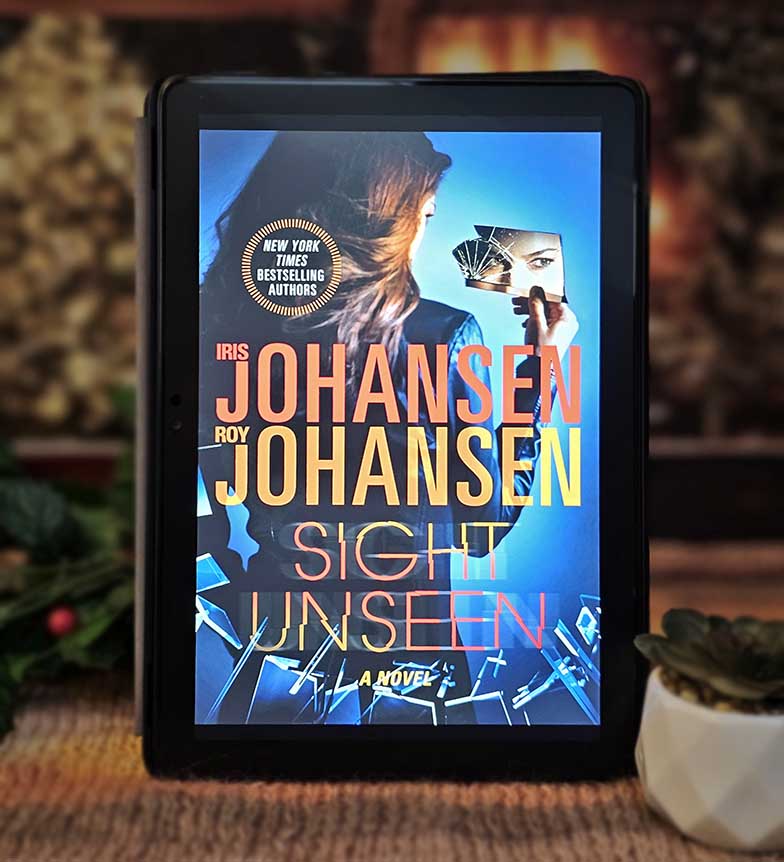
Sight Unseen
by Iris Johansen
The second Kendra Michaels thriller from Iris and Roy Johansen opens with a multi-car pile-up on San Diego's Cabrillo Bridge that Kendra - a music therapist who was blind from birth until experimental surgery gave her sight in her twenties - sees instantly is no accident, and the case turns personal fast when the new killings start mirroring her own most famous past cases. Fast-paced commercial suspense with a strong premise undercut by formula and an obligatory romance beat.

Paradise Lost
by J.A. Jance
On a Memorial Day weekend Girl Scout campout at Apache Pass, twelve-year-old Jenny Brady and her tentmate Dora Matthews sneak off to smoke a cigarette and stumble onto the body of a murdered Phoenix heiress; when Dora turns up dead two days later, Sheriff Joanna Brady has to figure out who left the body for her own daughter to find before they come back for the second witness.