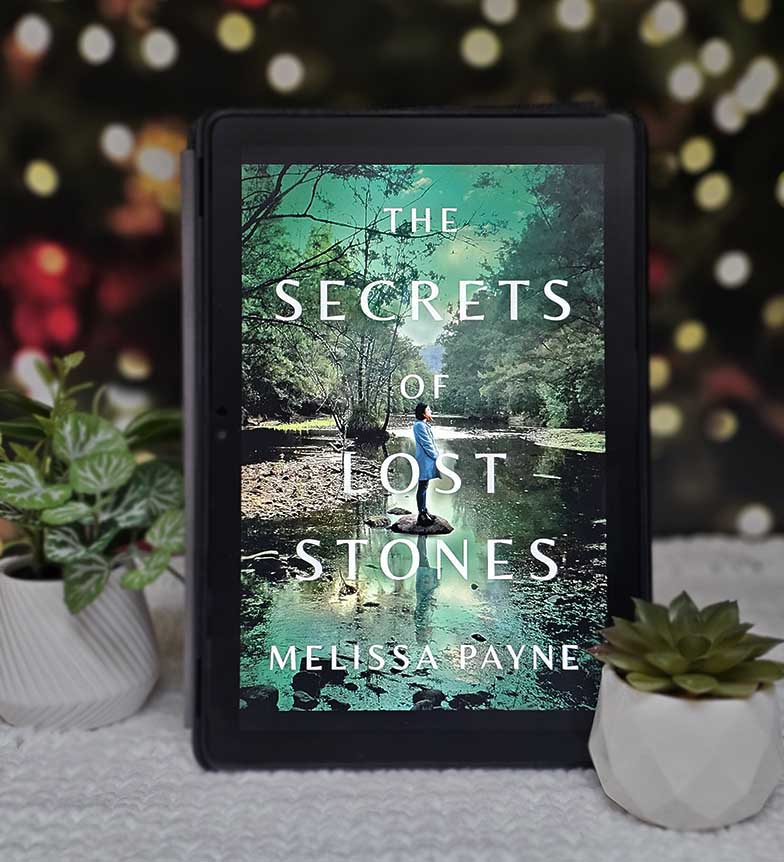
The Secrets of Lost Stones
by Melissa Payne
A touching story about a grieving mother, a teenage runaway, and an eccentric clairvoyant who brings them together in a small Colorado mountain town. A gentle tale about loss, healing, and the bonds between mothers and children.
Spoiler Warning
This review may contain spoilers. Read at your own discretion if you haven't finished the book yet.
Lost Souls Finding Each Other
Jess Abbot's eight-year-old son Chance was hit by a car and killed. That's the fact underneath everything else in this book - the fact that Jess can't outrun, can't process, can't think her way past. When we meet her, she's lost her apartment, lost her job, and exists in a state of grief so total that it's closer to hibernation. She's barely eating. She's not sleeping. She's carrying a guilt that goes beyond normal parental grief into something more specific and more destructive - the conviction that Chance's death was her fault, that she should have been watching, that the accident that killed him was the direct consequence of a moment when she failed at the one job that mattered. When she takes a position as a live-in caretaker for Lucy, an elderly woman in the small Colorado mountain town of Pine Lake, it's not because she's seeking a fresh start. It's because she's run out of other options and Pine Lake is far enough from everything she knew that the memories might - she hopes - be slightly quieter there.
They are not quieter. Melissa Payne's The Secrets of Lost Stones is a novel about what happens when broken people end up in the same house, and how the proximity of other people's pain can sometimes be the thing that cracks open your own. Lucy lives in a rambling Victorian house that's too big for one person and seems to attract strays - human ones. She's sharp, eccentric, and rumored by the townspeople of Pine Lake to be clairvoyant. When Jess arrives, Lucy takes one look at her and tells her she's a "loose end" - someone whose story isn't finished, someone the universe has unfinished business with. Jess doesn't believe in any of that. She doesn't believe in much of anything anymore. But she stays, because the house is warm and she has nowhere else to go, and almost immediately things start happening that her skepticism can't quite explain.
The Boy with the Stones
The first strange thing is the little boy. He appears around the property - in the garden, near the lake, on the porch - always holding heart-shaped stones. He doesn't speak. He leaves the stones in places Jess will find them - on her windowsill, on the kitchen counter, in her coat pocket - and disappears before she can reach him. The book's synopsis describes him as arriving "with a hope for reconciliation - and a warning." Is he real? Is he a ghost? Is he a projection of Jess's grief, her mind constructing a presence to fill the absence that's consuming her?
Payne plays this ambiguity beautifully, and it's the book's most effective technique. She never confirms or denies the boy's nature. Lucy treats his appearances as unremarkable - she's seen stranger things in her years of sensing what's beyond normal perception. Jess oscillates between terror and desperate hope, wanting the boy to be real (because that would mean Chance isn't entirely gone) and afraid of what it means about her sanity if he isn't. The stones themselves accumulate through the novel - each one heart-shaped, each one appearing at a moment when Jess is facing a choice between retreating further into her grief or taking one small step forward. Whether they're supernatural gifts or coincidences, they function as markers along Jess's emotional journey, and Payne is wise enough to let the reader decide which explanation they prefer.
Star and the Secret She's Carrying
The other lost soul in Lucy's house is Star, a fifteen-year-old runaway who shows up hungry, defensive, and fiercely unwilling to explain where she came from or why she left. Lucy takes her in without hesitation - Star is another loose end, another person whose story needs somewhere to land - and the uneasy triangulation between Jess, Star, and Lucy becomes the book's emotional engine. Jess doesn't want to care about Star. Caring about a teenager means risking the kind of attachment that, for Jess, now feels synonymous with devastation. Star doesn't want to need Jess. She's spent her life learning that adults can't be trusted, that vulnerability gets punished, that the safest strategy is to need no one.
Their resistance to each other is what makes their eventual connection so powerful. It happens in small, unglamorous moments: Jess teaching Star to cook because Lucy's kitchen is well-stocked and Star has clearly been eating out of dumpsters. Star noticing that Jess forgets to eat and wordlessly putting a plate in front of her. A conversation on the porch that starts about nothing and turns, without either of them planning it, into something honest. Payne doesn't rush the bond. She lets it build through proximity and shared meals and the particular intimacy of living in the same house while both pretending they're fine.
Star's secret - the thing she's running from - emerges gradually, and it involves her own mother. Without giving away the specifics, Star's situation mirrors Jess's from the opposite direction: Jess is a mother who lost a child, and Star is a child who, in a different sense, lost a mother. The parallel isn't subtle, and Payne doesn't pretend it is. But it works because both characters are drawn with enough specificity that the thematic echo feels organic rather than engineered. When Jess begins to see in Star the kind of fierce, stubborn survivorship that Chance might have grown into, and when Star begins to see in Jess the kind of mother she wished she'd had, the emotional payoff is earned through 200 pages of carefully built reluctant intimacy.
Lucy and the Magic of Pine Lake
Lucy is the book's most delightful character and also its most difficult to pin down. She's been in Pine Lake for decades, she lives alone in a house full of books and crystals and cats, and she has a reputation among the townspeople as someone who knows things she shouldn't be able to know. Some of this is played for gentle comedy - Lucy greeting Jess at the door with observations about her aura, or casually predicting which neighbor will stop by that afternoon. But Payne gives Lucy enough depth that she doesn't flatten into a quirky-psychic archetype. Lucy has her own losses, her own regrets, her own reasons for living alone in a big house and filling it with other people's loose ends. Her clairvoyance - if that's what it is - comes with a cost she doesn't advertise, and the scenes where that cost becomes visible are some of the book's most affecting.
Pine Lake itself functions as a kind of healing landscape - mountain air, lake water, the rhythms of a small community where people check on each other and the pace of life is measured in seasons rather than deadlines. Payne avoids sentimentalizing the setting entirely - there's gossip and small-mindedness alongside the neighborly warmth - but she clearly believes in the restorative power of a place that's quieter than the life you left, and that belief is woven into the texture of the prose.
Where the Warmth Meets Its Limits
Here's what keeps this at four stars rather than five: the novel's gentleness, which is its greatest strength, is also occasionally its limitation. Payne handles grief with genuine honesty - Jess's pain is real, Star's defensiveness is real, the losses they're carrying are not minimized - but the book's arc bends toward healing with a certainty that sometimes undercuts the messiness of real grief. By the final chapters, the pieces are fitting together with a precision that owes more to the requirements of a satisfying novel than to the unpredictable, non-linear way that people actually recover from devastating loss. The resolution with Star's secret, while emotionally satisfying, wraps up more neatly than the setup warrants, and Jess's journey from catatonic grief to something resembling forward motion happens on a timeline that's compressed for narrative purposes.
The magical realism elements, while beautifully handled in their ambiguity, also create a structural challenge. Because the novel never commits to a definitive explanation for the boy and the stones, the ending has to satisfy readers who've been reading supernaturally and readers who've been reading psychologically, and the solution Payne arrives at splits the difference in a way that's graceful but not quite as powerful as fully committing to either interpretation would have been. It's a minor issue in a book that gets the emotional fundamentals right, but it leaves the final pages feeling slightly softer than the rawness of the opening chapters promised.
None of which diminishes what Payne has actually accomplished: a novel about the worst thing that can happen to a parent that manages to be warm without being saccharine, hopeful without being dishonest, and genuinely moving without manipulating the reader into feeling things the story hasn't earned. The found-family dynamic between Jess, Star, and Lucy is the kind of reading experience that stays with you - not because the plot surprises you, but because the characters feel like people you've spent time with, and their healing, however neatly it arrives, feels like something worth believing in.
Rating: 4.0/5 ⭐
Perfect for: Readers who love gentle magical realism, anyone processing grief or loss, those who appreciate found-family stories where hope is earned through honest emotional work.
Skip if: You need faster pacing or sharper edges, prefer your magical realism fully committed rather than ambiguous, or find stories about child loss too difficult.
You Might Also Like
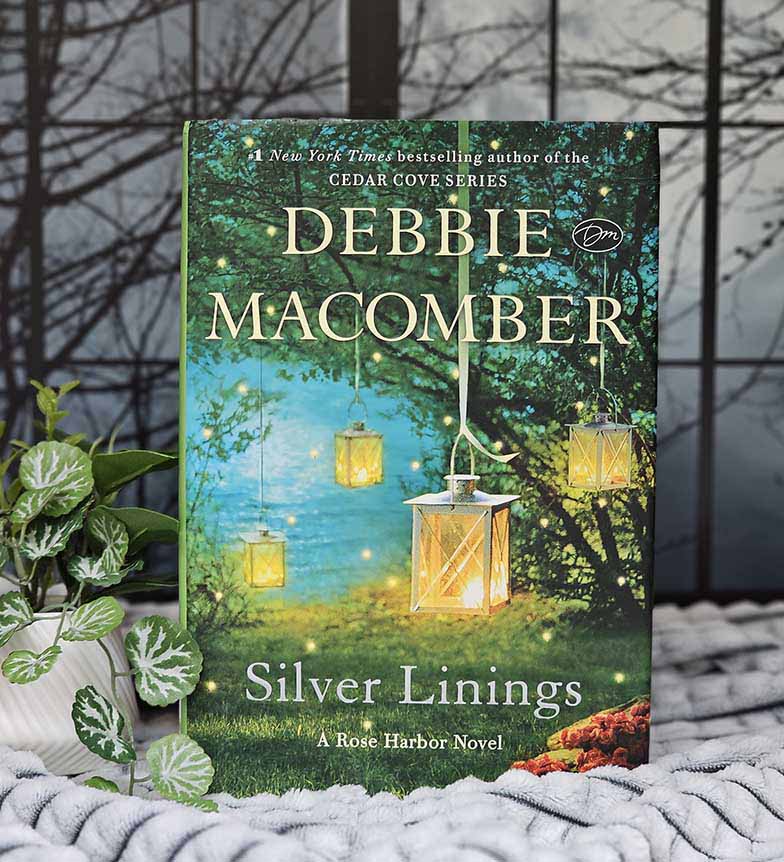
Silver Linings
by Debbie Macomber
When two wounded souls cross paths in a small Washington town, they discover that sometimes the hardest battles are fought in the heart. A heartwarming story about finding hope and love after loss.

Your Perfect Year
by Charlotte Lucas
When a mysterious diary falls into his hands on New Year's Day, a rigid businessman embarks on a life-changing journey of tasks and self-discovery that connects him with a free-spirited woman and changes both their lives forever.
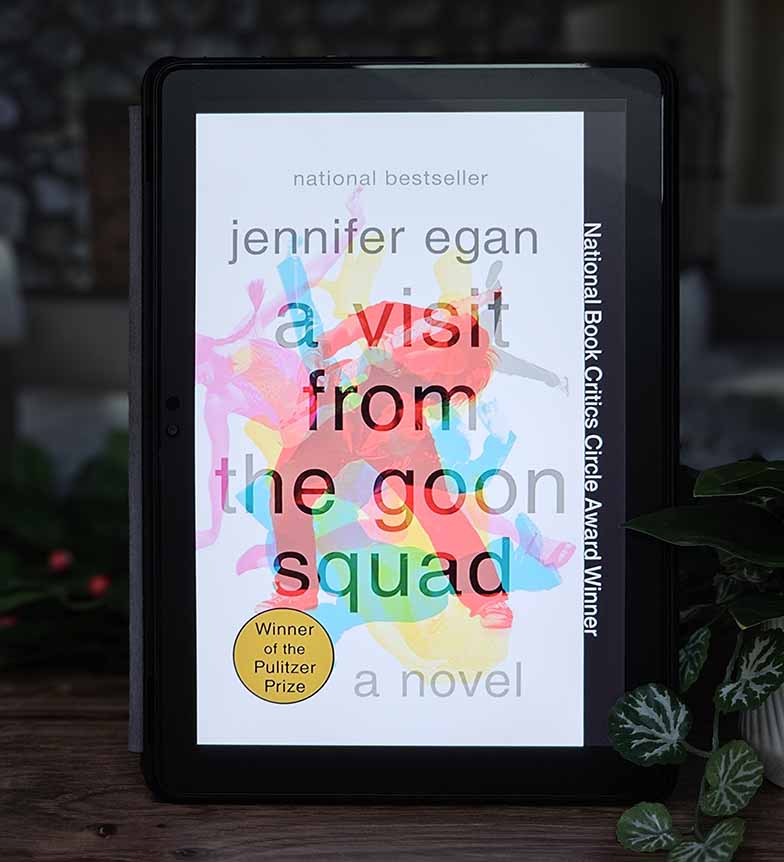
A Visit from the Goon Squad
by Jennifer Egan
A Pulitzer Prize-winning novel that weaves together interconnected stories about a group of characters connected to the music industry, exploring themes of time, memory, and aging through an innovative narrative structure.