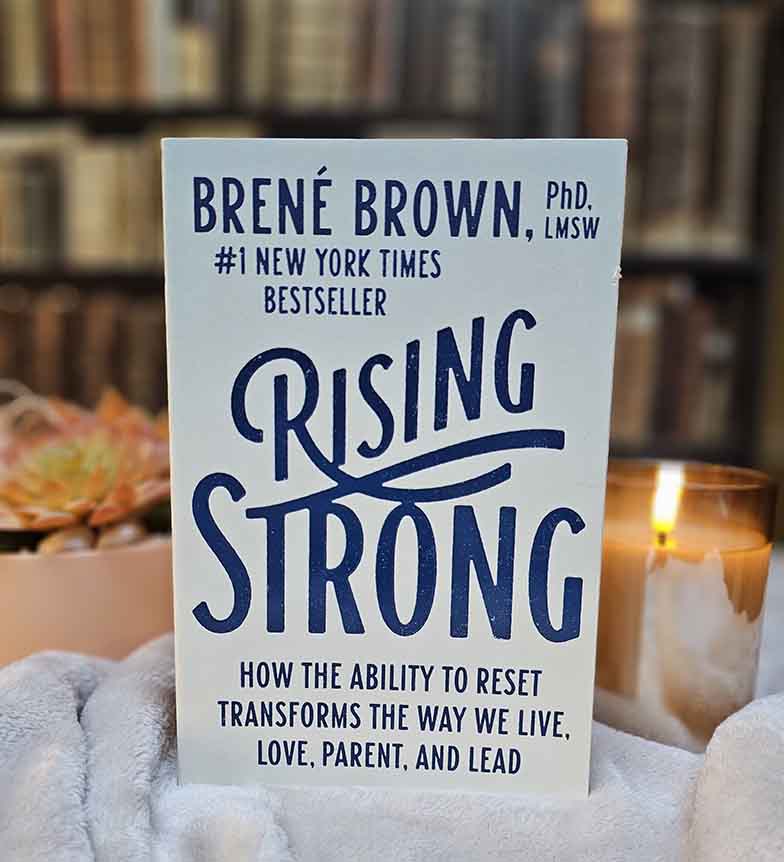
Rising Strong
by Brené Brown
Brené Brown explores the process of getting back up after failure, heartbreak, and disappointment, providing a research-based approach to resilience and emotional recovery.
Spoiler Warning
This review may contain spoilers. Read at your own discretion if you haven't finished the book yet.
Everyone Falls. This Is About What Happens Next.
In Daring Greatly, Brené Brown made the case that vulnerability is strength, that showing up and being seen - even when you can't control the outcome - is the definition of courage. In The Gifts of Imperfection, she explored what it means to let go of who you think you're supposed to be and embrace who you actually are. Both books are about stepping into the arena. Rising Strong is about what happens when the arena knocks you flat on your face. Because it will. Daring to show up means daring to fail, and Brown realized that her earlier work had a gap: she'd written brilliantly about the courage to be vulnerable but hadn't addressed the ugly, disorienting process of getting back up after vulnerability leads to exactly the kind of pain you feared.
The result is her most practical book and, I think, her most important one. Rising Strong isn't motivational - it doesn't tell you to bounce back, dust yourself off, or find the silver lining. It provides a three-phase process for working through failure, heartbreak, and disappointment without numbing the pain, without offloading it onto others, and without constructing a false narrative that lets you avoid the hard lessons. "The reckoning is when we recognize that we're emotionally hooked and we get curious about what's happening inside of us," Brown writes. That curiosity - the willingness to examine your own emotional reactions rather than just acting on them - is the entire book's foundation.
The Reckoning: Catching Yourself Mid-Fall
The first phase of the rising strong process is deceptively simple: notice when you've been emotionally triggered. Something happens - your boss gives you critical feedback, your partner snaps at you, a friend cancels plans for the third time - and you feel a surge of emotion. Anger, shame, defensiveness, hurt. Most people skip past this moment entirely. They react from the emotion without examining it: they fire off a sharp reply, withdraw into silence, eat something, pour a drink, scroll their phone for two hours. The reckoning is the practice of pausing before the reaction and asking yourself, with genuine curiosity, what am I actually feeling right now? Not what am I thinking about the situation - what am I feeling in my body, in my chest, in my gut?
Brown tells a story about herself that anchors this concept more effectively than any research citation could. She's swimming in a lake with her husband Steve, feeling connected and grateful, and she tells him so. His response is a distracted "yeah." She immediately spirals - he doesn't feel the same way, he's pulling away, maybe the marriage isn't as strong as she thought. Her body tenses. Her jaw clenches. She wants to swim away and sulk, or confront him with "what's wrong with you?" Instead - and this is the reckoning in action - she catches herself. She notices the emotional flood and gets curious about it rather than drowning in it. Why did his one-word response trigger a full-blown narrative about the state of her marriage? What's underneath the anger? The answer, when she sits with it, is fear. Fear of not being loved. Fear that her vulnerability - telling him how she felt - was met with indifference. The reckoning doesn't solve the feeling. It identifies it, and that identification is the prerequisite for everything that comes next.
The Rumble: The Story I'm Making Up
The second phase is the book's most original and most useful contribution. Brown calls it the rumble - the confrontation with the stories we tell ourselves about our experiences. "We are meaning-making machines," she writes. "When we don't have data, we will make up stories that fit our worst fears and greatest insecurities." Your boss gave you critical feedback and the story you're making up is that she thinks you're incompetent. Your friend cancelled plans and the story you're making up is that she doesn't value your friendship. Your partner said "yeah" in a distracted tone and the story you're making up is that he's emotionally checked out of the marriage.
The key word is "making up." Brown encourages literally using that phrase - saying out loud or writing down "the story I'm making up is..." - because it accomplishes two things simultaneously. It acknowledges the narrative you're running, taking it seriously rather than dismissing it. And it frames that narrative as a story rather than a fact, creating just enough distance to question whether it's actually true. Back in the lake, Brown turns to Steve and says, "The story I'm making up is that you don't feel connected to me the way I feel connected to you." His response: he'd barely registered what she said because he'd been fighting off a panic attack for the entire swim. He'd had a nightmare the night before about the kids in a boating accident - a speedboat bearing down on them in the water - and being out in the open lake had him white-knuckling his way through, counting his strokes just to stay calm. Her massive marital narrative was built entirely on her own fears, projected onto a one-word response from a man who was quietly wrestling with his own completely unrelated anxiety.
Brown's research shows that first stories - the initial narratives we construct about our experiences - are almost always wrong, and wrong in predictable directions. We assume negative intent. We make other people's behavior about us. We catastrophize. We default to the interpretation that confirms our deepest insecurity. The rumble is the practice of catching these first stories before they harden into beliefs, examining them honestly, and replacing them with narratives that are more accurate - which are usually more generous and more complex than the stories our fear generates.
The Revolution: Living the New Story
The third phase - the revolution - is the quietest and the most important. It's what happens when you take what you learned from the reckoning and the rumble and integrate it into how you actually live. Brown is careful to note that this isn't dramatic transformation. It's not a before-and-after. It's the slow, accumulating effect of catching yourself more quickly, questioning your first stories more honestly, and making choices based on better self-knowledge rather than reactive emotion. "The revolution is when we change how we engage with the world based on what we've learned about ourselves and our story."
Brown illustrates this with multiple examples from her research - couples who learned to say "the story I'm making up" to each other instead of launching into accusations, parents who recognized that their fury at a child's behavior was actually fear for the child's safety dressed up as anger, leaders who stopped interpreting employee pushback as insubordination and started hearing it as engagement. In each case, the revolution isn't a single epiphany. It's a pattern of small, daily choices to respond from awareness rather than reactivity. Over time, those choices compound into fundamentally different relationships - with partners, with colleagues, with your own inner life.
The chapter on guilt versus shame is where Brown connects Rising Strong to her earlier research most directly. Shame - the belief that you are fundamentally broken, unworthy, defective - keeps you facedown. It says: you failed because you're a failure. Guilt - the recognition that you did something that doesn't align with your values - actually helps you get up. It says: you did something bad, and you can do better. The difference between "I am bad" and "I did something bad" is the difference between paralysis and recovery, and Brown's argument is that learning to distinguish between the two is one of the most important emotional skills a person can develop. Shame thrives in secrecy and silence. Guilt motivates change. Knowing which one you're feeling determines whether you rise or stay down.
Where the Process Meets Its Limits
The rising strong process is genuinely powerful, and I've used it in my own life more than any other framework from any self-help book I've read. The "story I'm making up" phrase alone has defused more arguments and dissolved more unnecessary anxiety than I can count. Brown's ability to take research on shame, vulnerability, and emotional resilience and translate it into something you can actually do - right now, in your next difficult conversation - is what earns this five stars.
But the book does have a specific limitation worth naming: it works best for people whose emotional struggles are primarily interpersonal and cognitive - the wrong stories we tell about relationships, career setbacks, social rejection. For people whose facedown moments are rooted in structural oppression, chronic illness, poverty, or severe trauma, the framework can feel like it's asking you to examine your narrative when the problem isn't your narrative - it's your reality. Brown acknowledges this, particularly around trauma, recommending professional support for experiences that exceed the scope of self-help. But the acknowledgment is brief relative to the rest of the book, and some readers will feel the gap between "question the story you're making up" and "your story isn't made up - this is actually happening to you."
The writing also gets repetitive in the middle sections, where Brown applies the three-phase process to multiple scenarios that start to feel interchangeable. The lake story with Steve is the book's strongest example by a wide margin, and some of the later illustrations - while useful - don't land with the same specificity or emotional force. The book could have been shorter without losing anything essential, which is a minor complaint about a work that gets the big things right.
What I keep coming back to is the core insight underneath all of it: that the stories we tell ourselves about our experiences are not the experiences themselves, and that learning to separate the two - to hold your first narrative loosely enough to question it - is the fundamental skill of emotional resilience. Brown didn't invent that idea, but she made it usable in a way that nobody else has. This is the book in her catalog that I recommend first, because it's the one that gives you something to do tomorrow morning when you're facedown and wondering whether to stay there.
Rating: 5.0/5 ⭐
Perfect for: Anyone recovering from setbacks, people interested in emotional intelligence and resilience, readers who want a research-backed framework they can actually use in their daily lives.
Skip if: Introspection and emotional processing don't appeal to you, or your struggles require professional support beyond what a self-help book can provide.
My Notes & Takeaways
The Rising Strong Process
The Reckoning: "The reckoning is when we recognize that we're emotionally hooked and we get curious about what's happening inside of us."
This first step involves developing emotional awareness and the ability to notice when we're triggered or experiencing difficult emotions without immediately reacting.
The Rumble: "The rumble is when we get honest about the stories we're making up about our struggle, then we challenge those stories and assumptions to find the truth."
The middle phase requires courage to examine our interpretations and assumptions rather than accepting our first emotional reactions as factual.
The Revolution: "The revolution is when we change how we engage with the world based on what we've learned about ourselves and our story."
The final stage involves integrating insights into new behaviors and ways of being that reflect greater self-awareness and emotional intelligence.
Story and Truth: "We are meaning-making machines. When we don't have data, we will make up stories that fit our worst fears and greatest insecurities."
You Might Also Like
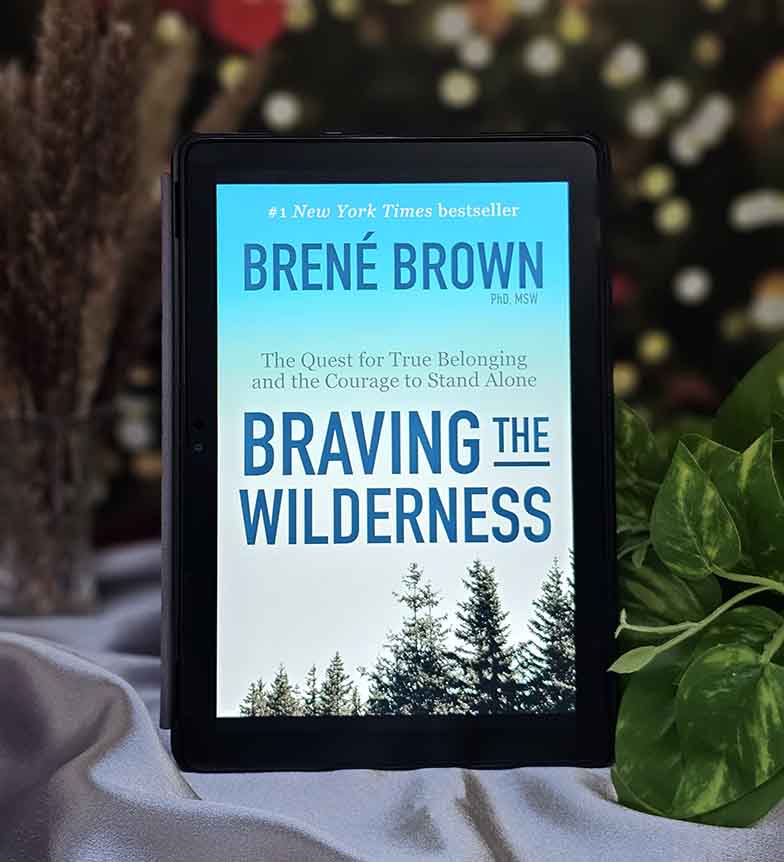
Braving the Wilderness
by Brené Brown
Brené Brown explores true belonging and the courage to stand alone, examining how we can maintain our authenticity and values even when it means standing apart from groups or popular opinion.
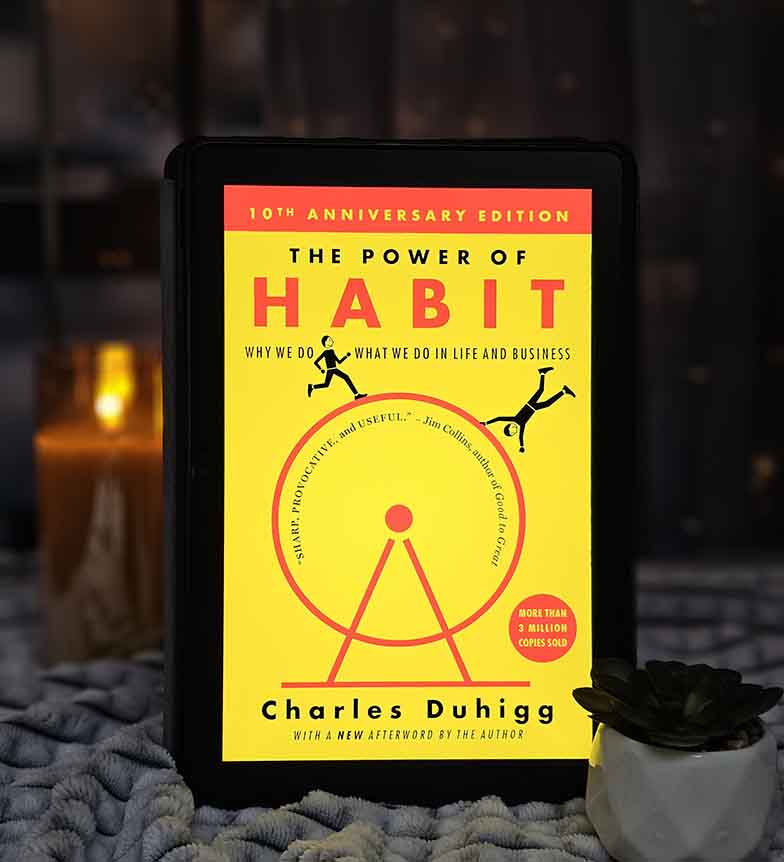
The Power of Habit
by Charles Duhigg
An exploration of the science behind habit formation and change, examining how habits work in individual lives, organizations, and societies. Duhigg combines neuroscience research with compelling case studies.
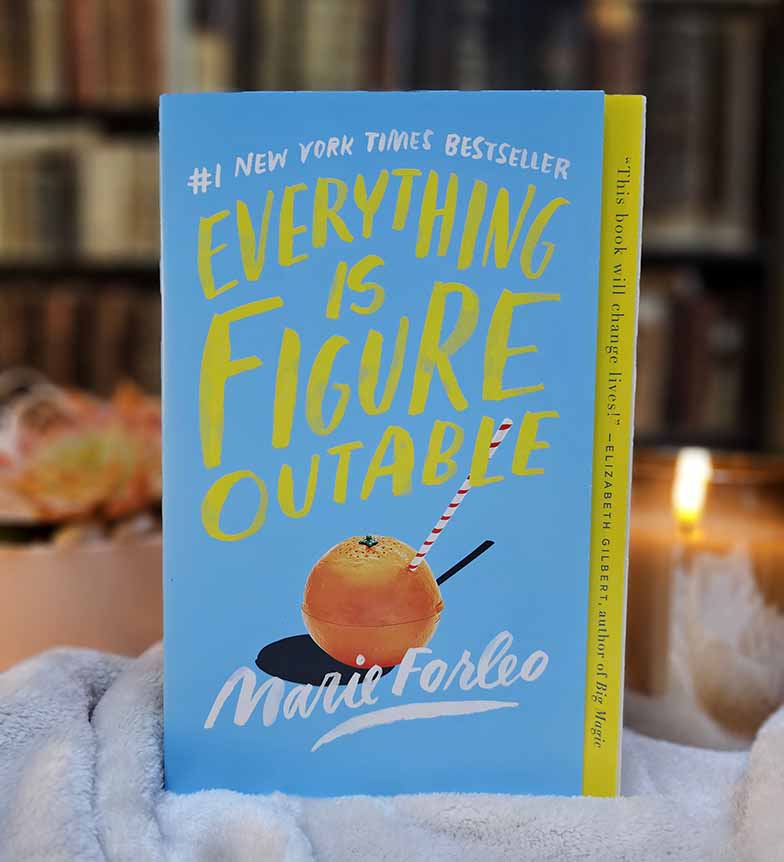
Everything is Figureoutable
by Marie Forleo
A revolutionary mindset and practical action plan for when you feel stuck, overwhelmed, or lost. Marie Forleo shares her philosophy that any problem, challenge, or dream is figureoutable.