
Sarah's Key
by Tatiana de Rosnay
Tatiana de Rosnay's haunting dual-timeline novel about Sarah, a Jewish girl hiding her brother during the 1942 Vel d'Hiv roundup in Paris, and Julia, an American journalist in 2002 uncovering her family's connection to Sarah's story. A powerful exploration of complicity, memory, and the lasting echoes of historical atrocity.
Buy this book:
Spoiler Warning
This review may contain spoilers. Read at your own discretion if you haven't finished the book yet.
My Thoughts
Sarah's Key is devastating, important, and beautifully executed—a dual-timeline novel that brings the forgotten story of French complicity in the Holocaust to vivid, heartbreaking life while exploring how historical atrocity reverberates through generations. Tatiana de Rosnay has crafted something rare: a Holocaust novel that educates without exploiting, breaks hearts without manipulating, and asks difficult questions about guilt, responsibility, and memory.
The novel alternates between two timelines. In 1942, ten-year-old Sarah Starzynski and her family are arrested during the Vel' d'Hiv roundup, when French police—not Germans—rounded up over 13,000 Jews in Paris. Before being taken, Sarah locks her younger brother Michel in a hidden cupboard to protect him, promising to return quickly. In 2002, American journalist Julia Jarmond, living in Paris and researching the Vel' d'Hiv roundup for its 60th anniversary, discovers her French husband's family occupied the Starzynskis' apartment after their deportation—and uncovers Sarah's story.
The historical sections are the novel's heart and soul. De Rosnay renders Sarah's experience with painful specificity—the terrifying roundup, the horror of the Vel' d'Hiv (an indoor cycling stadium where thousands were held for days in inhumane conditions), the transit camp, the desperate escape, and Sarah's agonizing journey back to Paris to free her brother. These sections are harrowing but never gratuitous, focused on Sarah's perspective and psychological experience rather than dwelling on suffering.
What makes this particularly powerful is the French context. Many Americans know about Nazi concentration camps and German perpetrators, but the French role—particularly the Vichy government's collaboration and French police carrying out the roundups—is less widely known. De Rosnay shines necessary light on this chapter of French history that France itself was slow to acknowledge (President Chirac only officially recognized French responsibility in 1995).
The Vel' d'Hiv sections are almost unbearable—the heat, the lack of water and sanitation, the crying children, the desperation of parents realizing what's happening, the French guards' varying degrees of cruelty and minimal humanity. De Rosnay handles this with restraint, conveying horror without sensationalism.
Sarah's character is beautifully rendered—a child forced into impossible circumstances, desperately focused on getting back to Michel, displaying remarkable resourcefulness and courage while remaining recognizably a frightened ten-year-old. Her voice is authentic, her experience specific and individual while representing thousands of similar stories.
The contemporary timeline follows Julia's investigation into Sarah's fate and her growing realization that her husband's family knowingly moved into the Starzynskis' apartment and never asked what happened to the previous occupants. This raises profound questions about complicity, willful ignorance, and how ordinary people benefit from atrocity without directly committing it.
Julia as protagonist works well—an outsider to French culture, she can ask questions that native French might avoid, and her American perspective creates productive distance for examining French historical memory. Her personal life (struggling marriage, unexpected pregnancy at 45, complicated relationship with French in-laws) interweaves with the historical investigation.
The novel explores how historical trauma echoes through generations. Sarah's survival creates its own tragedy (survivor guilt, loss of family, permanent psychological damage), and the effects ripple through her descendants. Julia's discoveries force her husband's family to confront uncomfortable truths they'd rather keep buried. The past isn't past—it shapes the present in profound ways.
De Rosnay handles the question of responsibility thoughtfully. Julia's in-laws didn't personally arrest anyone or run camps, but they benefited from Jewish deportation and chose not to ask questions. Is that complicity? What does one owe to those whose suffering enabled your comfort? How does a society reckon with collective guilt? These questions are raised without easy answers.
The prose is straightforward and accessible (the book was originally written in English, though de Rosnay is French)—clear, direct, occasionally beautiful in its simplicity. The short chapters and alternating timelines create momentum, making this a quick read despite heavy subject matter. The pacing balances the harrowing historical sections with Julia's present-day investigation.
However, the contemporary timeline is weaker than the historical. Julia's marriage troubles and pregnancy drama, while thematically connected to questions about legacy and what we pass to future generations, sometimes feel like standard women's fiction concerns grafted onto weightier historical material. The contemporary sections are competently written but less compelling than Sarah's story.
The resolution of Sarah's story is both devastating and somewhat contrived. Without spoiling specifics, the final revelations require some coincidence and convenient information-gathering that strains believability slightly. The emotional truth is powerful, but the mechanics of how Julia discovers everything are occasionally convenient.
Some readers criticize the ending for being too neat—wrapped up perhaps more tidily than life or history actually resolves. There's validity to this critique, though the ending also provides appropriate closure for what is, after all, fiction based on historical events rather than documentary.
The book succeeds brilliantly as education about an under-known historical event. Many readers discovered the Vel' d'Hiv roundup through this novel. De Rosnay includes an author's note with historical context and sources, showing the research behind the fiction. The novel prompted renewed French discussion about this period.
The dual-timeline structure works well, with each timeline informing and enriching the other. Sarah's historical experience gains weight from Julia's discovery of lasting consequences. Julia's investigation gains urgency from understanding Sarah's specific suffering. The structure creates productive dialogue between past and present.
Why You'll Love It
- Under-Known History: Vel' d'Hiv roundup brought to life
- Dual Timeline: Historical and contemporary interweave effectively
- Sarah's Story: Heartbreaking, authentic child's perspective
- French Complicity: Examines collaboration and responsibility
- Accessible Writing: Clear, moving prose
- Historical Research: Well-documented and specific
- Emotional Impact: Genuinely moving without manipulation
- Important Questions: Memory, guilt, and lasting trauma
Perfect For
Readers interested in Holocaust history beyond German concentration camps, those drawn to dual-timeline historical fiction, people curious about French WWII history and collaboration, fans of The Book Thief or All the Light We Cannot See, book clubs tackling serious historical topics, and anyone interested in questions about historical memory and responsibility. Essential reading about under-known Holocaust history.
Final Verdict
Sarah's Key is a powerful, important novel that brings the Vel' d'Hiv roundup—French complicity in the Holocaust—to vivid, heartbreaking life while exploring how historical atrocity echoes through generations. De Rosnay's historical sections are the book's greatest strength—Sarah's story is harrowing, specific, and beautifully rendered without exploitation. The ten-year-old's perspective is authentic, her resourcefulness and tragedy equally believable. The Vel' d'Hiv scenes are almost unbearable in their restraint and specificity. The French context is crucial—this shines necessary light on collaboration that France was slow to acknowledge. The dual-timeline structure works well, with Julia's contemporary investigation creating productive dialogue between past and present. Questions about complicity, responsibility, and memory are raised thoughtfully without easy answers. The prose is accessible and effective, pacing balances heavy content with momentum. However, the contemporary timeline is weaker—Julia's personal drama sometimes feels like standard women's fiction grafted onto weightier historical material. The resolution is emotionally powerful but slightly contrived in its mechanics. Some readers will find the ending too neat. But these are minor issues in an otherwise excellent novel. This succeeds as education, emotional experience, and exploration of difficult questions. Highly recommended for readers interested in Holocaust history, dual-timeline fiction, and questions about historical memory and responsibility. Essential reading about French complicity in the Holocaust.
You Might Also Like

The Storyteller
by Jodi Picoult
Jodi Picoult's powerful novel about Sage Singer, a baker who befriends a 90-year-old man who confesses to being an SS officer at Auschwitz and asks her to help him die. A profound exploration of forgiveness, justice, and whether some crimes are unforgivable, told through multiple perspectives and timelines.

The Sense of an Ending
by Julian Barnes
Julian Barnes' Man Booker Prize-winning novel about Tony Webster, who revisits his past when an unexpected bequest forces him to reconsider memories of his youth, first love, and a friend's suicide. A profound meditation on memory, time, and how we construct narratives about our lives.
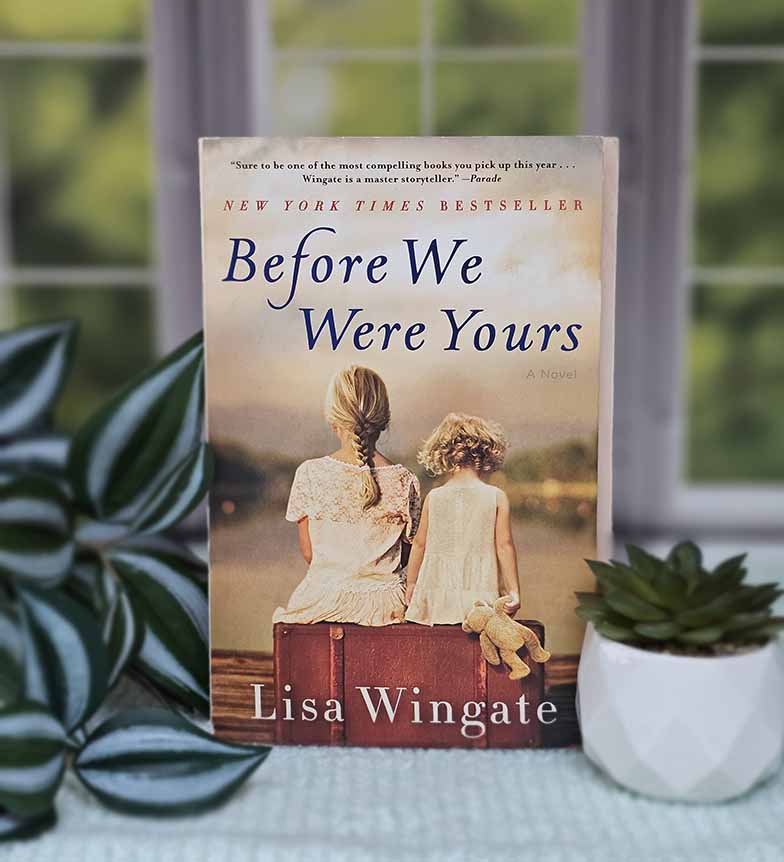
Before We Were Yours
by Lisa Wingate
A heartbreaking historical novel based on the true scandal of the Tennessee Children's Home Society, which kidnapped and sold poor children to wealthy families.