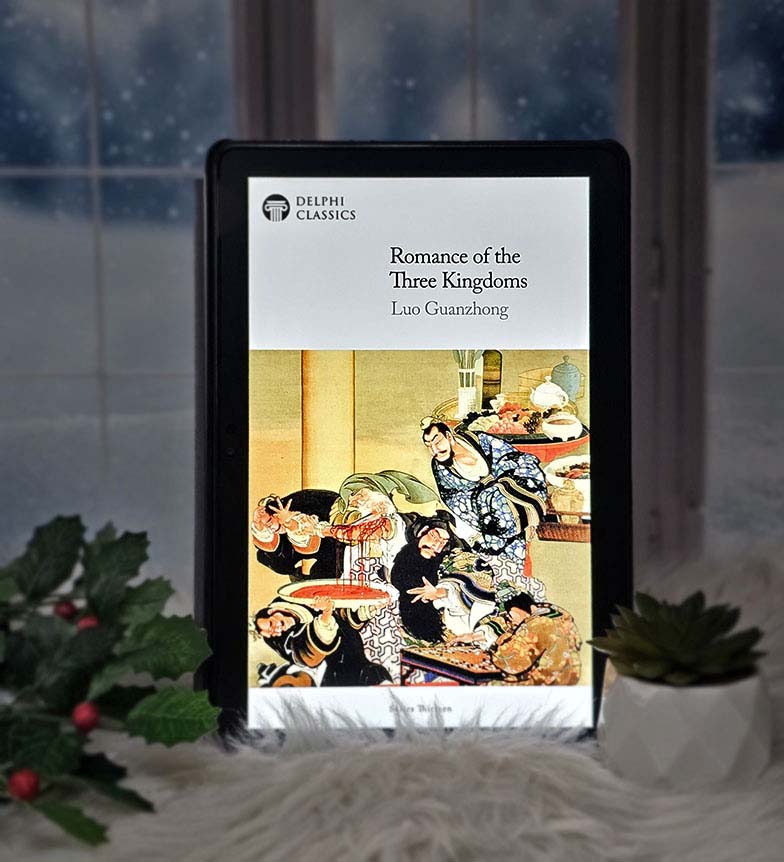
Romance of the Three Kingdoms
by Luo Guanzhong
One of China's Four Great Classical Novels, this epic historical saga chronicles the fall of the Han Dynasty and the three-way power struggle that followed. A monument of Chinese literature filled with battles, strategies, and legendary heroes—but extremely challenging for modern Western readers.
Buy this book:
Spoiler Warning
This review may contain spoilers. Read at your own discretion if you haven't finished the book yet.
My Thoughts
Romance of the Three Kingdoms is a towering monument of Chinese literature, one of the Four Great Classical Novels that has shaped Chinese culture for centuries. I recognize its immense historical and cultural importance. I understand why it's revered. And I found reading it one of the most challenging literary experiences I've undertaken.
Written by Luo Guanzhong in the 14th century, the novel chronicles real historical events from the late Han Dynasty (circa 169-280 CE) when the empire fractured into three competing kingdoms: Wei, Shu, and Wu. It's part history, part legend, weaving together actual events, real historical figures, and embellished heroic deeds into an epic narrative spanning decades.
The scope is genuinely impressive—hundreds of characters, countless battles, intricate political maneuvering, and the gradual fragmentation and reconstruction of power across China. For readers interested in Chinese history, military strategy, or the cultural foundations that still influence modern China, this book is essential. The strategic concepts and character archetypes have permeated everything from business books to video games.
However, I have to be honest about my experience: it was frequently tedious, confusing, and exhausting. The sheer number of characters—many with similar names—made tracking who was fighting whom and why genuinely difficult. Battle after battle blurs together. Long stretches consist of military campaigns described in repetitive detail. The pacing by modern Western standards is glacial.
The translation issue is significant. I read what's considered a good English translation, but the gulf between 14th-century Chinese literary conventions and 21st-century Western reading expectations is vast. The prose often feels stilted, the dialogue formal and repetitive, and the narrative structure—which would have been familiar to the original audience—can feel arbitrary or confusing without extensive cultural context.
The characterization operates on different principles than Western literature. Characters are often types rather than psychologically complex individuals: the brilliant strategist (Zhuge Liang), the fierce warrior (Guan Yu), the ambitious villain (Cao Cao—though the novel's judgment of him as villain is historically contested), the righteous leader (Liu Bei). They're sketched with broad strokes and defined by their role in the moral and political landscape rather than individual inner lives.
The novel's worldview is deeply rooted in Confucian values: loyalty, righteousness, proper conduct, and the importance of legitimacy. The narrative consistently judges characters and actions through this moral framework. For the original audience, these value judgments would be transparent and meaningful. For modern Western readers, they can feel heavy-handed or confusing, particularly when the historical reality was often more ambiguous than the novel presents.
The military strategy content is genuinely interesting if you're into that sort of thing. Many famous stratagems and tactics that influenced Chinese military thought appear here. Sun Tzu's principles are illustrated through narrative. Readers interested in strategy, whether for business, gaming, or military history, will find valuable material—though it requires patience to extract.
The battles themselves are described with considerable attention to terrain, tactics, formation, and leadership decisions. For readers who enjoy military history, this detail is engaging. For those more interested in character or plot, the endless battle sequences become numbing. There are only so many times you can read about armies clashing, heroes performing improbable feats, and commanders being outmaneuvered before it all blurs together.
The length is genuinely daunting—over 2,000 pages in most English translations. This isn't a book you casually read; it's a commitment. The payoff for that commitment depends entirely on what you're seeking. If you want to understand Chinese cultural foundations, engage with one of the world's most influential novels, or immerse yourself in ancient Chinese political and military history, the investment has value. If you're reading primarily for entertainment or narrative pleasure, there are more accessible ways to engage with this material.
The novel's influence on Chinese and broader Asian culture cannot be overstated. Characters like Zhuge Liang (the brilliant strategist), Guan Yu (deified as a god of war), and others are cultural touchstones still referenced in everything from poetry to video games. The book has been adapted countless times—opera, film, TV series, games—and understanding these adaptations requires some familiarity with the source material.
I genuinely wish I'd enjoyed this more than I did. I appreciate its historical importance, recognize its influence, and understand why it's revered. But the reading experience was often a slog rather than a pleasure. Long stretches tested my commitment. I frequently lost track of who was fighting whom and why. The moral framework felt distant and sometimes arbitrary to my modern Western sensibilities.
Why You'll Appreciate It
- Historical Importance: One of China's Four Great Classical Novels
- Cultural Foundation: Source material for countless adaptations
- Military Strategy: Influential tactical concepts
- Epic Scope: Decades of history, hundreds of characters
- Legendary Heroes: Iconic figures in Chinese culture
- Political Intrigue: Complex maneuvering and alliances
- Cultural Insight: Window into Chinese values and worldview
Perfect For
Students of Chinese history or literature, readers deeply interested in military strategy and ancient warfare, those wanting to understand cultural references that permeate Asian media, completists tackling world literature classics, and anyone with considerable patience and genuine interest in ancient Chinese political and military history. Not recommended for casual reading or those seeking narrative entertainment.
Final Verdict
Romance of the Three Kingdoms is unquestionably important and influential. It's a cornerstone of Chinese literature that has shaped culture for centuries. The military strategy is genuinely interesting, the historical scope is impressive, and the cultural impact is undeniable. However, I cannot in good conscience give this a high rating based on my actual reading experience, which was frequently tedious, confusing, and exhausting. The enormous cast of similar-sounding characters, repetitive battle sequences, cultural and temporal distance, and sheer length made this a challenge to complete. The translation issues exacerbate already-difficult material. I'm glad I read it for cultural literacy, but I didn't enjoy the experience, and I wouldn't recommend it except to readers with specific interest in Chinese history, literature, or military strategy—and even then, I'd suggest starting with adaptations or abridged versions before tackling the full text. Respect and appreciation without enjoyment.
You Might Also Like
My Ántonia
by Willa Cather
Willa Cather's American masterpiece about Ántonia Shimerda, a Bohemian immigrant girl on the Nebraska prairie, told through the nostalgic memories of childhood friend Jim Burden. Luminous prose, elegiac tone, and one of literature's most enduring portraits of pioneer life and immigrant experience.
Go Set a Watchman
by Harper Lee
An adult Scout returns to Maycomb, Alabama, and must grapple with her father Atticus's views on race in this controversial novel, written before To Kill a Mockingbird.
The Storyteller
by Jodi Picoult
Jodi Picoult's powerful novel about Sage Singer, a baker who befriends a 90-year-old man who confesses to being an SS officer at Auschwitz and asks her to help him die. A profound exploration of forgiveness, justice, and whether some crimes are unforgivable, told through multiple perspectives and timelines.