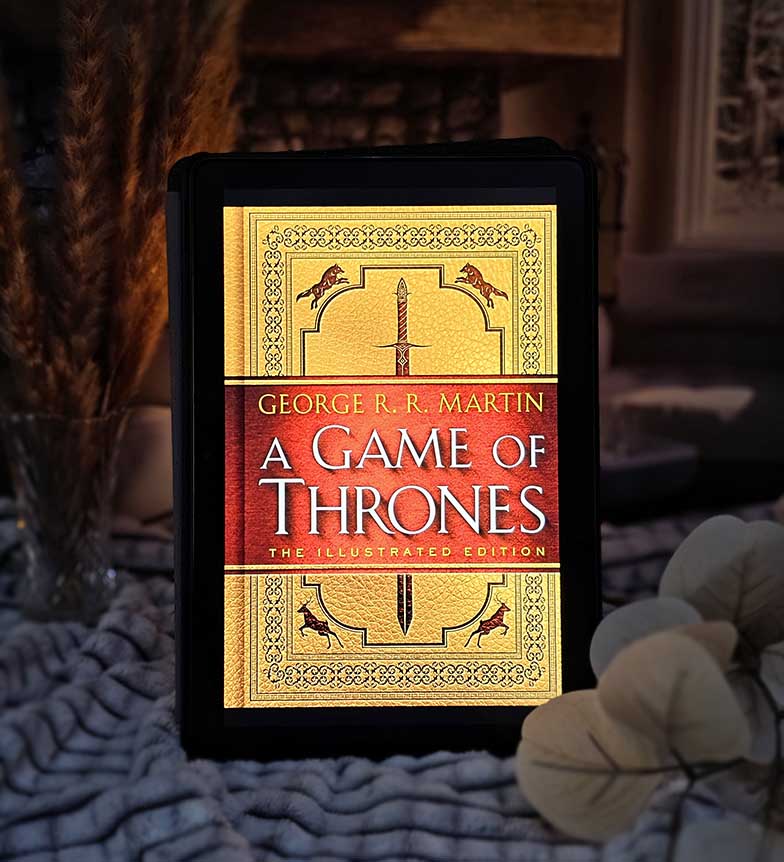
A Game of Thrones
by George R.R. Martin
The first book in the epic A Song of Ice and Fire series, introducing the Seven Kingdoms of Westeros through the eyes of the Stark family as they navigate political intrigue, ancient threats, and the deadly game of thrones where you win or you die.
Spoiler Warning
This review may contain spoilers. Read at your own discretion if you haven't finished the book yet.
The Book That Broke Fantasy's Rules
Before A Game of Thrones, fantasy had rules. The honorable lord survives. The beautiful queen is good or evil, never both. The child with a mysterious destiny fulfills it. The hero wins. George R.R. Martin took those rules, let you believe in them for about 600 pages, and then broke your heart. Reading this in 2020, after the HBO show has made every major plot point common cultural knowledge, creates a strange double vision - you know what's coming, you see the actors' faces superimposed on Martin's descriptions, and yet the book still manages to be a richer, more devastating, and more morally complex experience than the adaptation could fully capture. The show gave you the events. The book gives you the interior lives behind them, and those interior lives are what make the events matter.
The setup is deceptively traditional. The Stark family - Ned, his wife Catelyn, and their children Robb, Sansa, Arya, Bran, and Rickon, plus Ned's bastard son Jon Snow - live in Winterfell, the northernmost great castle in the Seven Kingdoms of Westeros. When King Robert Baratheon, Ned's old friend and war companion, arrives to ask Ned to serve as Hand of the King - essentially the realm's prime minister - the Starks are pulled from their cold, honest, relatively simple northern life into the political snake pit of King's Landing, where the Lannisters - Queen Cersei, her twin brother Jaime, and their brother Tyrion - have been consolidating power behind Robert's back. Meanwhile, across the Narrow Sea, Daenerys Targaryen, the exiled teenage daughter of the mad king Robert overthrew, is sold into marriage with the Dothraki warlord Khal Drogo and begins her own transformation from frightened girl to something far more dangerous.
The Trap Martin Sets
Martin's greatest trick in this first book is letting you believe you're reading a familiar story. Ned Stark feels like the protagonist. He's honorable to a fault, he loves his family, he's clearly the moral center of a world that desperately needs one. When he goes south to King's Landing and begins investigating the death of his predecessor as Hand - Jon Arryn, who may have been murdered for discovering a secret about the queen's children - the narrative feels like it's building toward the moment when the good man exposes the conspiracy and restores justice. That's what fantasy protagonists do.
Except this isn't that kind of book, and Ned isn't that kind of protagonist. His honor - the very quality that makes him admirable - is exactly what makes him vulnerable. He warns Cersei that he knows her secret before reporting it to Robert, because honor demands he give her a chance to flee. Cersei doesn't flee. She acts. Ned's assumption that other people will play by the rules of decency he follows gets him outmaneuvered at every turn by Cersei, by Littlefinger (Petyr Baelish, the sycophantic master of coin who claims to have loved Catelyn all his life), and by the power structures of a court that runs on manipulation rather than merit. The execution scene - and yes, Martin actually goes through with it - lands with the force of a structural demolition. The narrative safety net you assumed was there simply isn't. The character you were most invested in is gone, and the world keeps turning.
What separates this from cheap shock is that Ned's death isn't random or nihilistic. It's the logical consequence of who he is operating in a world that punishes his virtues. Martin respects Ned enough to let his choices matter - and to let them lead exactly where choices like that would lead in a world without narrative immunity. It's devastating precisely because you understand why it happened and can't argue that it shouldn't have.
Eight Windows into the Same World
The book cycles through eight POV characters - Ned, Catelyn, Jon, Daenerys, Tyrion, Bran, Arya, and Sansa - and the rotating perspective is the engine that makes the moral complexity work. Through Ned's eyes, King's Landing is a pit of corruption. Through Cersei's actions (seen from other perspectives, since she doesn't get her own chapters until later books), you understand a woman who is ruthless because the world has given her no other way to protect her children. Through Tyrion's chapters - acidic, funny, wounded - you see the Lannister family from inside and realize that being born into power and being born a dwarf in a world that despises physical imperfection has made him both the most cynical and the most empathetic person in the room.
Daenerys's storyline operates almost as a separate novel, set across the Narrow Sea in the Dothraki grasslands, and it's where Martin's ambitions for the series are most visible. She begins as a terrified thirteen-year-old (aged up in the show, for obvious reasons) sold by her abusive brother Viserys to Khal Drogo in exchange for an army. Her transformation across the book - from powerless girl to someone who walks into a funeral pyre and emerges with three dragons - is the most mythic arc in a book that generally resists mythic arcs, and Martin handles it by grounding every step of the transformation in specific, earned moments. Daenerys doesn't become powerful because destiny says so. She becomes powerful because she learns, adapts, and makes choices that change her relationship to the people around her.
The children's perspectives - Bran, who is pushed from a tower by Jaime Lanning after witnessing Jaime and Cersei together, and wakes up paralyzed with strange new abilities; Arya, fierce and resentful of the feminine role expected of her; Sansa, dreaming of princes and courts and learning too late that her fairy-tale expectations are a liability - give the book emotional anchors that the adult political scheming might otherwise lack. Martin writes children with rare honesty: they're neither miniature adults nor narrative props. They're kids processing events they don't fully understand, reaching conclusions that are sometimes wrong and sometimes more perceptive than any adult around them.
The 700-Page Investment
Here's where I have to be honest about what keeps this at four stars rather than five. A Game of Thrones is 694 pages, and Martin is in no hurry. The first half of the book is almost entirely setup - establishing families, tracing alliances, sketching the geography and politics of the Seven Kingdoms. If you're already invested in this world (from the show, from cultural osmosis, from a previous read), the setup is a pleasure, because Martin fills it with the kind of granular detail that makes Westeros feel lived-in: the food at feasts, the construction of castles, the specific hierarchy of noble houses and their histories. If you're coming in cold, the first 300 pages require patience. Martin is placing pieces on a board, and many of the moves won't pay off until this book's final act - or until books two, three, or five.
The pacing unevenness is real. The explosive events - Bran's fall, Ned's arrest, the execution, Daenerys's dragons - are concentrated in the book's final third, and the journey to reach them includes stretches of political maneuvering and world-building that, while intellectually rewarding, can feel slow by contemporary thriller standards. Martin is writing in the tradition of Tolkien and Tad Williams - epic fantasy that earns its payoffs through accumulation rather than constant acceleration - and that tradition requires a reader willing to trust the author through the quiet stretches.
The other elephant in the room: the series remains unfinished. A Song of Ice and Fire was planned as a trilogy, then expanded to seven books, and as of now only five have been published, with the sixth - The Winds of Winter - still unreleased decades later. A Game of Thrones works reasonably well as a standalone - the major arcs reach dramatic endpoints, and the final chapter (Daenerys emerging from the fire with three newly hatched dragons) provides a powerful closing image. But the book is designed to launch a journey, and beginning that journey means accepting the possibility that the destination may never arrive. For some readers, that uncertainty is part of the experience. For others, it's a dealbreaker.
Martin's treatment of violence and sexuality has been debated since the book's publication, and reading it in 2020 makes the discomfort sharper. The world is brutal - sexual violence occurs, women are traded as political currency, and the brutality isn't always presented with enough critical distance for the reader to feel certain that Martin is critiquing the patriarchy rather than simply depicting it. Daenerys's early chapters, describing her wedding night and the beginning of her marriage to Drogo, are particularly uncomfortable given her age in the text. Martin is clearly reaching for a portrait of a medieval-adjacent society with all its ugliness intact, and for the most part the ugliness serves the story's moral seriousness. But there are moments where the line between unflinching realism and gratuitous detail blurs, and individual readers will draw that line in different places.
These reservations exist alongside genuine admiration. A Game of Thrones changed the landscape of fantasy fiction because it took the genre seriously - as a vehicle for political storytelling, moral complexity, and psychological realism rather than escapist heroism. Martin proved that fantasy readers could handle ambiguity, could invest in characters who make terrible choices, could follow a story that refuses to guarantee anyone's survival. The book isn't perfect, but the conversation it started - about what fantasy can be and what it owes its readers - is one of the most important in the genre's history.
Rating: 4.0/5 ⭐
Perfect for: Readers who want complex, morally ambiguous fantasy with political depth, anyone who watched the show and wants the fuller experience of Martin's world, those willing to commit to a long and potentially unfinished series.
Skip if: You need faster pacing, prefer traditional fantasy heroism with clear moral lines, or find graphic violence and sexual content deal-breakers.
You Might Also Like
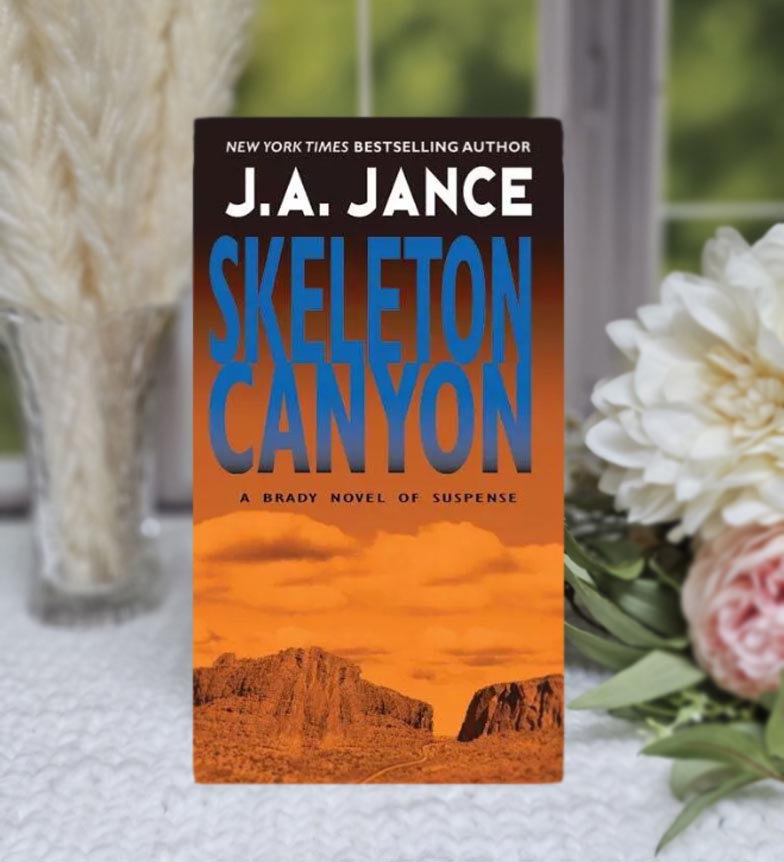
Skeleton Canyon
by J.A. Jance
When high school valedictorian Brianna O'Brien is found murdered in remote Skeleton Canyon, her wealthy parents blame her forbidden Hispanic boyfriend - but Sheriff Joanna Brady suspects the family racism masks darker secrets involving smugglers using their land.

Dead to Rights
by J.A. Jance
When the town veterinarian who killed a woman while driving drunk is found murdered by pitchfork in his burning barn, Sheriff Joanna Brady must prove that the obvious suspect - the victim grieving widower - is innocent while juggling multiple crises including a hostage situation involving her own daughter.
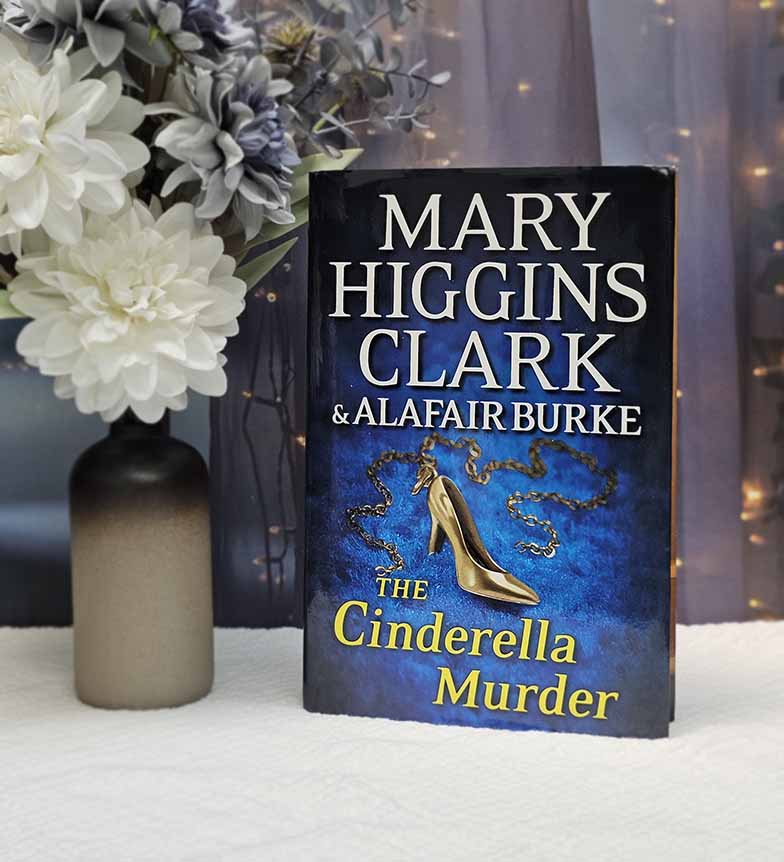
The Cinderella Murder
by Mary Higgins Clark & Alafair Burke
The second Under Suspicion novel and the first Mary Higgins Clark / Alafair Burke collaboration: Laurie Moran, producer of a cold-case television show, reopens the twenty-year-old murder of UCLA student Susan Dempsey - found strangled in Laurel Canyon Park missing a single shoe, the 'Cinderella Murder' of the tabloids - by reuniting the suspects on camera, from Susan's grieving mother and womanizing boyfriend to the now-famous director she was auditioning for, her former roommates, a tech billionaire who was her classmate, and the computer-science professor who taught them both.