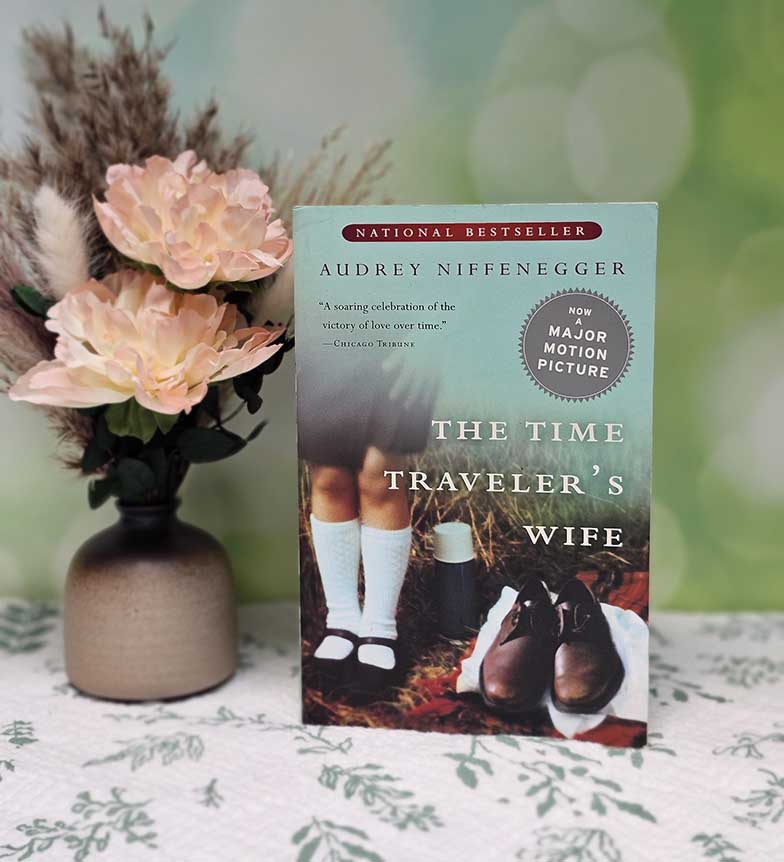
The Time Traveler's Wife
by Audrey Niffenegger
Audrey Niffenegger's 2003 debut: a love story between Henry DeTamble - a Chicago librarian with a genetic disorder she calls Chrono-Displacement that pulls him involuntarily through his own timeline and other people's, naked and out of clothes he cannot take with him - and Clare Abshire, the artist he meets in person at twenty-eight at the Newberry Library, who has known him since she was six because he has been visiting her in the meadow behind her family's South Haven house from a future version of himself for fourteen years already by the time she finally meets him in his own present.
Spoiler Warning
This review may contain spoilers. Read at your own discretion if you haven't finished the book yet.
A Chicago Librarian Who Cannot Stay in His Own Timeline, the Artist Who Has Been Waiting for Him Since She Was Six, and the Marriage Built on Knowing the End Before the Beginning
The premise of Audrey Niffenegger's 2003 debut is the kind of premise that sounds like it should not work in a literary novel and that the novel itself has to spend five hundred pages convincing the reader does. Henry DeTamble, a librarian at the Newberry Library in Chicago, has a genetic condition the book calls Chrono-Displacement Disorder. He time travels involuntarily. He cannot control when it happens, where in his life or anyone else's he is going to land, or how long he will be gone. He arrives naked. He arrives, often, hurt - cold, scraped, bleeding from however he came down. He cannot take anything with him through the jumps, which means clothing, food, weapons, and any version of warmth or safety has to be stolen or improvised the moment he gets there. The novel is the story of what it is to love a man who lives this way, and the woman who loves him is the one the title belongs to.
Clare Abshire meets Henry when she is six years old. He is twenty-eight, naked behind a bush, asking her for a blanket. He is from a future in which he has already been her husband for years. Over the next twelve years he will visit her in the meadow behind her family's house in South Haven, Michigan more than a hundred times, from various points in his future. He gives her a list of dates so that she can leave clothes for him. Somewhere across those years of visits, he lets the future of their marriage slip into the conversation. When Clare is twenty, she walks into the Newberry Library in October 1991 - to research paper-making techniques, and to find the man she has been waiting most of her life to meet on her side of his timeline. Henry is twenty-eight and working there. It is the first time, in his timeline, that he has ever seen her. The whole long backstory of their relationship - everything that, for her, has been the central fact of her growing up - is a story she has to tell him from scratch, because for Henry it has not happened yet.
A 4.0 reflects: a debut that takes a high-concept premise and uses it as the structure for a long, patient marriage novel; a non-linear structure that earns the demands it makes on the reader; a final third that is one of the more affecting renderings of grief in the speculative-fiction shelf of the early 2000s; and a set of real reservations about the determinism, the age gap between adult Henry and child Clare, and the length, which keep the book from being the unqualified great novel its premise sometimes lets it threaten to be.
The Structure: A Marriage in Non-Chronological Order
The mechanical achievement of the novel is the structure. Each chapter is dated and headed with the ages Henry and Clare are at the moment the chapter occurs, and those ages do not move forward in a straight line. A chapter set in 1996 (Henry 33, Clare 25) is followed by one in 1972 (Henry 9, Clare 1), is followed by one in 2005 (Henry 41, Clare 33). The reader is asked to hold the whole shape of their lives at once and to understand that Henry, on any given page, knows things Clare does not, and Clare, on any given page, has lived through things Henry has not yet experienced. The book alternates first-person between the two of them. Niffenegger trusts the reader to keep up, and the reader who keeps up is rewarded with the slow recognition that what looks like fragmentation is actually the only honest way to tell a story like this. Time, in their marriage, is not a line. It is a shape, and they have been inside it for as long as they have known each other, which for one of them is most of her life and for the other is sometimes longer than a single afternoon.
What the structure lets Niffenegger do, which a chronological telling could not, is build dread and tenderness in the same paragraph. A scene in which adult Henry and a young Clare have a quiet, charming exchange in the meadow is, for the reader who has already read forward, also a scene haunted by what Henry from later in his life is going to tell her. The book's emotional weather is constantly cross-pollinated by its own future and past. By the back third, when the dates start crowding toward the deaths the reader has been seeing coming since chapter three, the form is doing a lot of the heaviest lifting.
Henry, Clare, and the Shape of a Life Lived in Two Directions
Henry's interior is the book's harder achievement. Niffenegger is writing a man whose condition has organized his entire personality - a man who has watched his own mother, the opera singer Annette DeTamble, die in a car accident when he was six and has time-traveled back to that accident more times than he can count, watching it from outside himself; a man whose father has been emotionally absent ever since because of the same loss; a man who has spent most of his adolescence learning how to steal clothes, pick locks, and survive a stranger's neighborhood naked in winter. He drinks too much. He runs to stay sane. He is acidic and bookish and not always a kind man, and the book is careful not to soften him into a romantic-lead version of a husband. The version of Henry who meets Clare at the Newberry Library is a Henry who has already, in a future the reader will eventually see, learned how to be married to her; the version of Henry Clare grows up with is a Henry already shaped by a life she will share. The book is interested in this circularity rather than embarrassed by it.
Clare is the steadier interior. She is an artist - she makes large-scale paper sculptures, working in a studio attached to their Chicago house - and her patience with Henry's absences is rendered as a chosen accommodation rather than a flaw. The book is honest that her life waiting for him is also a life of her own: her work, her friends Gomez (a lawyer and old Henry rival) and Charisse (her best friend, a sculptor), her family in South Haven, the eventual struggle to have a child. Five miscarriages. The genetic condition Henry carries passes to the babies, who time-travel out of the womb. After the fifth loss Henry has a vasectomy without telling Clare, to spare her, which is one of the worst things he does in the book. Their daughter Alba is conceived anyway, by a Henry from earlier in his life who visits Clare without knowing what is coming. Alba inherits the chrono-displacement, but unlike her father she has a measure of control over where she lands.
The Death the Book Knows About from Chapter One
The structural device the novel is using also means that Henry's death is something the reader, and Henry, and Clare know is coming long before it arrives on the page. Henry has time-traveled forward and met his own ten-year-old daughter; Alba has told him, gently, that he died when she was five. Various forward-traveling Henrys come back with injuries that point toward whatever the final event is going to be. When it comes, it is on a deer-hunting trip in Michigan in 1984 that Henry stumbles into out of his own present - his feet, already amputated after a separate frostbite injury from a winter jump, leave him unable to run - and he is shot by Clare's brother in a hunting accident that nobody outside the marriage will ever entirely understand. He returns to his present long enough to die in Clare's arms on New Year's Eve 2006. The final scene of the novel jumps forward to 2053, when an eighty-two-year-old Clare, who has been waiting in their house for most of her adult life, sees Henry one more time - he has time-traveled to her from a moment before he died - and the book closes on the image of the waiting that has been the structuring fact of her life.
Why a 4
The strengths: the structure, which is a real formal achievement and not just a gimmick; Niffenegger's prose, which is plain in a way that lets the premise do the work; the long marriage as the actual subject, with the time travel as the metaphor it is using to talk about the things long marriages are always about - absence, return, the unreciprocated knowledge each spouse has of the other's worst moments, the grief of outliving someone whose death has been visible to you for years; the Chicago and the Newberry Library and the South Haven meadow all rendered with the specificity of a writer who has lived in those places; Alba as a character the book earns rather than uses; and the ending, which lands the way the book has been promising it would since page one.
The reservations: the age gap between adult Henry and the child Clare he visits in the meadow is something the book asks the reader to take in stride, and a significant slice of the contemporary conversation around the book has not been able to. Henry is twenty-eight to thirty-six when he visits Clare between her ages of six and eighteen. The book frames this as the inevitable shape of a marriage they will both choose as adults, and the visits are not sexual until Clare is eighteen, but the grooming question is one the novel does not address directly and that a contemporary reread has to sit with. The determinism is the other major reservation - the book is, structurally, a story in which neither Henry nor Clare can change anything that is going to happen, and the reader who needs free will inside their love stories will find the foreordained quality airless. The length, at five hundred and forty-six pages, is real, and the middle third has stretches where Henry's adolescent time-traveling shenanigans take up more room than the marriage needs.
A 4.0 means: a debut that is doing more than its premise required, a love story that earns the high emotional stakes of its last hundred pages, and a novel that has aged into being more complicated to recommend without caveats than it was in 2003. The book holds up. The questions it raises about the relationship at its center have gotten louder, and a reader picking it up now should know that going in.
Rating: 4.0/5 ⭐
Perfect for: Literary-fiction readers who can sit with a non-linear structure, anyone who likes a love story that takes marriage seriously as a subject, readers willing to commit to a long book for an ending that earns its weight, fans of Chicago-set novels, anyone who came to the 2009 film or 2022 HBO series and wants the original.
Skip if: The adult-Henry-visiting-child-Clare framing is a hard line for you, you need free will inside your love stories, you do not have the patience for a five-hundred-page non-linear novel, or pregnancy loss and the death of a spouse are subjects you are not in a place to read on the page.
You Might Also Like
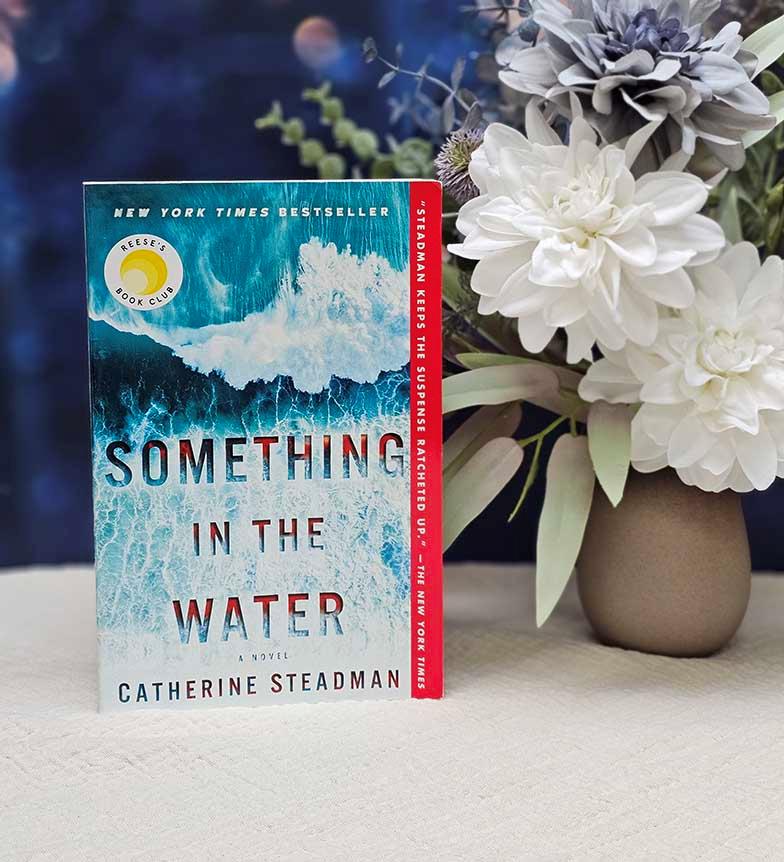
Something in the Water
by Catherine Steadman
Catherine Steadman's 2018 debut psychological thriller opens with London documentary filmmaker Erin Roberts digging a grave alone in the woods, then flashes back to the Bora Bora honeymoon - already trimmed from three weeks to two after her banker husband Mark lost his job - where a sealed duffle bag the couple pulls from the water turns out to contain a great deal more than they were prepared to be in possession of.
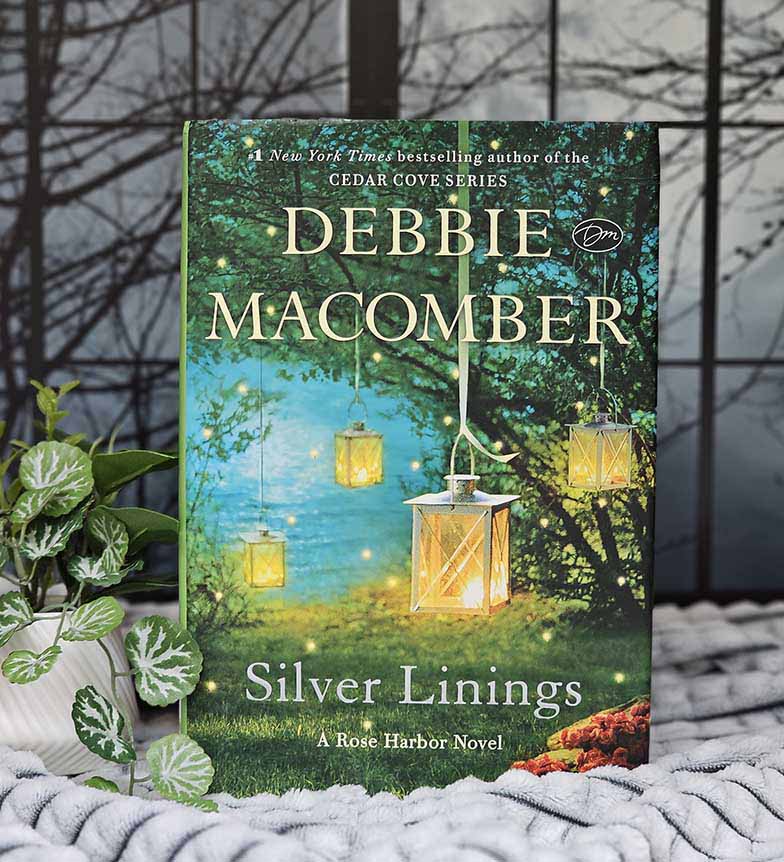
Silver Linings
by Debbie Macomber
When two wounded souls cross paths in a small Washington town, they discover that sometimes the hardest battles are fought in the heart. A heartwarming story about finding hope and love after loss.

Your Perfect Year
by Charlotte Lucas
When a mysterious diary falls into his hands on New Year's Day, a rigid businessman embarks on a life-changing journey of tasks and self-discovery that connects him with a free-spirited woman and changes both their lives forever.