
When I Was You
by Minka Kent
A psychological thriller about a woman whose perfect life is systematically stolen by someone claiming to be her, forcing her to question everything she thought she knew about her identity.
Spoiler Warning
This review may contain spoilers. Read at your own discretion if you haven't finished the book yet.
What If Someone Stole Your Entire Life?
We've all worried about identity theft - someone skimming a credit card number, maybe opening a fraudulent account in your name. Annoying, invasive, but ultimately fixable with enough phone calls and paperwork. Now imagine something worse. Imagine discovering that a woman in your town is using your name, your Social Security number, your personal history - and that she's not just borrowing your identity on paper. She's claiming your memories. She knows things about your past that you've never shared publicly. She's inserted herself into relationships with people you know. And when you try to confront the situation, you start finding gaps in your own memory that make you wonder whether you're the real you at all. That's the premise of Minka Kent's When I Was You, a psychological thriller that takes the familiar concept of identity theft and pushes it into genuinely unsettling territory.
Brienne Dougray lives alone in a Queen Anne Victorian she inherited from her grandparents - a beautiful house that represents both her family's wealth and her increasing isolation. She's careful, controlled, the kind of woman who keeps everything in its place. She rents a room in the house to a boarder, Dr. Niall Emberlin, who is polite, attentive, and seemingly harmless. So when Brienne discovers that another woman has been living under her name - using her identity at a PR agency, friending her family on social media, driving the same kind of car, copying her style - it isn't just a violation of her privacy. It's a crack in the foundation of the ordered world she's constructed. This woman doesn't just have Brienne's name. She seems to know details about Brienne's life that shouldn't be available to a stranger. The question isn't just who is she. It's who sent her - and why.
The Boarder, the Impostor, and the Slow Unravel
Kent structures the book as a slow unraveling, and the unsettling part is that both the mystery and the protagonist come apart simultaneously. As Brienne investigates the woman using her identity, she's forced to revisit parts of her own past that she's kept carefully sealed off - her family history, the reasons her grandparents cut certain people off, the inheritance that left her with a valuable house and a complicated legacy. Her relationship with her mother, which ended badly and left questions she's never been willing to ask. Her own memory, which she's always trusted completely but which starts revealing inconsistencies the deeper she digs.
Meanwhile, Niall - her boarder, the seemingly benign doctor renting a room in her inherited Victorian - is behaving in ways that should concern her more than they initially do. He's attentive. He's helpful. He's always there when she needs someone to talk to about the identity theft situation. Kent plants seeds of doubt throughout their interactions: moments where Niall knows a little too much about Brienne's schedule, scenes where his concern for her well-being has an edge of control to it, the way he consistently frames Brienne's escalating anxiety as something he can help her manage. Whether Niall is a genuine ally or something far more dangerous is the book's most effective slow-burn question - and the answer, when it comes, reframes the entire dynamic between them.
The impostor herself turns out to be a woman named Samantha - Sam - who has been set up with Brienne's name and identity at a local PR agency. Kent keeps Brienne as an active investigator rather than a passive victim. Brienne leaves the safety of her house to track the impostor down, confronts her at the agency, and uses every tool available - including an apartment key that arrives mysteriously - to piece together the connection between this stranger and her own life. The investigation keeps the pacing taut and gives the reader someone to root for, even as the picture that emerges is more complicated and more personal than simple identity theft.
Family Money, Family Secrets
The reveal, when it comes, ties the identity theft directly to Brienne's family history and her inheritance. Niall isn't just a boarder. He's a distant relative - connected to Brienne through her mother, who was Niall's stepmother - and he believes he was cheated out of the family fortune that Brienne inherited from her grandparents. The impostor, Sam, is Niall's girlfriend, deployed as part of a scheme to destabilize Brienne, undermine her sense of reality, and ultimately take what Niall considers rightfully his. The identity theft wasn't random. It was targeted, personal, and orchestrated by someone living under her own roof.
Kent's handling of this reveal is the book's strongest moment. The pieces click into place - Niall's strategic attentiveness, his careful positioning as Brienne's confidant, the way he encouraged her anxiety while pretending to soothe it - and the rereading value is genuine. Scenes that seemed benign on first encounter take on a menacing new coloring when you understand what Niall was actually doing in them. At one point he even claims to others that Brienne is his wife "Kate Emberlin," a gaslighting move that shows how far his scheme extends.
That said, the execution has real limitations. The plot requires Brienne to miss warning signs that a more suspicious person would catch earlier, and some of the coincidences that move the investigation forward feel engineered for the narrative rather than organic. The supporting cast is thin - Brienne's isolation is part of the story's design, but it also means few characters develop enough dimension to provide a genuine outside perspective on what's happening. And the family inheritance motive, while it connects the personal and the financial in interesting ways, doesn't fully explain the elaborate scope of Niall's scheme. The complexity of what he's doing - installing a girlfriend under a fake identity at a real company - seems disproportionate to what he could more easily achieve through legal channels, and the book doesn't quite close that logic gap.
Kent's real strength is in the atmosphere she builds - that pervasive sense that the ground beneath Brienne's feet is shifting, that the person she trusts most in her daily life might be the source of her destabilization. The book taps into a fear that goes deeper than identity theft: the fear that the people closest to you might not be who they seem, and that the safety of your own home can be an illusion. It's a disquieting read in the best way, the kind of thriller that makes you look sideways at anyone who seems a little too helpful.
Rating: 4.0/5 ⭐
Perfect for: Fans of psychological thrillers and domestic suspense, readers who enjoy identity-based mysteries with unreliable narrators, anyone who's ever felt a chill about how much personal information exists about them out there.
Skip if: You need airtight plotting without any plausibility stretches, or psychological manipulation as a central theme is difficult for you.
You Might Also Like

Your Heart Belongs to Me
by Dean Koontz
Dean Koontz's 2008 standalone thriller: Ryan Perry, a thirty-four-year-old internet tycoon, is diagnosed with incurable cardiomyopathy, receives a heart transplant that saves his life - and a year later begins to be stalked by a mysterious woman whose gifts and messages all carry the same chilling refrain: your heart belongs to me.
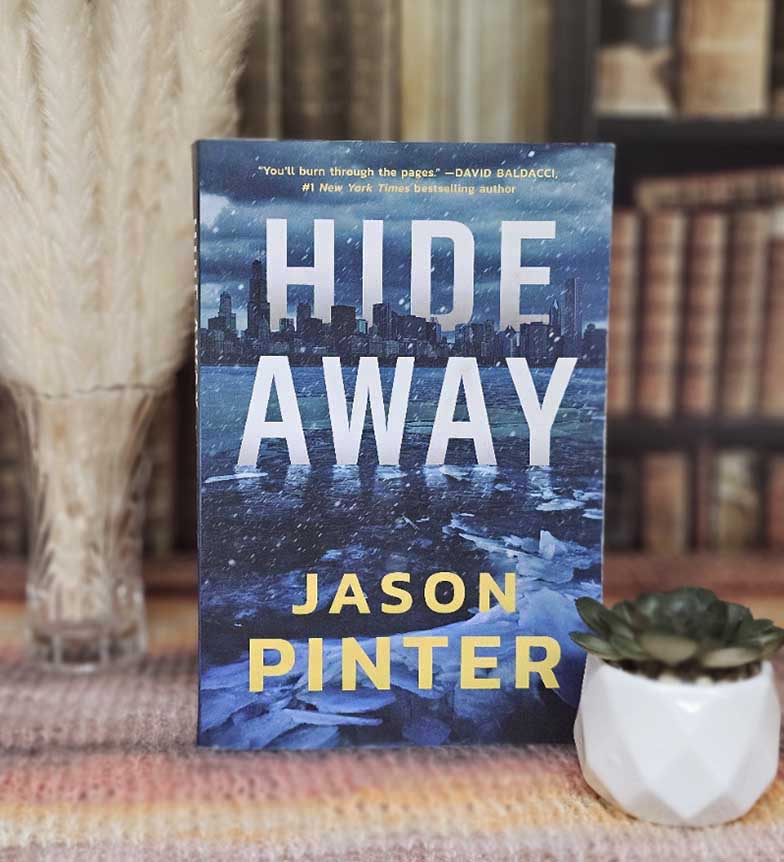
Hide Away
by Jason Pinter
A gripping thriller about a woman who changed her identity to protect her children after her husband's murder. When her carefully constructed new life begins to unravel, Rachel Marin must confront the past she's been hiding from.

Rapid Falls
by Amber Cowie
A psychological thriller about a woman who returns to her hometown to face dark secrets from her past that threaten to destroy everything she's built.