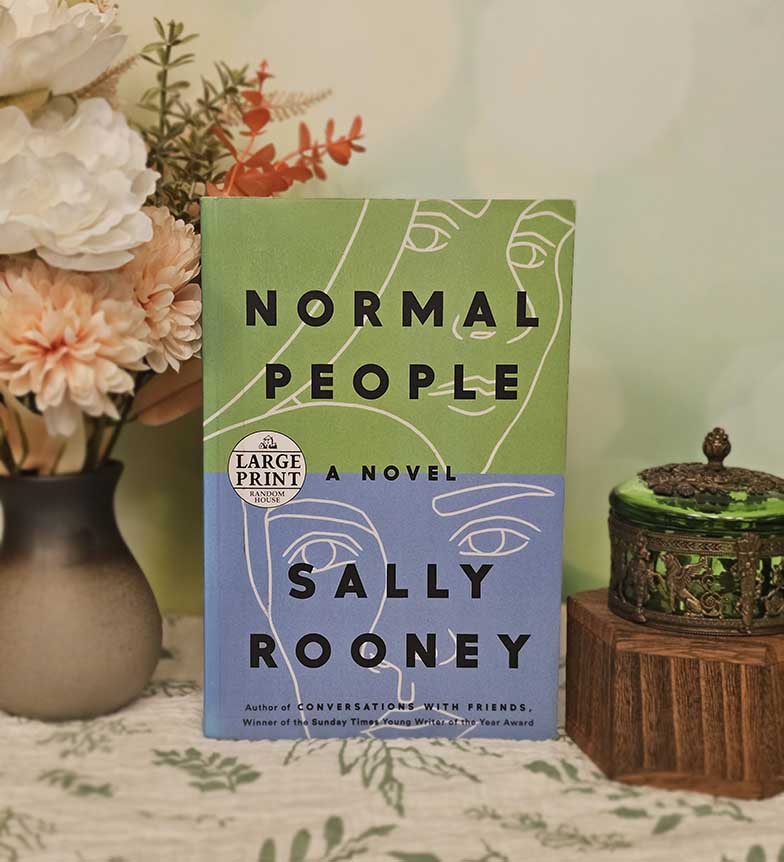
Normal People
by Sally Rooney
Connell and Marianne weave in and out of each other's lives from small-town Ireland to Trinity College Dublin in this intense exploration of love and class.
Spoiler Warning
This review may contain spoilers. Read at your own discretion if you haven't finished the book yet.
The People Who Can't Say What They Mean
Here's the basic economic fact that shapes everything between Connell Waldron and Marianne Sheridan: Connell's mother Lorraine cleans Marianne's family's house. In Carricklea, County Sligo, Connell is popular - athletic, handsome, liked by everyone. Marianne is a wealthy outcast, brilliant but socially isolated. They begin a relationship and keep it secret because admitting it would complicate Connell's social standing. He takes another girl named Rachel to the Debs instead of Marianne, humiliating her. Then they both go to Trinity College Dublin and everything inverts.
At Trinity, Marianne thrives. The intellectual environment suits her; her awkwardness becomes confidence; she becomes socially central. Connell struggles to find his place among students whose backgrounds differ from his. Both receive prestigious scholarships covering full tuition, room, and board - which doesn't change Marianne's daily life but profoundly impacts Connell, who for the first time doesn't have to worry about money. What mattered in Carricklea doesn't matter in Dublin. The power dynamics that seemed fixed prove fluid. Over four years, they move together and apart with the regularity of tides, drawn together by genuine connection, pushed apart by failures of communication, reunited by the recognition that no one else understands them as completely.
The Central Frustration
Sally Rooney's prose is clean to the point of severity. No quotation marks for dialogue. Minimal description. White space on the page. This sparseness concentrates attention on psychological nuance - we're deep inside both characters' heads, alternating perspectives chapter to chapter. We know why Connell fails to ask Marianne if he can stay with her when he loses his accommodation. We know why Marianne fails to tell him she'd say yes. The tragedy is that they love each other but can't say so clearly, can't ask for what they need, can't break through barriers that seem insurmountable but are actually fragile. Every reader has experienced this kind of failure, which is why watching it play out is both maddening and heartbreaking.
Marianne has money but lacks warmth at home. Her family relationships are damaged in ways gradually revealed - an abusive brother, a cold mother who employs Lorraine. She's intellectually confident but sexually and emotionally uncertain, looking for validation in places that hurt her. Connell is sensitive, intelligent, and paralyzed by his inability to express what he feels. He can discuss literature with sophistication, but when emotional honesty is required, he fails to speak. Their connection seems nearly inexplicable - they're very different people with different social positions - but it's undeniable. They see past each other's performances to something essential. They're both medicine and poison to each other.
Phenomena and Aftermath
The 2020 BBC/Hulu adaptation became a cultural phenomenon, bringing the novel's intimate portrayal of young love to a wider audience during lockdown. Paul Mescal and Daisy Edgar-Jones became stars. BBC iPlayer saw sixteen million viewers in the first week - double the previous record. The series maintained the novel's attention to interiority through careful cinematography and performance, and Mescal was nominated for an Emmy and won the BAFTA for Best Actor. For many people, the show was their introduction to Rooney's work.
The book ends ambiguously. Connell is accepted into a highly competitive MFA writing program in New York. Rather than asking him to stay, Marianne pushes him to go and pursue his ambitions. We don't know if Connell decides to leave or stay in Ireland. Rooney has said she has no plans for a follow-up. This refusal to resolve feels right for a novel that's been about the ongoing negotiation of love rather than its destination.
Worth the Frustration?
The characters can be maddening. Their inability to communicate made me want to shake them multiple times. The tight focus means the wider world barely intrudes - if you want more than two people's interiority, look elsewhere. But Rooney captures something true about how relationships actually work, how class shapes psychology without determining it, how difficult it is to say what you mean to the person you love most. The emotional impact is significant despite the minimalist style. If you've ever failed to ask for what you needed, failed to say what you felt, watched something beautiful collapse because neither person could find the words - this book will see you.
Rating: 3.0/5 ⭐
Perfect for: Readers who appreciate psychological precision, those interested in class and relationship dynamics, fans of intimate literary fiction.
Skip if: You find uncommunicative characters frustrating beyond tolerance, need plot beyond relationship development, or prefer maximalist prose.
You Might Also Like

Say You'll Remember Me
by Abby Jimenez
A heartfelt romance about love, loss, and the memories that shape who we are and who we choose to become.

What If It's Us
by Becky Albertalli
When Arthur and Ben meet in a New York post office, they wonder if the universe is sending them a sign - but first they have to find each other again.
Such a Fun Age
by Kiley Reid
A sharp social commentary wrapped in a page-turning story about a young Black woman caught between her white employer and her white boyfriend, both with their own ideas about what she should be.