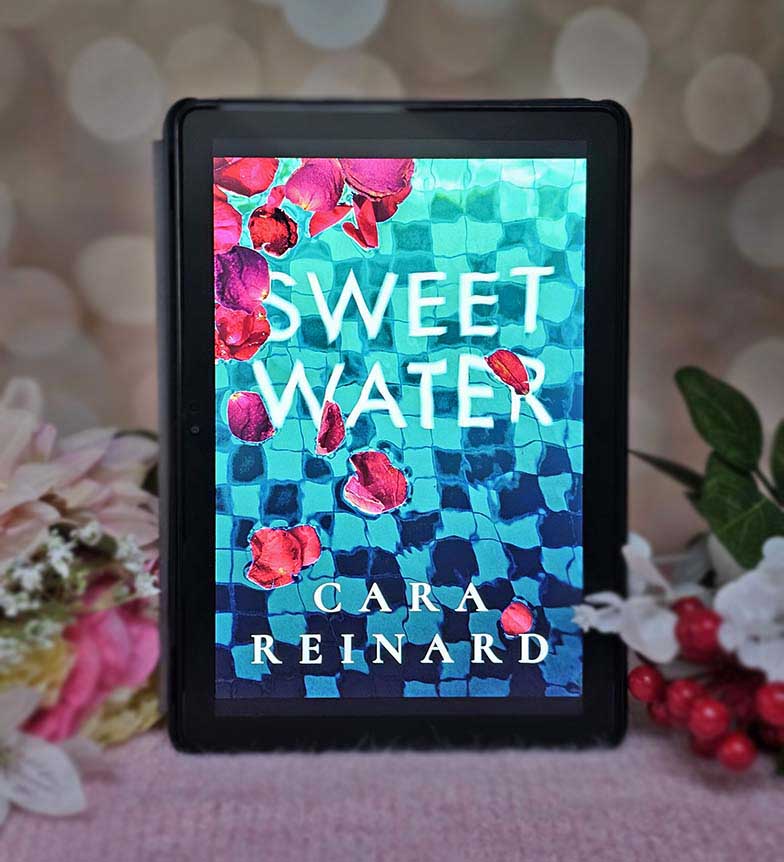
Sweet Water
by Cara Reinard
Cara Reinard's gripping psychological thriller about Sarah Ellsworth, whose privileged life in an elite Pennsylvania town unravels when her son is involved in a tragic accident. Family secrets, wealth, and the lengths a mother will go to protect her child collide in this tense domestic suspense.
Buy this book:
Spoiler Warning
This review may contain spoilers. Read at your own discretion if you haven't finished the book yet.
My Thoughts
Sweet Water is a taut psychological thriller that examines privilege, family loyalty, and moral compromise with considerable skill. Cara Reinard has crafted a suspenseful domestic drama that keeps pages turning while raising uncomfortable questions about how far we'd go to protect those we love—and what happens when wealth provides options most people don't have.
Sarah Ellsworth lives in Sweet Water, an exclusive Pennsylvania enclave where old money and careful appearances matter above all else. She's married into the powerful Ellsworth family, which controls the local steel mill and essentially the town itself. When her teenage son Finn is involved in a tragic accident that kills another teen, Sarah faces an impossible choice: let Finn face consequences that could destroy his future, or use her family's considerable resources and influence to make the problem disappear.
The premise immediately puts readers in morally complicated territory. Reinard doesn't make this simple—Finn isn't a sociopath who deserves protection, and the accident has genuine ambiguity about responsibility. But Sarah's choices to cover up evidence, manipulate witnesses, and use family power to avoid investigation cross clear ethical lines. We understand her motivation while recognizing she's doing wrong.
Sarah as protagonist is well-drawn—a woman who married into wealth but never quite feels she belongs, conscious of her less-privileged background, desperate to protect her children, and gradually realizing the family she married into has darkness she didn't fully understand. Her internal conflict feels authentic as she makes increasingly compromising choices.
The Ellsworth family dynamics are fascinating and sinister. Martin, Sarah's husband, is weak and controlled by his domineering mother. The matriarch, Angelica, rules through manipulation and money, viewing people as assets to be managed. The family's history of using power to avoid consequences for their actions becomes clear as Sarah gets deeper into the cover-up.
The setting of Sweet Water—an insular wealthy community where everyone knows everyone and appearances matter desperately—is vividly rendered. Reinard captures the claustrophobia of a place where reputation is everything and the wealthy operate by different rules. The small-town Pennsylvania atmosphere is specific and convincing.
The thriller mechanics work well. As Sarah tries to manage the cover-up, complications arise—witnesses who won't be silenced, investigators who ask uncomfortable questions, and her own conscience. The tension builds steadily as we watch Sarah make choices that trap her deeper into deception and complicity.
However, the pacing occasionally sags in the middle. Some scenes of Sarah's domestic life and social obligations feel like they're marking time rather than advancing plot or deepening character. The balance between psychological exploration and thriller momentum doesn't always hold.
The secondary characters are somewhat thinly drawn. The victim's family, various townspeople, and even Sarah's other children exist primarily in relation to the central crisis rather than feeling fully dimensional. More development of the victim and their family would have added moral weight.
The twist, when it comes, is well-executed—surprising yet inevitable in retrospect. Reinard plays fair, planting clues throughout that become clear once you know what to look for. The revelation recontextualizes earlier scenes effectively.
The ending raises questions about justice and whether Sarah gets appropriate consequences for her actions. Reinard doesn't provide easy moral resolution, which is thematically appropriate but may frustrate readers wanting clearer punishment or redemption.
The prose is clear and functional—focused on story and character rather than stylistic flourishes. Reinard writes natural dialogue and creates effective atmosphere without overwriting. The style serves the thriller genre well.
The themes about privilege and justice are timely and well-explored. The book examines how wealth creates different rules, how privilege corrupts judgment, and how protecting family can become rationalization for terrible choices. These questions feel urgent and relevant.
Why You'll Love It
- Moral Complexity: No easy answers about right and wrong
- Gripping Premise: Mother protecting son after tragedy
- Privilege Examination: Wealth and consequences explored
- Family Secrets: Dark history gradually revealed
- Tense Atmosphere: Claustrophobic small-town setting
- Good Twist: Surprising yet fair revelation
- Fast Read: Compelling thriller pacing
- Timely Themes: Justice and privilege questions
Perfect For
Fans of domestic suspense and psychological thrillers, readers who enjoyed Little Fires Everywhere or Big Little Lies, those interested in stories about privilege and moral compromise, people who like family secret narratives, and anyone seeking taut, well-plotted thrillers with substance. Great for readers wanting entertainment with thematic depth.
Final Verdict
Sweet Water is a solid psychological thriller that combines compelling plot with meaningful themes about privilege, family loyalty, and moral compromise. Reinard creates effective tension as Sarah makes increasingly questionable choices to protect her son, using family wealth and influence to avoid justice. The moral complexity is the book's strength—we understand Sarah's motivation while recognizing she's crossing lines. The Ellsworth family dynamics are fascinatingly toxic, the small-town setting claustrophobic and convincing, and the examination of how wealth creates different rules feels timely. The twist is well-executed and the thriller mechanics generally work. However, pacing occasionally sags, secondary characters are underdeveloped, and some readers may want clearer moral resolution than the ending provides. The prose is functional rather than distinctive. But as domestic suspense with substance, this succeeds admirably. Recommended for thriller readers who appreciate moral complexity and examinations of privilege, and anyone seeking page-turners that also have something to say.
You Might Also Like

Cross Her Heart
by Melinda Leigh
Melinda Leigh's romantic suspense featuring retired homicide detective Bree Taggert investigating her sister's murder while protecting her orphaned niece and nephew. Small-town setting, family stakes, and budding romance create engaging thriller. First in Bree Taggert series.

Lies We Bury
by Elle Marr
A woman born in captivity must confront her dark past when a serial killer begins recreating the bunker where she was held.

The House Next Door
by James Patterson
A collection of three thrilling novellas about the dangerous secrets that can hide behind the most ordinary suburban facades. Your neighbors might not be who they seem.