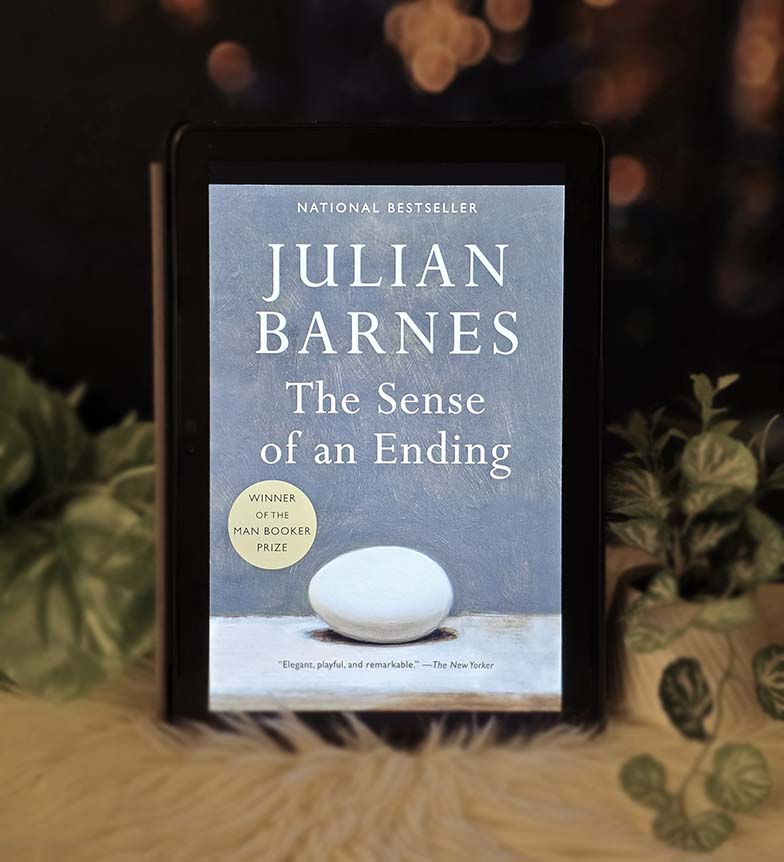
The Sense of an Ending
by Julian Barnes
Julian Barnes' Man Booker Prize-winning novel about Tony Webster, who revisits his past when an unexpected bequest forces him to reconsider memories of his youth, first love, and a friend's suicide. A profound meditation on memory, time, and how we construct narratives about our lives.
Buy this book:
Spoiler Warning
This review may contain spoilers. Read at your own discretion if you haven't finished the book yet.
My Thoughts
The Sense of an Ending is a masterclass in literary economy—a slim novel that packs enormous emotional and philosophical weight into just 163 pages. Julian Barnes explores memory, time, and self-deception with surgical precision, creating a story that's simultaneously intimate and universal. This is the kind of book that stays with you, prompting reflection on your own memories and the stories you tell yourself.
The protagonist, Tony Webster, is a divorced, retired man living a quiet, unremarkable life in London when he receives an unexpected bequest from the mother of his university girlfriend Veronica. This inheritance—which includes a diary kept by his brilliant but troubled friend Adrian, who committed suicide decades earlier—forces Tony to revisit memories of his youth: his friendships, his first serious relationship, and the events surrounding Adrian's death.
As Tony digs into the past, trying to understand the bequest and reclaim Adrian's diary from Veronica, his confident memories begin to crack. Details don't align. Events he thought he understood reveal new meanings. People he categorized simply turn out to be more complex. Most unsettling, his understanding of his own character and actions comes into question.
Barnes's exploration of memory is the novel's heart. Tony initially presents his memories with confidence—this happened, then that happened, I felt this way, she was like that. But as the narrative progresses, we watch him discover that memory is unreliable, self-serving, and constructed rather than recorded. We remember in ways that protect our self-image, that simplify complexity, that impose narrative coherence on messiness.
The structure brilliantly reinforces this theme. Part One presents Tony's memories of his youth—school friends, university, his relationship with Veronica, Adrian's arrival in their friend group, the breakup, news of Adrian and Veronica getting together, then Adrian's suicide. It's told with the confidence of established memory. Part Two, set in the present, systematically dismantles that confidence as Tony discovers what actually happened.
Tony as an unreliable narrator is perfectly executed. Barnes never explicitly signals that Tony is misremembering or self-deceiving—it emerges gradually through accumulating details that don't quite fit, through other characters' reactions, through what Tony doesn't say or glosses over. The reader begins to question Tony's version before Tony himself does, creating productive distance between narrator and reader.
The character of Veronica is fascinating and deliberately elusive. Through Tony's perspective, she appears difficult, cryptic, manipulative. But Barnes gives us enough glimpses—her behavior, her circumstances, Tony's own revealing details—to construct a very different reading of who she is and what she experienced. The gap between Tony's interpretation and what we can infer is profound and disturbing.
The revelation at the novel's climax is devastating—not through melodrama but through its quiet demonstration of how Tony's self-protective memory has obscured his own capacity for cruelty. What he did, why Adrian's suicide connects to him more directly than he acknowledged, what actually happened—the truth is worse than forgotten, it's been actively rewritten in his memory.
Barnes handles this with remarkable restraint. There's no big confrontation scene, no moment of redemption or forgiveness. Tony is forced to see himself differently, to recognize that his self-image as decent, reasonable, even victimized was constructed by convenient forgetting and self-serving interpretation. The horror is existential—if we can't trust our memories, who are we?
The novel raises profound questions about responsibility and causation. To what extent are we responsible for actions we don't remember accurately? For consequences we didn't intend or foresee? For harm done through words rather than actions? Barnes doesn't provide easy answers, instead showing how Tony struggles with precisely these questions.
The prose is elegant and precise—Barnes is a stylist who makes it look effortless. Sentences are clear and readable while carrying layers of meaning. The tone perfectly captures Tony's voice—educated, self-aware enough to be credible, but revealing blind spots and self-deceptions in what he chooses to emphasize or dismiss.
The philosophical dimension is substantial without being pretentious. The novel engages with serious questions about time, memory, history, causation, and selfhood, but always through concrete character and situation rather than abstract discourse. The title itself—borrowed from Frank Kermode's literary criticism—points to how we impose narrative endings on ongoing life.
However, the novel's brevity and restraint, while strengths, can also frustrate. Some readers want more—more explanation, more confrontation, more emotional catharsis. Barnes deliberately withholds these satisfactions, leaving ambiguities and unanswered questions. This is intentional and thematically appropriate (life doesn't provide neat resolutions), but can feel unsatisfying.
Veronica remains somewhat enigmatic even after the revelation. We understand more about her, but Barnes doesn't give us full access to her perspective or psychology. This can feel like she remains more function (challenging Tony's narrative) than fully realized person, though it's also arguable that this reflects Tony's continued limitations in seeing her.
The novel is also very British and very literary—the references, the university setting, the particular social milieu, the narrative structure itself all assume certain cultural literacy. This isn't a barrier to understanding, but it does create a specific flavor that won't appeal to all readers.
The ending is deliberately ambiguous and downbeat. Tony achieves some recognition of his failures and limitations, but there's no redemption arc, no making amends, no triumph of self-knowledge. He's left with uncomfortable truths and the recognition that "we live with such easy assumptions, don't we?" This refusal of consolation is honest but not comforting.
Why You'll Love It
- Profound Theme: Memory and self-deception explored brilliantly
- Literary Craftsmanship: Elegant, precise prose
- Unreliable Narrator: Perfectly executed
- Psychological Depth: Character revelation is devastating
- Economy: Enormous impact in slim volume
- Man Booker Winner: Deserved recognition
- Philosophical Weight: Raises important questions
- Rereadability: Reveals more on second reading
Perfect For
Readers who appreciate literary fiction that engages with big ideas through character, fans of unreliable narrators and memory-based narratives, those who enjoy British literary fiction, people interested in philosophical questions about time and selfhood, readers who prefer brevity and restraint over expansiveness, and anyone who's ever wondered how accurately they remember their own past. Essential for book clubs given the discussion it generates.
Final Verdict
The Sense of an Ending is a profound, beautifully crafted novel about memory, time, and self-deception. Barnes explores how we construct narratives about our lives, how memory serves self-image rather than truth, and how we can be complicit in harms we've successfully forgotten. Tony's journey from confident memory to uncomfortable recognition is devastating precisely because it's so restrained—no melodrama, just the quiet horror of realizing you don't know yourself as well as you thought. The unreliable narrator is perfectly executed, the prose is elegant, and the philosophical dimension is substantial without being pretentious. The slim length is deceptive—this packs enormous weight into 163 pages. However, the restraint and ambiguity that are strengths for some readers will frustrate others wanting more explanation or emotional catharsis. Veronica remains somewhat elusive even after revelation. The ending offers recognition without redemption or comfort. This isn't an easy or consoling read, but it's a brilliant one that will prompt reflection on your own memories and self-narratives. Highly recommended for readers who appreciate literary fiction that's both intellectually engaging and emotionally powerful. A deserving Man Booker winner.
You Might Also Like

The Storyteller
by Jodi Picoult
Jodi Picoult's powerful novel about Sage Singer, a baker who befriends a 90-year-old man who confesses to being an SS officer at Auschwitz and asks her to help him die. A profound exploration of forgiveness, justice, and whether some crimes are unforgivable, told through multiple perspectives and timelines.

A Perfect Life
by Danielle Steel
A successful news anchor faces unexpected challenges when a daughter she never knew existed appears in her perfectly ordered life.

Such a Fun Age
by Kiley Reid
A sharp social commentary wrapped in a page-turning story about a young Black woman caught between her white employer and her white boyfriend, both with their own ideas about what she should be.