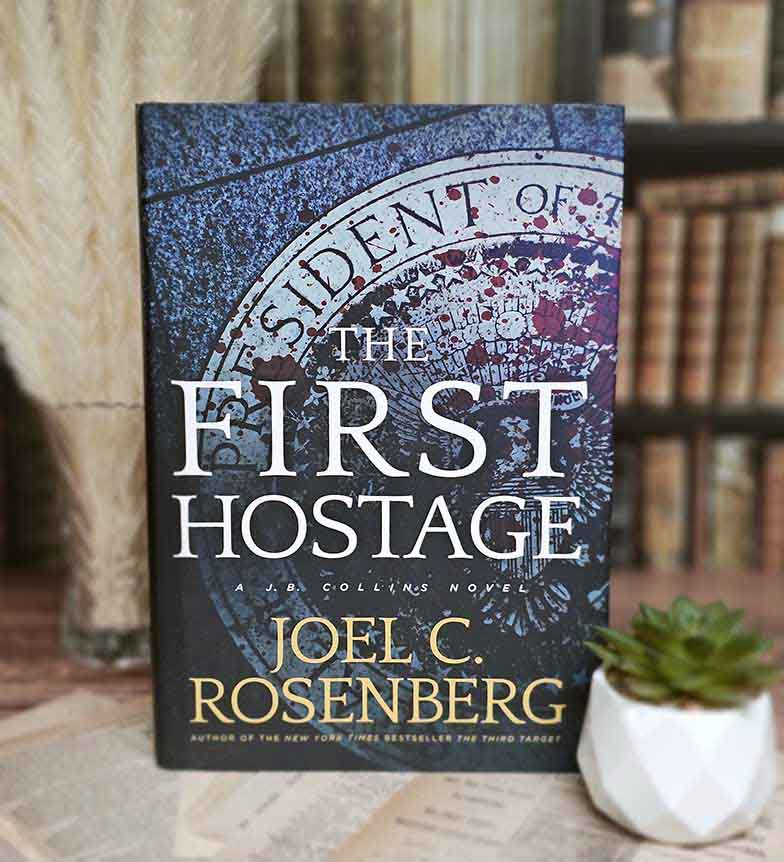
The First Hostage
by Joel C. Rosenberg
Joel C. Rosenberg's political thriller featuring journalist J.B. Collins, who lands an exclusive interview with ISIS leader Abu Kahlif only to witness ISIS kidnap the President of the United States. Fast-paced, ripped-from-headlines suspense with Middle East expertise and faith elements.
Buy this book:
Spoiler Warning
This review may contain spoilers. Read at your own discretion if you haven't finished the book yet.
My Thoughts
The First Hostage is political thriller that's remarkably timely despite being published in 2015—or perhaps it's timely because Joel C. Rosenberg has deep knowledge of Middle East politics and predictions about regional instability that prove eerily prescient. This is the second J.B. Collins novel, but it works well as standalone while clearly being part of larger series arc.
The premise is explosive: Foreign correspondent J.B. Collins lands an exclusive interview with the leader of ISIS, Abu Kahlif, in a Syrian stronghold. But during the interview, ISIS forces ambush and kidnap the President of the United States, who's making a secret trip to Jordan. Collins is the only Western witness to the kidnapping, and he's taken hostage too. What follows is a race against time as Collins tries to survive, report the story, and help locate the President before ISIS executes him on camera.
Rosenberg brings real expertise to the geopolitical elements. Having worked in politics and spent years covering Middle East issues, he understands the regional complexities, the various factions and their motivations, and the intelligence and military dynamics. The setting feels authentic, the strategic considerations realistic, and the procedural details of journalism, intelligence work, and military operations convincing.
The character of J.B. Collins is well-drawn—a New York Times foreign correspondent committed to getting the story, haunted by past trauma (his fiancée was killed in a terrorist attack), grappling with questions of faith, and thrust into situations well beyond reporting. He's competent and brave but not superhuman. His journalistic ethics—the obligation to report truth, the desire to help versus maintaining objectivity—create genuine dilemmas.
The pace is relentless. Once the kidnapping happens (early in the book), the tension never lets up. Short chapters, multiple perspectives (Collins, ISIS leaders, U.S. officials, other journalists), and ticking-clock urgency create propulsive momentum. This is a book that keeps you turning pages, easy to read in one or two sittings despite substantial length.
The villains are more than cardboard cutouts. Rosenberg gives Abu Kahlif and other ISIS leaders ideological motivation, strategic intelligence, and genuine fanaticism. They're not simply evil for evil's sake but pursuing specific religious and political goals through horrifying means. This makes them more chilling—these are true believers willing to die for their cause.
The procedural elements are strong. The intelligence community's response to the kidnapping, the military planning for potential rescue, the diplomatic complications, the media coverage—all feel realistic and well-researched. Readers interested in how government responds to crisis situations will find substantial detail without excessive jargon.
The faith elements are present but not overwhelming. Collins is Christian and grapples with questions about God's presence in suffering, evil, and tragedy. Other characters have different faith commitments (Muslim characters range from moderate to extremist; other Christians have different approaches). The Christian worldview shapes the narrative but doesn't dominate every page. Readers uncomfortable with faith content should know it's here; readers seeking explicit Christian fiction might find it subtler than expected.
The stakes feel real and enormous. The kidnapped President, the threat of public execution, the geopolitical implications, ISIS's larger strategic goals—Rosenberg makes clear that failure means catastrophic consequences. This isn't manufactured tension but stakes that emerge naturally from the situation.
However, the book has limitations. The prose is functional rather than literary—clear, fast-paced, serviceable, but not particularly distinctive or beautiful. This is thriller prioritizing story over style, which is appropriate for the genre but means limited aesthetic pleasure beyond plot.
Some character development is shallow. Secondary characters, particularly women, often feel more functional than fully realized. Collins's colleagues, various government officials, and family members exist primarily to serve plot purposes rather than having rich inner lives. This is common in thrillers but still limits engagement.
The ideological perspective is clearly conservative and pro-American military/intelligence intervention. The book doesn't shy from showing U.S. mistakes or complicated situations, but the underlying worldview assumes American leadership is necessary and generally positive. Readers with different political perspectives may find this grating.
The ISIS portrayal, while more nuanced than simple villainy, still presents them as comprehensively wrong and evil. Given ISIS's actual atrocities, this isn't exactly unfair, but the novel doesn't deeply engage with the conditions that breed extremism or Western complicity in regional instability. The focus is on stopping immediate threat rather than examining root causes.
The action sequences, while exciting, sometimes strain credulity. Collins survives situations that should probably kill him, makes connections that require fortunate timing, and achieves things that push believability. This is thriller convention—readers accept certain improbabilities for entertainment—but the most outlandish sequences may pull some readers out of immersion.
The ending is satisfying in thriller terms—major questions answered, immediate threats resolved—but clearly sets up future books in the series. Some threads are left dangling, which works for series readers but might frustrate those wanting complete standalone resolution.
The title and premise raise ethical questions about hostage situations and media coverage that the book engages with but doesn't fully explore. Collins's role as journalist-turned-participant creates genuine ethical dilemmas, but the thriller framework sometimes simplifies complex questions.
Why You'll Love It
- Ripped from Headlines: Timely Middle East focus
- Relentless Pacing: Propulsive thriller momentum
- Geopolitical Expertise: Realistic strategic elements
- Competent Protagonist: Collins is capable but human
- High Stakes: President kidnapped by ISIS
- Faith Elements: Christian worldview without preaching
- Action Sequences: Exciting, well-choreographed
- Series Character: Develops ongoing protagonist
Perfect For
Fans of political thrillers à la Vince Flynn or Brad Thor, readers interested in Middle East geopolitics and ISIS, those seeking action-packed entertainment with faith elements, people who enjoy journalist protagonists, and anyone looking for fast-paced suspense with procedural authenticity. Best for readers comfortable with conservative political perspective and willing to accept thriller conventions.
Final Verdict
The First Hostage delivers exactly what it promises—fast-paced political thriller with Middle East setting, high stakes (kidnapped President), and relentless action. Rosenberg's geopolitical expertise creates authentic feel, the procedural elements are convincing, and the pace never flags. J.B. Collins is solid protagonist—competent journalist thrust into extreme circumstances, grappling with professional ethics and personal faith. The ISIS portrayal is more nuanced than simple villainy, showing ideological motivation behind horrifying actions. The plot is propulsive, chapters are short and hooky, and the thriller mechanics work well. Faith elements are present but not overwhelming. However, prose is functional rather than distinctive, secondary characters are thinly developed, and the conservative political perspective may not appeal to all readers. Some action sequences strain credibility, and the ending clearly sets up future series installments. The thriller framework sometimes simplifies complex ethical and geopolitical questions that deserve deeper exploration. But judged as political thriller—entertainment that's timely, well-researched, and exciting—this succeeds admirably. Highly recommended for readers who enjoy political thrillers with Middle East focus, particularly those comfortable with faith elements and conservative worldview. Not literary fiction, but solid, entertaining, intelligent thriller that respects readers and delivers on its promises.
You Might Also Like

Blink of an Eye
by Iris Johansen
Kendra Michaels, blind for the first twenty years of her life, uses her extraordinary observational skills to help find a missing pop star before time runs out.
Hindsight
by Iris Johansen
Iris Johansen's Kendra Michaels thriller about reopening a cold case when new evidence suggests the convicted killer was innocent. Kendra must use her unique observational skills to find the real murderer before he strikes again. Solid series entry with cold-case twist.
Look Behind You
by Iris Johansen
Iris Johansen's Kendra Michaels thriller about a killer targeting people connected to Kendra's past. Personal stakes elevate the formula as Kendra must protect those she cares about while using her unique skills to stop the murderer before someone she loves dies.