
The Outsiders
by S.E. Hinton
S.E. Hinton's 1967 novel - written while she was a junior in high school - opens on fourteen-year-old Ponyboy Curtis getting jumped on his way home from a movie in Tulsa, and walks the next several days through a fountain killing, a hideout in an abandoned country church, a fire that saves schoolchildren, a rumble between greasers and Socs, a Robert Frost poem, and one of the more devastating closing arcs in YA literature.
Buy this book:
Spoiler Warning
This review may contain spoilers. Read at your own discretion if you haven't finished the book yet.
The Book a Sixteen-Year-Old Wrote That Invented Modern YA
Susan Eloise Hinton was a junior in high school when she wrote most of The Outsiders. She had started it at fifteen, wrote the bulk of it at sixteen, and was eighteen by the time it was published in 1967. The book she produced - a small, lean novel about working-class teenage boys in 1960s Tulsa, Oklahoma - was, by reasonable accounts, the work that broke open the YA category as we now know it. Before The Outsiders, books about teenagers were mostly about teenagers who had problems teenagers were allowed to have. After The Outsiders, that shelf began to admit kids whose parents were dead, whose homes were violent, whose pockets were empty, whose immediate physical safety was a daily question. The genre owes an unrepayable debt to the teenager who wrote this book.
A 4.0 reflects: an essential, lasting, formally efficient short novel that does what it set out to do; a book whose closing arc still earns its devastation; and a couple of small reservations about what the book is and isn't asking - reservations that mostly belong to the era rather than to Hinton.
Tulsa, the Curtis Brothers, and the Greasers
Ponyboy Curtis is fourteen. He has two older brothers - Darry, the eldest, who has stepped into the parental role since the boys' parents were killed in a car accident, and Sodapop, the middle brother, who is sweet, popular, and works at a gas station to help Darry keep the household together. The three brothers are greasers - the working-class side of Tulsa's high-school-age class divide, the boys with the long hair and the cheap leather jackets and the constant low-grade trouble. Their friends fill out the gang: Johnny Cade, sixteen, soft-spoken, with the kind of home life nobody wants to ask about (alcoholic parents, no protection); Dallas "Dally" Winston, seventeen, the roughest of the bunch, a juvenile delinquent who has done time and is, underneath all of it, the figure most fiercely protective of Johnny; Two-Bit Mathews, the wisecracker; Steve Randle, Sodapop's best friend since grade school. Across town, the Socs - the upper-middle-class kids in the cars and the madras shirts - run the same age range and the same town, and the rivalry between the two has the specific small-stakes brutality of teenage boys with too much loyalty and not enough else to do.
Hinton's first move is to refuse the easy categorization the rivalry implies. The greasers smoke and steal and fight; they are also, in the way Hinton renders them, kids. Ponyboy reads. He likes Robert Frost. He goes to the movies. Johnny is gentle. Sodapop is goofy and patient. Even Dally, the hardest of them, is tender with Johnny in ways the gang notices and doesn't tease him about. The book's central insight, carried in Ponyboy's first-person narration, is that the boys on either side of this class line - greaser and Soc - are looking at the same sunset, and the line is what the world has put there, not what the boys themselves would have drawn.
The Drive-In, the Fountain, and Bob Sheldon's Three Rings
The plot gets in motion at a drive-in movie, where Ponyboy, Johnny, and Dally meet two Soc girls - Cherry Valance and Marcia - whose own boyfriends have left them stranded by drinking. Ponyboy talks to Cherry. They get along. Cherry, despite the tribal politics of the town, recognizes something in Ponyboy that the categories don't account for. Then Bob Sheldon - Cherry's boyfriend, the dark-haired Soc who wears three heavy rings on his fighting hand and has already, before this book opens, used those rings on Johnny's face - shows up with his friends in a park where Ponyboy and Johnny have wandered. The Socs corner them. Bob holds Ponyboy's head under the water in the fountain. Ponyboy is drowning. Johnny, who has been carrying a knife since the night Bob's rings put him in the hospital, kills Bob.
What follows is the book's structural pivot. The two boys, terrified, find Dally, who gives them money and a gun and sends them to an abandoned country church in Windrixville to wait until things cool down.
The Church, the Fire, and "Nothing Gold Can Stay"
The Windrixville chapters are the lyrical heart of the novel. Johnny and Ponyboy hide in the church for a week, eating cans of food, cutting and bleaching Ponyboy's hair to disguise him, watching the sun come up. It is in one of these dawn moments that Ponyboy recites Robert Frost's "Nothing Gold Can Stay" out loud and Johnny, who has not been given the kind of life that would have made him a poetry kid, asks him what it means. The poem - "Nature's first green is gold, / Her hardest hue to hold... Nothing gold can stay" - is the book's argument in miniature, and it is the line Johnny will give back to Ponyboy at the end.
When Dally comes to check on them and they go for food, they return to find the church on fire. A school group has been picnicking nearby; children are trapped inside. Johnny and Ponyboy go in to get them out. They get the children out. A burning beam comes down on Johnny's back. Johnny does not walk again.
The Rumble, Johnny, and Dally
The greasers and the Socs settle the broader feud with a rumble - a coordinated gang fight in a vacant lot - which the greasers technically win. None of that matters. Ponyboy, after the rumble, is taken to see Johnny in the hospital, and Johnny - dying, in pain, with everyone he loves in the room - tells Ponyboy: Stay gold, Ponyboy. Stay gold. The line is loaded with Frost. The line is also Johnny telling Ponyboy not to harden into the version of a greaser the world keeps trying to turn him into.
Johnny dies. Dally - whose love for Johnny is the warmest thing in him, and whose loss of Johnny is the only thing the book ever shows breaking him - runs out of the hospital, robs a store, points an unloaded gun at the police, and dies the way he has chosen to die. The book's closing pages are Ponyboy, processing all of this, beginning to write a paper for English class that turns out to be the book the reader has been reading.
What the Book Earned, and a Note on What's Aged
The strengths are the structural cleanness - this novel does an enormous amount of emotional work in 192 pages - the moral seriousness about class without sermonizing, the refusal to let any of the boys be only their toughness, and the closing reveal that Ponyboy is the writer of the book itself, which lands harder than it has any right to. The Frost integration is one of the better uses of canonical poetry in YA literature.
The reservations belong mostly to the era. The world of the novel is almost entirely male; girls (Cherry, Marcia, Sodapop's ex-girlfriend Sandy) appear on the edges and get less interior life than the gang. The romanticization of the gang's loyalty has the slight retrospective wobble of a teenager mythologizing the boys around her. None of that is enough to dock the book past a 4.0; it is just worth noting on a reread that this is a first novel by a sixteen-year-old who was, in 1967, doing something nobody had done before in the YA register.
A 4.0 means: an essential novel, the founding text of an entire literary category, and one of the few high-school-syllabus books that genuinely earns its place there.
Rating: 4.0/5 ⭐
Perfect for: Readers of any age coming to or returning to the book that invented modern YA, fans of small-novel emotional efficiency, anyone interested in class-conscious coming-of-age fiction, readers who appreciate the closing-page reveal Hinton built into the structure.
Skip if: You first read it in school and feel no need to revisit, you bounce off teen-male-coded narrative voices, or violence and death involving teenage boys is too close to your current reading window.
You Might Also Like
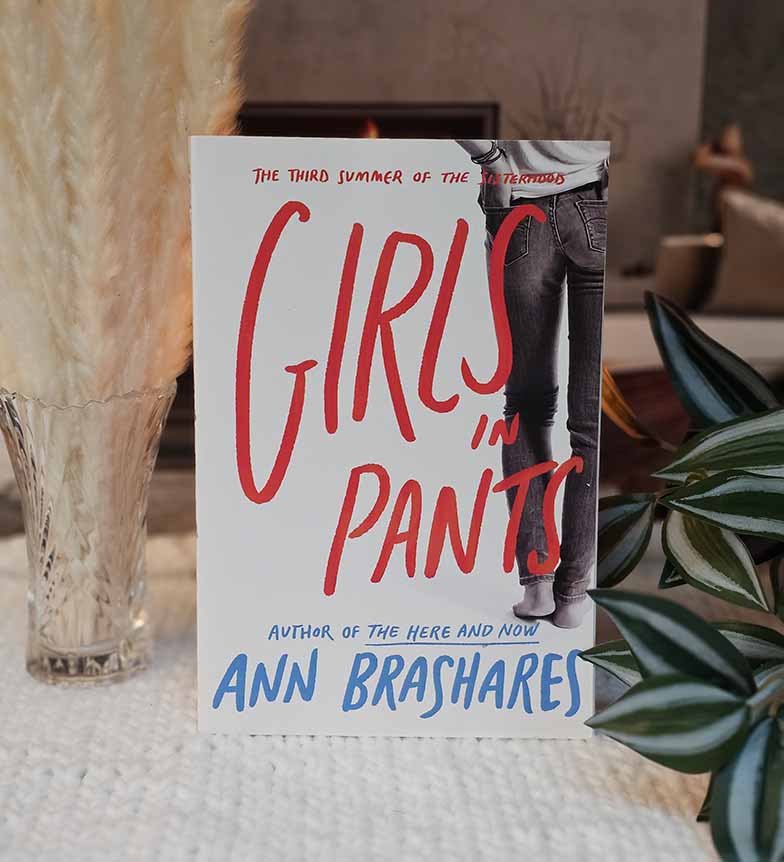
Girls in Pants: The Third Summer of the Sisterhood
by Ann Brashares
The summer before college - the last summer of innocence, of being together, of the magic pants. Carmen, Tibby, Bridget, and Lena face their biggest transition yet.
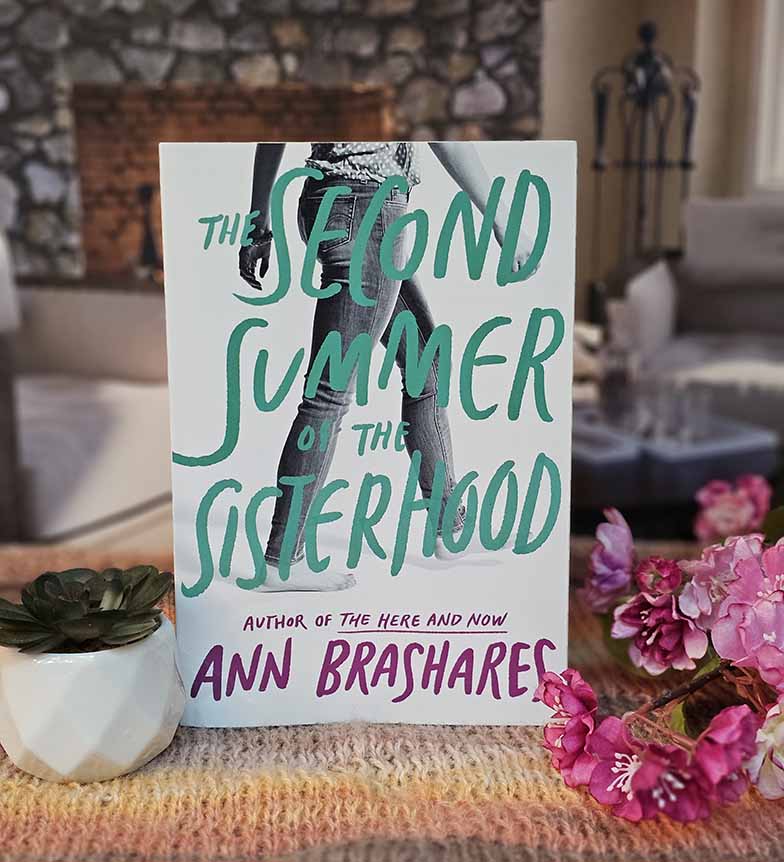
The Second Summer of the Sisterhood
by Ann Brashares
The pants are back for a second summer as Carmen, Tibby, Bridget, and Lena face new challenges, deeper heartbreak, and the continued magic of their unbreakable friendship.
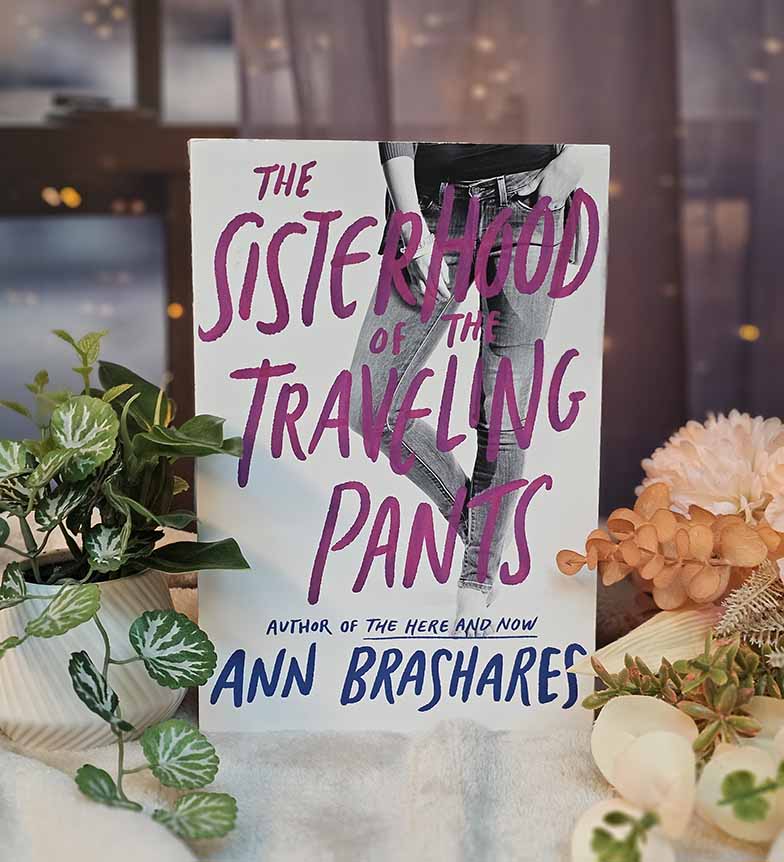
The Sisterhood of the Traveling Pants
by Ann Brashares
Four best friends, one pair of magical jeans, and a summer apart that brings them closer together. A heartwarming story about friendship, growth, and the bonds that hold us together.